A tower technician installs, inspects, maintains, or repairs communications equipment on towers, rooftops, poles, and related sites. The work may include antennas, cable, mounts, grounding, radios, lighting systems, climbing, rigging, and weather exposure. Training and rescue planning are central because the height and site conditions change the risk of ordinary technical tasks.
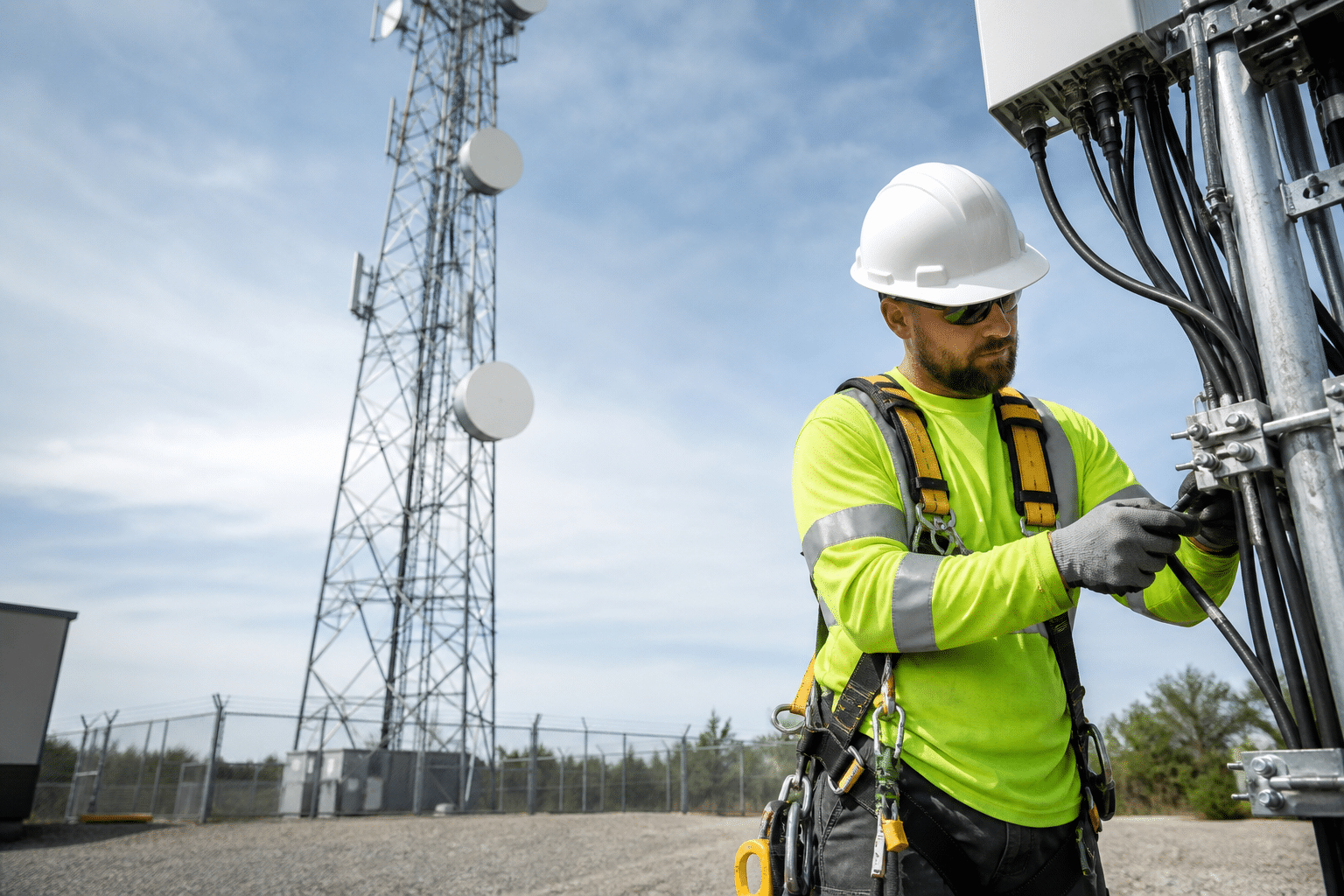
A tower technician installs, inspects, maintains, or repairs communications equipment on towers, rooftops, poles, and related sites. The work may include antennas, cable, mounts, grounding, radios, lighting systems, climbing, rigging, and weather exposure. Training and rescue planning are central because the height and site conditions change the risk of ordinary technical tasks.
A tower technician installs, maintains, tests, and repairs the equipment that keeps wireless and radio networks working. The job can include antennas, coaxial cable, fiber, radios, mounts, grounding, and weatherproof connections. It can also include a long climb before the real troubleshooting begins.
The title covers more than one kind of work. Some technicians spend most of their time on cell sites. Others work on broadcast towers, public-safety radio systems, small-cell equipment, or tower construction crews. A few jobs are mostly ground support and equipment preparation, while others require regular climbing.
That last point deserves plain language. This is a serious work-at-height occupation. The technical side can be learned, but no beginner should treat climbing as a test of courage. Training, fall protection, rescue planning, weather judgment, and supervision are part of the job.
Preparation matters before the climb: The crew checks the work plan, weather, fall protection, rescue equipment, tower condition, tools, materials, and communication method. A missing connector or incorrect bracket discovered at the top can turn a short repair into a second climb or a rushed decision.
Tower technician at a glance
| Question | Short answer |
|---|---|
| Main work | Install, maintain, test, and repair wireless, radio, and tower equipment |
| Common settings | Cell sites, broadcast towers, public-safety systems, rooftops, and construction sites |
| Useful background | Telecommunications, electrical work, construction, fiber, rigging, or mechanical work |
| Typical entry route | Employer training, technical school, apprenticeship, or a helper role |
| Common credentials | Employer or manufacturer training, fall-protection and rescue training, and industry credentials that match the job |
| Closest BLS pay proxy | Radio, cellular, and tower equipment installers and repairers had a $63,520 median annual wage in May 2025 |
The word “tower” does not tell you enough about a job. Ask how often technicians climb, how high the sites are, whether the crew works on rooftops, and how much of the week is spent traveling.
What does a tower technician do?
A crew may handle some or all of the following:
- Install antennas, remote radio units, transmission lines, mounts, cable trays, and related hardware.
- Run and weatherproof coaxial or fiber connections.
- Replace radios, filters, connectors, jumpers, lighting systems, or damaged hardware.
- Test signal paths, grounding, alarms, and equipment after installation or repair.
- Read site drawings, equipment lists, installation standards, and scope-of-work documents.
- Use hand tools, torque tools, test equipment, hoists, and personal fall-protection gear.
- Photograph completed work and record serial numbers, measurements, deficiencies, and changes.
The work may start on the ground. A technician checks tools, harnesses, radios, batteries, rigging, and replacement parts. The crew reviews the site and the day’s weather. If the climb is approved, the technician goes up with tools and hardware secured against dropping.
At the top, the job can be surprisingly exact. An antenna may need a particular orientation. A connector may need the correct torque. A cable must be supported and sealed so water does not enter. A small installation mistake can create an intermittent fault that is hard to reproduce later.
Cell tower work includes much more than climbing
Climbing gets most of the attention because it is visible. The job also involves planning, inspection, equipment handling, and fault-finding.
A tower technician may work on:
- Cellular antennas and radio units
- Microwave dishes and backhaul equipment
- Public-safety and two-way radio systems
- Broadcast and wireless communication equipment
- Tower lighting and obstruction-warning systems
- Grounding, cable support, and weatherproofing
The BLS includes radio, cellular, and tower equipment installers and repairers under the broader telecommunications technician family. It describes these workers as installing, repairing, and maintaining radio transmitting, broadcasting, and receiving equipment used in cellular telecommunications, mobile broadband, and public-safety or vehicle radio systems.
That classification is useful, but it is broader than the job title used by an employer. One company’s tower technician may be an antenna installer. Another may be a radio technician who climbs occasionally. Read the job description before comparing pay or training.
Tower technician vs. fiber optic technician
There is overlap, especially on modern sites, but the center of gravity is different.
A fiber optic technician works mainly with optical cable, splicing, termination, testing, and network connections. A tower technician may handle fiber at a cell site, but the job usually adds antennas, radios, tower hardware, rigging, and work at height.
Fiber work can happen in data centers, buildings, underground routes, or outside plant. Tower work is more tied to elevated structures and wireless equipment. Someone who enjoys testing and precision but dislikes heights may prefer fiber. Someone who wants outdoor work and does not mind climbing may prefer tower work.
Tower technician vs. lineman
The two jobs can look similar from the road because both may involve climbing, travel, and outdoor construction. They are not the same trade.
Lineworkers install and repair electrical power lines and related equipment. Tower technicians work on communications structures and wireless or radio systems. The electrical hazards, equipment, training, and work rules differ.
Read the employer’s language carefully. A communications contractor may advertise for a tower technician, while a power contractor may use terms such as lineworker, groundman, or apprentice. The lineman apprenticeship path is not a substitute for tower-specific climbing and rescue training.
How much of the job is spent climbing?
There is no universal percentage. It depends on the employer, crew, contract, season, and site type.
Some entry-level jobs begin with ground support. A new worker may stage equipment, help with rigging, organize materials, document the site, and learn procedures before climbing independently. Other positions expect climbing from the first week after the required training.
During an interview, ask:
- What percentage of the work is climbing versus ground support?
- What are the usual tower heights and site conditions?
- How often do crews work on rooftops or monopoles?
- Is climbing suspended for high winds, lightning, ice, or other conditions?
- Who makes the go/no-go decision for a climb?
- What rescue equipment and rescue training does the crew use?
These questions are practical, not fussy. They tell you whether the employer treats safety as part of production or as an afterthought.
What is tower technician training like?
Most people enter through some combination of employer training and supervised field work. The BLS says telecommunications technicians generally need a high school diploma or equivalent, and employers may prefer postsecondary education in electronics, telecommunications, or computer networking. It also notes that on-the-job training can last from several months to several years, depending on the role.
Tower-specific training often covers:
Climbing, fall protection, and rescue
Workers learn how to inspect and use harnesses, lanyards, anchor points, positioning systems, and other equipment. They also need a plan for what happens if a climber is injured or cannot descend without help.
Technical systems
Training can include antennas, radio units, transmission lines, grounding, connectors, basic RF concepts, cable testing, and manufacturer instructions. A worker may also learn how to read site drawings and installation standards.
Crew procedures
Tower work depends on communication between climbers and ground workers. Workers learn how to secure tools, control hoists, protect people below, use radios, and document the completed job.
The National Wireless Safety Alliance lists Telecommunications Tower Technician credentials in its certification system. Apprenticeship.gov also lists Telecommunications Tower Technician among high-demand apprenticeship occupations in the telecommunications industry. Those are useful starting points, but a credential does not remove the need for site-specific training or employer supervision.
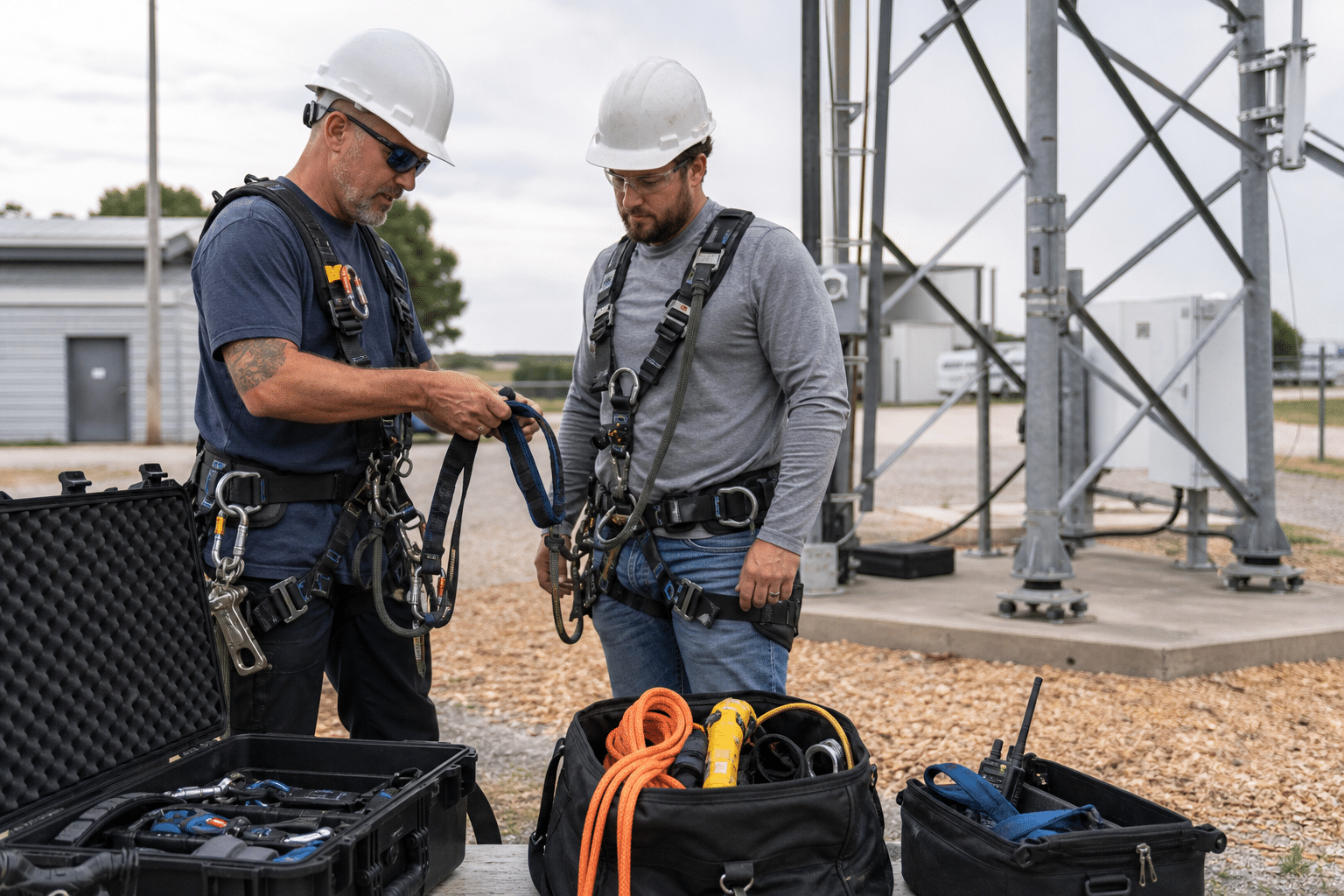
A tower technician installs, inspects, maintains, or repairs communications equipment on towers, rooftops, poles, and related sites. The work may include antennas, cable, mounts, grounding, radios, lighting systems, climbing, rigging, and weather exposure. Training and rescue planning are central because the height and site conditions change the risk of ordinary technical tasks.
Can you become a tower technician with no experience?
Yes, some employers hire helpers or entry-level technicians. “No experience” does not mean “no preparation,” though. Employers still need workers who can follow instructions, work safely, handle tools, travel, and learn without taking shortcuts.
Helpful preparation includes:
- Basic electrical and mechanical knowledge
- Comfort with hand tools and measuring equipment
- Construction, roofing, rigging, or warehouse experience
- Familiarity with cable handling or fiber optic technician work
- A clean approach to checklists and documentation
- The physical ability to climb, carry equipment, and work outdoors
Some technical schools offer tower technician programs. Compare their hands-on hours, rescue practice, employer connections, total cost, and placement claims. A short certificate may help you get noticed, but it is not a replacement for supervised field experience.
Tower technician salary: what can you use as a benchmark?
There is no single BLS occupation called “tower technician salary.” The closest current BLS category is Radio, Cellular, and Tower Equipment Installers and Repairers, within the broader Telecommunications Technicians group.
In May 2025, BLS reported a $63,520 median annual wage for the radio, cellular, and tower equipment category. The broader telecommunications technician group had a $66,200 median. These figures are useful national reference points, not a promise for a specific tower job.
Pay can change with climbing responsibility, travel, overtime, per diem, project type, union coverage, certifications, and whether the technician can handle advanced radio or transmission-line work. A job listing that shows a high annual total may include long weeks, extensive travel, bonuses, or allowances. Ask what part of the number is guaranteed base pay.
The BLS category had about 11,300 jobs in 2025 and is projected to reach 11,400 in 2035, a 1 percent increase. The broader telecommunications technician group is projected to decline 3 percent, partly because some large installation projects are expected to finish. BLS separately expects demand for radio, cellular, and tower equipment installers and repairers to increase with continued construction of power and communications structures. The categories overlap, so the safest reading is a mixed market rather than a simple boom story.
| Pay question | Why it matters |
|---|---|
| Base hourly or salary rate | Shows guaranteed pay before overtime and allowances |
| Overtime rules | Travel and long site days can change annual earnings |
| Per diem and lodging | Helps cover travel but may not count as wages |
| Climbing premium or project bonus | Can vary by contract and may not be permanent |
| Training pay | Tells you whether required courses happen on paid time |
Is tower work dangerous?
Yes. The risk is not a dramatic detail to add at the end of a career article. It should influence the decision from the start.
OSHA identifies falls, electrical hazards, falling objects, equipment failure, severe weather, and structural collapse among the hazards found on communication towers. Its guidance also stresses that employers must provide appropriate fall protection, train workers to use it, and supervise its use.
That means a responsible employer should be able to explain its training, equipment inspections, rescue plan, weather limits, site assessment, and supervision. Be cautious if an employer treats fall protection as optional, expects workers to climb before training, or gives vague answers about rescue.
The right attitude is calm and procedural. You do not need to be fearless. You need to respect the equipment, the structure, the weather, the crew, and the limits of the job.
What is the physical side of the work?
Tower technicians may climb ladders and structures, carry tools or hardware, work in harnesses, lift equipment, kneel, reach, and stay outside in heat, cold, wind, or rain. Travel can add long drives and irregular meals to an already physical day.
The BLS says telecom technicians may climb rooftops, ladders, poles, and towers; work in cramped or awkward positions; and lift heavy tools, cables, and parts. It also notes that night or weekend work and on-call schedules are possible.
Fitness expectations vary. Do not rely on a vague job ad. Ask whether the employer uses a formal assessment, what equipment must be carried, how long climbs usually last, and how often the crew works in difficult weather.
Is it a good career change after 40?
It can be, but the answer depends more on your relationship with heights and travel than on your age.
Construction, electrical, welding, wind turbine technician, fiber, military maintenance, and mechanical backgrounds can transfer. So can experience with checklists, equipment installation, customer sites, and troubleshooting.
The first step does not have to be a full career leap. Talk to a contractor about a ground-support or trainee role. Ask to see the training schedule and the real travel expectations. You can learn a lot from a few honest conversations before paying for a school.
The trade may suit you if you like changing worksites, practical equipment, and visible results. It may be a poor fit if you need predictable hours, dislike travel, or feel pressured to ignore weather and fatigue. A career change at 40 does not become wiser because the job looks adventurous in a video.
Questions to ask before enrolling or accepting a job
- Is the job mostly cell sites, broadcast towers, public-safety radio, or mixed work?
- How much climbing is expected after the initial training period?
- Which credentials are required, and who pays for them?
- Is training paid, and is travel to training reimbursed?
- What are the usual tower heights and weather limits?
- How are rescue plans practiced?
- How much overnight travel is normal?
- What equipment will I carry and lift?
- Is the advertised pay base pay, or does it include overtime and per diem?
- Can I start in ground support while I build skills?
The answers will tell you whether the opportunity is a real training path or simply a request for someone willing to climb immediately.
Bottom line
A tower technician keeps communication equipment working on structures that are often remote, exposed, and high above the ground. The trade blends electronics, construction, cable work, documentation, travel, and physical skill.
The strongest entry plan combines basic technical preparation, employer training, supervised climbing, and a serious safety culture. Use BLS numbers as a benchmark, not a guarantee. Check the actual job duties, travel, base pay, and training before you commit.
Official sources
- BLS: Telecommunications Technicians
- Apprenticeship.gov: Telecommunications
- Apprenticeship.gov: Radio, Cellular, and Tower Equipment Installers and Repairers
- OSHA: Communication Towers
- OSHA: Letter to Communication Tower Industry Employers
- National Wireless Safety Alliance: Telecommunications Tower Technician
Related guides: Fire Alarm Technician: Duties, Training, Pay and Career Fit and Solar Installer: Duties, Training, Certification and Career Fit.
\n
Reviewed September 3, 2026: Tower technician work involves height, climbing, weather, rigging, travel, and communications equipment. Ask about rescue training, crew schedules, and the actual job sites before applying. See telecommunications technician work.
\n