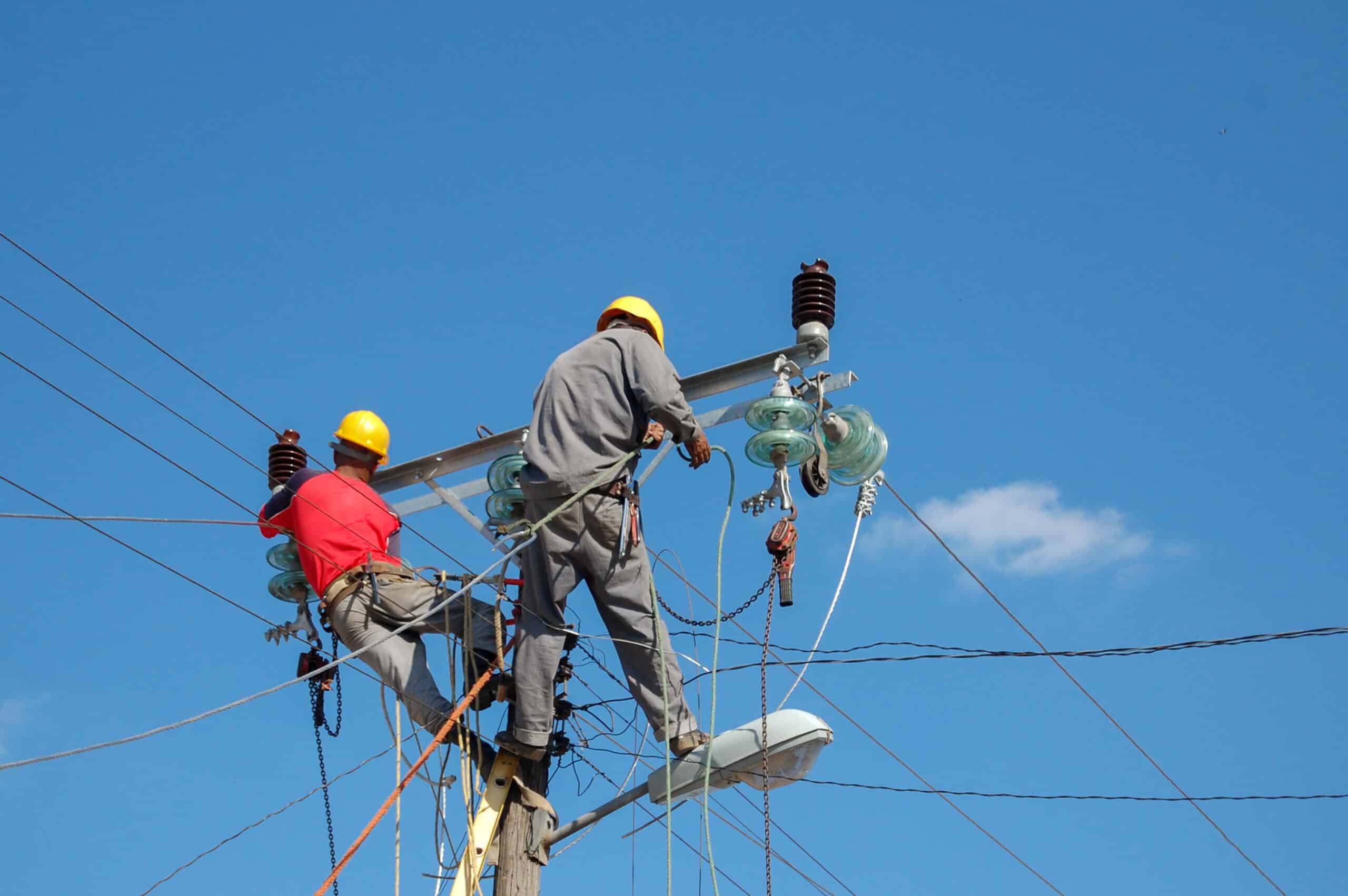
A lineman apprenticeship prepares workers to build, maintain, and repair electrical power lines and related utility equipment. The training combines paid field work, classroom instruction, climbing, rescue procedures, electrical safety, and long days during construction or storm response. The job is a serious outdoor trade, not simply a general lineworker course.
The title also causes confusion. In this article, “lineman” means an electrical power-line installer or repairer working on utility distribution or transmission systems. Telecommunications line work is different. So is inside electrical work in buildings. Read the employer’s job description before assuming that every “lineworker” opening follows the same training path.
The first year is more than climbing: An apprentice may spend time learning knots, rigging, grounding, bucket-truck procedures, rescue, equipment inspection, and line construction before taking on more complex energized work. Ask how the program handles storm duty, travel, and wage increases.
Lineman apprenticeship at a glance
| Question | Practical answer |
|---|---|
| What you learn | Line construction, distribution basics, climbing or aerial work, rescue, tools, and electrical safety |
| Typical entry education | High school diploma or equivalent |
| Common screening | Algebra, aptitude testing, driving record, substance screening, medical or fitness checks, and an interview may apply |
| Training model | Paid on-the-job learning combined with technical instruction |
| Typical length | Some programs last up to three years; the sponsor sets the actual standard |
| License issue | A CDL may be required for heavy vehicles; other rules vary by state and employer |
| Main trade-off | Strong technical progression, but real exposure to height, weather, physical work, and irregular schedules |
What does a lineman do?
Electrical power-line installers and repairers install or repair the cables and wires used in electrical power and distribution systems. Depending on the employer, a lineworker may work on poles, towers, substations, underground systems, service connections, or storm restoration. Some jobs focus on construction. Others focus on maintenance, emergency repair, or transmission work.
The workday can include preparing a job site, checking equipment, moving materials, helping with traffic or work-zone control, installing hardware, setting poles or conductors, inspecting line components, and restoring service after damage. Apprentices do not begin by working independently on the most hazardous tasks. They learn the employer’s methods under supervision and earn more responsibility as they demonstrate competence.
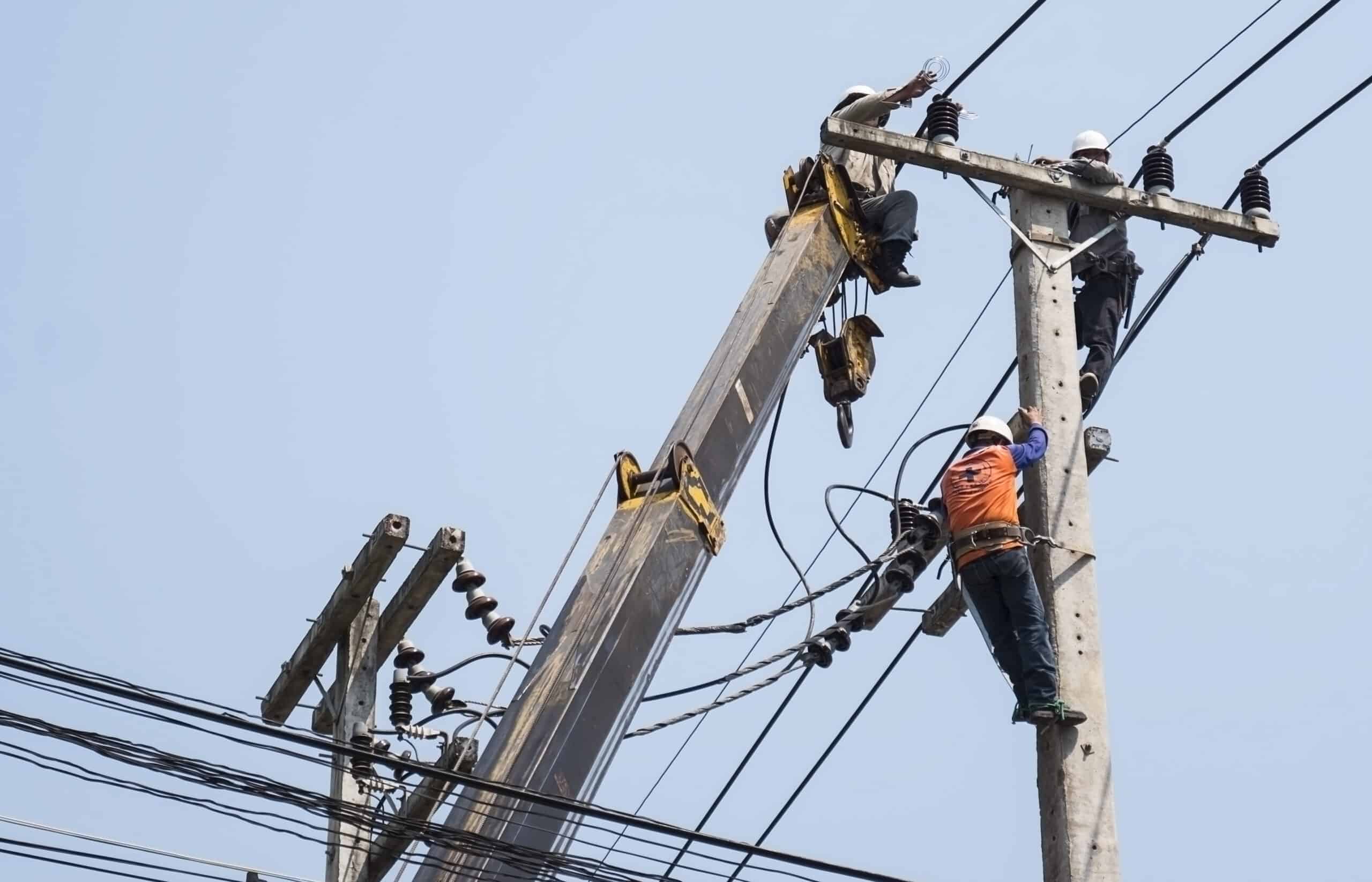
The Bureau of Labor Statistics profile for electrical power-line installers and repairers says the occupation involves serious hazards, including high-voltage electricity and work at great heights. That plain description is worth taking seriously. The career is not a good place to bluff confidence or skip a safety question.
How lineman apprenticeships work
A serious apprenticeship combines paid work with related technical instruction. You learn from experienced workers in the field, then reinforce the theory in a classroom, lab, or structured online component. The exact balance differs by sponsor.
The U.S. Department of Labor describes Registered Apprenticeship as a pathway that can include paid work experience with a mentor, progressive wage increases, classroom instruction, and a portable nationally recognized credential. That does not mean every lineworker job is a Registered Apprenticeship. It means you should ask what kind of program you are actually applying to.
A useful apprenticeship listing should explain:
- who employs the apprentice;
- which occupation or standard the program follows;
- how wages progress;
- how many hours are spent in technical instruction;
- where the work and classes take place;
- what tools, clothing, or safety equipment you must provide; and
- what happens after completion.
Some programs are sponsored by utilities. Others are connected to contractors, unions, joint training committees, or public workforce partners. The name of the sponsor matters less than the training plan, supervision, wage schedule, and actual work available in your area.
Lineman apprenticeship requirements
There is no single national application checklist. Requirements vary, but the same themes appear often enough to prepare for them.
High school education and algebra
The BLS lists a high school diploma or equivalent as the typical entry education. It also says employers may prefer basic algebra and trigonometry, and that some apprenticeship programs ask for one year of high school algebra or a college equivalent.
That does not mean you need advanced mathematics before you apply. It does mean that fractions, equations, measurements, and basic geometry should not be ignored. If algebra is rusty, refresh it before an aptitude test rather than hoping the issue will disappear during the application.
Aptitude testing
Many programs use an aptitude test to check reading, mechanical reasoning, algebra, or related skills. The test is not a measure of whether you are already a lineman. It is a screen for the learning habits the sponsor expects.
Ask for the test topics and format. Then study the actual gaps. A short, regular practice routine is more useful than buying an expensive course with a vague promise of selection.
Driving and the CDL question
Line crews use trucks and other heavy equipment. The BLS notes that workers who drive heavy vehicles usually need a state-issued commercial driver’s license, and interstate driving can bring additional requirements. Some employers require a CDL before hiring; others provide a path to obtain it.
Read the posting carefully. Ask whether the CDL is a firm condition of entry, whether a permit is enough at first, whether the employer pays for training, and whether a poor driving record disqualifies an applicant. Do not assume that a standard passenger-vehicle license will be enough for every crew position.
Physical and medical screening
Apprentices may need to pass a fitness test or medical screening. Programs can assess climbing, lifting, balance, stamina, vision, or the ability to perform the essential duties safely. The exact process varies.
Prepare honestly. Do not hide a limitation from the employer or treat a generic fitness checklist as medical advice. Ask what the job actually requires and whether the program has a written standard. A good sponsor should explain the requirement rather than leave applicants guessing.
Substance screening and background checks
The BLS lists substance abuse screening among possible apprenticeship qualifications. A driving record or background check may also matter because crews drive expensive equipment, enter work sites, and work around public infrastructure. The employer or sponsor should tell you which checks apply and when they occur.
What you learn during the apprenticeship
The technical subjects vary by program, but a lineworker apprenticeship normally builds from ground-level knowledge toward more complex field tasks. You may study:
- electrical theory and distribution systems;
- line construction and hardware identification;
- pole, bucket, and rescue procedures;
- rigging, knots, hoists, and material handling;
- blueprint, map, and work-order reading;
- tool inspection and care;
- grounding, switching, and employer-specific safety practices; and
- emergency response and communication.
This list is a guide, not permission to practice hazardous work without training. OSHA’s power-generation, transmission, and distribution guidance distinguishes qualified and unqualified employees. Workers need the training and competence appropriate to the work assigned. An apprentice should follow the sponsor’s instruction, supervision, and limits at every stage.
Paid training and the money question
“Paid apprenticeship” does not mean the first paycheck will match an experienced journeyman’s wage. Apprentice wages usually progress as skills, hours, and responsibility increase. Some programs also involve tools, work clothing, travel, dues, testing, or licensing costs.
Before accepting an offer, write down:
- starting hourly wage and scheduled hours;
- wage steps and the conditions for each increase;
- overtime and storm-restoration rules;
- per diem, travel, or lodging arrangements;
- health insurance, retirement, and other benefits;
- tool and clothing costs;
- classroom time and whether it is paid; and
- the expected wage and classification after completion.
The BLS reported a 2024 median annual wage of $92,560 for the broader occupation of electrical power-line installers and repairers. That is an occupation-wide figure, not an apprentice starting wage. It includes experienced workers, different employers, locations, schedules, and specialties. Use local postings and the sponsor’s wage sheet to make your own transition budget.
Safety is part of the job, not a separate module
Line work has real consequences when a procedure is misunderstood. Electrical energy, traffic, weather, equipment movement, falls, and fatigue can all affect a job. Apprentices need to learn when to stop, when to ask for clarification, and when they are not authorized to continue.
OSHA’s power-transmission and distribution guidance says employees assigned to covered work must be trained in the safety-related practices and procedures connected to that work. The employer determines the training and qualification required for the task. A short online certificate cannot replace that process.
During an interview, ask how the program handles:
- new-apprentice supervision;
- climbing and rescue training;
- job briefings and changing site conditions;
- fatigue and storm call-outs;
- damaged or missing equipment; and
- the right to stop work when something is unsafe.
The answers tell you more about the sponsor than a polished recruiting video.
Is lineworker work realistic after 40?
It can be, but age alone is not the useful test. The useful test is whether your body, finances, and home life can handle the entry period.
You may bring strengths that matter: a steady work history, better communication, patience with procedures, experience working in teams, and a clearer reason for changing careers. You may also be less willing than a younger applicant to accept a long commute, shared housing, irregular nights, or several years of lower apprentice pay. Both sides belong in the decision.
Ask yourself:
- Can I work safely at height after proper training?
- Can I handle outdoor work in heat, cold, rain, or wind when the employer says conditions are acceptable?
- Can my household manage early wages and possible travel?
- Can I pass the required physical and driving screens?
- Do I want utility construction, storm work, maintenance, or another specialty?
Do not answer these questions from a job advertisement. Speak with a sponsor, current lineworker, or utility recruiter. If possible, attend an information session before paying for a private pre-apprenticeship course.
A practical application plan
Week 1: map the local market. Search lineman apprentice, lineworker apprentice, electrical line apprentice, groundman, and utility trainee. Save at least 15 openings. Note which employers require algebra, a CDL, a physical test, or prior line school.
Week 2: prepare the basic screens. Refresh algebra, collect your driving record if needed, update your resume, and list work that shows outdoor reliability, equipment use, safety, teamwork, or emergency response. Prepare short examples that show how you handled a difficult task without cutting corners.
Week 3: verify the programs. Contact each sponsor with precise questions about wage steps, training hours, work territory, travel, tools, screening, and the next application window. Search the Apprenticeship.gov career-seeker resources and apply directly to the employer or sponsor when instructed.
Week 4: apply and keep options open. Submit the applications that match your actual situation. Apply for groundman or utility support roles when they offer a credible route into line work. Do not pay a large tuition bill merely to obtain a certificate with no employer connection.
If your first choice is an inside electrical apprenticeship, compare it with our guide to electrician apprenticeships. The work, height exposure, licensing path, and schedule are different. Our guides to learning a trade at 40 and planning a career-change payback can help you test the financial side before you resign.
Bottom line
Lineman apprenticeships offer a structured way to learn a demanding occupation while earning a wage. The right program will explain its standard, supervision, screening, wage progression, and next step after completion.
Apply because the work fits you, not because a salary number sounds impressive. Confirm the height, weather, travel, schedule, physical, driving, and safety expectations first. Then choose the most credible paid training route you can reach without putting your household under avoidable financial pressure.
Sources
- U.S. Bureau of Labor Statistics: Electrical Power-Line Installers and Repairers – duties, work environment, training, requirements, pay, and outlook; checked August 31, 2026.
- Apprenticeship.gov: Career seekers – paid work, mentors, wage progression, instruction, and how to apply; checked August 31, 2026.
- OSHA: Electric power generation, transmission, and distribution – scope, qualified employees, and safety training; checked August 31, 2026.
- OSHA: Power-line safety – official construction safety requirements around power lines; checked August 31, 2026.
This article is educational and does not replace an employer’s safety training, state requirements, or professional advice.
\n
Reviewed September 3, 2026: Lineman apprenticeships involve paid work, safety training, physical demands, travel, and structured progression. Check the sponsor, testing, work territory, and storm or outage expectations before applying. See substation technician work for a related electrical path.