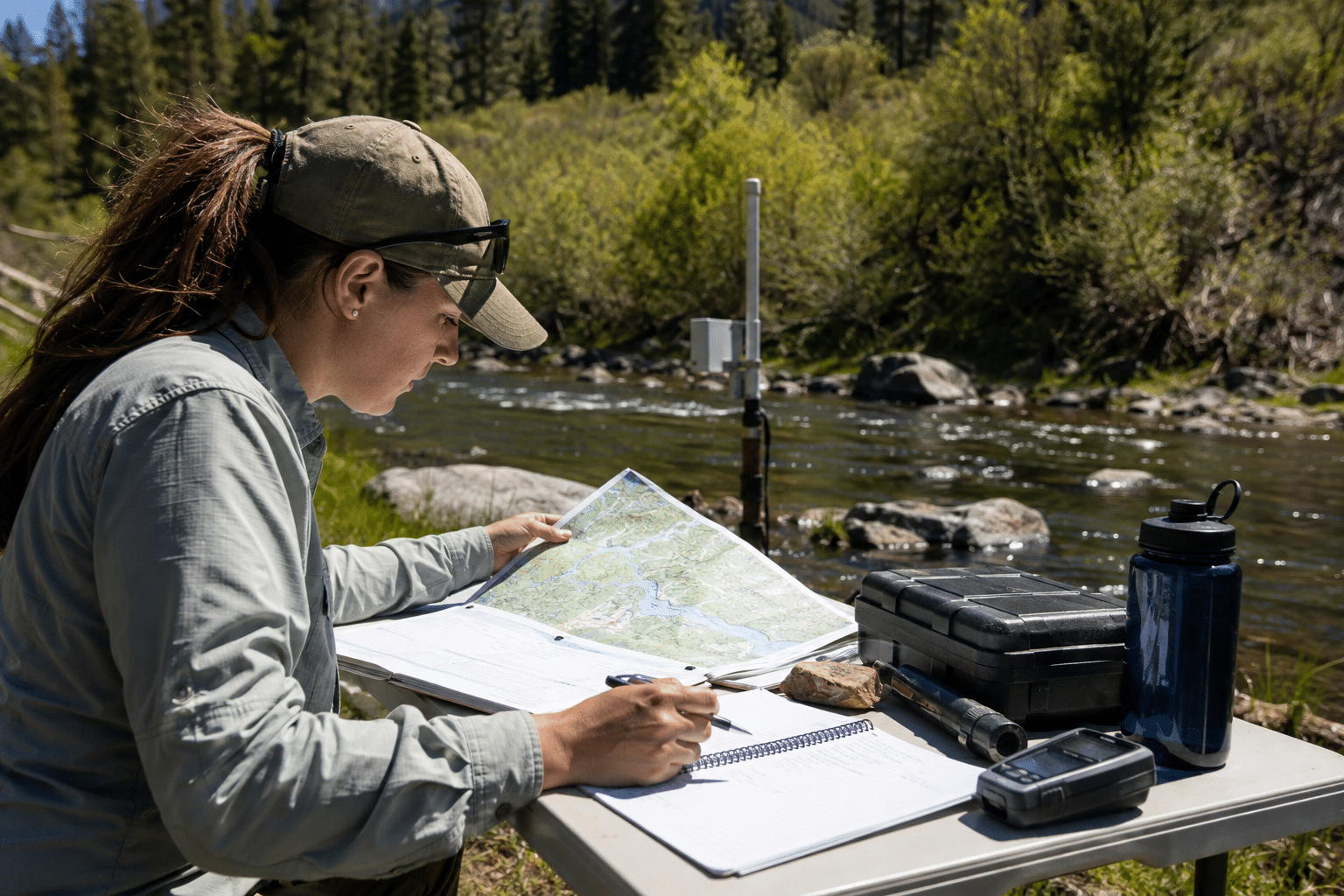
A water resource specialist studies how water is used, moved, protected, and managed. The work may combine field information, technical reports, permits, data analysis, planning, and conversations with utilities, landowners, agencies, or project teams. It is broader than a single field technician role, so the employer’s mission and the balance between office and field work matter when judging the fit.
What does a water resource specialist do?
The title covers several kinds of work. Common duties include:
- Reviewing water-use records, stream data, well information, maps, and permit conditions.
- Helping evaluate water supplies, conservation plans, treatment options, or watershed concerns.
- Preparing technical summaries, spreadsheets, maps, presentations, and recommendations.
- Coordinating sampling, field inspections, contractors, consultants, or public meetings.
- Checking whether projects follow environmental rules and approved water-management plans.
- Explaining technical findings to managers, regulators, clients, or community members.
Some positions are mostly analytical. Others include site visits, sampling, stream observations, or inspections of wells and facilities. Read the employer description closely because specialist can mean a planning role in one organization and a field-heavy technical role in another.
Training and education
Employers may look for a bachelor’s degree in environmental science, hydrology, geology, natural resources, civil engineering, or a related field. Some technician-level or coordinator roles accept an associate degree plus practical experience. Useful courses include water chemistry, statistics, GIS, soil science, ecology, and technical writing.
The U.S. Environmental Protection Agency describes water resource specialist work as including technical studies of water resources, pollutants, and water treatment options. That is a useful reminder that the job is broader than collecting samples. You may need to understand how a finding affects a project, a permit, or a community decision.
GIS, spreadsheet analysis, database work, and clear report writing can make a career changer more competitive. Experience in utility operations, environmental sampling, surveying, construction, agriculture, or compliance can also transfer well.
Pay and job outlook
There is no single BLS wage category for every job called water resource specialist. Pay depends on the employer, degree, technical responsibility, public or private sector, and whether the role requires professional judgment.
For a related benchmark, BLS reported 2025 median pay of $64,790 for hydrologic technicians. That is a technician occupation, not a direct salary promise for specialists. Professional hydrologist roles have different education and qualification expectations, especially in federal employment.
Water work can be sensitive to public budgets, infrastructure investment, drought conditions, and local regulation. Before changing careers, check actual openings in the region where you want to live and note whether employers want field experience, GIS, permitting, or a specific degree.
Could this career fit you after 35?
This path may suit someone who likes practical environmental problems but also wants time for analysis and writing. It can be a good fit if you are comfortable dealing with incomplete information, explaining tradeoffs, and following a project from field evidence to a documented recommendation.
The tradeoffs are straightforward. Some jobs involve public meetings, regulatory deadlines, and disagreements between users. Field assignments can mean heat, mud, long drives, or work near water. Office roles may involve long stretches of reading records and checking data. Ask how the week is divided between field work, analysis, meetings, and paperwork.
How to prepare for the first job
- Search local postings and record the degrees, software, and permits employers mention most often.
- Build basic GIS and spreadsheet skills, then create a small map or water-data project.
- Learn how water-quality, withdrawal, discharge, and conservation rules affect the work in your state.
- Look for environmental technician, utility, watershed, permitting, or project-coordinator roles.
- Practice turning a technical finding into a short memo that a non-specialist can understand.
Related options include hydrology technician, environmental technician, and GIS technician careers.
Turn a broad title into a clear job target
Water resource specialist can describe very different positions. One employer may need a GIS analyst who maps wells and withdrawals. Another may need a coordinator who reviews permits, manages consultants, and speaks at public meetings. A watershed organization may combine grant reporting with field projects. Sort local postings by their main output: analysis, permitting, planning, outreach, or field coordination.
Then identify the evidence each path requires. A map-based role needs a small GIS portfolio with documented data sources. A permitting role benefits from concise technical memos and careful record review. For project coordination, show that you can track deadlines, contractors, budgets, and public questions without losing the technical purpose of the work.
Handle uncertainty in water decisions
Water data rarely arrives as one perfect answer. Records may cover different time periods, wells may be measured under different conditions, and stream observations can change with weather or upstream operations. State assumptions clearly and distinguish measured values from estimates. When information is missing, explain what additional monitoring or review would reduce the uncertainty.
Recommendations also involve tradeoffs. A conservation measure may reduce demand but cost more to administer. A supply project may improve reliability while affecting habitat or neighboring users. A specialist should explain these consequences in plain language without pretending that a technical spreadsheet makes the policy choice.
Test the career with a small public-data project
Choose one local watershed, aquifer, reservoir, or utility issue. Use official public data to create a map, short trend summary, and one-page memo describing what the data can and cannot show. Cite the source, units, and dates. This exercise tests whether you enjoy checking records and explaining uncertainty, and it gives an employer something more useful to discuss than a generic certificate.
Informational interviews are especially useful for this title because job descriptions can be broad. Ask one specialist to walk through a recent project from the initial question to the final decision. Note where time was spent: finding records, checking data, visiting sites, coordinating reviewers, writing, or presenting. Then compare that pattern with your preferred work. Enjoying environmental issues is not enough if you dislike the daily analysis, documentation, or public coordination used to address them.
Check the data trail before you trust the conclusion
Water work often moves between public records, field notes, laboratory results, maps, and older reports prepared for another purpose. Before using any of it, check who collected it, when it was collected, what the units mean, and whether the location matches the question you are trying to answer. A neat spreadsheet can still hide a mismatch.
That habit is a useful career test. If you enjoy following a number back to its source and explaining the limitation without losing the practical point, you are likely to enjoy more of this work than someone who only wants to be outdoors. Pair the exercise with our hydrology technician guide to compare the field-heavy route.
Sources
- U.S. Environmental Protection Agency: Water Resource Specialist
- U.S. Bureau of Labor Statistics: Geological and Hydrologic Technicians
- OPM: Hydrology Series 1315
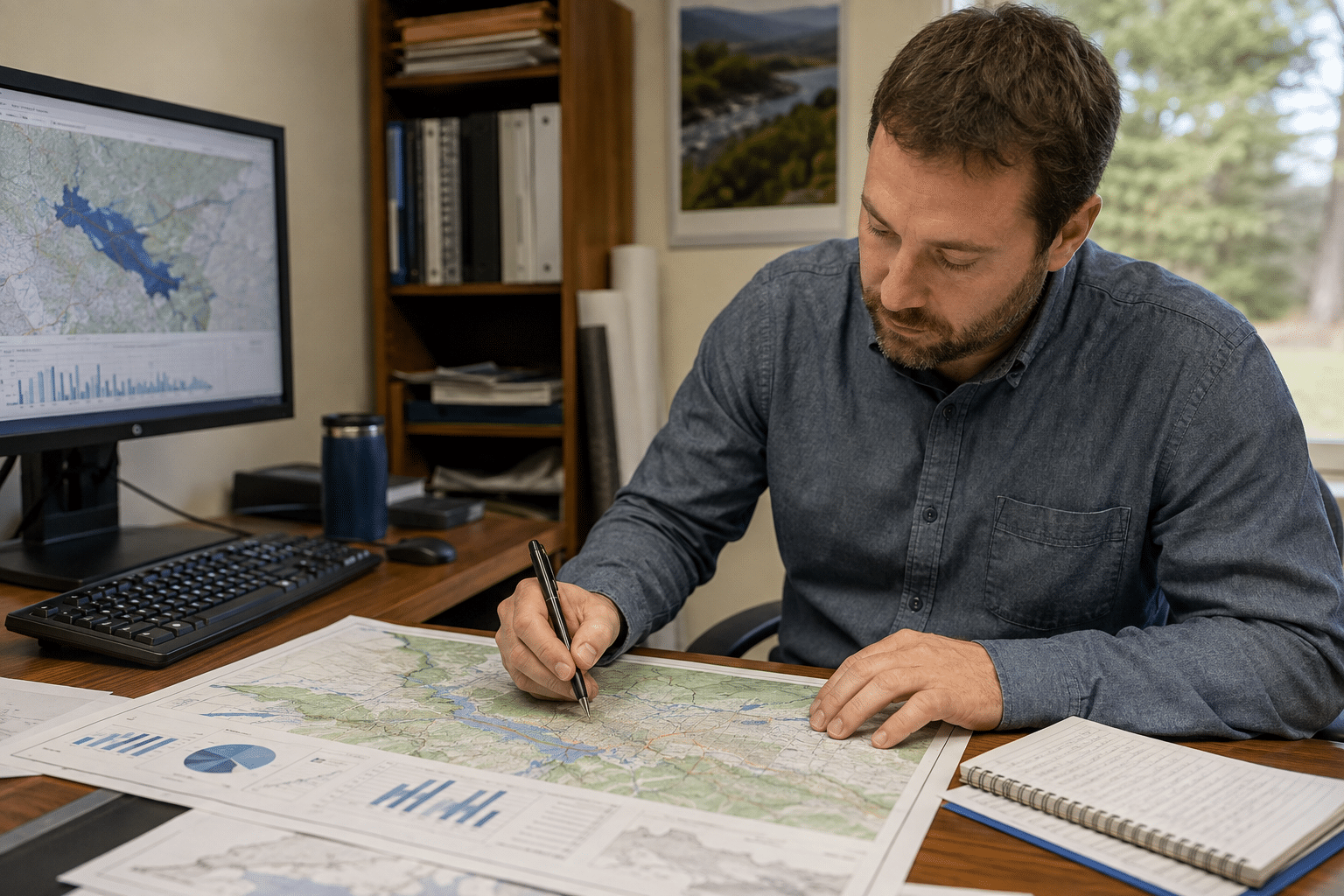
A project may begin with an apparently simple question: A utility or watershed group may need to understand why use changed, whether a supply is reliable, or what a proposed project could affect. The specialist checks the dates, units, source records, assumptions, and limits of the data before turning it into a recommendation. A polished report is not useful if the underlying comparison is wrong.