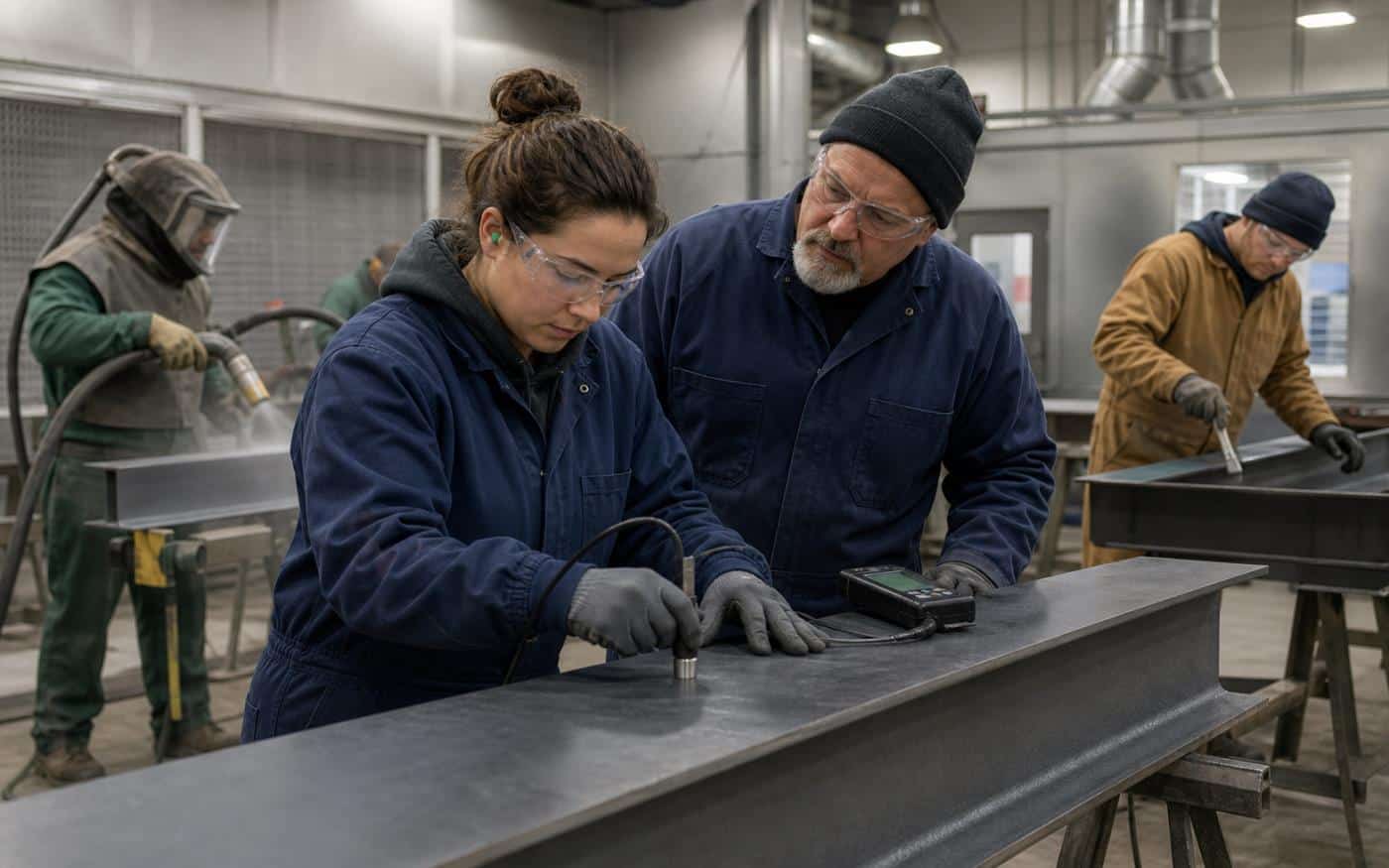
An environmental technician collects, tests, documents, or supports decisions about air, water, soil, waste, and workplace or community conditions. The work may combine field sampling, laboratory preparation, instruments, permits, reports, and communication with clients or agencies. The title is broad, so the sample type, travel, safety training, and level of technical judgment matter.
The title covers more than one kind of job. Some environmental technicians spend most of their time outdoors. Others work in a laboratory. Some help a government agency investigate complaints. Others work for a consulting firm that monitors a construction project or helps a client manage contamination.
That variety is part of the appeal. It is also the main thing to check before enrolling in a program. "Environmental technician" is a useful search term, but it does not tell you whether the job means water sampling, hazardous waste cleanup, air monitoring, habitat surveys, or routine compliance paperwork.
Reliable environmental work begins with a defensible sample: The technician records the location, time, method, container, preservation, and chain of custody, then notes conditions that could affect the result. A clean-looking spreadsheet cannot compensate for a sample that was taken from the wrong place or handled incorrectly.
Environmental technician at a glance
| Question | Short answer |
|---|---|
| Main work | Collect, test, document, and explain environmental data |
| Common samples | Air, soil, surface water, groundwater, wastewater, sediment, and waste materials |
| Common settings | Offices, laboratories, industrial sites, construction projects, public facilities, and outdoor field locations |
| Typical education | An associate degree is common, but requirements range from high school to bachelor’s degree depending on the position |
| Useful subjects | Chemistry, biology, physics, math, statistics, computers, and technical writing |
| Possible credentials | Site-specific safety training, HAZWOPER where applicable, a driver’s license, or an employer’s training |
| BLS benchmark | $55,090 median annual wage in May 2025 for environmental science and protection technicians |
The U.S. Bureau of Labor Statistics groups many of these jobs under environmental science and protection technicians. That category is a better benchmark than a generic salary page, but it still does not describe every job advertised with the environmental technician title.
What does an environmental technician do?
The job depends on the employer and project. A typical assignment may include:
- Read a sampling plan, permit, work order, or project-specific monitoring plan.
- Inspect a site for conditions that may affect health, safety, or environmental quality.
- Set up sensors, pumps, meters, containers, or other monitoring equipment.
- Collect air, soil, water, sediment, or waste samples.
- Label, preserve, package, and track samples so the laboratory can trust their identity and condition.
- Perform field measurements such as temperature, pH, conductivity, dissolved oxygen, flow, or air readings.
- Deliver samples to a laboratory or prepare them for analysis.
- Review laboratory results for obvious errors, missing data, or values that need escalation.
- Prepare tables, charts, field notes, and reports.
- Discuss findings with scientists, engineers, inspectors, clients, contractors, or the public.
BLS lists inspecting places for environmental, health, and safety hazards; maintaining pollution-monitoring equipment; collecting samples; tracking samples in transport; analyzing samples; preparing reports; and verifying compliance with regulations.
The technician often works from a procedure rather than making a final policy decision. A field result may show that a sample needs more analysis. A scientist, engineer, regulator, or project manager may determine the larger response.
What kinds of environmental technician jobs exist?
The title changes meaning across industries. Read the actual duties before comparing two offers.
Environmental field technician
A field technician may travel to industrial facilities, construction sites, landfills, farms, wastewater plants, or contaminated properties. The work can include sampling, inspections, equipment checks, photographs, measurements, and field notes.
Some field jobs are routine. Others involve long drives, early starts, changing weather, rough ground, ladders, or PPE. A listing that says "field technician" may be a good entry route, but ask how much of the day is sampling and how much is hauling equipment or waiting for site access.
Environmental laboratory technician
A lab technician receives and prepares samples, follows analytical procedures, runs instruments, records results, cleans equipment, and helps maintain quality records. The work may be more controlled than field work, but it still requires care.
A lab result is only useful if the sample was collected, preserved, identified, and handled correctly. The technician may spend a surprising amount of time checking labels and chain-of-custody paperwork.
Compliance or inspection technician
Government agencies and private firms use technicians to inspect businesses, facilities, public spaces, and projects for environmental or health concerns. The work can include reviewing permits, documenting conditions, investigating complaints, and writing findings.
Communication matters here. You may have to explain a requirement to an operator, ask for records, or document a condition that a client would rather not discuss. The job is technical, but it also involves judgment and professional boundaries.
Hazardous waste or cleanup technician
Cleanup work can involve contaminated soil, groundwater, drums, industrial sites, or emergency response. It may require specialized training, a site safety plan, respiratory protection, decontamination procedures, and close supervision.
This is not a role to enter on the basis of a generic online certificate. Ask which hazards are present, what training is required before site entry, and whether the employer has a real safety program.
Environmental science technician
Some positions support environmental scientists on habitat surveys, species monitoring, environmental impact studies, construction monitoring, or pollution investigations. The Department of Energy’s career map describes technicians who collect field data, monitor habitats, perform tests, and prepare reports, often under the direction of environmental scientists.
The work may be seasonal or project-based. It may also involve more outdoor travel than someone expects from the general title.
What samples do environmental technicians collect?
The sample type tells you a lot about the job.
Water and wastewater
Water technicians may collect samples from streams, lakes, wells, stormwater systems, industrial discharge points, or treatment facilities. The work can involve a sampling pole, bottles, coolers, meters, pumps, and strict timing.
The wastewater operator guide covers process control inside a treatment plant. An environmental technician may instead collect samples to document the quality of a water body, a discharge, or a cleanup site. The two jobs can overlap, but they are not interchangeable.
Soil and sediment
Soil sampling can support site assessments, construction projects, agricultural work, spill investigations, or cleanup plans. The technician may use hand tools, coring equipment, augers, or sampling systems selected for the project.
Location matters. A clean-looking surface does not prove that deeper soil is clean. Sampling plans specify where and how deep to collect, how to prevent cross-contamination, and how to record the exact location.
Air and emissions
Air monitoring may involve pumps, filters, sensors, meters, or equipment installed near a process. Some jobs focus on workplace exposure. Others monitor emissions, dust, odors, or outdoor air quality.
The equipment can be delicate, and the setup can affect the result. Ask whether you will calibrate instruments, manage flow rates, replace media, interpret readings, or simply carry equipment for another technician.
Waste and unknown materials
Waste sampling and contaminated-site work deserve extra caution. The material may be unknown, corrosive, flammable, biologically hazardous, or toxic. The correct sampling method depends on the project and the safety plan.
Do not open a container or collect an unknown sample because a job listing says "assist with sampling." The employer should explain the training, PPE, supervision, emergency procedures, and limits of your role.
Why sample tracking matters
A sample is not just a bottle of water or a bag of soil. It is evidence tied to a time, place, method, person, and condition.
Environmental technicians may record:
- Sample identification and location
- Date and time of collection
- Material or medium sampled
- Preservative and container type
- Field measurements
- Weather or site conditions
- Person who collected the sample
- Transfer to the courier or laboratory
- Arrival condition and any problem with the sample
This chain of custody protects the meaning of the result. A sample with the wrong label, missing preservation, a broken seal, or an unexplained delay may need to be rejected or qualified.
The paperwork is not filler. If the sample cannot be tied to the correct site and procedure, a precise laboratory number may still answer the wrong question.
Environmental technician vs. related jobs
Several careers sit close to environmental technician work.
| Role | Main focus | How it differs |
|---|---|---|
| Environmental technician | Collecting, testing, and documenting environmental conditions | Works with field data, samples, monitoring equipment, and compliance procedures |
| Wastewater operator | Running a treatment process | Controls pumps, tanks, chemicals, and plant operations under water-quality rules |
| Environmental scientist | Interpreting environmental problems and designing investigations | Usually has broader scientific responsibility and often a bachelor’s degree or higher |
| Environmental engineering technician | Supporting plans and systems designed by environmental engineers | May focus on treatment systems, construction, remediation, or engineering measurements |
| Lab technician | Testing samples or materials in a laboratory | May work on environmental samples but can also serve healthcare, manufacturing, or research |
| NDT technician | Finding flaws in materials without damaging them | Uses inspection methods such as ultrasonic or radiographic testing |
| Calibration technician | Checking measurement devices against references | Focuses on the accuracy and records of the instrument itself |
Our guides to NDT technician work and calibration technician work cover two related technical paths. Both rely on careful measurement, but neither is a substitute for environmental sampling or compliance training.
How to become an environmental technician
BLS says environmental science and protection technicians typically need an associate degree, although some jobs require only a high school diploma and others require a bachelor’s degree. The Department of Energy also notes that requirements vary by task, employer, and industry.
Route 1: Earn an associate degree
Programs in environmental science, environmental health, public health, biology, chemistry, or a related field can provide a useful base. Look for courses with laboratory work, field methods, data handling, and technical writing.
Chemistry and biology matter, but so do math, statistics, and computer skills. Environmental work produces tables, maps, sample logs, and reports. A person who can collect a good sample but cannot document it clearly will struggle.
Route 2: Start as a field or laboratory assistant
Some employers train new technicians on the job. Search for environmental field technician, sampling technician, laboratory assistant, water quality technician, environmental services technician, or compliance assistant.
Ask what you will do during the first few months. A supervised entry role can teach you the practical details that a classroom misses: how to avoid contaminating a sample, how to handle a cooler, how to document a site, and what to do when the plan does not fit the conditions on the ground.
Route 3: Transfer from a related technical field
Experience in wastewater, laboratory work, construction inspection, surveying, agriculture, industrial maintenance, safety, or quality control can help. A calibration technician may already understand instruments and records. A maintenance worker may be comfortable around plants and equipment.
The transfer is not automatic. You still need to learn sampling methods, environmental regulations, report requirements, and the hazards of the specific site.
Route 4: Build a specialty
After the first job, you may move toward water quality, air monitoring, hazardous waste, stormwater, remediation, wetlands, construction compliance, or laboratory analysis. The best specialty depends on local employers and your tolerance for travel, weather, paperwork, and hazardous materials.
Do not choose a specialty only because the title sounds advanced. Ask which tasks you will perform each week and which skills the next promotion requires.
Do you need HAZWOPER training?
Not every environmental technician needs the same HAZWOPER training. It depends on the work, site, exposure potential, and responsibilities covered by OSHA’s hazardous-waste standard.
For example, OSHA’s standard includes different initial-training requirements for general site workers, workers who visit occasionally for limited tasks, and workers in characterized areas with lower exposure potential. General site workers engaged in hazardous substance removal may need 40 hours of off-site instruction and three days of supervised field experience. Certain limited-task workers may fall under a 24-hour and one-day path.
Those numbers are not a universal shortcut. The employer must determine which part of the standard applies and provide site-specific training before entry where required. Ask the employer:
- Is this a hazardous waste operation or a routine environmental monitoring job?
- Which OSHA training section applies to this position?
- Will I wear a respirator or work in a contaminated area?
- What site-specific training happens before my first field day?
- Who is the trained supervisor?
- How are decontamination and emergencies handled?
A certificate sold online without a clear connection to the job may not satisfy the employer or the site.
What skills matter most?
Environmental technicians need more than an interest in nature. The work combines science, field habits, equipment, and communication.
Useful skills include:
- Following a sampling plan without improvising the method
- Working cleanly enough to avoid contaminating samples
- Reading a map, site plan, permit, or field procedure
- Taking clear notes and photographs
- Handling coolers, containers, pumps, meters, and basic test equipment
- Tracking samples and preserving their identity
- Recognizing when a condition is unsafe or outside the plan
- Using spreadsheets, databases, GPS tools, or specialized software
- Writing a short report that another person can follow
- Speaking professionally with clients, contractors, property owners, and regulators
BLS emphasizes analytical ability, attention to detail, communication, teamwork, and problem-solving. Those qualities show up in small moments. Did you record the time before moving the sample? Did you notice that the label does not match the site? Did you ask before entering the restricted area?
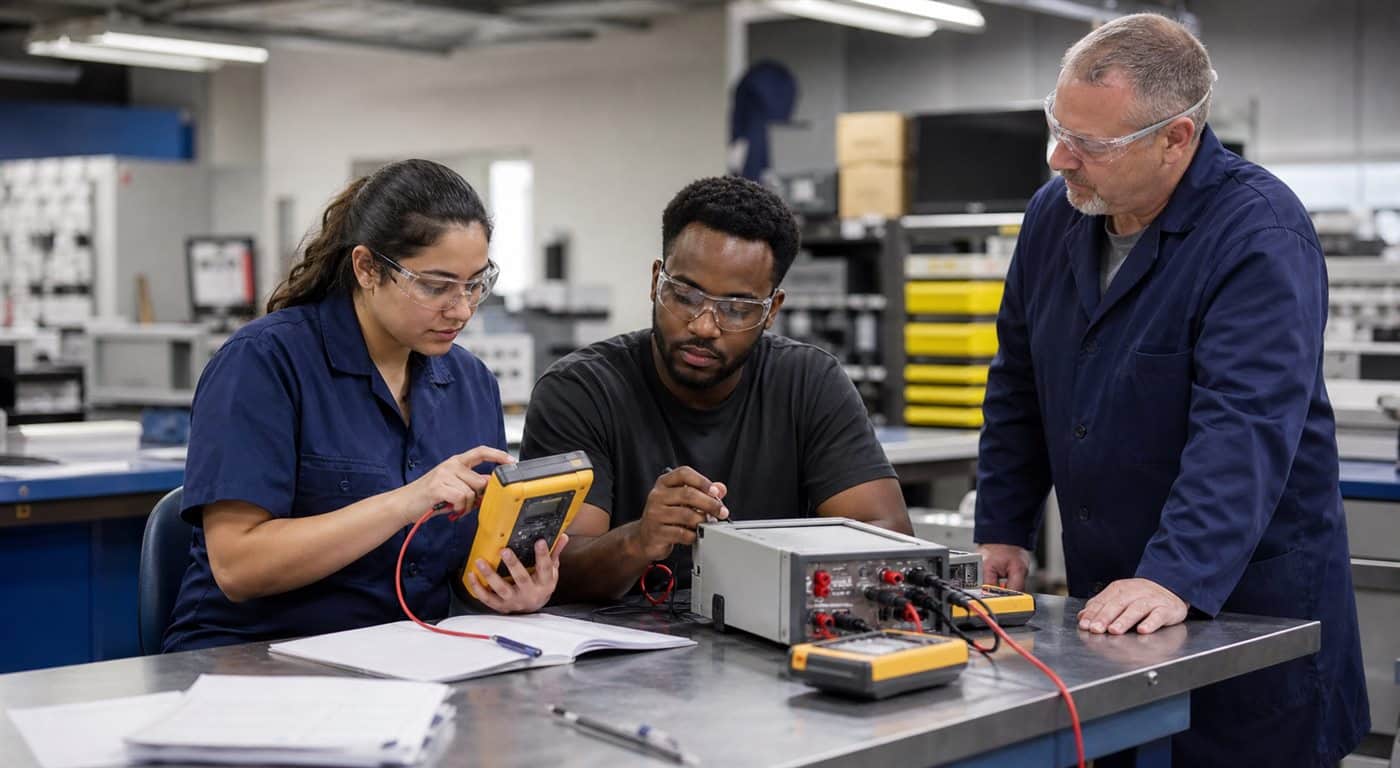
Where do environmental technicians work?
BLS reports about 36,400 environmental science and protection technician jobs in 2025. The largest employer groups included local government, management and scientific consulting services, testing laboratories, engineering services, and state government.
| Employer or setting | Possible work |
|---|---|
| Local or state government | Inspections, complaints, permits, public-health or environmental monitoring |
| Consulting firm | Sampling, site assessments, construction monitoring, reports, and client support |
| Testing laboratory | Sample preparation, analysis, quality records, and results reporting |
| Engineering services | Field data for design, remediation, construction, or environmental studies |
| Industrial employer | Compliance sampling, emissions monitoring, waste management, and site records |
| Construction or energy project | Monitoring plans, habitat or water surveys, and permit compliance |
BLS says technicians typically work in offices, laboratories, and the field. Fieldwork may involve industrial sites or outdoor conditions. Some technicians travel to clients or work nonstandard hours.
Ask whether the job is year-round, seasonal, local, regional, or rotational. A role can be a good match for someone who wants outdoor work and a poor match for someone who needs predictable hours close to home.
How much does an environmental technician make?
The best national benchmark for many environmental technician jobs is the BLS occupation environmental science and protection technicians. BLS reports a $55,090 median annual wage in May 2025. The lowest 10 percent earned less than $38,170, and the highest 10 percent earned more than $94,160.
BLS also reports the following medians by major industry:
| Industry | May 2025 median wage |
|---|---|
| Local government, excluding education and hospitals | $64,070 |
| State government, excluding education and hospitals | $56,410 |
| Engineering services | $52,150 |
| Management, scientific, and technical consulting services | $51,460 |
| Testing laboratories and services | $48,440 |
These figures are not a guaranteed starting salary for every job using the environmental technician title. They also do not capture every overtime, travel, per diem, seasonal, or project arrangement.
BLS projects 7% employment growth from 2025 to 2035 and about 5,300 openings per year for environmental science and protection technicians. Many projected openings are replacement needs rather than entirely new jobs.
When comparing offers, ask about travel time, mileage, overtime, seasonal layoffs, benefits, PPE, training costs, and whether field days start before dawn. A salary number without the schedule can be misleading.
Is environmental technician work physically demanding?
Fieldwork can be physically demanding. You may spend much of the day standing, walking over uneven ground, carrying equipment, opening access points, working near water, or wearing protective gear.
Laboratory and office work may be easier on the legs but still require concentration, repetitive handling, and careful posture. Some jobs involve lifting coolers, pumps, soil equipment, or sampling cases. Others require driving long distances and then working outdoors.
BLS specifically notes that field technicians may face adverse weather, spend long periods on their feet, carry heavy equipment, and wear hardhats or masks. Ask for a realistic description of the heaviest item, the longest field day, and the percentage of time outside.
Is environmental technician work dangerous?
The risk depends on the site and the task. A stream sample in a public park is not the same assignment as a groundwater sample at a former industrial facility.
Possible hazards include:
- Traffic and moving equipment
- Slips, trips, uneven ground, and remote locations
- Heat, cold, rain, or severe weather
- Chemicals, contaminated soil, waste, or unknown materials
- Confined spaces or restricted areas
- Electrical, mechanical, or construction hazards
- Wildlife, insects, and water-related hazards
Training and PPE reduce risk, but they do not replace a site safety plan or supervision. If an employer cannot explain the hazards, controls, emergency contacts, and limits of your role, keep asking questions before accepting the work.
OSHA’s HAZWOPER standard requires training and supervised field experience for covered hazardous-waste work. It also requires site-specific practices and additional controls in situations where workers may be exposed to hazardous substances. The exact requirements depend on the operation.
Is environmental technician work a good career change after 40?
It can be a good fit for someone who wants technical work connected to the physical world and does not mind a mixture of field days, paperwork, and careful procedures.
The transition may be easier if you already have experience with construction, water systems, laboratory work, safety, quality, agriculture, equipment, or public service. You may understand job sites and documentation faster than someone starting from zero.
The work may be frustrating if you dislike driving, wet boots, early starts, sample labels, or rules that leave little room for improvisation. Some projects are quiet and repetitive. Others change by the hour because the weather, site access, or sample plan changed.
Ask yourself:
- Do I want mostly fieldwork, lab work, office work, or a mixture?
- Can I carry equipment and work outdoors when conditions are uncomfortable?
- Am I willing to write down details that seem minor at the time?
- Can I follow a safety rule even when a supervisor is in a hurry?
- Am I comfortable discussing findings with clients or the public?
- Do I want a science-support role rather than an independent scientist role?
Our career change after 40 roadmap can help you compare training time, income timing, and local job availability.
How to compare environmental technician programs
Before paying for a program, look at the practical content:
- Does it include chemistry, biology, environmental sampling, and laboratory work?
- Do students collect and preserve real or realistic samples?
- Does the program teach chain of custody and field documentation?
- Is there training with meters, pumps, sensors, GPS, or sampling equipment?
- Does it explain hazardous-site work without treating HAZWOPER as a generic career badge?
- Are internships or employer connections available?
- Which job titles do graduates apply for?
- Are transportation, boots, PPE, lab fees, and field trips included?
- Does the program prepare you for an associate-level role or a bachelor’s-level role?
An online course may be useful for terminology and theory. It cannot replace field practice when the target job requires sampling, site access, equipment setup, or supervised hazardous work.
How to read an environmental technician job posting
Look for the actual material and setting:
- Water, soil, air, wastewater, stormwater, waste, or habitat
- Laboratory, industrial site, construction site, government office, or outdoor fieldwork
- Sample collection, chain of custody, testing, reporting, inspection, or cleanup
- Travel radius, overnight work, seasonal schedule, or emergency response
- Required education, driver’s license, PPE, HAZWOPER, or technical experience
- Supervision by an environmental scientist, project manager, engineer, or senior technician
A good interview question is: "What percentage of the week is sampling, driving, laboratory work, reporting, and waiting for site access?" Another is: "What training must be completed before I handle samples or enter a hazardous area?"
The answers will tell you more than the job title.
Bottom line
Environmental technicians turn field conditions and samples into information that scientists, regulators, engineers, businesses, and communities can use. The work can be outdoors, in a lab, at a computer, or all three in the same week.
BLS reports a $55,090 median wage in May 2025, 7% projected growth from 2025 to 2035, and about 5,300 openings per year for environmental science and protection technicians. Those figures are a national benchmark, not a promise for every environmental technician job.
Start by choosing the kind of work you want: water, soil, air, laboratory, compliance, habitat, or cleanup. Then compare local job postings and training programs against that target. The right first step is the one that gives you supervised practice, documented experience, and a clear answer about the hazards you will actually face.
Sources
- U.S. Bureau of Labor Statistics: Environmental Science and Protection Technicians
- U.S. Department of Energy: Career Map, Environmental Science Technician
- OSHA: Hazardous Waste Operations and Emergency Response
\n
Reviewed September 3, 2026: Environmental technician duties can lean toward field sampling, laboratory work, compliance records, or site safety. Ask which setting the job actually uses and compare it with industrial hygiene work.
\n