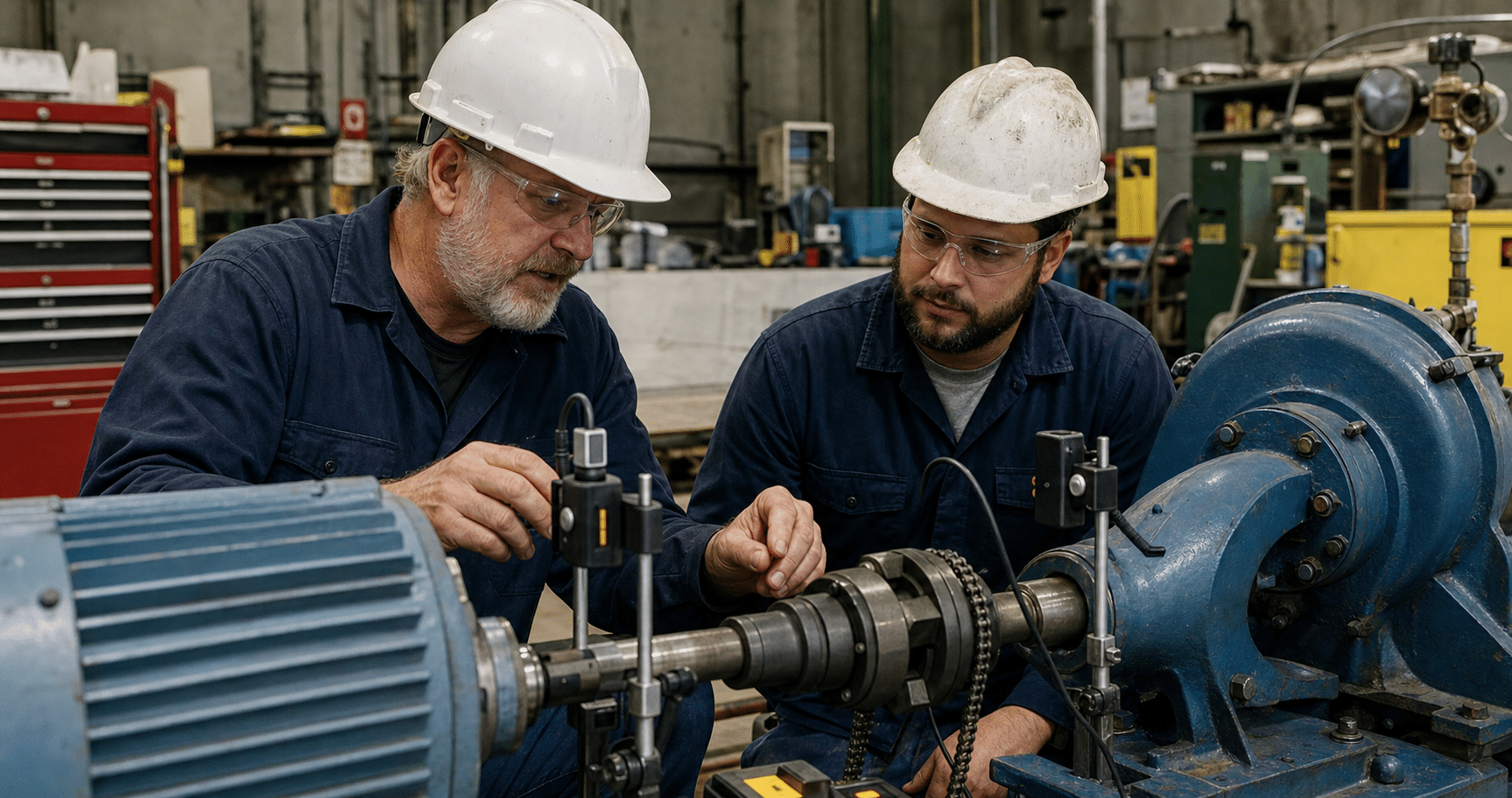
A process technician monitors and supports the process that turns materials into a product. The work may include equipment checks, samples, settings, control screens, troubleshooting, records, and coordination with maintenance or engineering. Because the title appears in many industries, the process, shift pattern, hazards, and decisions within the role should be confirmed from the job posting.
The title is broad. A process technician in a refinery may work around distillation and high-pressure systems. Someone in a pharmaceutical plant may focus on clean-room procedures and batch records. A technician in semiconductor manufacturing may work with controlled environments and specialized equipment. Read the job description carefully before comparing the role with process operator, chemical technician, instrumentation technician, or maintenance technician.
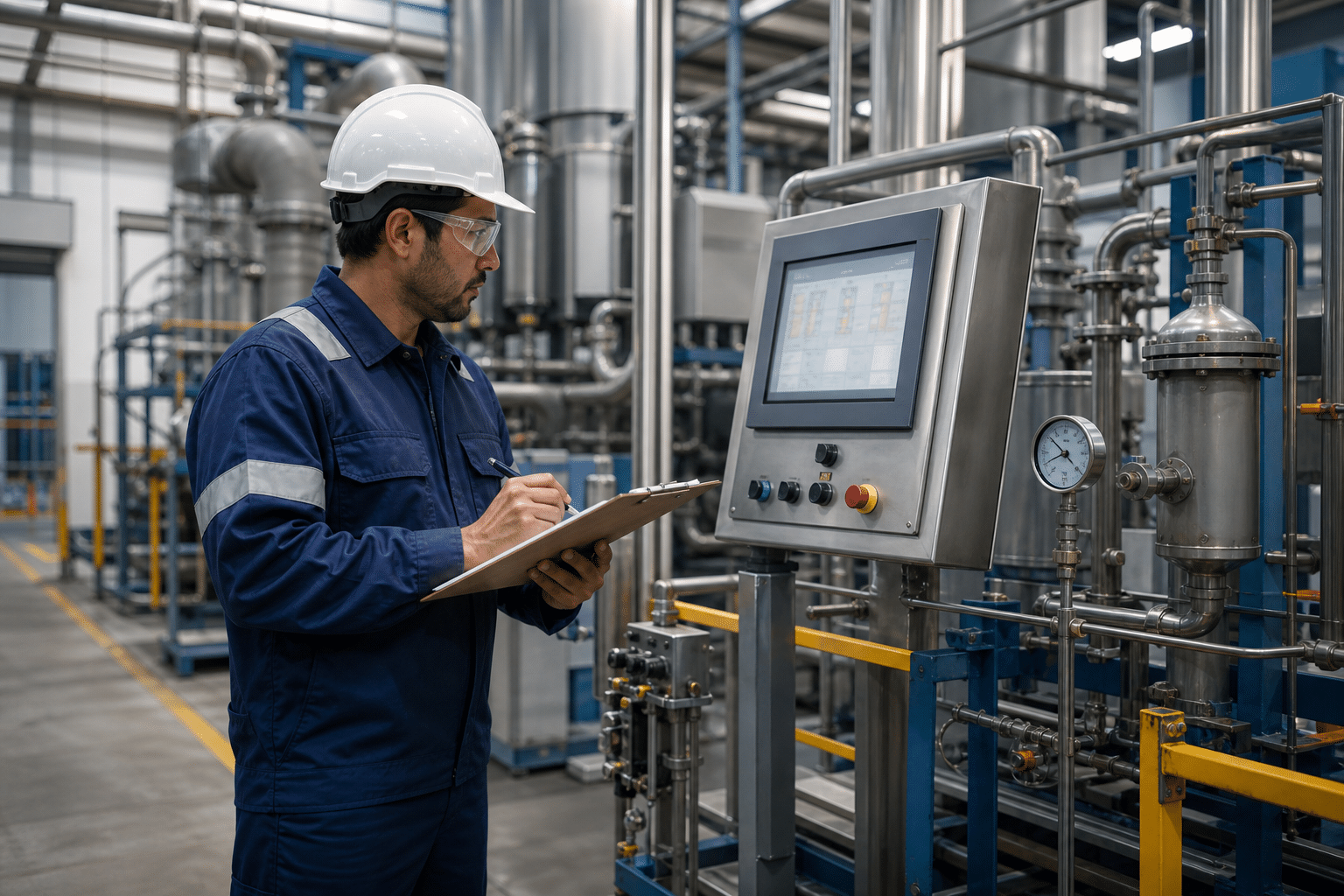
A process change needs a baseline: Before adjusting a temperature, speed, flow, or feed rate, the technician checks the current reading, recent trend, material condition, and approved limits. A small improvement that creates a defect or equipment problem is not an improvement, so the result needs to be measured and recorded.
What does a process technician do?
Process technicians help keep a production system within its operating and quality limits. The work usually combines computer-based monitoring with hands-on checks, although the balance changes by industry.
Common duties include:
- monitoring gauges, control screens, alarms, and production data;
- making field rounds to look for leaks, unusual noise, vibration, temperature, or pressure;
- starting, stopping, or adjusting equipment under written procedures;
- collecting samples for quality or laboratory testing;
- checking that raw materials, batches, or finished products meet specifications;
- recording readings, work orders, deviations, and shift handoffs;
- performing routine cleaning, setup, or minor adjustments when authorized;
- escalating unsafe conditions or equipment faults to a supervisor, engineer, or maintenance team.
The American Fuel & Petrochemical Manufacturers describes process technicians in refinery and petrochemical settings as people who help operate processes safely and reliably. The BLS description of chemical technicians also includes monitoring processes, testing product quality, maintaining production equipment, and troubleshooting problems. Those sources point to an important distinction: the title can include both production operations and technical quality work.
The job changes by industry
Process technology is easier to understand when you picture the plant rather than the title.
| Setting | Work may include | What to ask about |
|---|---|---|
| Chemical or petrochemical plant | Control-room monitoring, field rounds, samples, valves, pumps, and operating procedures | Chemical exposure, rotating shifts, emergency response |
| Pharmaceutical manufacturing | Batch records, clean-room procedures, equipment setup, sampling, and deviation reporting | Clean-room rules, gowning, documentation, schedule |
| Food and beverage production | Production-line checks, sanitation, temperature control, quality samples, and troubleshooting | Sanitation work, standing time, seasonal production |
| Semiconductor or advanced manufacturing | Controlled-environment production, equipment monitoring, process data, and strict contamination controls | Clean-room clothing, repetitive tasks, shift pattern |
| Utilities or water operations | Pumps, tanks, flow, chemical dosing, samples, and alarms | State certification, outdoor work, emergency callouts |
This range is why two process technician job postings can ask for different education and pay. One may be close to a process operator. Another may be closer to a laboratory or manufacturing technician.
Process technician versus related jobs
Titles overlap, but the center of gravity is different.
| Job title | Main focus | Typical boundary |
|---|---|---|
| Process technician | Monitor and support a production process, with field checks, data, samples, and troubleshooting | Works within plant procedures and escalates engineering changes |
| Process operator | Operate equipment and control a process through rounds, panels, and written procedures | May have more direct responsibility for operating conditions |
| Chemical technician | Test materials and products, operate lab instruments, and report results | Often spends more time in a lab or quality setting |
| Instrumentation technician | Calibrate sensors, signals, valves, and control devices | Focuses on measurement and control hardware |
| Industrial maintenance technician | Repair and maintain machinery, motors, and mechanical systems | Focuses on equipment condition rather than production decisions |
The boundaries depend on the plant. A process technician may do some maintenance, while a process operator may collect samples or troubleshoot an instrument. Ask what percentage of the week is control-room work, field work, lab work, cleaning, setup, and maintenance.
For a closer look at neighboring routes, see our guides to instrumentation technician work, industrial maintenance, industrial electrician work, and wastewater operations.
What skills do process technicians need?
Attention to readings and changes
Small changes can matter in a plant. A rising temperature, unexpected pressure difference, unusual vibration, or quality result may be the first sign of a problem. The job rewards people who notice patterns and report them clearly.
Basic math and technical literacy
You may convert units, read trends, compare measurements with limits, or follow a batch or operating instruction. You do not need to be a chemical engineer, but you do need to be comfortable with numbers and written procedures.
Mechanical and computer skills
Many roles use control systems, computerized maintenance systems, laboratory instruments, pumps, valves, motors, or production equipment. A person who can move between a screen and a piece of equipment has an advantage.
Documentation and handoff communication
Shift work makes written records important. The next operator needs to know what changed, what was checked, what remains open, and who was notified. Vague notes create work for someone else and can hide a developing issue.
Patience under procedure
Industrial work is not a place to improvise around a safety step because production is behind. Good technicians know when to stop, isolate the problem, and ask for help.
How do you become a process technician?
There is no single national route. Employers commonly ask for a high school diploma, technical certificate, associate degree, or relevant experience. The right route depends on the industry and whether the position is mainly plant operations, laboratory testing, or equipment support.
Common entry routes include:
- A two-year process technology or industrial technology program.
- A certificate in chemical process technology, manufacturing, instrumentation, or a related field.
- An entry-level production, operator trainee, or manufacturing technician role.
- Experience in maintenance, instrumentation, electrical work, laboratory work, or military operations.
- Employer training after hiring, followed by supervised qualification on the site’s equipment.
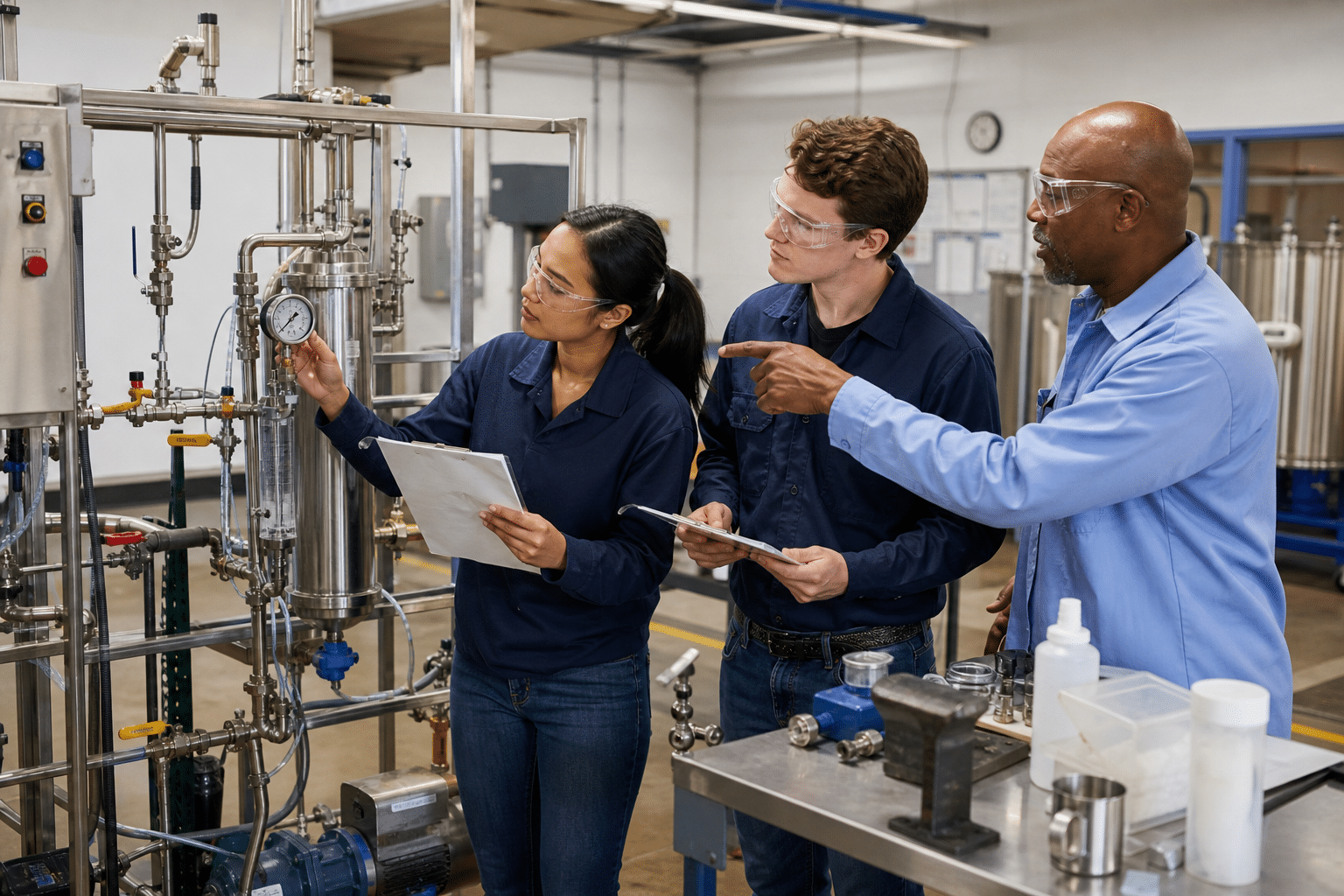
Before enrolling, compare the curriculum with local job postings. Look for process controls, industrial safety, measurement, technical drawings, equipment, quality systems, and hands-on lab time. A program that only promises a fast certificate may leave you without experience on the equipment employers actually use.
Some jobs require more than a classroom credential. A chemical plant may qualify employees on specific units and procedures. A pharmaceutical employer may train workers in good manufacturing practices. A utility or water employer may require state credentials. Treat the school certificate, employer qualification, and government license as separate things.
Pay: which benchmark applies?
There is no single BLS occupation called process technician that covers every employer using the title. That makes a precise national salary claim misleading. Use the benchmark that matches the actual work.
| Related official BLS benchmark, May 2025 | Median annual wage | Best use of the benchmark |
|---|---|---|
| Chemical technicians | $60,390 | Lab, quality, materials, and manufacturing technician duties |
| Chemical plant and system operators | $78,120 | Direct control or operation of an entire chemical process or system |
| Plant and system operators, all other | $62,470 | Plant operations that do not fit a more specific BLS category |
The BLS data show why job duties matter. A process technician in a control room may belong closer to an operator category, while a quality or manufacturing technician may fit chemical technicians. These figures are context, not a guaranteed offer for a job with the title process technician.
Pay also changes with shift premiums, overtime, industry, location, union coverage, hazardous-environment requirements, clean-room work, and the amount of responsibility assigned after qualification. Ask whether a posted annual number includes overtime or shift differential. A higher total may come with nights, weekends, callouts, or a long commute.
Safety and working conditions
Process technicians may work on a plant floor, in a control room, in a laboratory, or outdoors between units. The setting can involve noise, heat, pressure, rotating equipment, chemicals, dust, fumes, confined spaces, and strict clothing requirements.
OSHA’s Hazard Communication Standard covers information and training about hazardous chemicals, including labels and safety data sheets. In a chemical or manufacturing environment, you should know how the employer communicates hazards, where the SDS information is available, and what personal protective equipment the task requires.
Lockout/tagout may apply when equipment is serviced or maintained and unexpected startup or stored energy could cause injury. Process technicians should not assume that a control-screen command makes equipment safe. The site procedure, authorized roles, isolation points, and verification steps control the work.
Ask an employer:
- Is the work mostly control-room, field, laboratory, or production-line work?
- Which chemicals, temperatures, pressures, or biological hazards are present?
- Are shifts eight hours, twelve hours, rotating, or fixed?
- What training is required before an employee operates equipment independently?
- How do production, maintenance, engineering, and safety teams divide responsibility?
Is process technology a good second career after 40?
It can be a sensible route for someone who likes systems, equipment, measurement, and structured problem-solving. Prior experience in maintenance, electrical work, HVAC, manufacturing, laboratory work, military operations, or quality control can transfer well.
The schedule may be the bigger adjustment. Many plants operate continuously, so nights, weekends, holidays, or rotating shifts may be part of the job. A role with a good wage can still be a poor fit if the schedule conflicts with family responsibilities or makes recovery difficult.
The work is usually active, but it is not identical to construction. You may stand or walk for long periods, climb stairs, wear protective clothing, handle samples, and work around equipment. Some roles involve repetitive monitoring; others involve more urgent field response. Read the job posting and ask to see the actual work area when possible.
Use our career-change roadmap after 40 to compare the income gap, training time, commute, schedule, and first-year costs before leaving your current job.
Questions to ask before applying
- Which BLS occupation or internal pay grade does the employer use for this role?
- Is the job closer to process operator, chemical technician, or maintenance technician?
- How much time is spent in the control room, field, lab, and production area?
- What does a new hire learn during the first 90 days?
- Are there shift premiums, overtime rules, union benefits, or callout requirements?
- Which license, certificate, or site qualification is actually required?
- What does advancement look like after qualification: technician level, lead, operator, quality, maintenance, or engineering support?
Bottom line
Process technician is a useful career label, but it is not a precise occupation by itself. The job may involve control-room monitoring, field rounds, sampling, quality work, production support, or equipment troubleshooting. Industry and employer matter.
Training can come from a process technology program, a related technical certificate, an entry-level plant role, or transferable experience. Salary research needs the same caution. BLS benchmarks range from $60,390 for chemical technicians to $78,120 for chemical plant and system operators in May 2025, but neither number is automatically the pay for every process technician.
For a career changer after 40, compare the actual work area, shift pattern, hazards, training plan, and first-year cash flow. If you like following a process closely and finding small problems before they become larger ones, process technology may be worth a closer look.
Sources
- BLS: Chemical Technicians
- BLS: Data for Occupations Not Covered in Detail
- American Fuel & Petrochemical Manufacturers: Process Technician
- OSHA: Hazard Communication Standard
- OSHA: Control of Hazardous Energy
\n
Reviewed September 3, 2026: Process technician work varies by plant and may combine equipment checks, samples, control screens, procedures, and shift coverage. Compare the local process with chemical plant operations before choosing training.
\n