
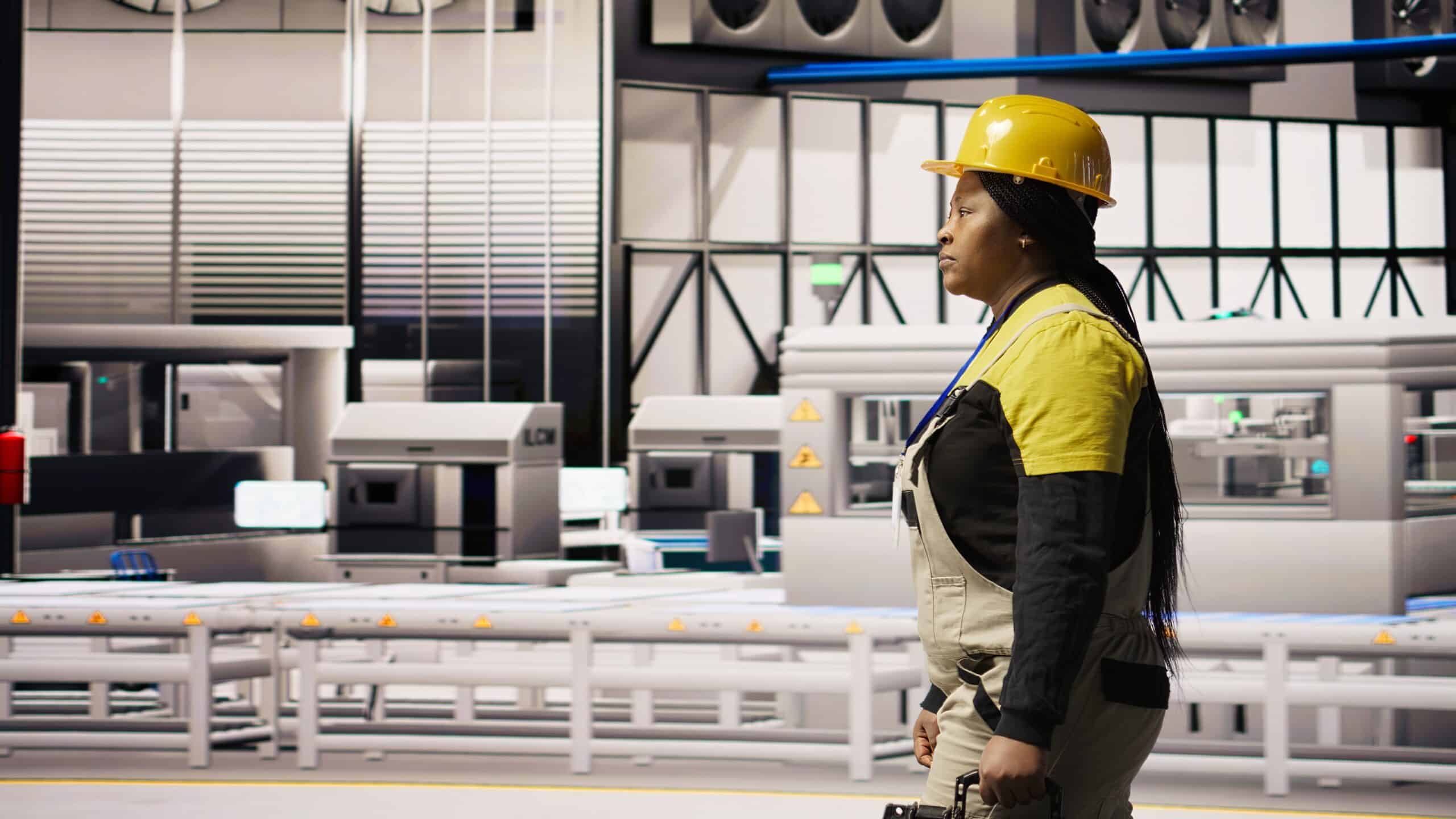
An industrial maintenance technician keeps production equipment running by inspecting machines, finding faults, replacing worn parts, and checking that repairs worked. The job may combine mechanical systems, motors, sensors, controls, hydraulics, documentation, and safety procedures. Employers use the title broadly, so the equipment and shift pattern in the posting deserve close attention.
For a career changer, the most important question is not whether you can learn every machine in advance. It is whether you can accept the workplace: a factory, warehouse, processing plant, or other industrial site; a mix of planned maintenance and urgent breakdowns; and, in some employers, nights, weekends, on-call work, noise, and protective equipment.
A breakdown call starts with control: The technician verifies the machine state, follows lockout procedures, checks the symptoms, and works from the likely failure point instead of replacing parts at random. The repair is not finished until the machine runs safely and the cause is recorded for the next shift.
Industrial maintenance technician at a glance
| Question | Practical answer |
|---|---|
| Main purpose | Keep production equipment safe, reliable, and available |
| Common work | Inspect, lubricate, align, diagnose, repair, test, and document |
| Equipment | Conveyors, motors, pumps, packaging equipment, robotics, hydraulics, and plant systems |
| Typical entry point | High school diploma or equivalent plus employer training, technical education, or apprenticeship |
| License | Usually no single national license; employer, state, and equipment requirements vary |
| Work pattern | Often full time; shifts, overtime, weekends, or on-call work may apply |
| Best early proof | A safe troubleshooting process, reliable attendance, and evidence that you can learn equipment |
What does an industrial maintenance technician do?
The title can cover several levels of responsibility. A maintenance worker may handle routine inspections and basic repairs. An industrial machinery mechanic may diagnose faults, replace components, adjust equipment, and verify the repair. A millwright may install, move, dismantle, and rebuild large machinery. Employers do not always use these titles consistently, so read the duties rather than relying on the title alone.
On a normal day, the work may include:
- inspecting equipment before a small problem becomes a shutdown;
- cleaning, lubricating, tightening, aligning, or calibrating parts;
- reading manuals, diagrams, work orders, and maintenance histories;
- tracing a fault through mechanical, electrical, pneumatic, or hydraulic components;
- replacing belts, bearings, sensors, motors, valves, or other failed parts;
- testing the machine after a repair and communicating what changed; and
- recording the work in a maintenance system or written log.
The U.S. Bureau of Labor Statistics describes the broader occupation as installing, maintaining, and repairing factory equipment and industrial machinery. Its examples include conveying systems, production machinery, packaging equipment, robotic welding arms, and hydraulic lifts. The actual mix depends on the plant: food processing, automotive, plastics, distribution, energy, and other industries use different equipment and terminology.
The job is usually a troubleshooting loop. You notice a symptom, make the equipment safe, gather information, test the most likely causes, repair or escalate the problem, and confirm that the machine works under normal conditions. Guessing and replacing parts until the problem disappears is expensive in a production environment. A good technician learns to slow down long enough to diagnose.
Skills that matter most
You do not need to arrive knowing every motor, PLC, pump, or conveyor system. You do need a useful base and the willingness to build on it.
Mechanical reasoning
You should be comfortable asking how parts move together and what could create friction, vibration, heat, leakage, or misalignment. Basic measurement, hand tools, fasteners, bearings, belts, lubrication, and alignment become more valuable when you understand the reason behind each task.
Electrical and controls awareness
Many industrial systems combine mechanical equipment with motors, sensors, switches, variable-frequency drives, and programmable controls. An entry-level employee may not be authorized to repair every electrical component, but should learn to read simple diagrams, identify a sensor or disconnect, and work within the employer’s boundaries.
Troubleshooting discipline
A reliable process matters more than sounding confident. Start with the symptom and the machine history. Separate what you know from what you suspect. Test safely, change one thing at a time when possible, and document the result. These habits transfer well from automotive, facilities, appliance, farm, construction, or equipment work.
Safety judgment
Maintenance can expose workers to moving parts, stored pressure, electricity, heat, chemicals, elevated work, and unexpected startup. OSHA’s lockout/tagout rules address hazardous energy during servicing and maintenance. In practical terms, a new technician must learn the employer’s energy-control procedure, machine-guarding rules, required protective equipment, and stop-work expectations before working independently.
This is not a credential to improvise. Ask how a prospective employer trains new hires on hazardous energy, who may remove guards, and how work is handed off across shifts.
Communication and documentation
Maintenance is often shared work. The next shift needs to know what failed, what was replaced, what remains uncertain, and whether the equipment is operating normally. Clear notes and calm communication protect people and reduce repeat failures.
How to enter industrial maintenance
There is no single route that fits every employer. Compare the following paths against the equipment and job titles available near you.
1. Start as a maintenance helper or trainee
This can be the fastest way to test the job before committing to a long program. Search for maintenance helper, machine operator with maintenance duties, facilities maintenance trainee, production technician, or entry-level industrial mechanic roles. Look for a real training plan rather than a job that simply labels an inexperienced worker “maintenance” and expects immediate independence.
Ask during the interview:
- Which machines will I learn first?
- Who signs off on training and safety procedures?
- What shifts and overtime are normal?
- Which tools or certifications must I provide?
- What would success look like after 30, 60, and 90 days?
2. Attend a technical or community-college program
An industrial maintenance, mechatronics, electromechanical, or maintenance technology program can give you structured practice before you enter a plant. Look for hands-on labs and courses that match local jobs: industrial electricity, motors, hydraulics, pneumatics, welding, blueprint or schematic reading, programmable controls, and troubleshooting.
Do not judge a program by its equipment list alone. Check the total cost, schedule, completion rate if available, employer relationships, lab hours, and the jobs graduates actually pursue. An online-only program may help with terminology, but many employers still need evidence that you can work safely around equipment.
Our guide to choosing a trade school without overpaying can help you compare the offer before paying a deposit. Online trade school is more useful when it is paired with a lab, employer training, or supervised practice.
3. Apply for an apprenticeship
Apprenticeships can combine paid work with related technical instruction. The BLS notes that many millwrights learn through a three- or four-year apprenticeship, while industrial machinery mechanics and machinery maintenance workers commonly receive substantial on-the-job training. Sponsors may include employers, unions, contractor associations, or public labor agencies.
A millwright apprenticeship is not identical to every industrial maintenance apprenticeship. Read the work description, travel expectations, wage progression, classroom schedule, and completion credential. Use the U.S. Department of Labor’s apprenticeship resources and contact local sponsors directly rather than assuming that one national application covers every program.
If you are comparing this route with a more familiar trade, see our guides to electrician apprenticeships, HVAC apprenticeships, and carpenter apprenticeships. The comparison is not about prestige; it is about the work, training clock, and local openings you can realistically accept.
Do you need a license or certification?
Industrial maintenance does not usually follow one nationwide license path in the way some electrician or plumber roles do. Requirements can still come from the employer, the state, the site, the equipment, or the specific work assignment. A job may ask for electrical knowledge, welding ability, forklift authorization, confined-space training, an industrial credential, or experience with a particular control system.
Treat “certification required” as a question to clarify. Ask who issues it, whether the employer pays, whether it must be renewed, and whether it is required before hiring or after you start. Do not buy a generic certificate simply because an advertisement uses the word “certified.” The credential should connect to a real task, employer, or regulated safety requirement.
Training on hazardous energy and machine safety is especially important, but completing a general safety course does not automatically authorize you to service every machine. Authorization comes from the employer’s procedures, training, and supervision.
Pay and job outlook: how to read the numbers
The BLS groups industrial machinery mechanics, machinery maintenance workers, and millwrights together. For that broader group, it reported a 2025 median annual wage of $64,100 and projected 14% employment growth from 2025 to 2035. Those figures are useful context, not a promise for a new technician. They include different titles, experience levels, industries, locations, shifts, and responsibilities.
Before changing careers, compare actual local offers. Put starting wage, benefits, overtime rules, shift differential, commute, tools, training time, and probation rules on one page. A higher hourly rate can lose its advantage if it requires a damaging commute, rotating nights, or unpaid preparation. A lower first offer may be a better bridge if it gives you supervised access to equipment and a clear progression.
Is industrial maintenance a good career change after 40?
It can be, especially if you bring patience, work history, safety awareness, customer or team communication, and the ability to keep records. Prior experience does not replace technical training, but it can help you behave like a dependable professional while you are still learning the equipment.
The trade-offs deserve equal attention:
- Physical work: standing, walking, lifting, kneeling, climbing, reaching, and working in awkward positions may be part of the day.
- Schedule: plants may run continuously, so nights, weekends, overtime, or on-call rotations can appear in the offer.
- Income timing: a training route may mean starting below your previous wage before you gain skills or move to a stronger shift.
- Safety culture: you must be willing to stop, ask, isolate energy, and follow the procedure even when production is under pressure.
- Learning curve: modern equipment can require mechanical, electrical, digital, and documentation skills at the same time.
The best test is a realistic conversation with two local employers or technicians. Ask to hear about a normal week, not only the best-case pay. If possible, tour a plant, attend an information session, or apply for a helper role before paying for a long program.
A practical 30-day entry plan
Days 1–7: define the target. Search local jobs using industrial maintenance technician, industrial mechanic, maintenance mechanic, millwright, electromechanical technician, and maintenance trainee. Save 15 postings and mark repeated skills, shifts, and credentials.
Days 8–14: close the first gap. Choose one foundational topic—basic electrical, hydraulics, pneumatics, blueprint reading, or industrial safety—and complete a credible introductory lesson. At the same time, identify the nearest technical program and apprenticeship sponsors.
Days 15–21: test the workplace. Contact employers, training providers, or current workers with specific questions. Confirm whether entry-level hires receive supervision, what tools are supplied, and how schedules change after training.
Days 22–30: choose a low-regret next step. Apply for trainee/helper roles, attend an apprenticeship orientation, or enroll only after you have compared hands-on access, total cost, schedule, and local job outcomes. Keep your current income until the transition math works.
Bottom line
Industrial maintenance technician can be a strong second-career direction for a practical problem-solver who wants work tied to real equipment. The entry route is flexible, but the standard is not casual: employers need people who can learn machinery, troubleshoot methodically, document clearly, and respect hazardous-energy procedures.
Start with local job postings and a conversation with an employer. Then choose the shortest credible route that gives you supervised practice. That approach tells you much more than a generic promise that a certificate alone will lead to a maintenance job.
Sources
- U.S. Bureau of Labor Statistics: Industrial Machinery Mechanics, Machinery Maintenance Workers, and Millwrights — duties, work environment, training, pay, and outlook; checked August 31, 2026.
- O*NET OnLine: Industrial Machinery Mechanics — occupation profile and reported job titles; checked August 31, 2026.
- OSHA: Lockout/Tagout scope and application — hazardous-energy controls during servicing and maintenance; checked August 31, 2026.
- Apprenticeship.gov — official U.S. apprenticeship information and sponsor resources; checked August 31, 2026.
This career overview cannot replace plant-specific safety training or current state and employer requirements. Verify the rules that apply to the industrial maintenance position you are considering.
\n
Reviewed September 3, 2026: Industrial maintenance work can lean toward mechanical repair, electrical troubleshooting, controls, or preventive maintenance. Ask local employers which skills they need first and compare the route with maintenance mechanic work.