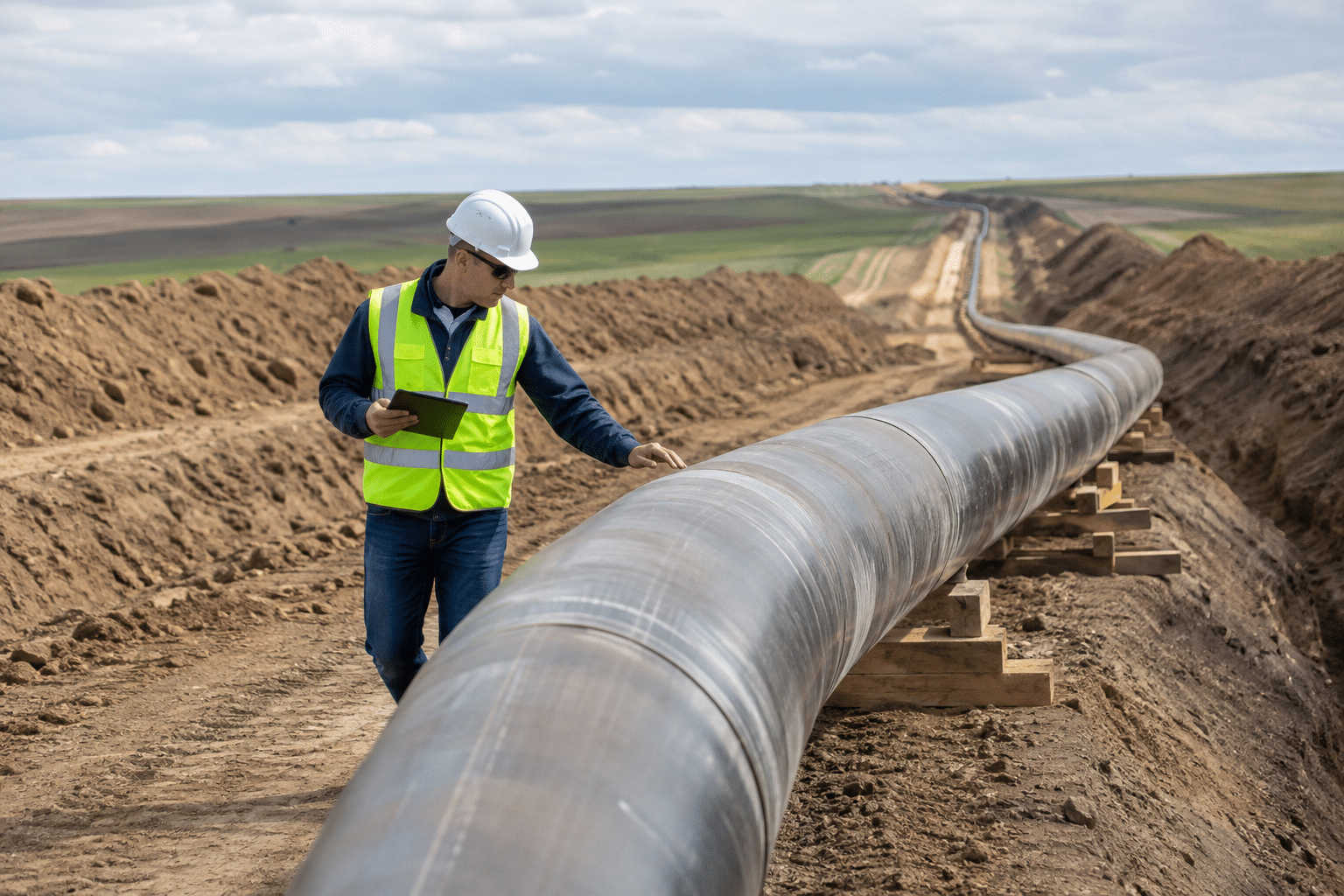
A pipeline inspector checks whether construction, materials, installation, testing, and records match the requirements of a pipeline project. The system may carry natural gas, water, chemicals, or other products, and the inspector’s focus can shift between welds, coatings, crossings, pressure tests, and documentation. The role is field-heavy and detail-heavy, with travel and weather often part of the job.
What does a pipeline inspector do?
Common responsibilities include:
- Reviewing drawings, specifications, permits, inspection plans, and the contractor’s work schedule.
- Checking pipe, fittings, welds, coatings, trench conditions, bedding, backfill, and alignment.
- Observing tests and confirming that results are recorded correctly.
- Documenting locations, measurements, photographs, repairs, and nonconforming work.
- Coordinating with operators, contractors, welding inspectors, environmental staff, and engineers.
- Confirming that required safety, environmental, and quality controls are followed.
The exact role matters. A pipeline construction inspector may spend the day walking a spread and checking installation steps. A coating inspector may focus on surface preparation, environmental conditions, and coating thickness. An integrity inspector may support inspections of an existing line. These jobs overlap, but they are not interchangeable.
Training and certification
There is no single entry-level pipeline inspector license that applies to every employer and every type of line. Many employers prefer people with experience in construction, welding, coatings, surveying, heavy equipment, quality control, or pipeline operations.
API 1169 is an important industry credential for onshore pipeline construction inspection. API says qualified applicants should understand pipeline construction inspection, inspector responsibilities, safety, environmental controls, and pollution control. The qualification route combines technical experience with education and, in some cases, another accepted certification. API 1169 certification is valid for three years and has recertification requirements.
Other credentials may fit a different assignment. AWS welding inspection credentials can help with weld-focused work. AMPP’s Coatings Inspector Program covers surface preparation, coating application, inspection testing, and instrumentation, with pipeline coating as one specialty. Read the job description before choosing a course. A certificate that looks relevant may not satisfy the operator, contractor, or client requirements for a particular project.
Pipeline work also has site-specific safety and operator-qualification expectations. PHMSA explains that operators must define covered tasks and training or qualification requirements for personnel performing those tasks under their program. That does not mean every inspector needs the same qualification, but it does mean the employer’s written requirements matter.
Pay and job outlook
Pipeline inspector is a specialized title, so BLS does not publish one national wage figure for every version of the job. As a broad comparison, BLS reported 2025 median pay of $74,690 for construction and building inspectors. That benchmark includes a wider group and should not be treated as a guaranteed pipeline salary.
Pay can change sharply with API or AMPP credentials, travel, per diem, overtime, shutdown work, contract length, and responsibility for a high-risk project. Ask whether the advertised rate includes travel time, meals, lodging, overtime, and gaps between assignments.
Could this career fit you after 35?
Pipeline inspection can suit an experienced tradesperson who wants more responsibility for quality and documentation. It can also appeal to someone moving from welding, coatings, construction supervision, surveying, or field safety.
The work is rarely a desk job. Expect long walks, uneven ground, weather exposure, traffic around active construction, and strict attention to site rules. Some projects require extended travel or temporary relocation. The paperwork is substantial because an inspection decision may need to be understood months or years later.
How to prepare for the first job
- Choose a starting lane: construction, welding, coatings, environmental compliance, or integrity support.
- Review local job postings and list the codes, credentials, and experience they actually request.
- Build experience with drawings, daily reports, photographs, measurements, and nonconformance records.
- Learn basic pipeline safety, excavation hazards, confined-space awareness, and work-zone procedures.
- Compare API 1169, AWS, and AMPP requirements before choosing a certification path.
For related routes, compare pipeline technician, NDT technician, and quality control inspector careers.
Follow the inspection plan in the field
Pipeline inspection may cover construction, coatings, welding records, pressure testing, corrosion control, right-of-way conditions, or operating facilities. Ask which phase and pipeline type the employer means. Before work starts, review the approved drawings, specifications, inspection and test plan, reporting chain, and hold points. An inspector should know which observations can be accepted in the field and which require engineering, nondestructive testing, or operator review.
Records must identify the location, component, contractor activity, weather or test condition, measurement method, and supporting photographs. Separate direct observation from interpretation. If a weld, coating holiday, backfill condition, or test result is questionable, preserve the evidence and follow the nonconformance process instead of negotiating an undocumented fix. Accurate stationing and timestamps matter because buried work may become inaccessible within hours.
Test the travel and independence requirements
Projects can involve long drives, remote rights-of-way, heat, cold, mud, active equipment, and changing schedules. Ask how lodging, per diem, travel time, overtime, and personal vehicles are handled. Also ask who supports an inspector when production pressure conflicts with the plan. A new inspector needs access to qualified review. Independence means reporting facts without favor, not making technical decisions outside the assigned authority.
Coating and corrosion-control inspection requires attention to preparation and environmental conditions, not only the final appearance. Depending on scope, records may include surface condition, cleanliness, profile, material batch, mixing, temperature, humidity, dew point, thickness, cure, and repairs. Use the specified instruments and calibration checks. If rain, dust, handling, or delay changes the conditions, document it and follow the plan. Construction inspectors should also understand handoff boundaries. The contractor performs the work, the inspector verifies defined requirements, and the operator or engineer resolves matters outside field authority. Friendly working relationships are useful, but acceptance should rest on evidence. Ask prospective employers how they protect inspectors from pressure when rejected work affects schedule or cost.
Review daily reports while locations are still fresh. Correct station numbers, photograph labels, and references promptly; small record errors become expensive after crews and equipment move farther down the right-of-way.
Sources
- American Petroleum Institute: API 1169 Pipeline Construction Inspector
- AMPP: Basic Coatings Inspector Certification
- PHMSA: About Operator Qualification
- U.S. Bureau of Labor Statistics: Construction and Building Inspectors
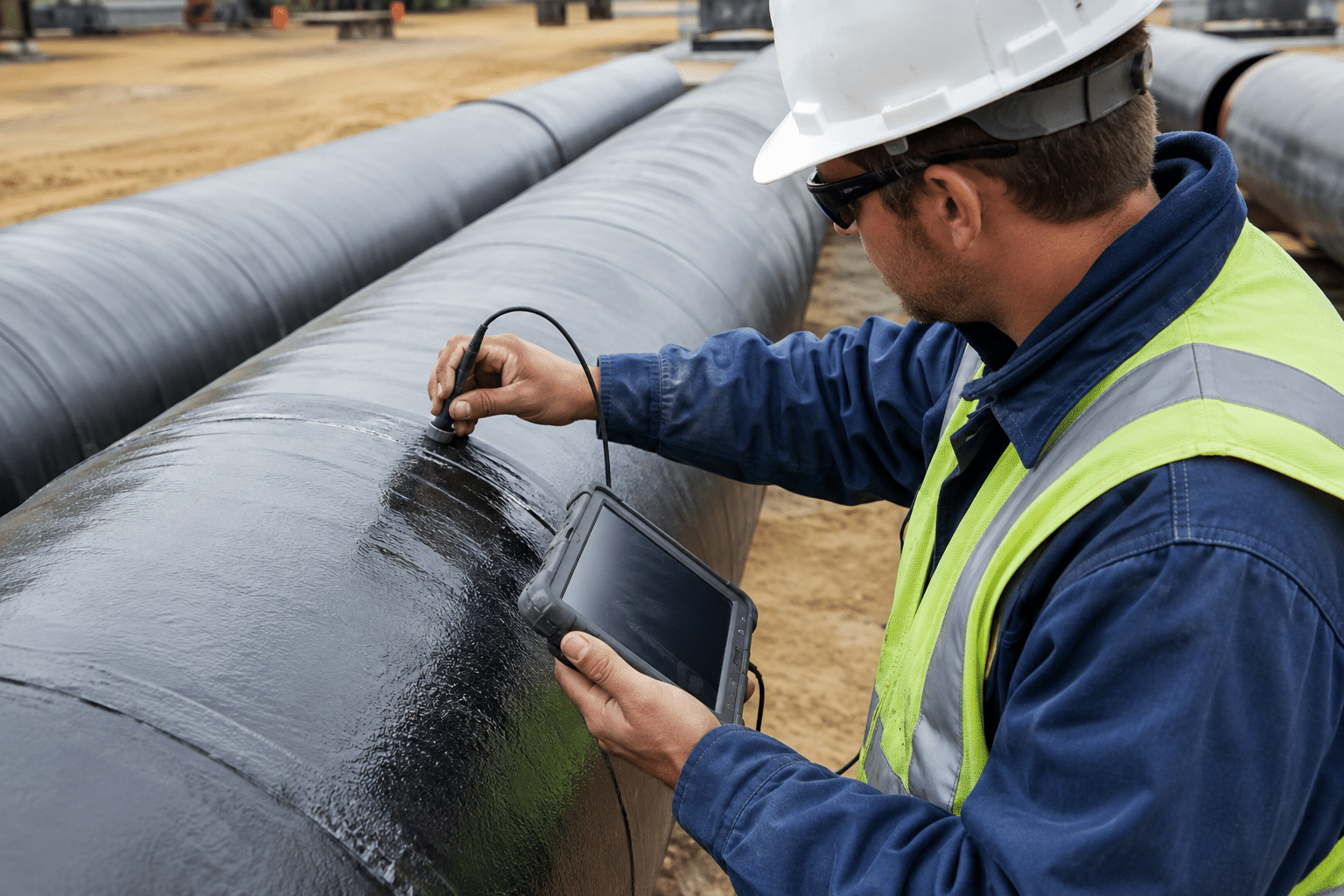
A useful inspection record tells a story: If a coating repair is incomplete or a weld report does not match the pipe segment, the inspector records the location, evidence, required correction, and follow-up. A vague note can force the next crew to repeat the inspection, while a precise one helps the project move safely.