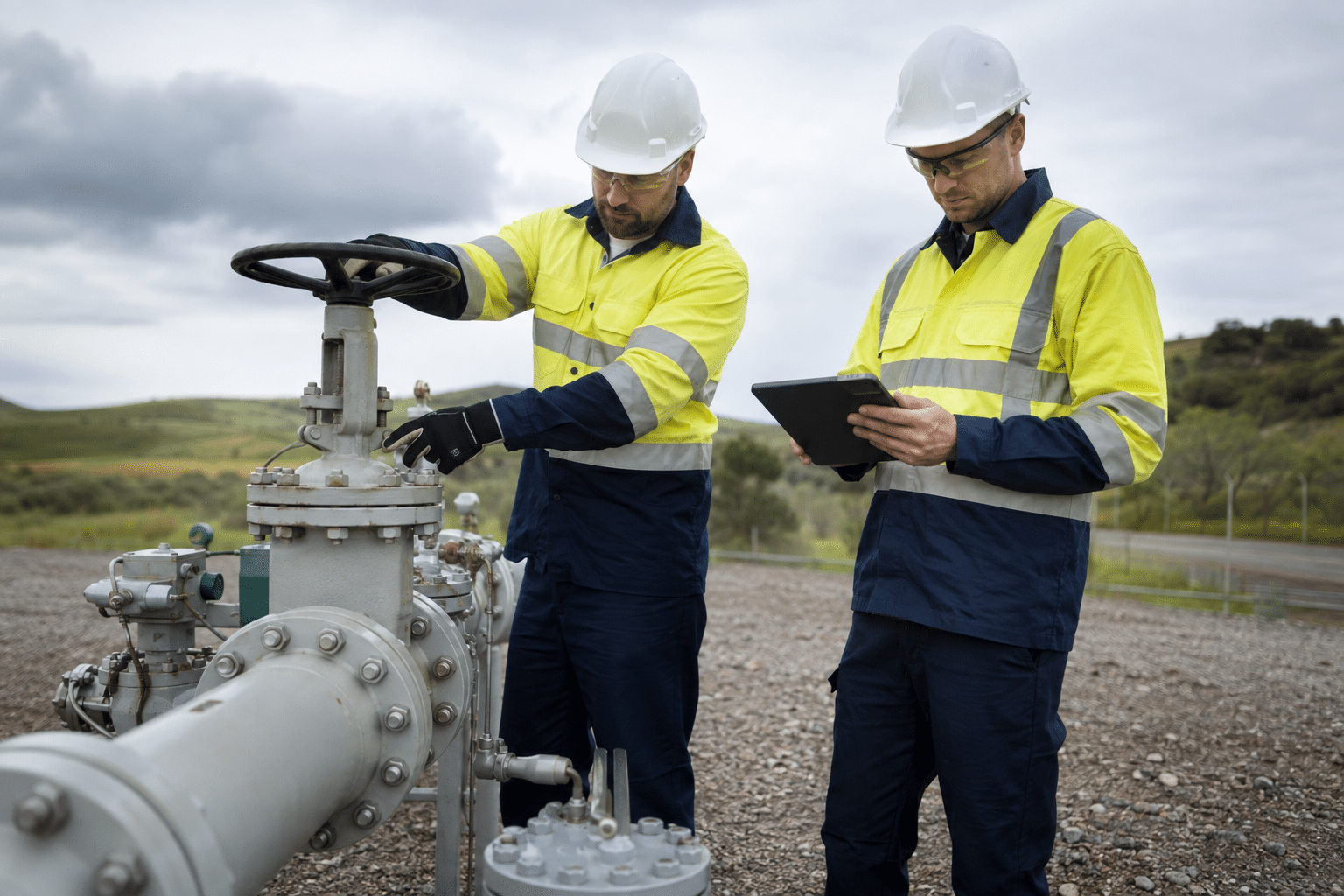
A pipeline technician helps inspect, maintain, test, or operate equipment along a pipeline system. The work may involve valves, pumps, meters, pressure-control equipment, communications, right-of-way checks, or field documentation. The title covers different jobs, so a career changer should look closely at the system, travel, shift pattern, qualifications, and amount of hands-on mechanical work.
What does a pipeline technician do?
Work varies by the type of pipeline and the employer’s operating procedures. A technician may:
- Inspect valves, flanges, meters, pumps, regulators, and above-ground facilities.
- Read gauges and digital control information, then report unusual conditions.
- Support preventive maintenance, repairs, pigging, or cathodic-protection work.
- Check for leaks, corrosion, damage, vegetation problems, or unauthorized activity.
- Collect measurements and photos for maintenance or integrity records.
- Coordinate with control-room staff, contractors, landowners, and emergency responders.
Some jobs are close to a town or processing facility. Others involve long drives to remote rights-of-way, compressor stations, terminals, or pump stations. The work can be mechanical, electrical, instrumentation-focused, or a mixture of all three.
Pipeline technician training and qualifications
There is no single national pipeline technician license that covers every job. Employers commonly look for a high school diploma, mechanical or electrical aptitude, a driver’s license, and experience with industrial equipment. Technical school, an apprenticeship, military maintenance experience, or work in an adjacent trade can help.
Pipeline operators covered by federal safety rules must maintain written operator-qualification programs for people who perform certain covered tasks. PHMSA explains that qualification involves the knowledge and skills needed for the task, along with the ability to recognize and react to abnormal operating conditions. Contractors can be covered too.
That does not mean every pipeline technician completes the same course. Training is tied to the operator’s equipment, procedures, and task list. Expect employer training, supervised field work, safety orientations, and documented evaluations. Depending on the job, additional training may cover confined spaces, hazardous energy, excavation, fall protection, hazardous materials, first aid, or commercial driving.
Pay and career data
“Pipeline technician” is not a clean BLS occupation. Pay depends on whether the role is closer to stationary equipment repair, industrial maintenance, oil and gas operations, instrumentation, or pipeline inspection. The BLS profile for oil and gas workers reported a $51,650 median annual wage in May 2025, but that figure includes several occupations and is only a rough industry benchmark.
| Factor | What to check in the actual job posting |
|---|---|
| Work area | Local facility, regional route, or remote right-of-way |
| Technical focus | Mechanical, electrical, controls, measurement, corrosion, or integrity |
| Schedule | Day shift, callout rotation, travel, or extended field assignments |
| Entry route | Employer training, apprenticeship, trade experience, or degree |
| Pay structure | Base wage, overtime, travel pay, per diem, and benefits |
Safety is part of the job
Pipeline work can involve stored pressure, flammable products, moving equipment, excavation, electrical hazards, and weather exposure. A technician must follow the operator’s procedures instead of improvising around a valve or alarm.
Before maintenance, the crew may need to isolate equipment, control hazardous energy, verify conditions, communicate with the control room, and document the work. The exact steps vary by facility. A strong safety culture is not a nice extra in this field. It is part of being trusted with the system.
Could pipeline work fit after 40?
This career can make sense for someone with maintenance, heavy-equipment, electrical, instrumentation, military, utility, or industrial experience. It rewards people who can work carefully when the weather is poor and the nearest coworker may be a long drive away.
The harder questions are lifestyle questions. Are you comfortable with travel, outdoor work, on-call rotations, and strict procedures? Can you pass the employer’s medical, background, and drug-testing requirements when applicable? Are you willing to keep training as equipment and procedures change?
Start by comparing real postings from pipeline operators and contractors in the region where you want to live. Look for the equipment named in the duties, not just the job title. A pipeline technician role centered on instrumentation may be a very different second career from a field maintenance role focused on valves and heavy equipment.
Read a pipeline vacancy by its assigned equipment
Compare the verbs in two job descriptions. Maintaining measurement equipment, servicing pump stations, and patrolling a right-of-way describe different weeks. Ask the hiring supervisor which tasks occupy a new technician’s first six months and which qualifications are needed for each. A mechanical background may transfer well to one position, while another depends on electronics and instrument experience. Use that distinction when selecting technical classes.
PHMSA’s operator-qualification framework concerns covered tasks and the ability to recognize and respond to abnormal conditions. Ask how the operator identifies those tasks, evaluates trainees, and maintains qualification records. Completing a contractor’s training course does not by itself explain what the operator permits you to perform on its system. Obtain a clear explanation of supervised work and independent assignments.
The communication part of a field assignment
A technician arriving at a remote station needs the correct asset information, scope of work, access arrangements, and contact process. Before a maintenance activity changes equipment availability, the field team and control room need a shared understanding of its status. This is a career responsibility rather than a universal operating sequence; the actual actions come from the operator’s procedures.
After the work, document the condition found, the authorized work completed, and any outstanding restriction. A note that equipment was checked may leave the next person unsure whether a fault was corrected or only observed. A useful interview question is how the company reviews field records and communicates unfinished work across shifts or contractors.
Calculate the cost of a regional assignment
Request the travel area, expected nights away, standby arrangements, and pay rules for driving. Clarify whether the company provides a vehicle and how remote communication works. A higher hourly wage may come with a much larger geographic commitment than a local plant job. If you share caregiving duties, compare the on-call response requirement with the distance between home and the assigned facilities.
For a first application, describe a maintenance or utility problem you handled within a defined procedure. Explain what you observed, whom you involved, and how the work was documented. Avoid presenting familiarity with tools as qualification for pressurized pipeline equipment. Employers need to see both transferable skill and a realistic understanding of the site-specific learning still ahead.
Sources
- PHMSA: About Operator Qualification
- PHMSA: Operator Qualification FAQs
- U.S. Bureau of Labor Statistics: Oil and Gas Workers
Related reading: Instrumentation Technician, Industrial Maintenance Technician, and Field Service Technician.
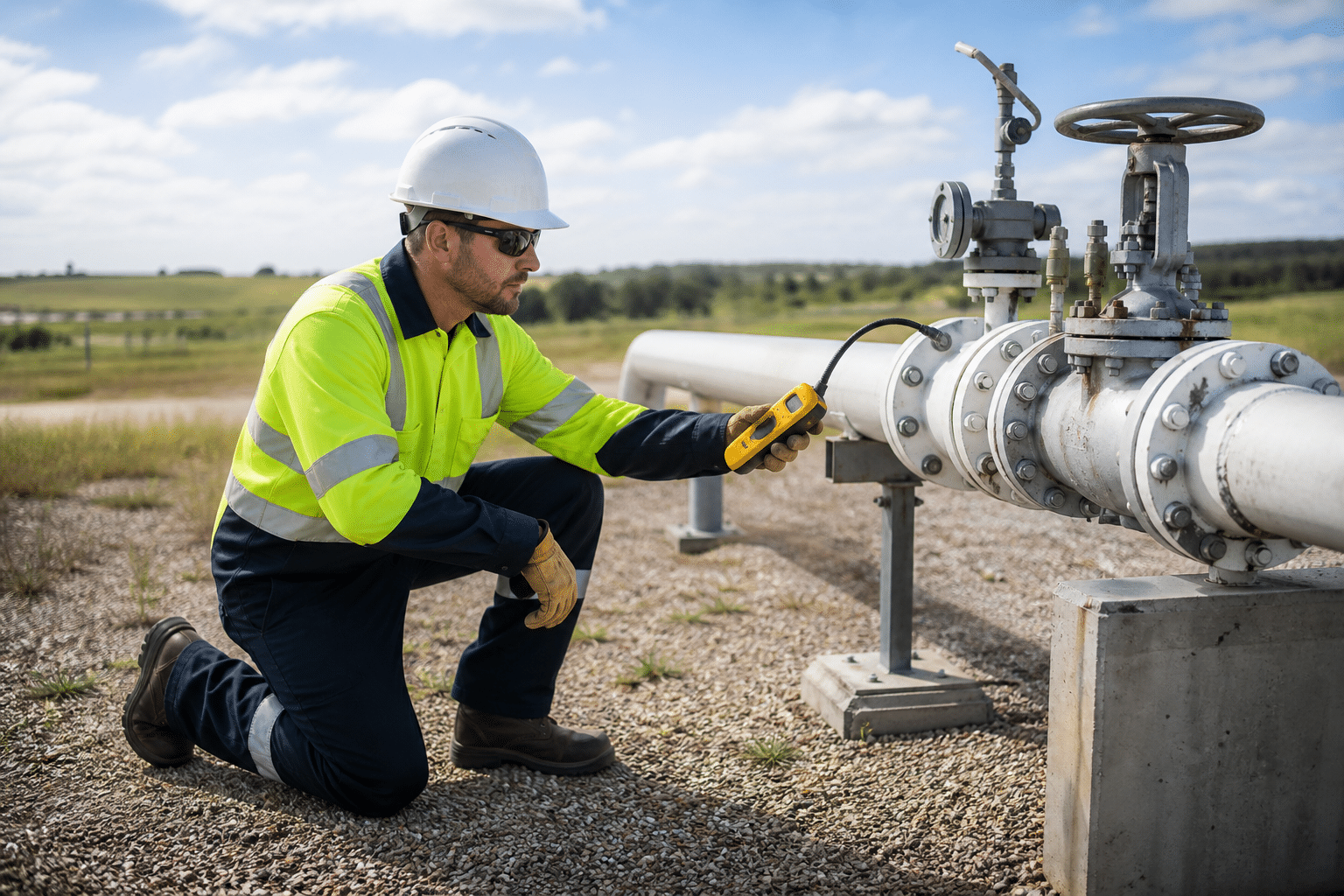
The field detail matters: A technician may find a valve that is hard to operate, a damaged marker, a pressure reading that does not match the control-room record, or a work order missing an important detail. The right response is to follow the operating procedure, record the condition, and escalate it within the technician’s authority.