A quality control inspector checks products, materials, or work against drawings, specifications, procedures, and acceptance criteria. The job may involve gauges, measurements, visual checks, sampling, records, nonconformance reports, and communication with production or engineering. QC is close to the result being inspected, so the inspector needs both technical accuracy and the independence to report a problem.
The title is broad. An inspector in a machine shop may spend most of the day with calipers, micrometers, gauges, and a drawing. An inspector in food production may focus on sanitation, temperature, weight, and records. An aerospace or medical manufacturer may require more documentation and traceability. The employer’s product and quality system matter as much as the title.
A good inspection record is specific: It identifies the part, feature, measurement method, result, tolerance, and disposition. ‘Looks wrong’ is not enough for the next person to reproduce the check or decide whether the issue needs rework, use-as-is approval, or engineering review.
What does a quality control inspector do?
The BLS describes quality control inspectors as workers who examine products and materials for defects or deviations from specifications. They may read blueprints, monitor production, inspect or measure materials, operate inspection equipment, accept or reject finished items, and report test data.
Common duties include:
- checking incoming materials before production uses them;
- inspecting parts during a production run;
- performing final inspection before packaging or shipment;
- reading blueprints, drawings, work instructions, and specifications;
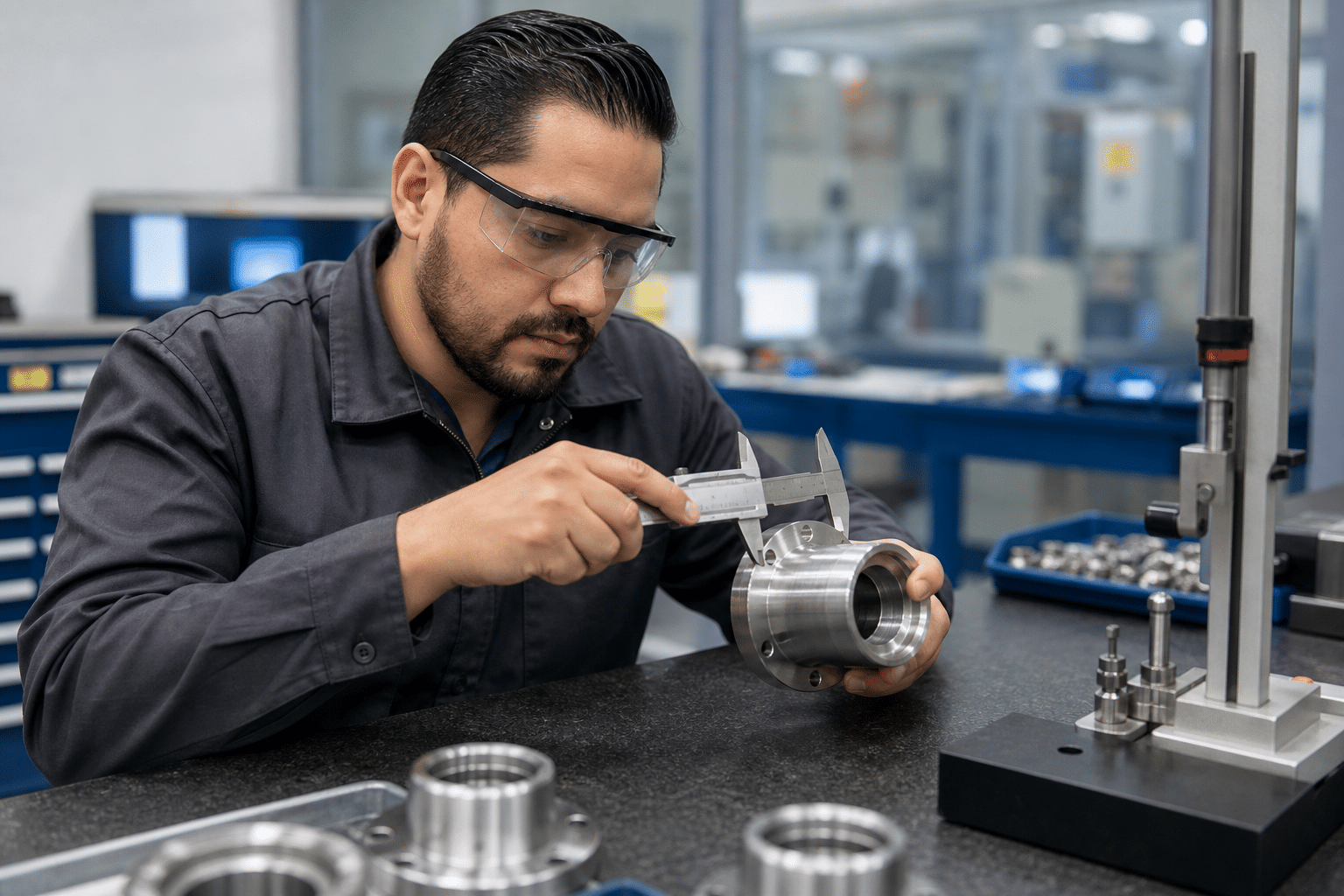
- measuring dimensions with calipers, micrometers, gauges, or electronic equipment;
- comparing results with tolerances or acceptance criteria;
- recording measurements, sample sizes, defects, and disposition decisions;
- tagging or separating nonconforming material;
- communicating a problem to production, engineering, or a quality supervisor;
- helping identify whether a defect is isolated or part of a larger pattern.
The work sits close to production, but an inspector should not quietly change a requirement to keep a line moving. When a part is out of specification, the next step is usually documentation and escalation under the employer’s quality procedure.
Incoming, in-process, and final inspection
The same inspector may handle several points in the production flow, but each one asks a different question.
| Inspection point | Main question | Examples |
|---|---|---|
| Incoming inspection | Did the material or component arrive as ordered? | Dimensions, material certificate, damage, lot information |
| First-piece inspection | Is the setup producing the intended part? | Drawing features, critical dimensions, tooling or process checks |
| In-process inspection | Is the process staying within its limits? | Sampling, measurements, visual defects, temperature, weight |
| Final inspection | Can this product be released under the specification? | Completed dimensions, function, finish, paperwork, labeling |
Some jobs also include supplier checks, calibration records, audit support, or customer complaints. Others are narrowly focused on a production line. Ask what percentage of the job is measurement, paperwork, floor observation, testing, and communication.
Quality control inspector versus related jobs
These roles overlap, but they are not interchangeable:
| Role | Main focus | Typical difference |
|---|---|---|
| Quality control inspector | Check products and process results against requirements | Focuses on inspection evidence and disposition |
| Quality technician | Support inspection, testing, records, and quality-system tasks | May work across several quality activities |
| Quality assurance specialist | Build or monitor systems that prevent quality problems | Often focuses more on procedures, audits, and system performance |
| Quality engineer | Analyze defects, improve processes, and set technical controls | Usually requires deeper engineering or technical responsibility |
| NDT technician | Find flaws without damaging a part using a defined test method | Certification and method-specific training may apply |
| Construction inspector | Check building work against codes, plans, and regulations | Works on construction sites rather than manufactured products |
Our guides to NDT technician work, calibration technician work, and CNC machining cover neighboring paths. A small manufacturer may combine several of these responsibilities in one job. A larger employer may keep them separate.
Tools and skills that employers look for
Measurement and inspection tools
Entry-level inspectors may use rulers, calipers, micrometers, gauges, scales, templates, or visual standards. More advanced roles may use a coordinate measuring machine, optical comparator, surface measurement equipment, or electronic test equipment. The employer should train you on the tools and procedures it uses.
Drawing and specification reading
Inspection is difficult if you cannot tell which dimensions are required, which are reference-only, and which notes control acceptance. Blueprint reading and basic geometric dimensioning concepts can make a large difference.
Consistent documentation
A measurement without a record may not help anyone later. Inspectors often record the part or lot, instrument, date, result, disposition, and person who performed the check. The exact record depends on the quality system and product.
Calm communication
An inspector may have to tell production that a batch is on hold or that a measurement needs to be repeated. The job calls for firmness without turning every disagreement into a personal argument. Clear evidence is more useful than a loud opinion.
Attention without guesswork
Good inspection is detailed, but it is not about inventing defects. Follow the drawing, sample plan, test method, and acceptance rule. If the requirement is unclear, stop and ask the responsible person.
How do you become a quality control inspector?
The BLS says quality control inspectors typically need a high school diploma to enter the occupation and receive on-the-job training. That training can last more than one month and up to one year. Some employers prefer a certificate, associate degree, or experience in manufacturing, machining, welding, electronics, laboratory work, or a related field.
Practical entry routes include:
- Applying for an entry-level inspector, tester, sampler, or production quality role.
- Starting in production and moving into inspection after learning the process.
- Completing a certificate in quality, manufacturing, metrology, or inspection.
- Moving from CNC machining, welding, fabrication, maintenance, laboratory work, or technical service.
- Entering an employer or industry apprenticeship when one is available.
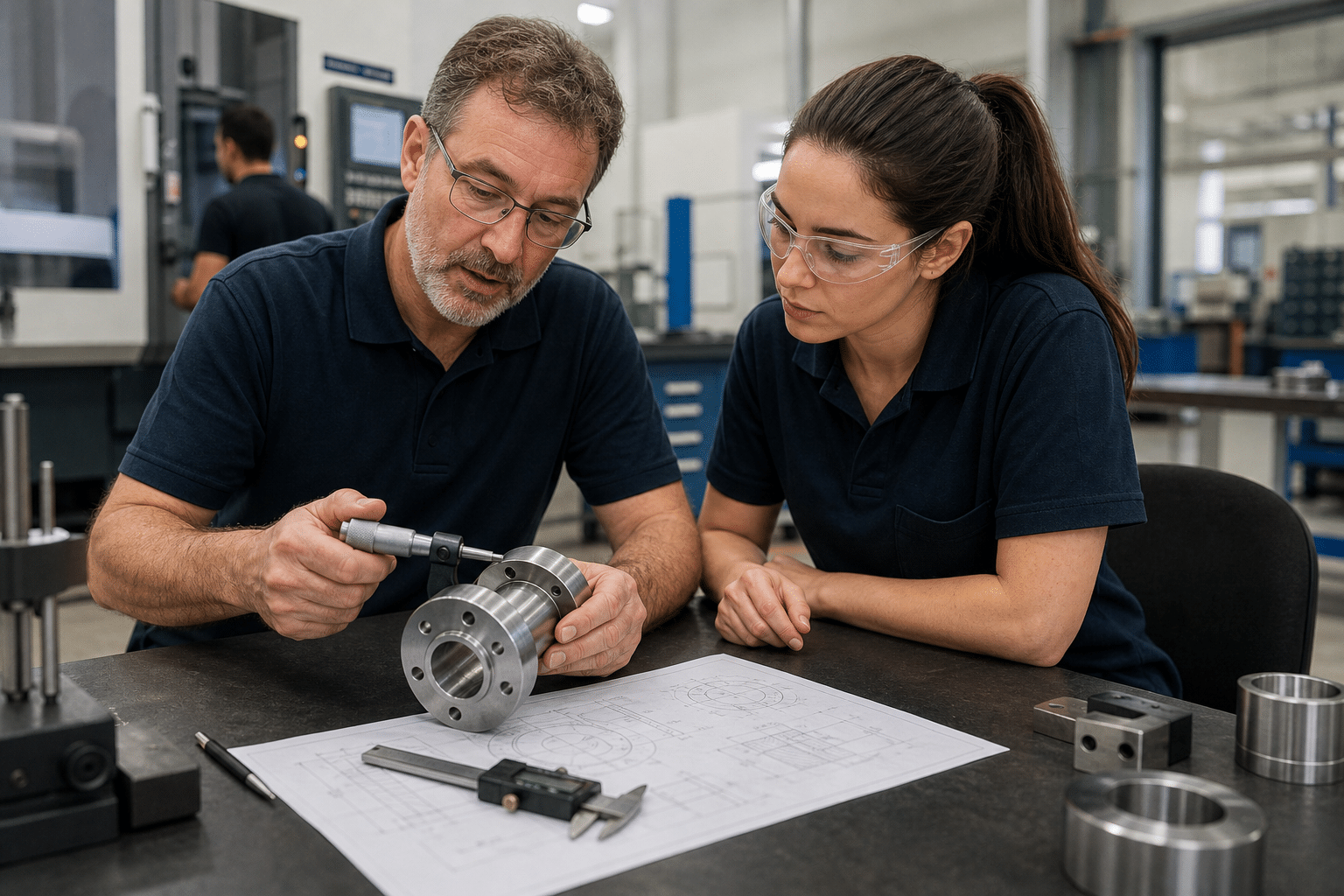
Before enrolling, ask whether the program includes real measuring tools, blueprint reading, inspection planning, reporting, and practice with the kinds of parts local employers produce. A general quality certificate may be useful, but it does not automatically qualify you for an aerospace, medical, automotive, or regulated production environment.
Is ASQ certification required?
Usually, no. Licensing is not a universal requirement for quality control inspectors, and employers set their own preferences. The American Society for Quality offers the Certified Quality Inspector credential. ASQ describes the certified inspector as someone who works under the direction of quality engineers, supervisors, or technicians and can evaluate documentation, perform procedures, inspect products, measure process performance, record data, and prepare reports.
ASQ’s current requirements include three years of paid, full-time work in areas covered by the exam. A degree from a technical, military, or trade school, or an associate, bachelor’s, master’s, or doctoral degree can waive two years of that experience requirement. That makes the credential more realistic after you have gained some experience; it is not a substitute for the first job.
Check the current ASQ requirements and fee before applying. Certification rules and exam details can change, and the employer may value a different industry credential or internal qualification more.
Pay and job outlook
The BLS occupation is called inspectors, testers, sorters, samplers, and weighers, and its quality control inspector profile is the closest national benchmark for this title.
| BLS benchmark, May 2025 | Figure | What it means |
|---|---|---|
| Median annual wage | $48,570 | Half earned more and half earned less in the occupation |
| Lowest 10 percent | Below $35,510 | A lower-end national reference, not a starting offer |
| Highest 10 percent | Above $77,860 | An upper-end reference across the occupation |
| Manufacturing median | $49,270 | Median for one major industry, not every manufacturing job |
| Projected growth, 2025-35 | 3% | About as fast as the average for all occupations |
| Projected annual openings | 66,700 | Includes replacement needs as well as new jobs |
The range is wide because the occupation includes different products, tools, industries, and levels of responsibility. A simple visual check and a precision inspection role should not be treated as the same job. Shift premiums, overtime, lead responsibility, specialized equipment, and industry requirements can also change an offer.
Automation may reduce some repetitive inspection tasks, but the BLS still expects openings and continued need for inspection and validation. Inspectors may increasingly work with scanners, electronic records, and automated measurement rather than relying only on hand tools.
Safety and working conditions
Many inspectors work in manufacturing and spend time near production equipment. You may stand for long periods, lift or maneuver materials, work around noise and moving parts, or encounter dust, fumes, and other contaminants. Some plants operate evening, overnight, or weekend shifts, and overtime can occur when production deadlines are tight.
The work area should provide the protective equipment and procedures appropriate to the task. OSHA’s machine-guarding requirements address hazards from points of operation, rotating parts, flying chips, and sparks. If inspection requires handling chemicals, coatings, or cleaning products, the employer’s hazard communication program should explain labels, safety data sheets, and training.
Ask an employer:
- How much of the shift is on the production floor?
- What parts, materials, weights, and tolerances will I handle?
- Which measurement tools and inspection software are used?
- Who decides whether nonconforming material is reworked, scrapped, or released?
- Are shifts fixed, rotating, or tied to production demand?
- How are new inspectors trained and qualified?
Is quality control inspection a good second career after 40?
It can be a good fit if you like detail, written standards, measurement, and work that rewards consistency. Previous experience in production, machining, welding, maintenance, electronics, laboratory work, or technical documentation may transfer well.
The job is less physical than some construction trades, but it is not always light office work. You may stand, walk, bend, handle parts, repeat measurements, wear protective equipment, and work under time pressure when a shipment is waiting. The mental side matters too. You may need to stay focused while checking similar parts for a long stretch.
The growth path depends on the employer. An inspector may move toward senior inspection, quality technician, metrology, supplier quality, auditing, or quality engineering support. The next step may require more math, software, documentation, or formal education. Ask what the company has actually promoted people into rather than relying on a generic career ladder.
Use our career-change roadmap after 40 to compare the first wage, training cost, schedule, commute, and likely next step before changing jobs.
Questions to ask before applying
- Is this job incoming, in-process, final, or a mix of inspection work?
- Will I inspect machined parts, welds, assemblies, chemicals, food, electronics, or another product?
- Which tools must I already know how to use?
- Does the employer train new hires on blueprint reading and measurement?
- Is ASQ certification required, preferred, or irrelevant for this position?
- What happens when a measurement is outside the specification?
- How much production pressure does the inspector face?
- Are there nights, weekends, overtime, or standing requirements?
- What is the next role after becoming fully qualified?
Bottom line
A quality control inspector protects the requirements that a product is supposed to meet. The work can be a practical entry into manufacturing because the typical BLS route starts with a high school diploma and on-the-job training. The right fit depends on whether you prefer measurement, documentation, production-floor contact, and repeated attention to detail.
The BLS median was $48,570 in May 2025, with about 66,700 projected annual openings, but that national benchmark covers many types of inspection work. Check the product, tools, shift, training plan, and advancement path in the actual posting. If you like finding small problems before they reach the customer, quality inspection may be a realistic technical career to explore.
Sources
- BLS: Quality Control Inspectors
- ASQ: Quality Inspector Certification
- OSHA: General Requirements for All Machines
- OSHA: Hazard Communication
\n
Reviewed September 3, 2026: Quality control work depends on the product, measurement tools, documentation, and employer standards. Ask whether the role is inspection, testing, process support, or a mix. The quality assurance guide explains the adjacent path.
\n