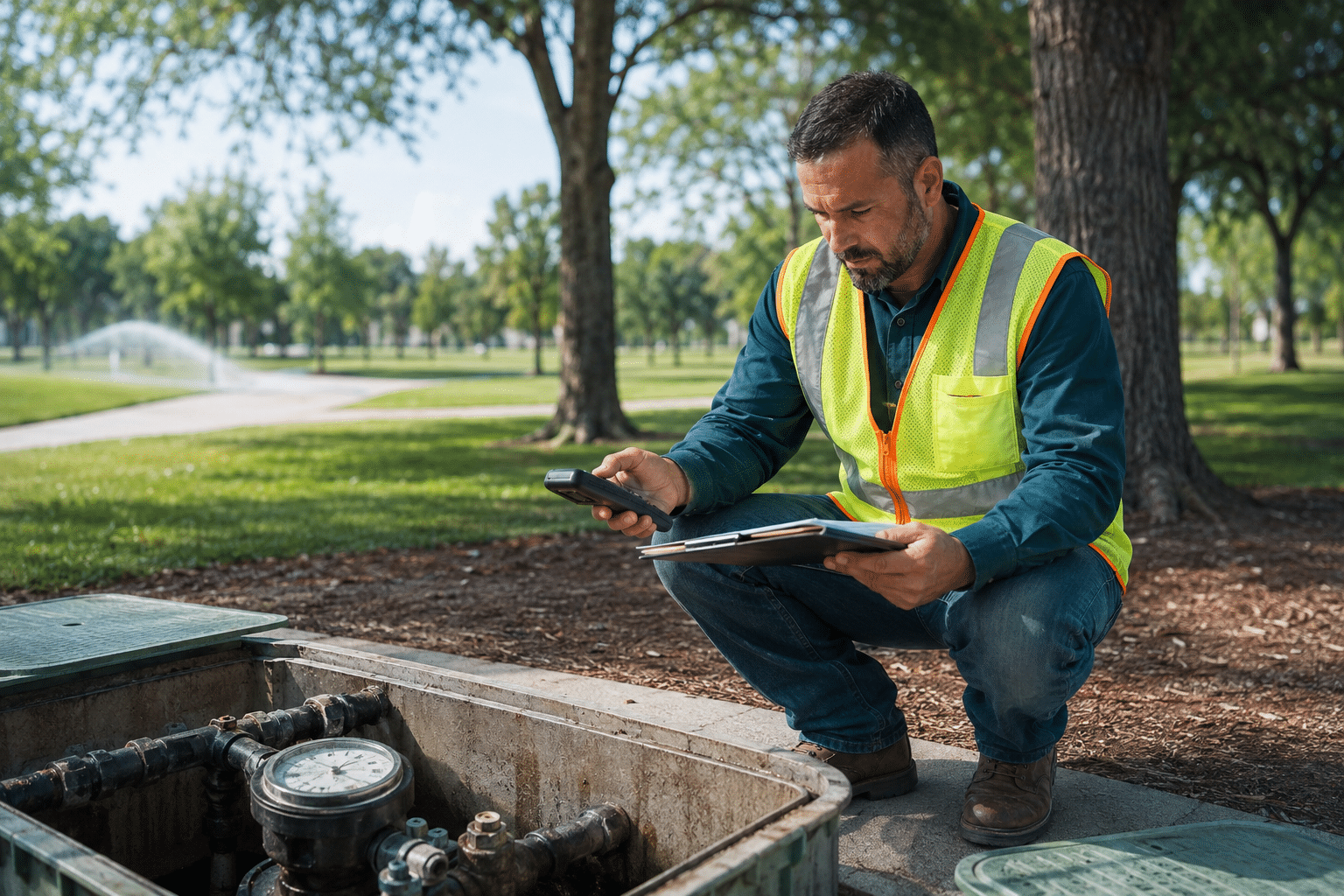
Water conservation technicians help utilities, property owners, and customers find practical ways to reduce wasted water. The work can combine meter checks, leak investigations, irrigation observations, customer education, and records review. It suits someone who likes field visits and problem solving, but the job also depends on clear documentation and the ability to explain a recommendation without overstating the savings.
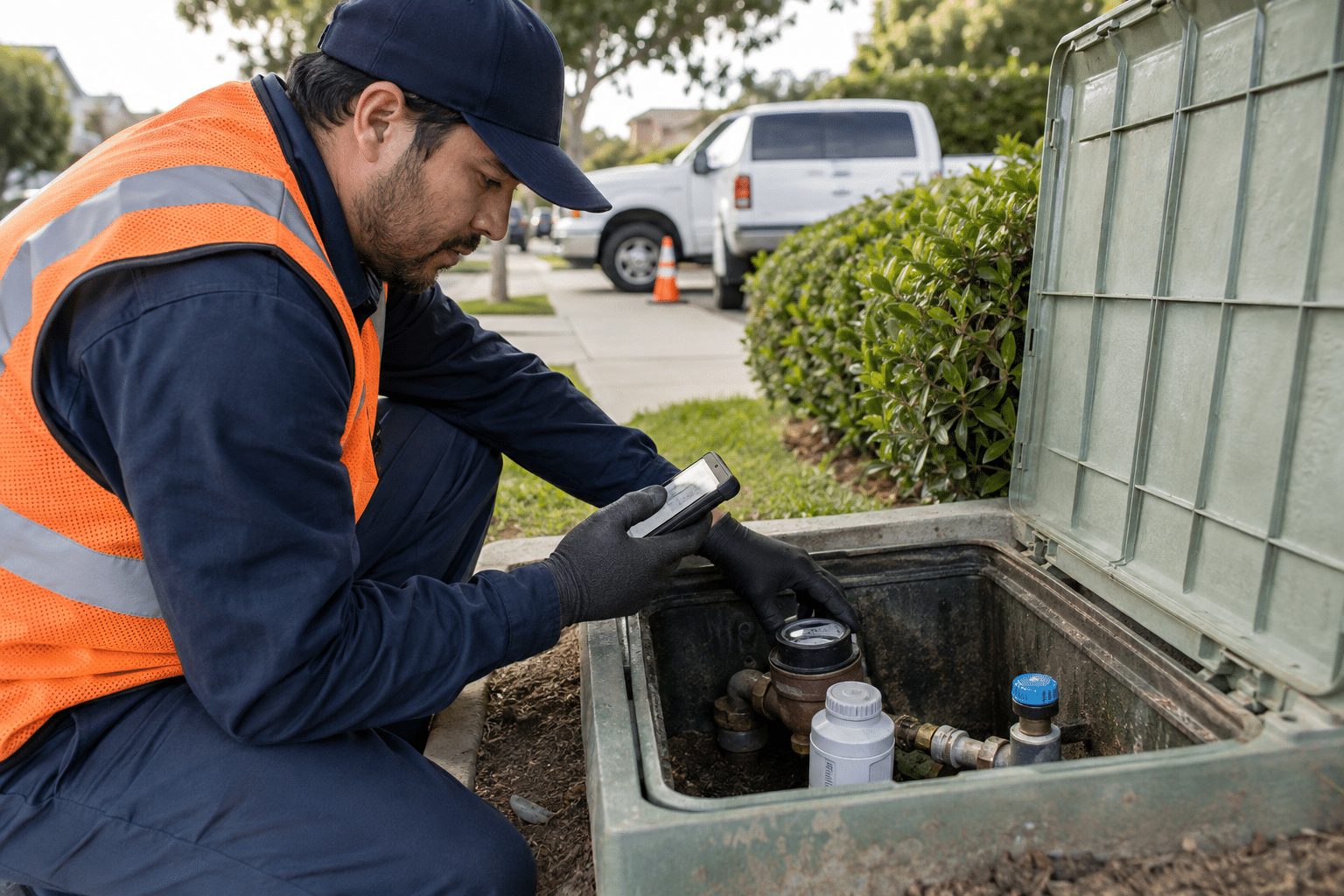
A typical investigation: A property may show unusually high use even when nobody reports a visible leak. The technician might compare meter readings, inspect irrigation timing, check toilets or service lines, and review whether the increase matches the season. The next step could be a repair referral, an adjustment, or more monitoring rather than an immediate conclusion.
What does a water conservation technician do?
Duties vary by utility and employer. A technician may test meters, look for continuous flow, inspect irrigation controllers and valves, review high-use accounts, visit properties, check public landscapes, and document leaks or repair needs. Some technicians install efficient fixtures or help customers understand rebates and conservation rules.
The work is not the same as water treatment or water distribution. Conservation focuses on use and loss. A technician may find that a customer has a hidden leak, a badly timed irrigation controller, or a meter problem before the issue becomes an expensive bill.
Training and work conditions
Employers may ask for a high school diploma, a driver’s license, basic plumbing or irrigation knowledge, and comfort using a tablet or meter. Utility procedures, customer service, water regulations, and field safety are often taught on the job. A certificate can help, but local experience may matter more than a generic course.
Expect outdoor work, walking, crouching, driving between sites, and conversations with homeowners, businesses, landscapers, or public-works staff. Some visits are routine. Others involve a frustrated customer and a bill that needs careful explanation.
Pay and second-career fit
Water conservation technician is not always reported as a standalone occupation. Pay depends on the utility, region, public-sector grade, and whether the role includes plumbing, irrigation, or enforcement work. Compare local utility postings instead of treating a neighboring BLS occupation as an exact salary.
This career can fit after 40 for someone from customer service, facilities, irrigation, plumbing, meter reading, landscaping, or field inspection. It suits people who like practical problem-solving and community work. It is less suitable if you want an indoor desk job or dislike explaining rules repeatedly.
A sensible starting point
Search city, county, and water-utility career pages for conservation aide, water-use efficiency technician, meter technician, and irrigation auditor roles. Ask how much time is spent testing equipment versus educating customers. That one detail can change the whole feel of the job.
For related options, see our guides to water meter technician, water distribution operator, and water resource specialist.
What the work looks like in practice
A water conservation technician usually balances scheduled work with problems that cannot be predicted from a calendar. The scheduled side may include inspections, readings, preventive tasks, site visits, customer appointments, or a review of records from the previous shift. The unscheduled side may begin with an alarm, a complaint, a weather event, a failed test, or a result that does not match expectations. The first professional habit is to confirm the condition before changing anything.
Because the work supports water utilities, public works departments, and conservation programs, communication is part of the technical job. A worker may coordinate with a supervisor, customer, contractor, operator, dispatcher, engineer, or emergency team. A good handoff explains what was observed, what was checked, what action was taken, and what still needs attention.
Equipment and records
The tools used by a water conservation technician may include customer usage data, leak-detection tools, meters, irrigation checks, field forms, and outreach materials. The exact list varies, but the principle is consistent: select an appropriate tool, use it according to the procedure, and record enough information for another person to understand the result. A spike in usage may reflect a leak, a seasonal change, a billing issue, or a property condition that needs a closer look That is why a reading without location, time, condition, or method can be less useful than a shorter record made carefully.
A useful conservation report ties observed fixtures, irrigation zones, schedules, leaks, and usage patterns to practical recommendations. Numbers should be explained in plain language, with assumptions identified. Accurate photos and notes allow program staff to confirm eligibility and help customers act without repeating the entire visit.
Training and the first months
Water conservation technicians may work with irrigation audits, customer programs, leak investigations, usage data, or public facilities. Ask which activities fill most of the week and whether beginners make recommendations independently. Good onboarding pairs local water rules and rebate criteria with supervised site visits.
Preparation may include irrigation basics, water-use calculations, customer education, local landscape rules, and the utility’s data systems. Certifications can help in some programs, but employers may value experience interpreting actual sites more. Ask which credential, if any, is required for the duties advertised.
Safety and working conditions
A water conservation technician may face moving equipment, electricity, pressure, traffic, heights, weather, chemicals, confined areas, or unfamiliar properties. The correct response is to follow the hazard assessment, use the required PPE, isolate equipment when required, and stop when the real condition does not match the work plan. Production pressure or a customer deadline does not remove the need for a safe method.
Expect driving, outdoor inspections, conversations with property owners, and time reviewing accounts or reports. Ask about summer heat, early appointments, access to irrigation controllers, lifting meter lids, and how often conflict arises over bills or recommended changes. The customer-facing portion deserves as much attention as the technical work.
Career change after 40
This path can suit someone who brings reliability, practical judgment, customer awareness, or careful documentation from another field. The most transferable skill is often the ability to notice a change, ask a precise question, and complete the record. field investigation and practical public service can be learned, but it is easier when you already respect procedures and understand the consequences of a rushed decision.
At first, avoid treating every high-use account as the same problem. Separate seasonal irrigation, occupancy changes, continuous leaks, and legitimate process use. Ask questions before prescribing a fix, and leave the customer with two or three prioritized actions rather than an overwhelming list that is unlikely to be followed.
Advancement and fit
With experience, a water conservation technician may move toward water efficiency specialist, utility educator, conservation coordinator, or program supervisor. Advancement depends on demonstrated competence, additional education, employer structure, and sometimes licensing. Before accepting a job, ask what the previous person moved on to and whether internal postings or tuition support are available.
Questions to ask before applying
- What does this title mean at this employer, and which tasks are outside the role?
- What are the normal schedule, travel, physical, and emergency expectations?
- Which tools, software, records, and safety qualifications are required?
- How are new workers trained and approved for independent work?
- What is the realistic next step after the first year?