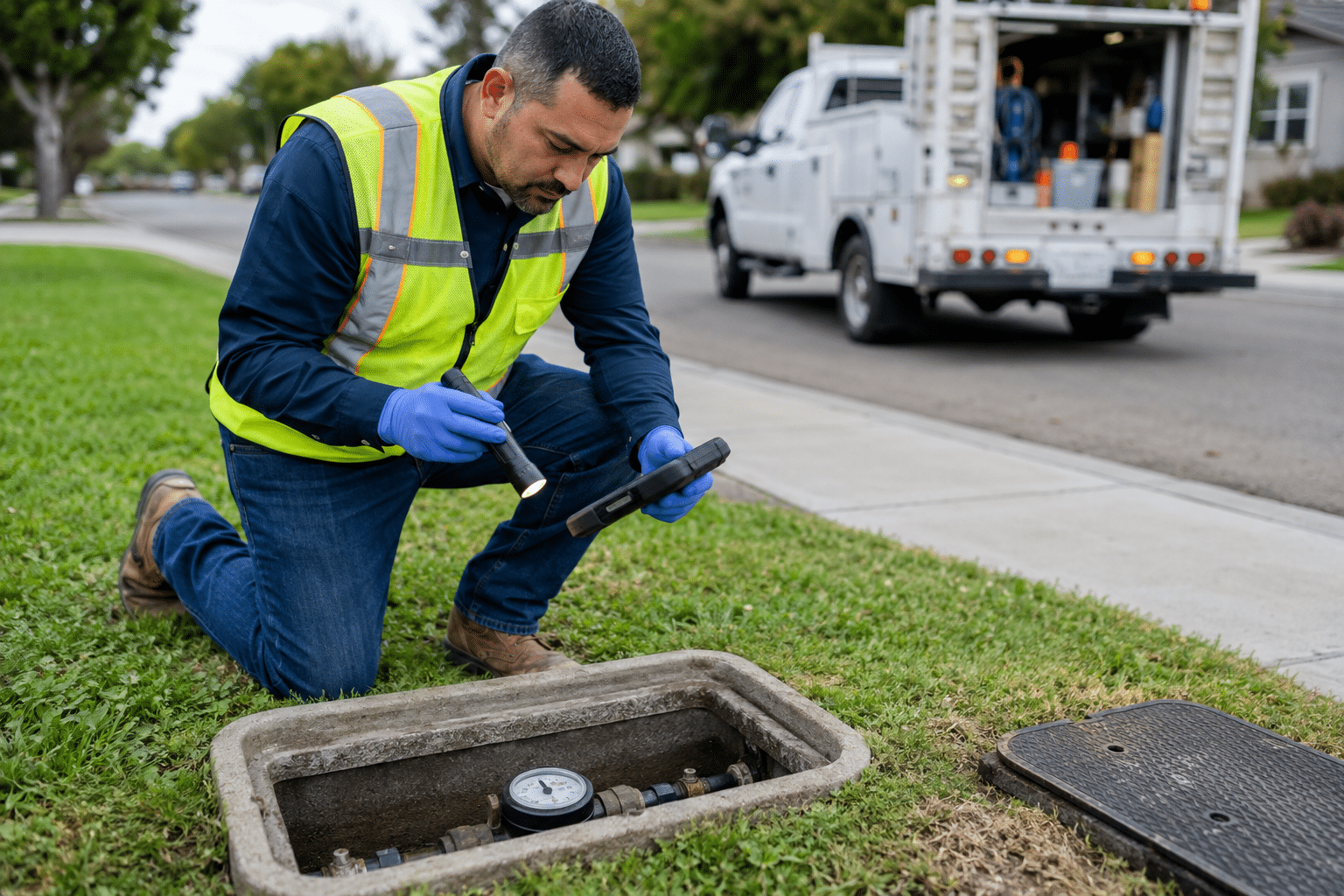
A water meter technician works with the devices and records used to measure water consumption. Depending on the utility, the job may involve installation, testing, troubleshooting, replacement, field routes, shop repair, or customer questions. It is practical utility work, but accuracy matters because a wrong serial number, reading, or service address can create billing and maintenance problems later.
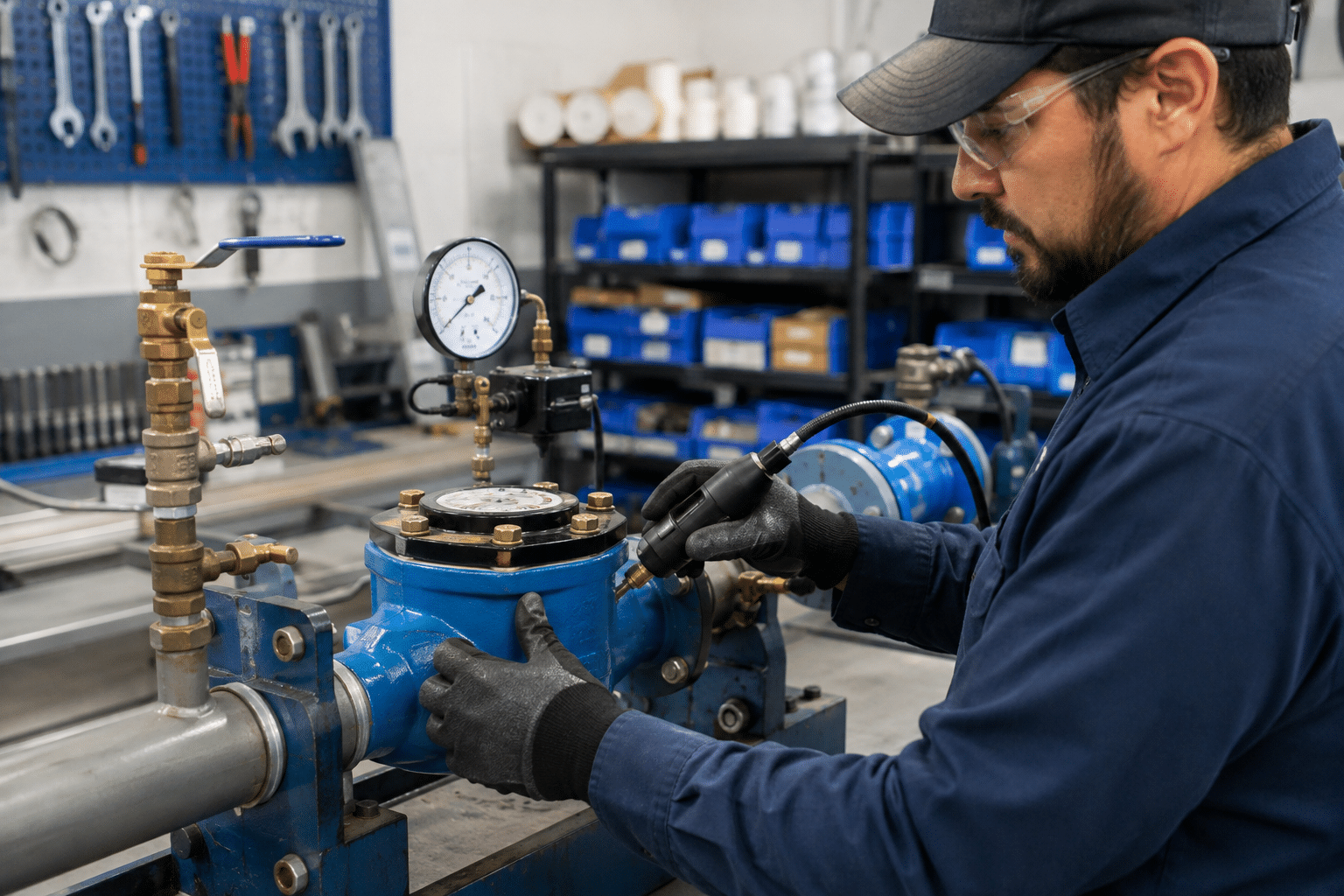
A normal call is often investigative: If a customer reports a high bill, the technician may compare the meter reading with the account record, check for visible leaks, test the meter or communication device, and document what was actually found. The technician should separate a meter fault from a plumbing leak instead of assuming the first explanation is correct.
What does a water meter technician do?
Duties depend on the utility and the size of the customers served. Work may include:
- Installing or replacing residential, commercial, or industrial meters.
- Reading conventional meters or collecting data from AMR and AMI systems.
- Checking registers, transmitters, valves, connections, and meter boxes.
- Testing accuracy, investigating unusual readings, and preparing meters for repair or replacement.
- Keeping service records, photographs, location notes, and customer information accurate.
- Explaining a high bill or suspected leak without promising a conclusion before the meter and plumbing are checked.
The EPA explains that advanced metering can provide frequent usage data for billing and leak detection. Older systems may still require a technician or meter reader to visit the site. The work therefore includes both physical equipment and data handling.
Training and certification
Most entry training is provided by the utility or contractor. Helpful preparation includes basic plumbing, hand tools, reading utility maps, customer communication, safe driving, documentation, and comfort working outdoors.
Some roles include meter-shop testing, calibration, or larger commercial meters. Others focus mainly on field installation and reading. State rules, utility procedures, backflow requirements, and customer-service policies vary, so ask the employer what training is paid and what credential is required.
Pay and career outlook
Water meter technician is not consistently reported as a standalone national occupation. BLS title files place related meter installation work near control and valve installers, while meter-reading work is classified separately. Those categories are too broad to present as a guaranteed salary for this job.
Utilities continue to replace older meters and add remote systems, but technology changes the work rather than removing every field task. Large meters, difficult access, damaged boxes, service connections, and testing still need people who can work carefully and document the result.
Is this career a good fit after 35?
This can be a sensible second-career option for someone who wants predictable public-service work with a practical technical side. You may spend part of the day alone in the field and part of it speaking with customers or utility staff.
Weather, digging, traffic, heavy covers, and uncomfortable access are part of the trade. Accuracy matters because a wrong read or poorly documented replacement can affect billing and leak investigations. People who prefer careful routines with occasional troubleshooting may find the work a better fit than high-pressure construction.
How to explore the field
Check openings with municipal water departments, regional utilities, meter-service contractors, and meter manufacturers. Compare them with water distribution operator, water treatment operator, and utility locator roles.
What the work looks like in practice
A water meter technician usually balances scheduled work with problems that cannot be predicted from a calendar. The scheduled side may include inspections, readings, preventive tasks, site visits, customer appointments, or a review of records from the previous shift. The unscheduled side may begin with an alarm, a complaint, a weather event, a failed test, or a result that does not match expectations. The first professional habit is to confirm the condition before changing anything.
Because the work supports water utilities, service departments, and meter shops, communication is part of the technical job. A worker may coordinate with a supervisor, customer, contractor, operator, dispatcher, engineer, or emergency team. A good handoff explains what was observed, what was checked, what action was taken, and what still needs attention.
Equipment and records
The tools used by a water meter technician may include water meters, endpoints, valves, hand tools, leak indicators, handheld computers, and work-order systems. The exact list varies, but the principle is consistent: select an appropriate tool, use it according to the procedure, and record enough information for another person to understand the result. A meter problem may be the device, the valve, the service line, the installation, or the record attached to the account That is why a reading without location, time, condition, or method can be less useful than a shorter record made carefully.
Work records should capture the account, meter and endpoint serial numbers, initial and final readings, seals, condition, programming result, and any leak or access issue. A transposed digit can create a billing problem, while poor notes can force another visit. Verify identifiers before closing the order.
Training and the first months
A water meter technician may install, exchange, test, program, or troubleshoot meters and remote-reading equipment. Ask which meter sizes and communication systems are used locally and who handles plumbing repairs beyond the meter. Training should include supervised work on live services and clear contamination-control procedures.
Preparation can include basic plumbing, meter technology, safe excavation or pit access, customer service, and mobile work-order software. The utility normally teaches its approved equipment and procedures. Ask whether backflow, traffic-control, confined-space, or other training is required for the assigned route.
Safety and working conditions
A water meter technician may face moving equipment, electricity, pressure, traffic, heights, weather, chemicals, confined areas, or unfamiliar properties. The correct response is to follow the hazard assessment, use the required PPE, isolate equipment when required, and stop when the real condition does not match the work plan. Production pressure or a customer deadline does not remove the need for a safe method.
Routes can involve basements, crawlspaces, meter pits, traffic, dogs, weather, and repeated driving. Ask how appointments are scheduled, who handles unsafe access, what lifting aids are provided for larger meters, and whether emergency leak calls occur after hours. The setting varies sharply between utilities.
Career change after 40
This path can suit someone who brings reliability, practical judgment, customer awareness, or careful documentation from another field. The most transferable skill is often the ability to notice a change, ask a precise question, and complete the record. mechanical service and reliable field records can be learned, but it is easier when you already respect procedures and understand the consequences of a rushed decision.
The first weeks reward a slow, repeatable sequence: confirm the address, control the service safely, protect the property, check for leakage, and verify the new reading signal. When an installation differs from the standard detail, photograph it and call the lead rather than improvising a fitting that may fail later.
Advancement and fit
With experience, a water meter technician may move toward lead meter technician, distribution technician, utility investigator, or crew lead. Advancement depends on demonstrated competence, additional education, employer structure, and sometimes licensing. Before accepting a job, ask what the previous person moved on to and whether internal postings or tuition support are available.
Questions to ask before applying
- What does this title mean at this employer, and which tasks are outside the role?
- What are the normal schedule, travel, physical, and emergency expectations?
- Which tools, software, records, and safety qualifications are required?
- How are new workers trained and approved for independent work?
- What is the realistic next step after the first year?