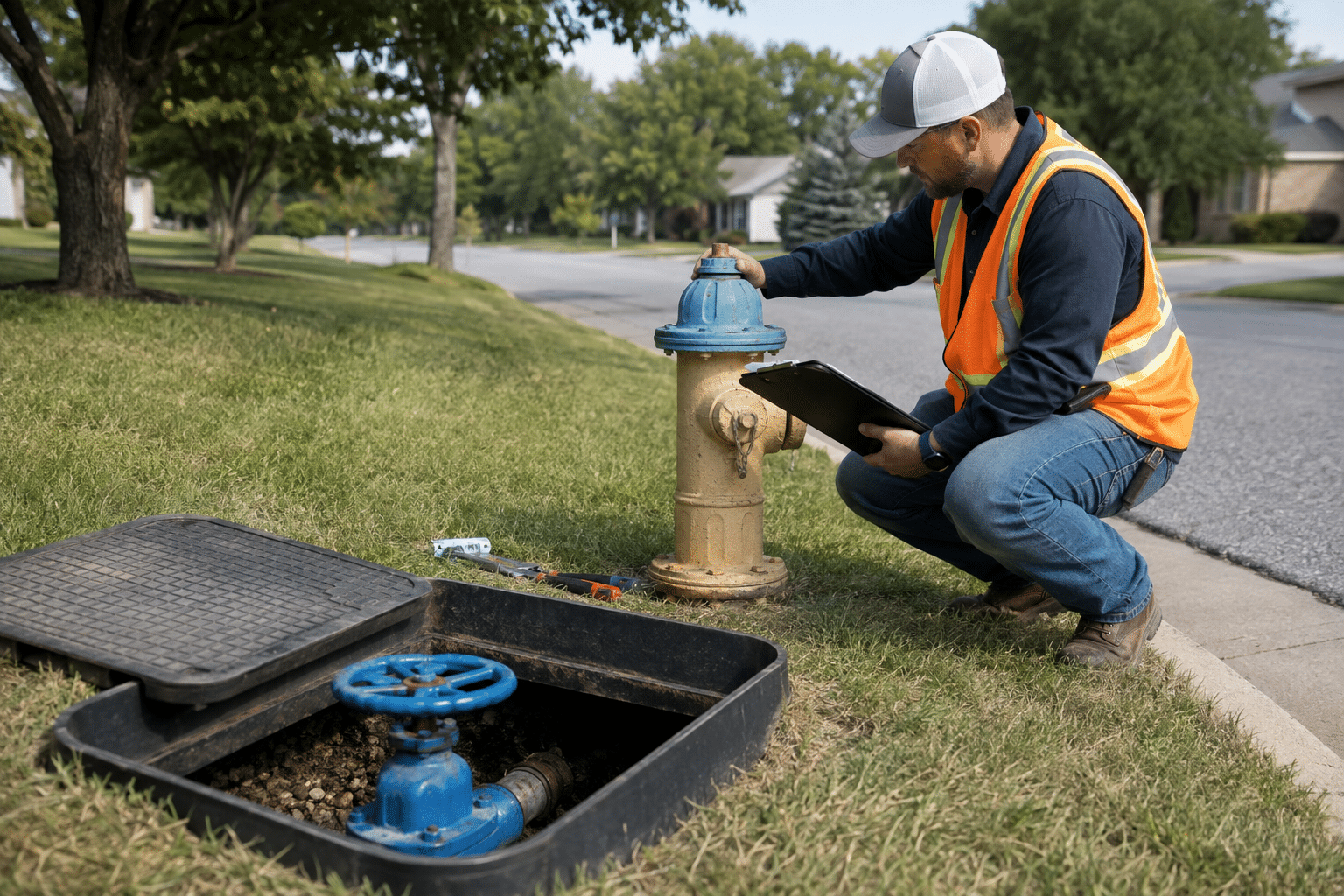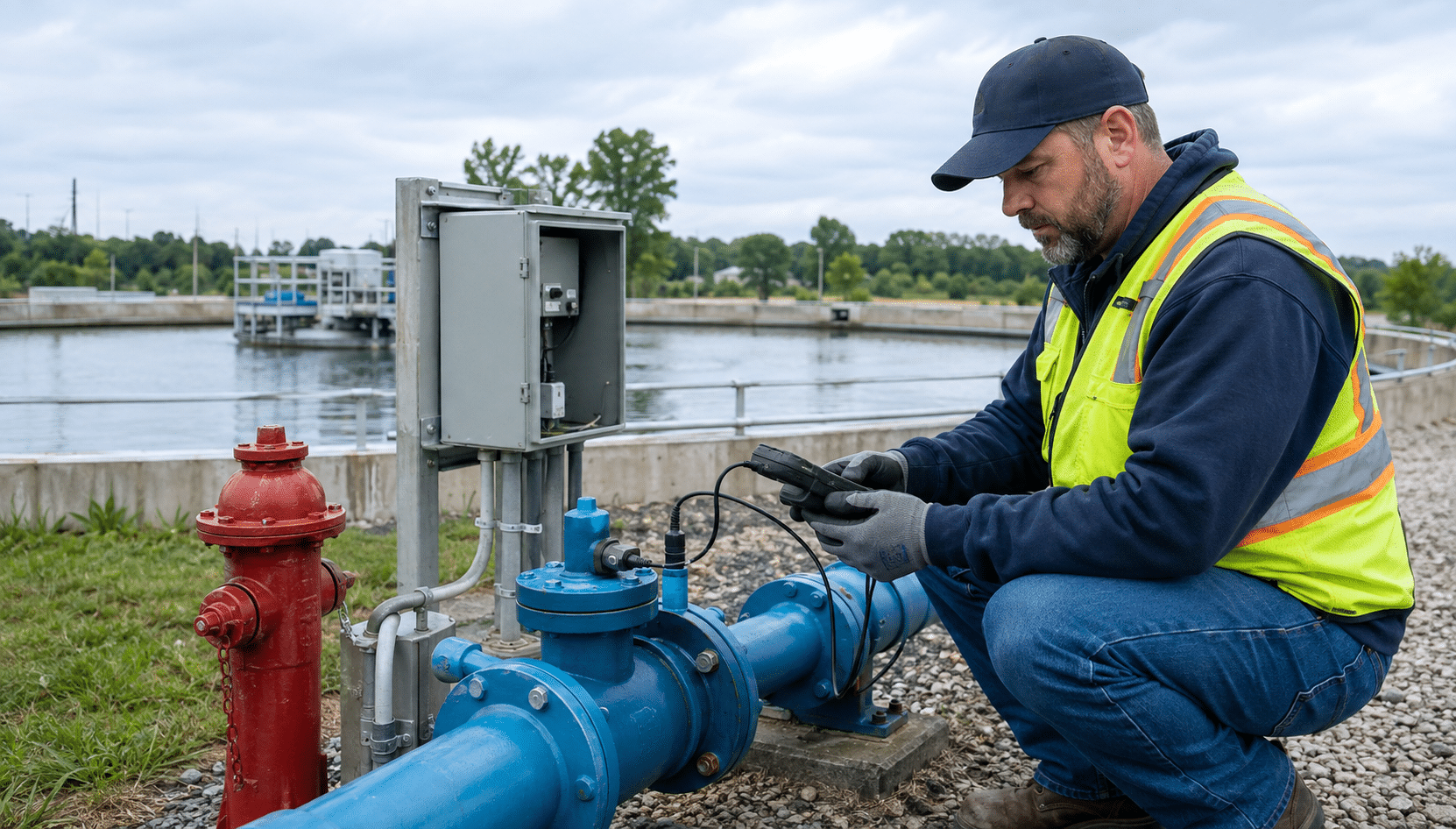
A water distribution operator helps move treated water through mains, storage tanks, valves, pumps, and service connections. The work may include system rounds, pressure checks, valve operation, leak response, records, sampling support, and coordination with repair crews. It is utility work that combines routine monitoring with occasional emergency response, often under state certification requirements.
The title is less familiar than water treatment operator, but the work is practical and local. A normal day may include checking pressure, responding to a main break, locating a valve, collecting a sample, repairing a service line, or documenting a change in the system.
A distribution problem can travel through the system: A pressure complaint may point to a closed valve, a pump issue, a main break, high demand, or an inaccurate gauge. The operator checks the local condition against system records, communicates with dispatch or maintenance, and documents the sequence so the next shift knows what changed.
What does a water distribution operator do?
Duties vary by system size and state license level. Common work includes:
- Inspecting water mains, valves, hydrants, meters, tanks, and booster stations.
- Reading pressure, flow, level, and pump information.
- Operating valves to isolate a leak or support planned maintenance.
- Checking for leaks, low pressure, water loss, and unusual conditions.
- Collecting or coordinating drinking-water samples under the system’s procedures.
- Flushing lines and supporting disinfection after construction or repairs.
- Repairing or replacing service connections and smaller components.
- Recording work orders, readings, repairs, samples, and customer issues.
Some operators work from a truck and move between sites. Others spend more time at a control panel, pump station, or operations center. Small utilities often combine distribution, treatment, meter, and maintenance duties in one job.
Water distribution versus water treatment
| Role | Main focus | Typical work |
|---|---|---|
| Water distribution operator | Move treated drinking water through the network | Mains, valves, hydrants, pressure, storage, leaks, and service lines |
| Water treatment operator | Make raw water safe for use | Filters, chemical feed, disinfection, pumps, samples, and process controls |
| Wastewater operator | Treat used water before discharge or reuse | Collection, biological treatment, solids, testing, and discharge controls |
Our guides to water treatment operator work, wastewater operator careers, and water quality technician jobs cover nearby paths. The difference matters because the license, work environment, and daily equipment may not be the same.
Training and certification
The U.S. Environmental Protection Agency explains that drinking-water operator certification is handled through state programs. Requirements vary by state and by the size or classification of the system. A distribution license may have different grades from a treatment license, and an entry-level worker may complete experience and training while employed.
A high school diploma is commonly enough to start looking at operator trainee or utility maintenance roles. Useful preparation includes basic math, mechanical troubleshooting, safety procedures, reading simple plans, water chemistry, sampling, and accurate recordkeeping. Community colleges and state-approved training providers may offer classes that count toward a license.
Before enrolling, check the rules for the state where you expect to work. Ask whether the course is approved, what grade of license it supports, how much supervised experience is required, and whether the employer will count your previous work. A general environmental certificate is not automatically a drinking-water distribution license.
What equipment do operators use?
A distribution operator may work with valve keys, hydrant tools, pressure gauges, flow meters, pipe locators, chlorine test equipment, radios, tablets, pumps, backflow devices, and work-order software. The job can also involve excavation, traffic control, confined-space procedures, lifting, and coordination with contractors.
Much of the skill is knowing what a reading means. A pressure change could point to demand, a closed valve, a broken main, a pump problem, or an instrument issue. Operators learn the system’s normal patterns and document enough detail for the next person to make a sound decision.
Pay and job outlook
BLS groups drinking-water and wastewater plant and system operators in one national occupation, so it does not publish a separate federal median for water distribution operators. For that combined occupation, BLS reports 131,000 jobs in 2025 and a median annual wage of $60,020 in May 2025. Employment is projected to decline 6% from 2025 to 2035, but BLS still projects about 10,000 openings per year, mostly to replace workers who leave the occupation or retire.
| BLS benchmark | 2025 figure |
|---|---|
| Combined water and wastewater operators | 131,000 jobs |
| Median annual wage, May 2025 | $60,020 |
| Projected change, 2025-35 | -6% |
| Average annual openings | About 10,000 |
This is a benchmark for a combined occupation, not a guaranteed water distribution salary. Local government pay scales, overtime, emergency callouts, license grade, union coverage, location, and whether the job includes treatment work can change the offer.
The real work environment
Distribution work is often outdoors and weather-dependent. You may walk around tanks, work beside roads, enter utility sites, handle wet equipment, and respond when a main breaks. A repair can happen at an inconvenient hour because customers cannot wait for a convenient schedule.
Safety deserves a direct conversation. Ask how the employer handles traffic, excavation, confined spaces, lockout and tagout, biological exposure, chlorine or other treatment chemicals, and emergency callouts. The job can be steady, but it is not always quiet or physically easy.
Is water distribution a good career change after 40?
It can fit someone who wants public-service work with a mechanical and field component. Experience in plumbing, construction, equipment maintenance, utilities, military work, or fleet repair may help with tools and troubleshooting. Customer communication matters too, especially when a repair interrupts service.
The financial question is the time to the first dependable paycheck. Compare the cost of approved classes, testing, work boots, transportation, and any temporary reduction in income with the wage offered to a trainee. Ask whether the utility pays for license classes and whether it has a clear grade progression.
Read local job postings before committing. A small utility may offer broad experience but fewer formal promotion steps. A larger system may have clearer classifications, but the work may be more specialized and shift-based.
Questions to ask before applying
- Which state distribution license or grade is required?
- Can a trainee work while completing the license requirements?
- How much of the job involves excavation, driving, emergency callouts, and customer contact?
- Are sampling, flushing, hydrant, and valve duties part of the normal role?
- Does the employer pay for approved training, exams, and continuing education?
- What is the wage progression after the first license or experience milestone?
Bottom line
Water distribution operator is a hands-on utility career built around pressure, pipes, valves, storage, repairs, records, and public health. The BLS numbers combine water and wastewater operators, so local licensing and the actual job description matter more than a single national figure. Start with your state’s certification rules and a real utility posting, then decide whether the schedule and field work fit your next move.
Sources
- U.S. Bureau of Labor Statistics: Water and Wastewater Treatment Plant and System Operators – duties, training, May 2025 pay, employment, openings, and outlook; checked September 4, 2026.
- U.S. EPA: Operator Certification Program Management – state-based drinking-water operator certification context; checked September 4, 2026.