
A solar maintenance technician keeps photovoltaic systems producing power safely after installation. The work is different from putting panels on a roof. It focuses on inspections, performance data, preventive work, troubleshooting, and repairs.
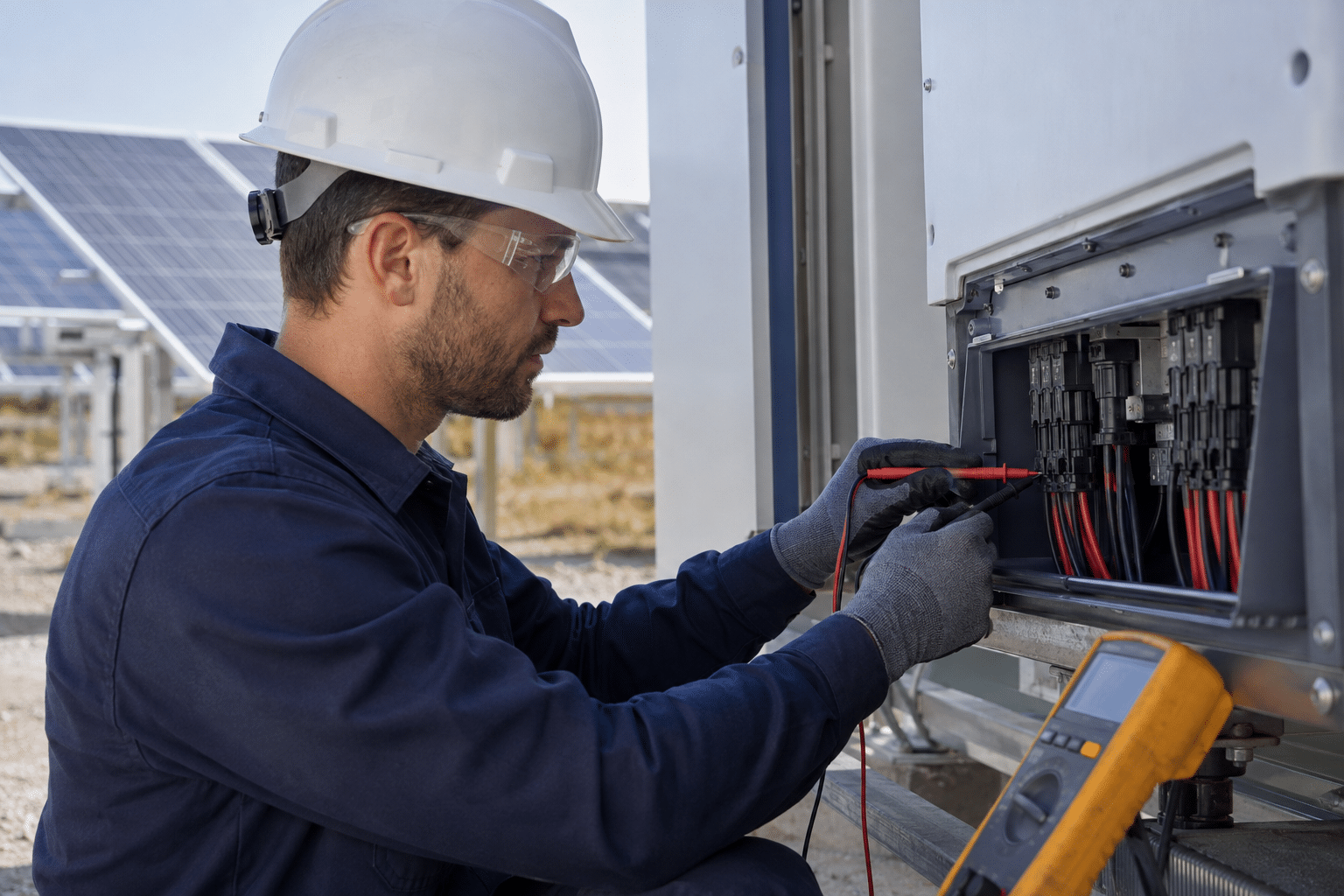
What does a solar maintenance technician do?
- Inspect modules, racking, wiring, disconnects, inverters, and combiner equipment.
- Review production data, error messages, and system availability.
- Look for soiling, shading, corrosion, loose hardware, storm damage, or signs of overheating.
- Test equipment and document faults before a repair or replacement.
- Complete preventive maintenance and verify the system after corrective work.
The Department of Energy recommends planned operations and maintenance for PV systems, including performance monitoring, inspection, testing, and calibration of meters or sensors when required.
Training and certification
Many technicians start with solar installation, electrical work, HVAC, or general maintenance. Training adds DC and AC electrical safety, inverter operation, monitoring software, fall protection, lockout procedures, and manufacturer-specific equipment.
Licensing rules vary by state and by the work being performed. A maintenance worker may need different authorization from an electrician who modifies wiring or connects equipment to the grid. Confirm local rules before accepting a job.
Pay and job outlook
Solar maintenance is not always separated from installation in national wage data. BLS reported a 2025 median annual wage of $53,140 for solar photovoltaic installers, a useful broad benchmark rather than a guaranteed maintenance salary. BLS projects 37 percent growth for that occupation from 2025 to 2035 and specifically connects demand with installation and upkeep.
Is this career a good fit after 35?
This path can work for someone who likes outdoor equipment, diagnostic work, and a mix of routine inspections and unexpected faults. Roof work, heat, weather, electrical hazards, and travel are real parts of the job. Maintenance may suit someone who prefers keeping systems reliable over rushing through new installations.
How to explore the field
Compare openings with solar installer, electrical inspector, and HVAC controls technician roles. Ask whether the employer works on residential rooftops, commercial sites, or utility-scale arrays.
What a normal week can include
Most solar maintenance technicians move between planned work and unexpected questions. The planned side may include inspections, readings, preventive tasks, scheduled service, or a review of records from the previous shift. The unexpected side is where judgment matters: a customer reports a problem, an alarm appears, a measurement does not match the drawing, or a component behaves differently from yesterday. Good work starts by confirming the condition before changing anything.
Because these jobs support rooftop, commercial, and utility-scale photovoltaic systems, the worker may coordinate with operators, customers, engineers, contractors, dispatchers, or a supervisor. A short, accurate handoff is often as important as the physical task. It should explain what was observed, what was tested, what was changed, and what remains open.
Tools, records, and technical judgment
The day-to-day equipment for a solar maintenance technician commonly includes modules, inverters, combiner boxes, disconnects, monitoring portals, meters, thermal cameras, and fall-protection equipment. The list changes by employer, but the habit is consistent: use the right instrument, check that it is suitable for the task, and record enough information for another person to understand the result. Low production can come from shade, soiling, a failed optimizer, a loose connection, inverter behavior, or a monitoring error.
Maintenance documentation should connect alarms and measurements to the correct inverter, combiner, string, tracker, or module location. Record what was isolated, what changed, and how production was verified afterward. Accurate timestamps matter because operations staff may compare your visit with monitoring data, weather, and earlier faults.
Training that actually helps
Preparation may include photovoltaic fundamentals, electrical safety, meter use, mechanical fastening, monitoring platforms, and site-specific switching procedures. Ask which tasks require an electrician or other qualified worker in that jurisdiction. Employer instruction on its equipment fleet is usually essential, even for someone arriving with a general solar credential.
For solar maintenance work, ask whether the crew services rooftop systems, commercial sites, or utility-scale plants. Entry tasks may include inspections, vegetation or housekeeping checks, torque verification, and module replacement, while live electrical diagnosis requires specific training. A good employer defines those boundaries before assigning a route.
Safety and working conditions
Safety depends on the setting. A solar maintenance technician may face electricity, moving machinery, pressure, chemicals, heights, vehicles, weather, confined areas, or stored energy. The correct response is not to improvise. It is to follow the hazard assessment, use the required PPE, isolate equipment when required, and stop when the conditions do not match the work plan.
Daily conditions can mean heat, reflected sunlight, wind, roof access, remote sites, repetitive walking, and driving between arrays. Ask about start times, storm response, fall protection, restroom and shade access, and how heavy modules or inverters are moved. The work is easier to judge after seeing an actual site and service vehicle.
Career fit after 40
This path can suit someone who brings reliability, patience, customer awareness, or practical troubleshooting from another industry. The strongest transferable skill is often not a specific tool; it is the ability to notice a change, ask a precise question, and complete the record. electrical troubleshooting and outdoor service work can be learned, but it is easier when you already respect procedures and take pride in leaving a site or workstation in better condition.
Beginners sometimes focus on the visibly damaged module and overlook connectors, shading, communication faults, or upstream equipment. Follow the site’s troubleshooting sequence and compare expected output with actual operating conditions. A methodical technician who restores one system safely is more useful than someone who rushes through several alarms without confirming the cause.
Where the role can lead
With experience, a solar maintenance technician may move toward solar operations lead, commissioning technician, energy-storage technician, or service manager. Advancement depends on demonstrated competence, additional education, employer structure, and sometimes a license or industry credential. Before applying, ask what the previous person in the role moved on to and whether internal training is available.
Questions to ask before applying
- What does the title mean at this company, and what tasks are outside the role?
- What equipment, software, PPE, and documentation system will I use?
- How are new workers trained and signed off for independent work?
- What are the schedule, travel, physical, and emergency expectations?
- What is the next realistic step after I become competent?