
An electrical inspector checks installations against the applicable code, approved plans, and local requirements. The work may cover rough wiring, service equipment, panels, grounding, equipment connections, and final inspections. It is different from electrical installation because the inspector must apply the authority having jurisdiction’s rules consistently and explain what needs to be corrected.
What does an electrical inspector do?
The work is a mix of field observation, code research, communication, and reporting. Typical tasks include:
- Inspecting wiring, panels, grounding, conduit, disconnects, and equipment connections.
- Checking rough-in work before walls or ceilings are closed.
- Reviewing plans, permits, load information, and change requests.
- Testing or observing electrical systems where local procedures require it.
- Documenting violations and explaining the correction needed.
- Returning for follow-up inspections and closing permits when the work passes.
An inspector does not normally redesign a project for the contractor. The role is to apply the relevant rules consistently, record what was found, and communicate the next step.
Electrical inspector vs. electrician
Electricians install, maintain, and repair electrical systems. Inspectors review the work and decide whether it meets the applicable requirements. Many inspectors begin with experience as an electrician, but the two jobs have different responsibilities and daily rhythms.
Inspection work can involve less hands-on repair and more walking, documentation, code interpretation, and conversations with contractors or property owners. A person who likes electrical systems but wants to move away from constant installation may find that difference appealing.
How to become an electrical inspector
Requirements vary by state, city, and employer. A high school diploma is common, and construction or electrical trade experience is often valuable. Some jurisdictions require an inspector license or certification, while others hire inspectors and provide training through the department.
Training usually covers the adopted electrical code, permit procedures, plan review, report writing, inspection methods, and legal limits of the role. Credentials from organizations such as ICC may be requested, but the local authority remains the best place to confirm which certification is accepted.
Before paying for a course, read local job postings and call the building or electrical inspection office. Ask whether electrician experience is required, which code edition is used, whether an exam is required, and whether the employer supports certification after hiring.
Pay and career data
The BLS places electrical inspectors within the broader construction and building inspectors group rather than publishing a separate national profile. That group reported a median annual wage of $74,690 in May 2025. The figure includes several kinds of inspectors, so it is a benchmark rather than a promise for an electrical inspection job.
| Factor | What to check locally |
|---|---|
| Entry route | Electrical trade experience, inspection training, or both |
| Authority | City, county, state, utility, employer, or third-party agency |
| Work mix | Field inspections, plan review, reports, and follow-up visits |
| Credential | Local license, ICC certification, or employer-specific qualification |
| BLS context | Construction and building inspectors, $74,690 median in 2025 |
What the work is really like
Inspectors work in finished buildings, construction sites, mechanical rooms, attics, crawl spaces, and outdoor areas. The job may require ladders, tight spaces, dust, heat, cold, and repeated walking. It also requires tact. A contractor may disagree with a correction, and the inspector still has to explain the decision clearly and professionally.
Schedules are often more regular than an installation or service role, although deadlines, travel between sites, and public-facing work can add pressure. Accuracy matters because an incomplete inspection can leave a safety issue hidden behind a finished wall.
Could it fit after 40?
Electrical inspection can suit an experienced electrician, maintenance worker, construction supervisor, or technically minded career changer who enjoys rules and documentation. The transition is easier when you already understand circuits, equipment, tools, and jobsite practice.
Make the decision from actual local requirements. Compare the time and cost of certification with the experience employers want, then ask an inspection office what makes a new hire useful during the first six months.
Inspect against the approved basis
An electrical inspector compares installed work with applicable requirements, approved plans, permits, listed equipment instructions, and local amendments. Before the visit, identify the inspection stage and what will become concealed. On site, confirm the location and scope before focusing on details. A remembered code rule is not enough when the drawing revision or equipment conditions change the question.
Correction notices should state where the condition exists, what was observed, and what requirement or approved detail applies. Avoid designing the contractor’s solution. Clear photographs and notes help with reinspection and appeal. When the issue requires engineering judgment or another trade’s authority, route it correctly instead of stretching the electrical inspection beyond its scope.
Verify the local qualification route
Jurisdictions differ in experience, certification, civil-service, and licensing expectations. Ask whether trainees ride with senior inspectors, how field decisions are reviewed, and which disciplines they cover. Consider driving, ladders, unfinished sites, weather, conflict, and report workload. Prior electrical experience helps, but the role also requires patience and consistent public-facing communication when a failed inspection delays a project.
Before accepting a municipal or third-party role, ask how workload is assigned. Daily inspection counts, travel between distant sites, emergency calls, and time for reports all affect quality. A schedule that leaves no room to read plans or document corrections encourages superficial visits. Find out how supervisors review difficult calls and whether inspectors meet to calibrate interpretations. Consistency matters when contractors work across several districts. Prepare by practicing respectful boundary setting. Contractors may ask for design advice, advance approval, or exceptions on site. Explain the observed issue and official process without becoming the project’s consultant. If you make an error, correct the record promptly. Public confidence depends less on pretending to be infallible than on applying the same process transparently.
Carry the approved plans and local reference in a form that works on site. Verify revisions before the inspection, especially when contractors submit changes shortly before work is covered.
Record unresolved questions before leaving the site and identify who must answer them before approval can proceed.
Sources
- U.S. Bureau of Labor Statistics: Construction and Building Inspectors
- International Code Council: Inspector certifications
- NFPA 70, National Electrical Code information
Related reading: Electrical Technician, Electrical Engineering Technician, and Building Inspector.
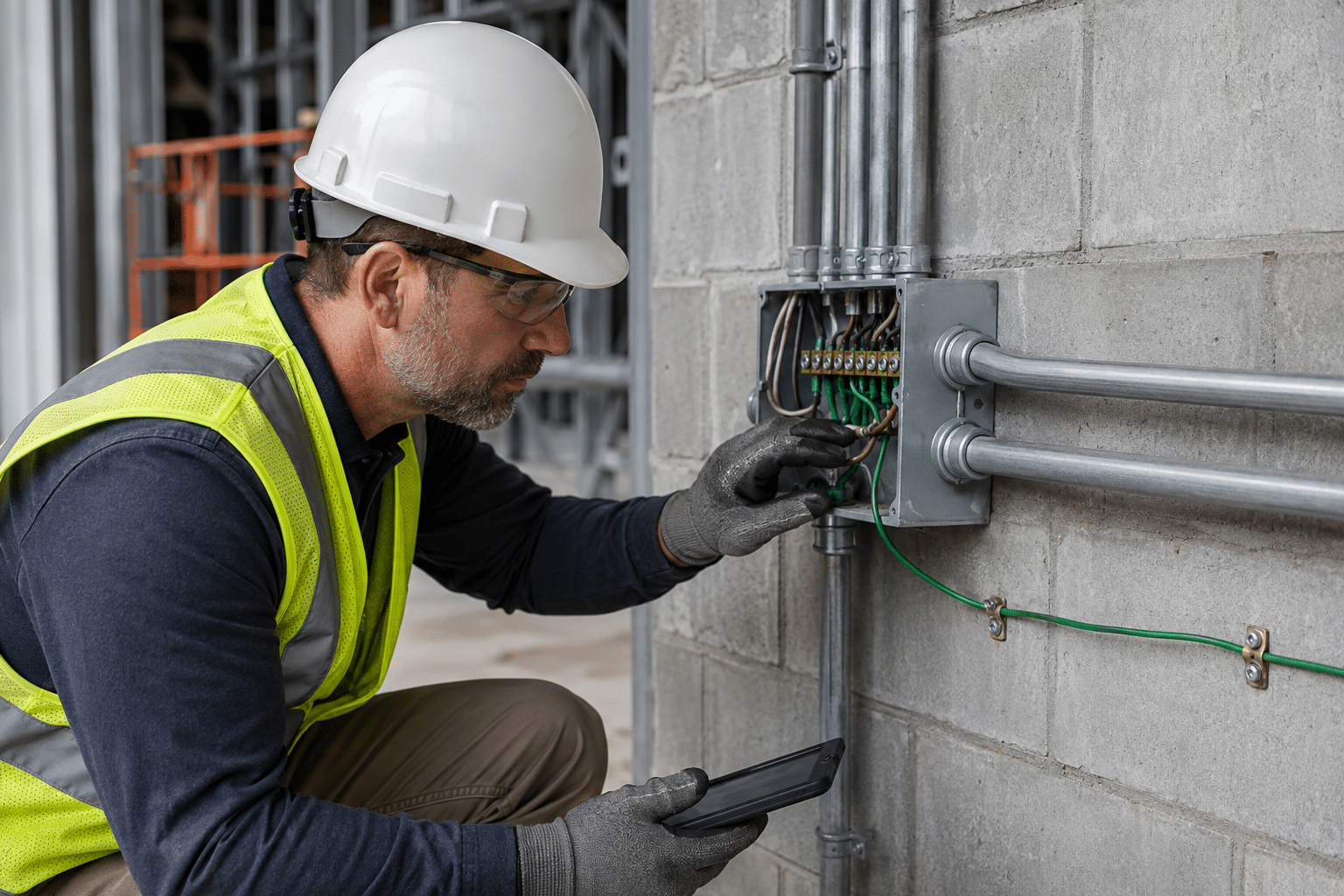
A failed inspection is often about a detail: The inspector may find an incorrect conductor, missing bonding connection, inaccessible equipment, incomplete labeling, or a change that is not reflected in the approved plan. A clear correction notice should tell the contractor what was observed and what requirement must be met.