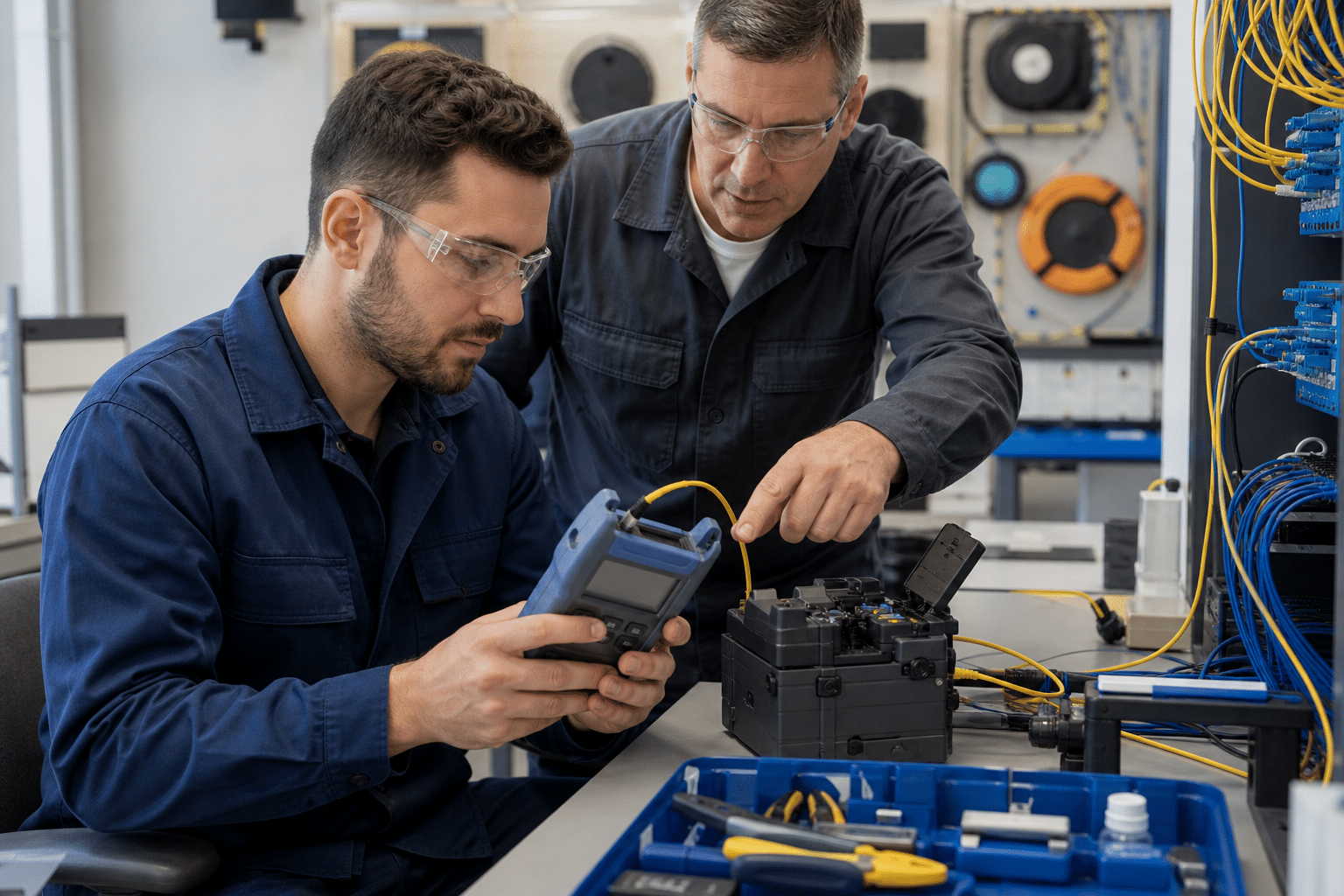
A robotics technician keeps automated equipment working safely and consistently. The job may involve checking a robot cell, replacing a sensor, adjusting a gripper, tracing a fault, loading a controlled program, or helping production recover after a stoppage. The title sounds futuristic, but much of the work is practical electrical, mechanical, and process troubleshooting.
The title sounds futuristic, but much of the work is practical. You need electrical and mechanical basics, patience with troubleshooting and respect for the safety boundary around moving equipment.
What does a robotics technician do?
The exact work depends on the factory. A technician may support robotic welding, packaging, material handling, assembly, painting or inspection. Common tasks include preventive maintenance, cable and connector checks, sensor testing, pneumatic troubleshooting, end-of-arm tooling, teach pendant operation and documentation.
| System | Typical responsibility |
|---|---|
| Robot arm | Check alarms, joints, cables, tooling and programmed motion |
| Sensors | Verify wiring, position, proximity and signal behavior |
| PLC and controls | Trace inputs, outputs and interlocks with the controls team |
| End-of-arm tooling | Inspect grippers, weld guns, vacuum and alignment |
| Safety system | Test gates, light curtains, emergency stops and restart rules |
A robotics technician is not automatically a robotics engineer. Engineers may design cells and develop systems. Technicians usually install, maintain, troubleshoot and improve equipment within defined procedures.
Robotics technician vs related jobs
An automation technician may work across PLCs, drives, robots and production controls. A controls technician often focuses more directly on sensors, PLC logic and control panels. An electromechanical technician may cover the motors, mechanisms and electronics around the cell.
How do you enter the field?
Useful foundations include electrical safety, DC and AC circuits, mechanical maintenance, pneumatics, schematics, sensors, motor controls and basic PLC logic. A mechatronics or electro-mechanical program can provide a structured start. A maintenance helper, machine operator or assembler role can also become a route into automation if the employer offers supervised training.
Ask schools whether students work on real robot cells, use industrial controls and practice fault diagnosis. A course that only demonstrates software may not prepare you for cables, guarding, tooling and production pressure.
Pay and outlook
There is no single BLS occupation called robotics technician. The closest broad benchmark is electro-mechanical and mechatronics technologists and technicians. The BLS reported a $73,900 median annual wage in May 2025 for that group and notes that autonomous systems and robotics may support demand.
That figure is a benchmark for a wider occupation, not a promise for every robotics job. An employer may classify the role under mechatronics, industrial maintenance, controls or engineering technology. Compare the duties and shift before comparing salary.
Safety is not optional
Robots can move unexpectedly and may restart when a fault is cleared. OSHA hazardous-energy rules and the employer’s cell-specific procedures matter. A technician must know when to isolate energy, when a diagnostic mode is allowed and who can authorize a return to production.
Ask about lockout/tagout, machine guarding, light curtains, emergency stops, teach-mode rules and arc-flash training. If a workplace treats bypassing a guard as normal, the pay is not compensating for the risk.
Is it realistic after 40?
Robotics can suit a career changer with experience in machinery, electrical work, automotive diagnostics, maintenance, welding or technical support. The work rewards people who can stay calm while a production line is waiting.
The learning curve is real. Expect technical documentation, shift work, hands-on repairs and continuing training as equipment changes. Compare the first realistic wage and schedule, not a senior automation salary. Visit a lab or plant if possible, then build a small skills plan around schematics, safe measurement, sensors, pneumatics and basic PLC troubleshooting.
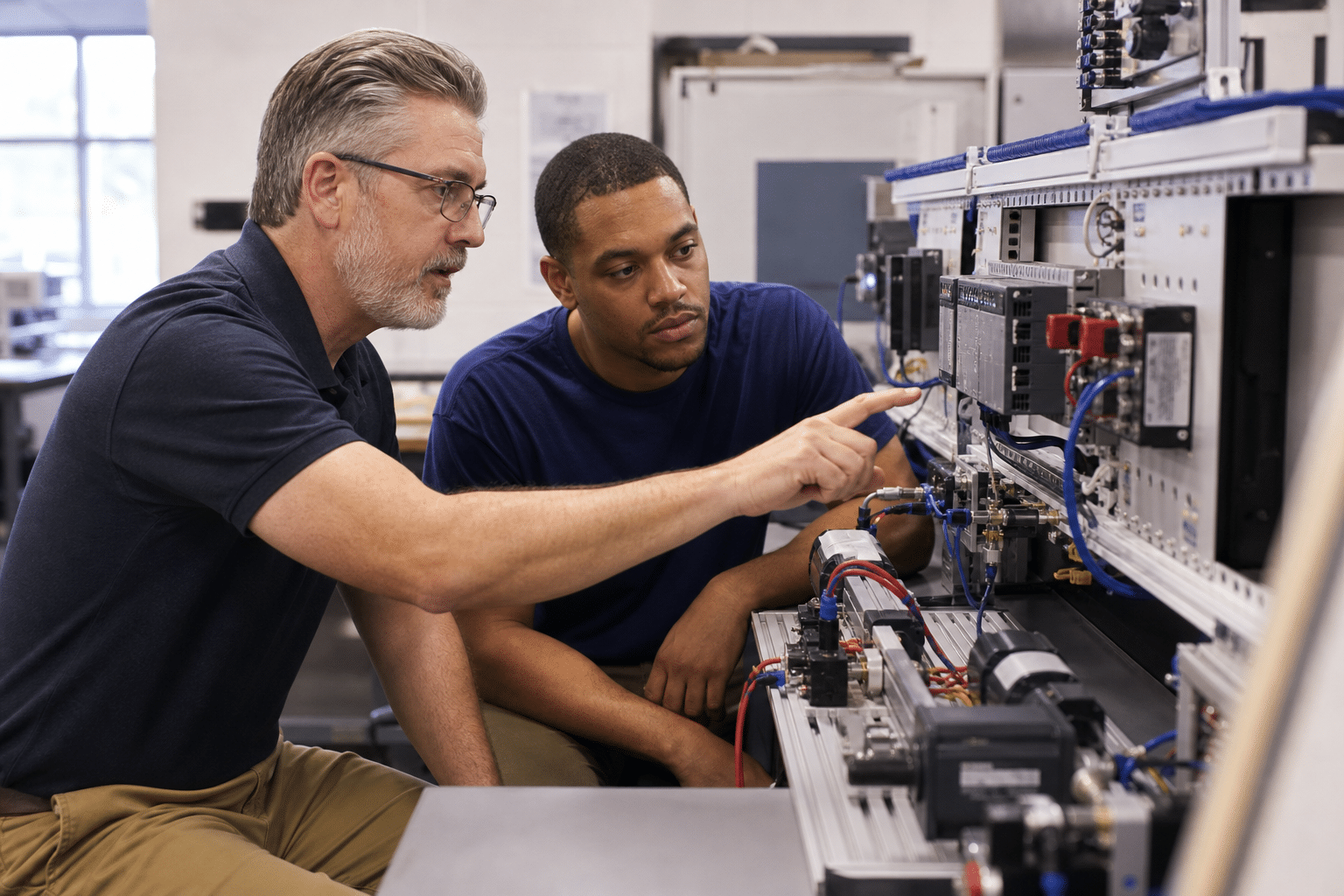
A robot fault may begin outside the robot: The cell can stop because of a safety circuit, sensor, fixture, air supply, network connection, or part-position problem. The technician follows the fault history and safety procedure, checks the surrounding equipment, and verifies the cell through a controlled restart.
Bottom line
Robotics technician is a hands-on automation career, not a shortcut into engineering. It is a good fit if you like machines, logic and careful fault-finding. Choose another route if you want mostly design work or a job with no production deadlines.
Related guides: Aircraft Mechanic Salary: Pay, A&P and Career Outlook and Substation Technician: Duties, Training, Pay and Career Fit.
What a first robotics job usually asks you to prove
Robotics employers rarely expect an entry-level applicant to arrive as a programmer who can redesign an entire cell. They do want evidence that you can work carefully around automated equipment. In an interview, that may mean explaining how you would read an alarm, verify a sensor, follow a restart procedure, or document a recurring fault instead of guessing.
Build a small body of proof while training. Keep photos or notes from lab projects when your program permits it. Practice reading wiring diagrams, tracing I/O points, and describing what a robot cell does from the safety gate to the end-of-arm tool. If you have prior maintenance experience, translate it into the language employers use: preventive work, fault isolation, schematics, pneumatics, motor controls, and shift handoff notes.
The split between setup work and production support is worth asking about. One plant may give technicians time to improve a fixture or troubleshoot a repeat fault. Another may need fast recovery during a night shift. Neither is automatically better, but the schedule and pressure feel very different. Compare this role with an automation technician position when you read postings, because the titles overlap in many factories.
A practical first step is to ask a local employer which controls platform and equipment they use, then see whether your program gives you exposure to the fundamentals. You do not need a perfect match. You do need enough hands-on confidence to learn safely once you are on the floor.
When you visit a plant, watch the handoff between operators and maintenance. A good robotics environment makes it clear who can reset a fault, who can change a program, and when the line must stay locked out.
Sources
- BLS: Electro-mechanical and Mechatronics Technologists and Technicians – pay, training and outlook; checked September 2, 2026.
- OSHA: Control of Hazardous Energy – lockout/tagout principles; checked September 2, 2026.
- Apprenticeship.gov: Advanced Manufacturing – apprenticeship and OJT context; checked September 2, 2026.
Reviewed September 3, 2026: Robotics technician work is usually practical equipment support: sensors, grippers, programs, faults, and safe recovery after a stoppage. Ask which robot platforms and controls a local employer uses. Compare it with automation technician work.