A substation technician helps maintain and test the equipment that moves electricity between transmission and distribution systems. The work may involve breakers, transformers, disconnects, relays, batteries, controls, grounds, and records. It is specialized electrical work with strict switching, clearance, and safety procedures, so the training route and level of authorization matter before applying.
The job is not simply a lineworker role on the ground. Substation work happens inside fenced utility sites, industrial substations, and power facilities. Technicians may support planned maintenance, testing, commissioning, switching, emergency repairs, or upgrades for a more automated grid.
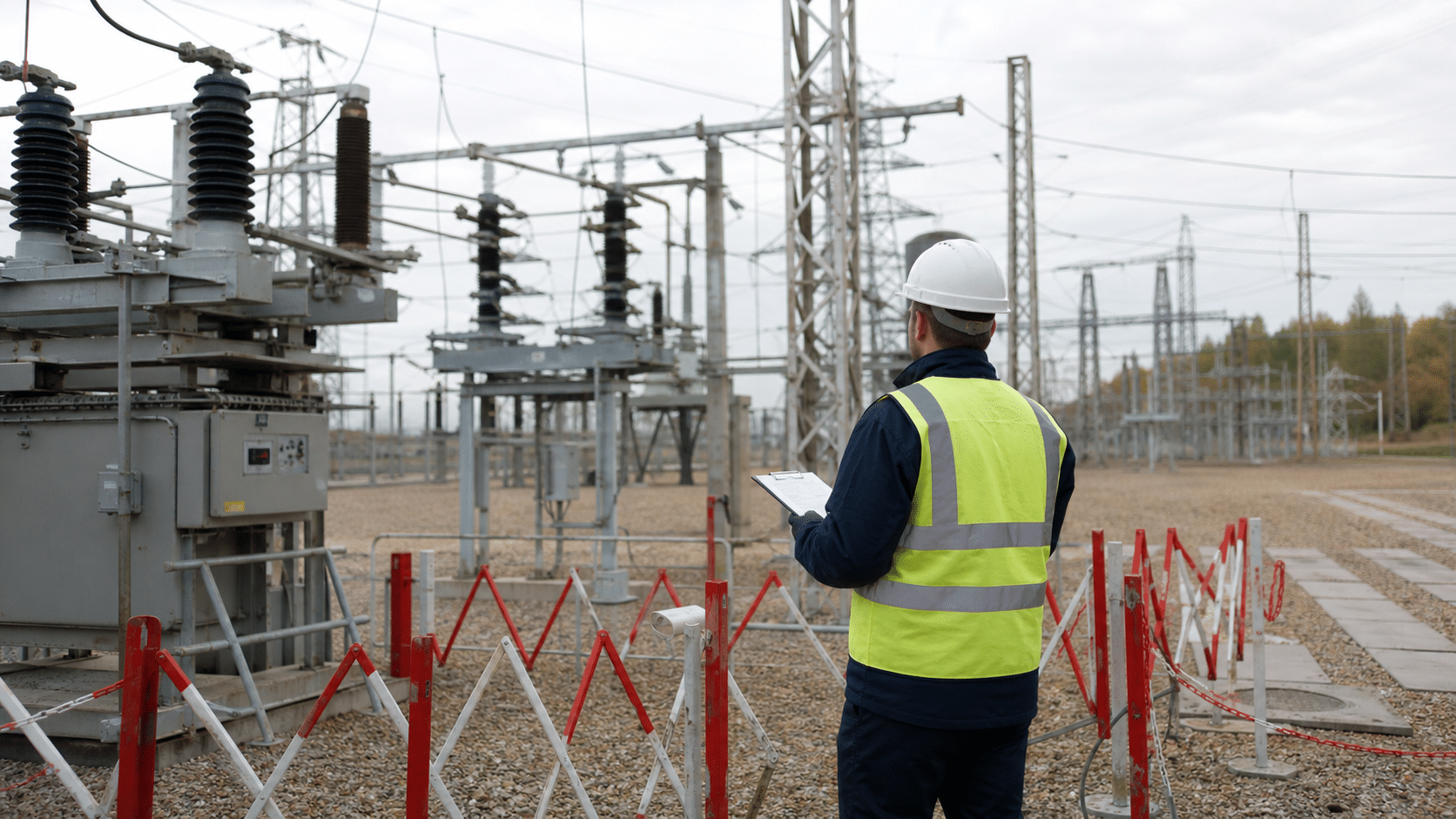
A substation problem is rarely solved by one reading: The technician may compare relay information, equipment condition, battery status, oil or temperature clues, and the switching plan before escalating a fault. The job requires accurate communication because an incorrect assumption can affect a much larger part of the grid.
What does a substation technician do?
The exact duties vary, but a technician may:
- Inspect transformers, breakers, switches, relays, batteries, and control cabinets.
- Test protective relays, meters, wiring, and communication circuits.
- Read one-line diagrams, wiring diagrams, manuals, and switching instructions.
- Assist with equipment installation, replacement, commissioning, or shutdown work.
- Check alarms, control signals, and remote monitoring systems.
- Perform maintenance on deenergized equipment under an approved work plan.
- Apply or verify grounding and isolation procedures as directed.
- Record test results, defects, parts, clearances, and completed work.
Some roles are closer to relay testing and protection and control. Others emphasize construction, transformer maintenance, substation equipment, or field service. Read the posting carefully. Two jobs with the same title can have different training and travel requirements.
Substation technician versus related work
| Role | Main focus | Typical difference |
|---|---|---|
| Substation technician | Equipment, testing, controls, and maintenance in substations | Works on transformers, breakers, relays, wiring, and protection systems |
| Linemen | Overhead and underground lines | Installs and repairs conductors, poles, and line equipment |
| Industrial electrician | Electrical systems in plants and facilities | Often works on motors, panels, controls, and plant distribution |
| Relay technician | Protective relays and power-system testing | More specialized focus on protection, commissioning, and test results |
| Power plant operator | Generation equipment and control-room operations | Operates generation systems rather than focusing on substations alone |
Compare our guides to lineman apprenticeships, industrial electrician work, and power plant operator careers before choosing a route.
Equipment and skills
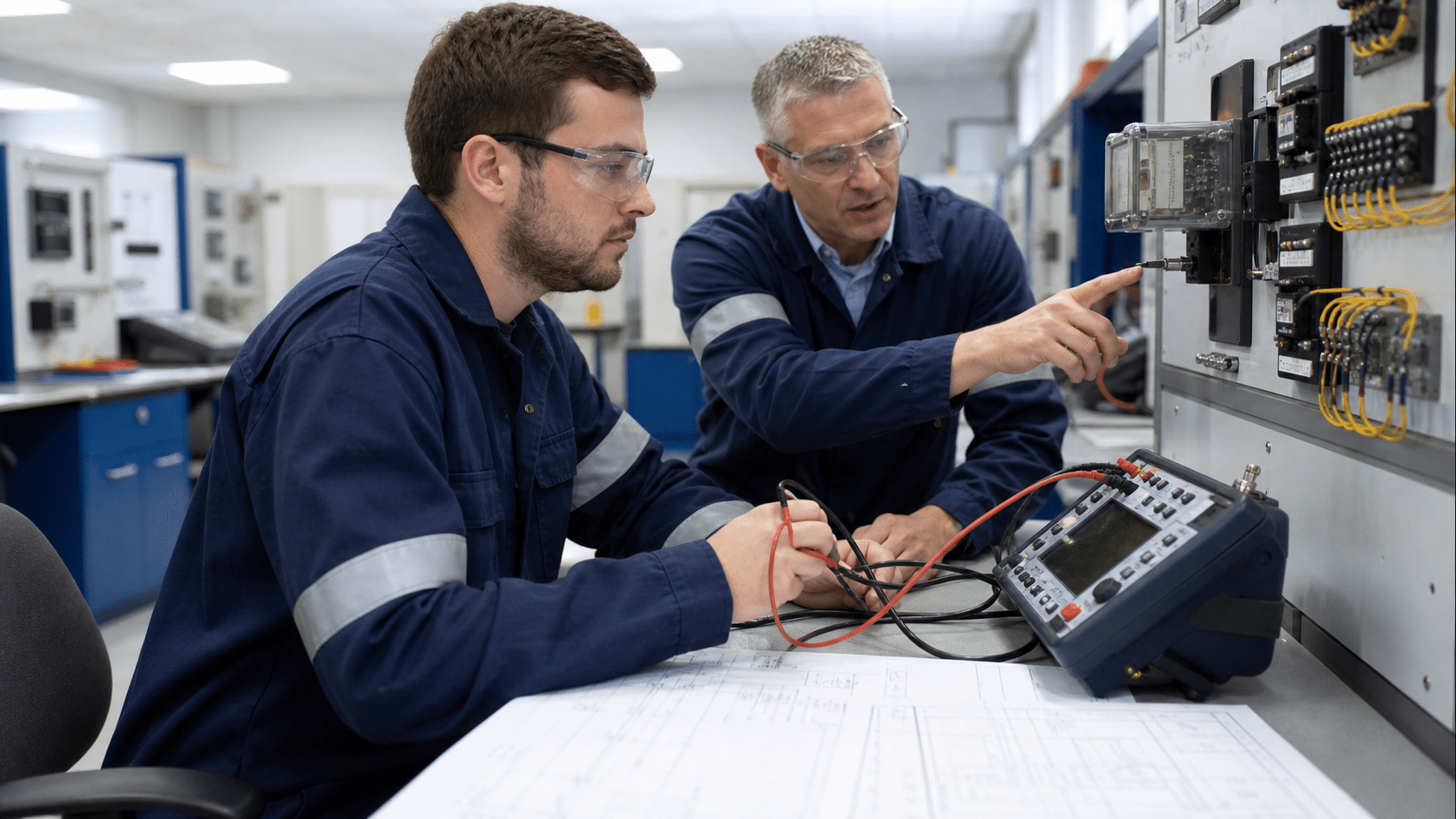
Substation technicians may use multimeters, insulation testers, relay test sets, voltage detectors, phasing tools, torque tools, battery analyzers, laptops, drawings, and grounding equipment. The equipment and authorization level depend on the employer and the job.
Useful foundations include:
- AC and DC electricity, transformers, breakers, relays, and control circuits.
- Reading one-line diagrams, wiring diagrams, schematics, and test procedures.
- Careful use of meters and test equipment with documented results.
- Mechanical ability for covers, cabinets, connections, lifting, and equipment access.
- Clear communication during briefings, switching, testing, and handoffs.
- Strong attention to equipment identification, labels, boundaries, and sequence.
Good troubleshooting is deliberate. The technician must know which circuit is being tested, which energy sources are present, what the test should show, and who is in charge of the work. Speed matters less than getting the sequence and the record right.
Training and entry routes
BLS says powerhouse, substation, and relay electrical and electronics repairers may gain experience by first working as electricians. Employers may also prefer electronics or electrical courses at a community college or technical school, especially programs with practical lab work.
Apprenticeships, utility training programs, military electrical experience, and industrial maintenance can all be relevant. Apprenticeship.gov’s occupation listing identifies the broader powerhouse, substation, and relay repairer occupation. The sponsor may use a different job title or require aptitude tests, a driver’s license, background checks, or prior electrical experience.
Training should cover electrical theory, drawings, transformers, breakers, relays, batteries, grounding, testing, and safety. A short online course cannot authorize someone to work around high-voltage equipment. Ask who provides field qualification and how the employer evaluates readiness.
Substation technician pay and outlook
BLS places substation technicians in the detailed occupation Electrical and Electronics Repairers, Powerhouse, Substation, and Relay. The category included about 20,900 jobs in 2025. Its median annual wage was $103,020 in May 2025. BLS projects 10% growth from 2025 to 2035, or about 2,000 additional jobs.
| BLS comparison category | 2025 jobs | May 2025 median pay | 2025-35 projection |
|---|---|---|---|
| Electrical and electronics repairers, powerhouse, substation, and relay | 20,900 | $103,020 | 10% growth |
This is a useful national benchmark, not a guaranteed starting salary for every substation technician. Pay can reflect union status, utility versus contractor employment, testing specialization, travel, overtime, storm work, location, and years of qualification. Ask whether a posting’s rate includes per diem, overtime, standby, or emergency callout pay.
Safety and the work environment
Substations may be indoors or outdoors, and many are remote field sites. Work can involve weather, uneven ground, heavy components, noise, electrical hazards, batteries, induced voltage, and strict access controls. Some projects involve climbing, lifting, or long days during a scheduled outage.
OSHA’s electric power standard, 1910.269, covers the operation and maintenance of power generation, transmission, and distribution lines and equipment. OSHA also explains that substations can be transmission switching points, voltage transformation sites, or sources of distribution circuits.
Only qualified employees may work on or near exposed energized parts under the applicable rules. Deenergizing, testing, grounding, minimum approach distances, job briefings, and site boundaries are not optional details. A prospective employer should be able to explain how those controls are taught and supervised.
Is substation work a good career change after 40?
It can suit someone who prefers technical field work, electrical systems, and careful procedures. Electrical, industrial maintenance, controls, military, and utility experience may help. The strongest candidates tend to be comfortable with documentation and disciplined safety, not just with tools.
The trade-offs are real. You may travel, work outdoors, respond to storms, take overtime during outages, or spend months building qualifications before working independently. Compare the employer, apprenticeship or training path, first-year income, travel rules, and safety culture. Our career-change roadmap after 40 can help you make the comparison.
Questions to ask before enrolling or applying
- Is the role maintenance, construction, relay testing, commissioning, or a mix?
- What equipment will a new technician work on first?
- Which electrical qualifications and employer-specific authorizations are required?
- How are travel, storm response, standby, overtime, and per diem handled?
- How much of the work is outdoors, remote, or performed during outages?
- What training is required before a worker can enter a substation or test equipment independently?
Bottom line
Substation technician is a specialized electrical career tied to the reliability of the power system. It combines testing, maintenance, diagrams, equipment, field work, and strict energy controls. The BLS benchmark is attractive, but the path requires real electrical training and employer qualification. Read the job duties and safety expectations before treating the salary number as a reason to switch careers.
Related guides: Semiconductor Processing Technician: Duties, Training, Pay and Career Fit and Commercial Diver: Duties, Training, Pay and Career Fit.
Sources
- BLS: Electrical and Electronics Installers and Repairers
- OSHA: Electric power generation, transmission, and distribution
- OSHA: Substations eTool
- Apprenticeship.gov: Powerhouse, Substation, and Relay Repairers
\n
Reviewed September 3, 2026: Substation technician work involves electrical equipment, testing, safety procedures, and utility-specific training. Ask about travel, switching rules, physical access, and progression before applying. Compare the route with industrial electrician work.
\n