
Aircraft mechanic salary figures make more sense when you separate the national occupation from the first job a new mechanic can realistically obtain. Pay varies with A&P certification, aircraft type, employer, location, shift, overtime, union status, and experience. A national median is a useful benchmark, but it is not a promise about the offer attached to your first certificate.
The U.S. Bureau of Labor Statistics reported a median annual wage of $79,870 for aircraft mechanics and service technicians in May 2025. That works out to about $38.40 an hour before taxes if divided across 2,080 hours. The median includes workers at different experience levels, employers and locations. It is a useful benchmark, not a guaranteed starting wage.
The latest aircraft mechanic salary benchmark
The BLS places aircraft mechanics and service technicians inside the broader occupation of aircraft and avionics equipment mechanics and technicians. Its May 2025 data give this national reference:
| BLS measure | May 2025 figure |
|---|---|
| Aircraft mechanics and service technicians, median | $79,870 per year |
| Approximate hourly equivalent | $38.40 |
| Broader aircraft and avionics occupation, median | $81,470 per year |
| Projected growth, 2025 to 2035 | 6% |
The broader figure combines aircraft mechanics with avionics technicians, so the $79,870 aircraft-mechanic number is the more useful starting point for this article. Neither number tells you what a new hire will earn in a particular hangar.
The BLS also projects about 13,100 openings per year in the broader occupation over the decade. Openings include growth and workers who leave the occupation. They do not mean every applicant will find a job nearby.
Why aircraft mechanic pay varies so much
Aircraft maintenance is not one uniform job. A mechanic working overnight line maintenance at a major airport may have a different wage structure from someone maintaining small aircraft at a general aviation shop. A repair station, cargo carrier, helicopter operator and aircraft manufacturer can also set different requirements and pay scales.
| Pay factor | What to check |
|---|---|
| Certification | Is an FAA A&P certificate required, preferred or unnecessary for this role? |
| Work setting | Airline, cargo, repair station, general aviation, manufacturing or government contractor |
| Schedule | Days, nights, rotating shifts, weekends and holiday coverage |
| Experience | Time in the exact aircraft, engine, inspection or maintenance system |
| Location | Local labor market, airport access and cost of living |
| Total package | Overtime rules, shift differential, health coverage, retirement and paid leave |
This is why two jobs with the same title can produce very different annual earnings.
Does an A&P certificate raise your salary?
An FAA mechanic certificate with Airframe and/or Powerplant ratings can expand the jobs you are eligible to consider. It does not create one national pay rate, and it does not guarantee a raise at every employer.
The certificate matters because aircraft maintenance is controlled work. Employers may need people who can perform or approve tasks within their authorization, follow maintenance data, document work and understand the limits of their privileges. Some roles require both ratings, while others hire people into supervised or specialized positions before they have the complete credential.
The FAA recognizes several ways to qualify for the mechanic tests, including an FAA-certificated Aviation Maintenance Technician School, documented practical experience and qualifying military experience. The route you choose affects your tuition bill, the time before you can test and the quality of your first job options. Our aircraft mechanic training guide explains those routes in more detail.
Do not treat a school certificate, an employer qualification and an FAA A&P certificate as interchangeable. They can each help, but they are different things.
What should a beginner expect?
The national median is not an entry-level promise. A new mechanic may start below it while building aircraft-specific experience, completing probation, earning ratings or learning the employer’s procedures.
An apprenticeship or trainee role may pay less at first but provide supervised experience and a clearer progression. Another employer may offer a higher hourly wage but require tools, night work, relocation or prior experience on a particular aircraft family.
Before comparing numbers, ask:
- Is the quoted wage the base rate or does it assume overtime?
- Does the job require an A&P on day one?
- When do benefits begin?
- Is training paid, and who pays for tests or tools?
- What raises are written into the progression?
- How many hours are normally available?
An offer at $30 an hour with reliable benefits and a predictable 40-hour week may be more useful than a higher headline rate that depends on excessive overtime or an unstable schedule.
Airline, repair station or general aviation?
Airline and cargo maintenance can offer structured pay scales, shift premiums and overtime. The trade-off may be nights, weekends, weather exposure on the ramp, security requirements and a commute to an airport.
Repair stations may work on specialized aircraft or components. The work can be a good fit for someone who likes inspection, documentation and repeatable processes, but the schedule and advancement path depend heavily on the employer.
General aviation shops may offer broader exposure to aircraft and customers. They can also be smaller, with less formal wage progression. Ask how much of the week is hands-on maintenance, how supervision works and what certificate or inspection authority the role supports.
Manufacturing and overhaul work may feel more like industrial production than airport line maintenance. The salary can be competitive, but the job title alone does not tell you whether the work involves assembly, inspection, component repair or final testing.
Overtime can distort the annual number
Aircraft maintenance often runs outside a standard weekday schedule. Nights, weekends, holidays, storm recovery and aircraft delays can create overtime or premium pay. That can lift annual earnings, but it can also make the advertised salary hard to reproduce without giving up time and recovery.
Separate the offer into three numbers:
- Guaranteed base pay.
- Realistic annual pay at the normal schedule.
- Possible pay if overtime, shift premiums or travel are accepted.
This split helps you compare aircraft maintenance with industrial maintenance, avionics or another technical path. The avionics technician guide is useful when you prefer electronics, testing and aircraft systems over mechanical work.
Is aircraft mechanic work a realistic change after 40?
Age is not the only financial issue. The important question is how long it will take to reach the job and pay level you want.
Count the cost of training, tools, transport, exams, reduced income and possible relocation. Then compare those costs with the first realistic wage, not the BLS median. Your previous experience may help with maintenance discipline, electrical troubleshooting, documentation, manufacturing or safety, but aviation employers still need evidence that you can work to aviation rules.
The physical demands also deserve a trial. Some jobs involve standing, climbing, reaching, kneeling, lifting, noise and cramped spaces. Other roles are more inspection or component focused. Talk with a working mechanic, visit a school or ask about job shadowing before paying tuition. The career change at 40 roadmap can help you build the cash-flow comparison.
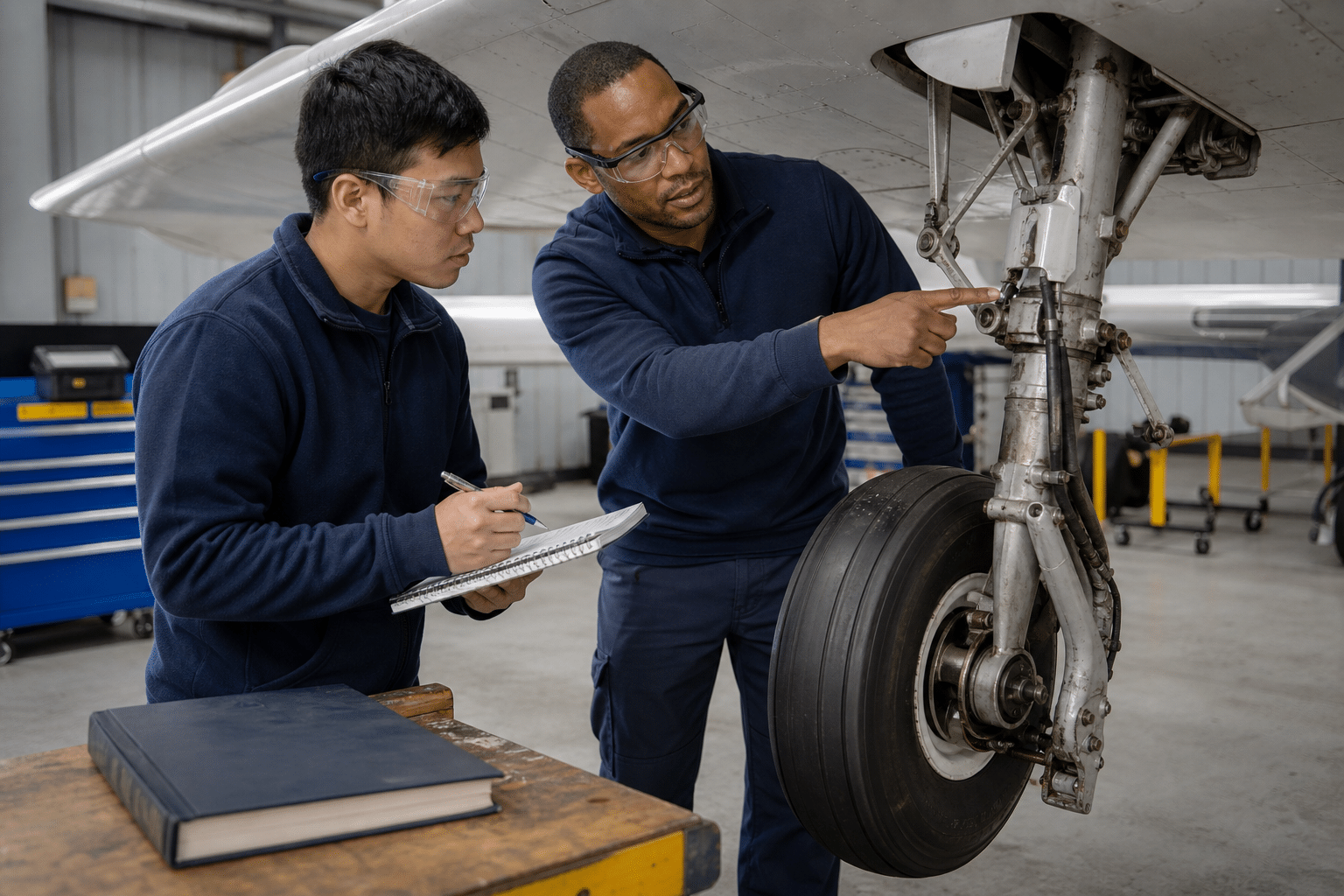
Compare the offer behind the number: Ask whether the job requires an A&P, which aircraft and maintenance tasks are involved, how the shift and overtime work, and when progression occurs. A lower starting wage with supervised experience on a strong aircraft platform may lead somewhere different from a higher wage with narrow or irregular work.
Bottom line
The latest BLS aircraft mechanic salary benchmark is $79,870 at the median for aircraft mechanics and service technicians. It describes an established national workforce, not the first paycheck after training.
The strongest comparison looks at A&P requirements, employer type, aircraft experience, shift, overtime, benefits and location together. If you want a regulated hands-on career and can accept detailed records and irregular hours, aircraft maintenance deserves a closer look. If you mainly want a short course and a predictable daytime schedule, the headline salary will give you the wrong picture.
Related guides: Substation Technician: Duties, Training, Pay and Career Fit and Semiconductor Processing Technician: Duties, Training, Pay and Career Fit.
Sources
- U.S. Bureau of Labor Statistics: Aircraft and Avionics Equipment Mechanics and Technicians – May 2025 pay, outlook, duties and work conditions; checked September 2, 2026.
- Federal Aviation Administration: Become an Aviation Mechanic – certificate ratings, experience routes and testing; checked September 2, 2026.
- Federal Aviation Administration: Experience Requirements – AMTS, OJT and military experience; checked September 2, 2026.
- Apprenticeship.gov: Aircraft Mechanics and Service Technicians – related registered apprenticeship occupation information; checked September 2, 2026.
\n
Reviewed September 3, 2026: Aircraft mechanic pay depends on the A&P credential, aircraft type, employer, location, shift, and overtime. Separate the national benchmark from the first offer and review the training route in aircraft mechanic work.