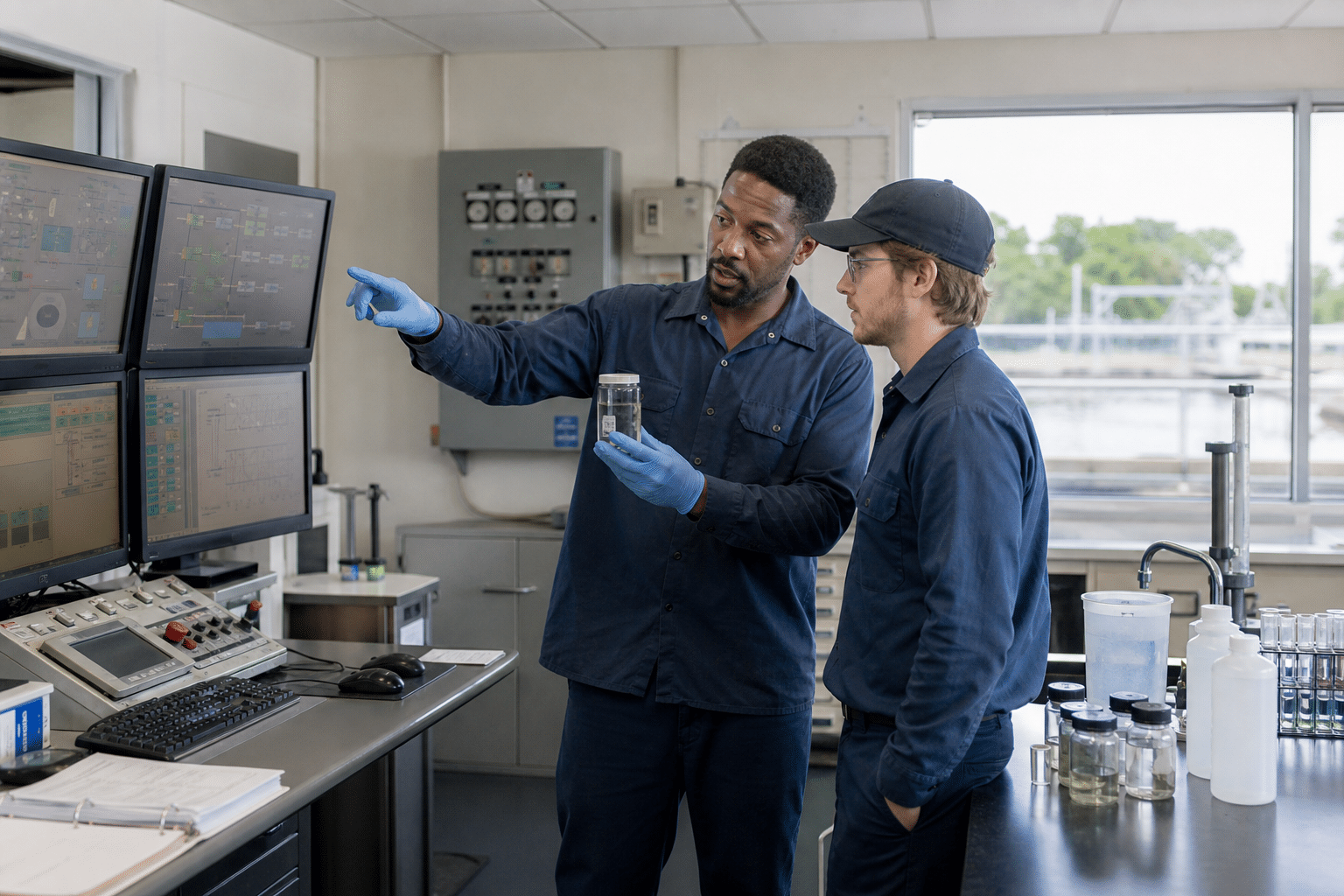
A water treatment operator manages the equipment and processes that make water usable or remove pollutants from wastewater. The work combines control screens, pumps, samples, chemicals, records, and rounds through a plant. It is public-service work, but the daily tasks are technical and hands-on, with certification and shift requirements that vary by state and facility.
What does a water treatment operator do?
The exact duties depend on whether the plant treats drinking water, wastewater, or both. Common work includes:
| Area | Typical work |
|---|---|
| Monitoring | Read meters, screens, gauges, and alarms |
| Process control | Adjust pumps, valves, chemical feed, aeration, or flow |
| Sampling | Collect samples and check whether the process is within limits |
| Rounds | Inspect tanks, motors, pipes, filters, and pumps |
| Records | Log readings, maintenance, incidents, and required reports |
| Response | Investigate abnormal conditions and follow emergency procedures |
An operator may spend part of a shift in a control room and part outside around tanks and equipment. The job requires attention to detail because a small process change can affect water quality, compliance, or plant reliability.
How do you become a water treatment operator?
The Bureau of Labor Statistics lists a high school diploma or equivalent as the typical entry-level education. Employers provide on-the-job training, and a state license is usually required. Entry-level workers often complete licensing requirements while working under supervision.
Requirements vary by state and by the type and size of plant. Check the state environmental or public-health agency before paying for a course. Helpful preparation includes chemistry basics, mechanical equipment, pumps, electrical safety, spreadsheets, sampling, and technical reading.
Our wastewater operator guide covers the closely related path. Environmental technician work may also appeal to people who prefer sampling and field documentation, although it is not a substitute for operator licensing.
What is the work environment like?
Treatment plants operate around the clock, so rotating days, nights, weekends, and on-call coverage are common. Operators can work indoors and outdoors, in wet areas, around machinery, and near unpleasant odors. Some tasks are physically demanding or involve locations that are difficult to access.
Chemical handling, confined spaces, electrical equipment, biological hazards, slips, and moving machinery make site training essential. Follow the plant’s procedures and use the protective equipment provided for each task.
Water treatment operator pay and outlook
The BLS reports a median annual wage of $60,020 for water and wastewater treatment plant and system operators in May 2025. It projects 6% employment decline from 2025 to 2035, but still expects about 10,000 openings per year, mainly to replace people who leave the occupation. Automation may reduce some tasks while increasing the need for workers who can understand complex controls.
This is a national benchmark, not a guaranteed starting wage. Local government, utilities, manufacturing, plant size, license class, overtime, and shift work all affect pay.
Is it a good second career after 40?
The path can fit someone who wants stable, practical work and does not mind schedules tied to a 24-hour plant. Experience in maintenance, facilities, manufacturing, the military, laboratory work, or equipment operation can help. So can a record of following procedures and documenting work accurately.
Before applying, ask which license level is required, how long the trainee period lasts, whether shifts rotate, and how much outdoor or chemical exposure the job involves. A wastewater role may share equipment with drinking-water work but can have different certification requirements.
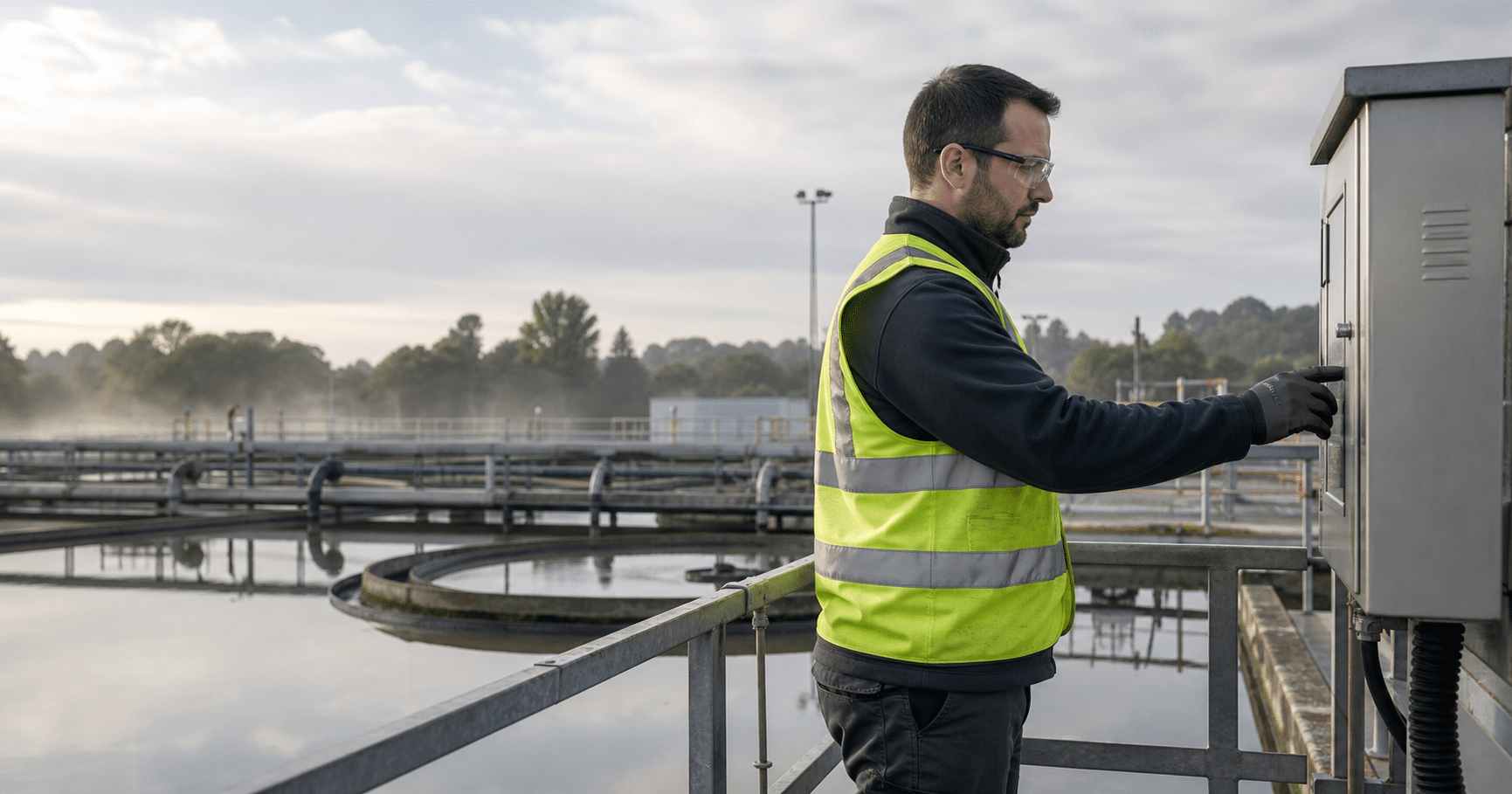
A plant response begins with verification: If a sample changes or an alarm appears, the operator checks the instrument, process conditions, recent readings, chemical feed, and equipment status before changing the setpoint. The record should show what was observed, what action was taken, and whether the next sample confirmed the response.
Bottom line
Water treatment operators keep complex treatment processes within safe and legal limits. The career often starts with a high school diploma and supervised training, but licensing and shift work deserve serious attention. Compare your state’s requirements with local postings before choosing a program.
Map the certification route in your state
Water operator certification is generally organized by state and often by treatment type or plant class. Read the official eligibility rules, exam outline, experience requirements, renewal cycle, and reciprocity information. Ask local utilities which entry titles allow a trainee to earn qualifying experience. A general environmental course may help, but it does not automatically satisfy operator requirements.
Visit a plant if possible. Follow the water from intake through treatment, storage, and distribution. Ask what operators check during a normal round and what changes during storms, source-water events, equipment failures, or a disinfection problem. The work combines process decisions with sampling, records, maintenance coordination, and public-health responsibility.
Prepare for shifts and documentation
Many facilities require coverage outside ordinary office hours. Compare rotating shifts, weekends, holiday duty, overtime, and call-in rules with your household schedule. Ask whether one operator works alone and what support is available during an alarm. Walking, stairs, chemical handling, noise, wet floors, and outdoor rounds are part of the physical picture.
Operating logs should connect readings, chemical feed, flows, alarms, samples, maintenance, and process changes to exact times. Good records help the next shift understand what is normal and what needs attention. During training, learn why each measurement is taken. Memorizing a target without understanding the treatment step makes abnormal conditions harder to recognize.
Before the certification exam, connect each topic to the plant rather than memorizing isolated definitions. Trace coagulation, filtration, disinfection, pumping, residuals handling, and laboratory checks where they apply. Practice the calculations used locally and keep units visible. During an interview, ask how trainees are released to operate equipment, how often competency is reviewed, and whether study time or exam fees are supported. Also examine the public-service side of the career. Operators may receive complaints about taste, odor, pressure, or outages and must pass accurate information without speculating. A treatment decision can affect compliance and public health, so unusual results must be communicated promptly. Mature workers often bring patience and procedural discipline, but they still need to learn the plant’s chemistry and control system. The right first employer provides time to understand both before expecting independent judgment.
Sources
- U.S. Bureau of Labor Statistics: Water and Wastewater Treatment Plant and System Operators
- OSHA: Occupational Safety and Health Administration
Reviewed September 3, 2026: Water treatment operator requirements depend on the plant, state certification rules, shift coverage, and the water or wastewater process involved. Confirm the license level and entry route locally. Compare it with wastewater operator work.