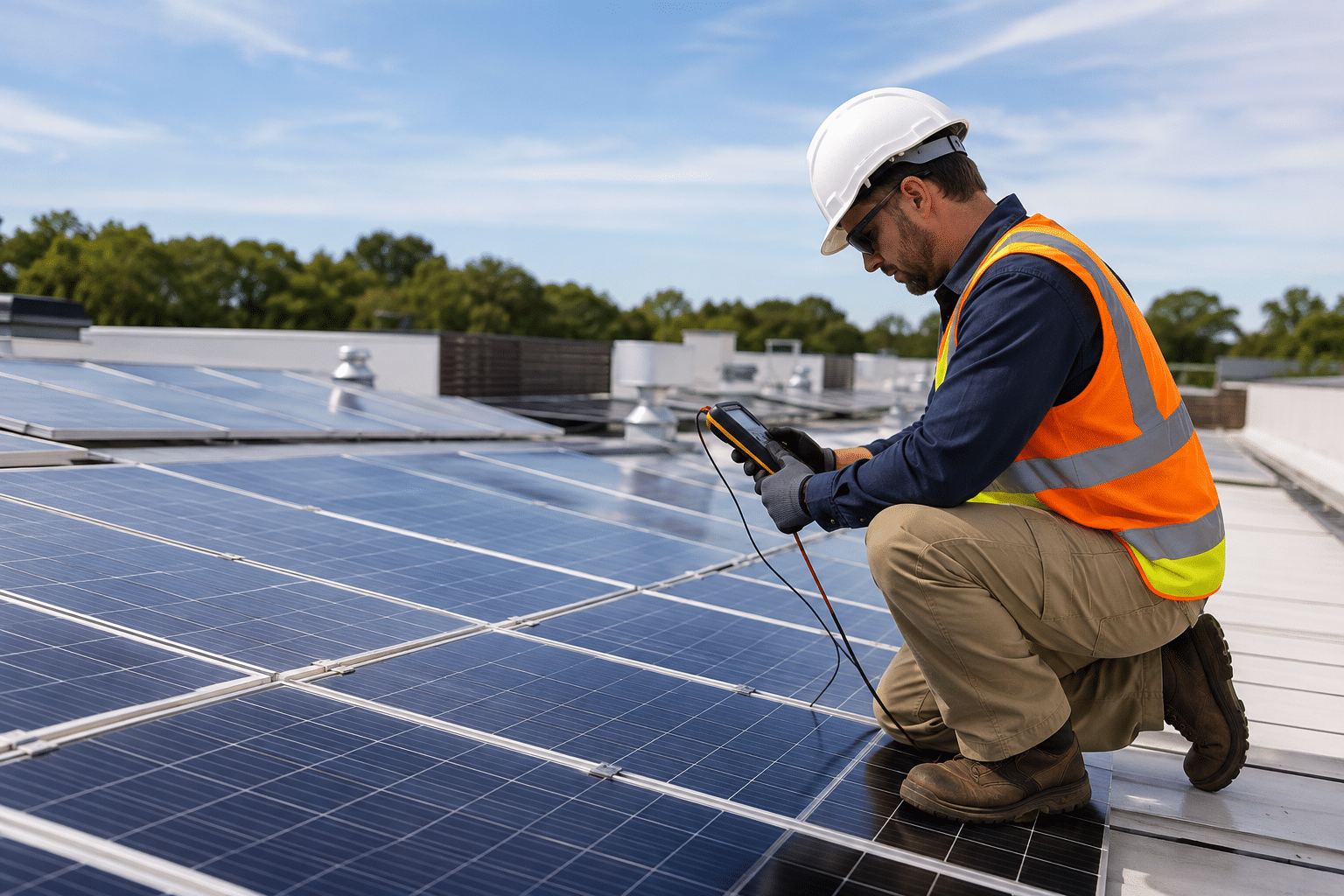
A solar panel inspector checks whether a photovoltaic installation was built and maintained in a condition that supports safe operation. The work may involve looking at modules, racking, wiring, inverters, labels, access paths, and visible damage, then matching observations with drawings, checklists, or performance information. It is inspection work, not simply a sales visit or a promise about how much energy a system will produce.
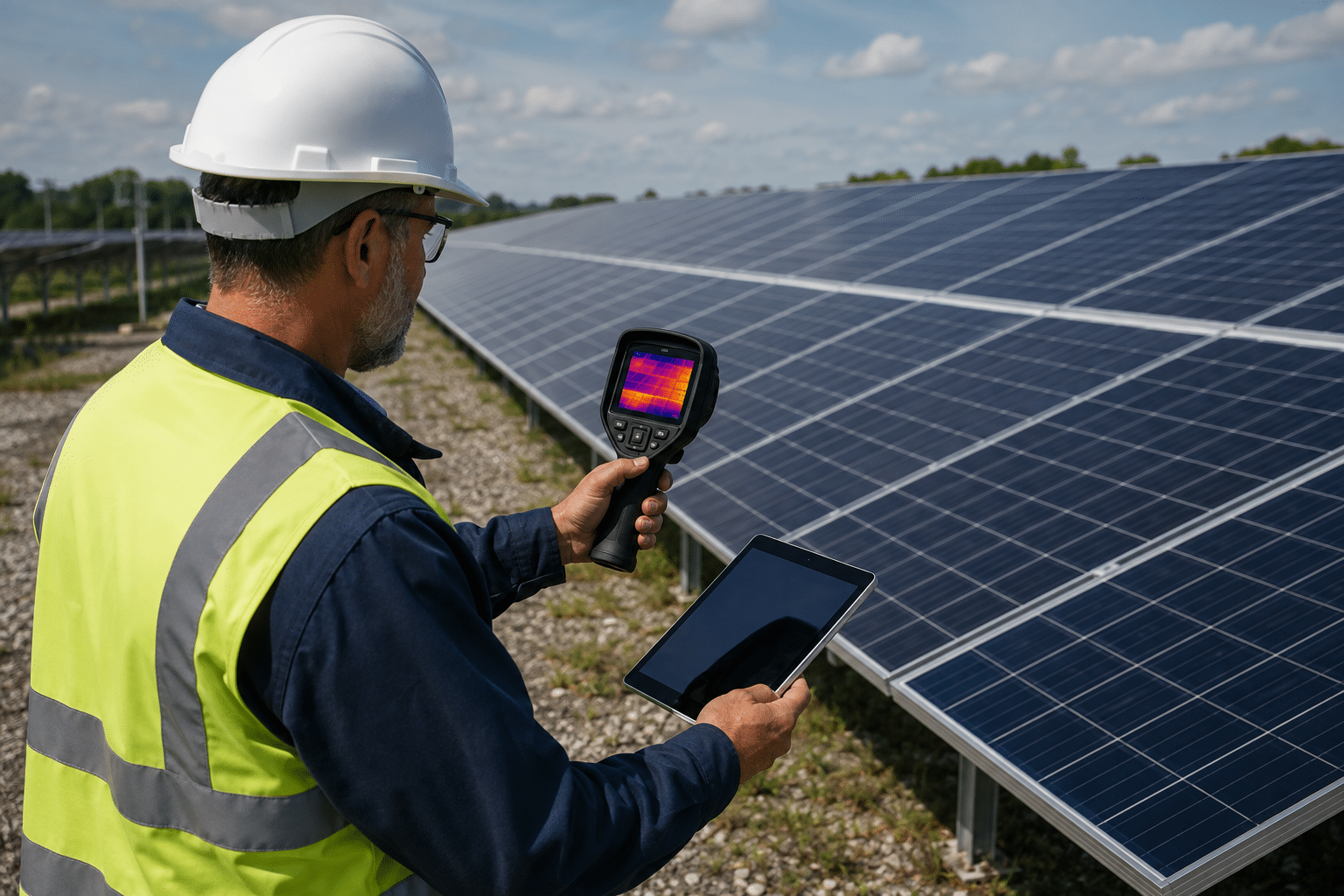
A useful inspection example: An array may be producing less power than expected even though the panels look clean from the ground. The inspector may find shading, a damaged connector, loose hardware, an inverter alert, or a mismatch between the installation record and the field layout. The report should separate what was observed from what still needs electrical testing.
What does a solar panel inspector do?
Inspectors may check modules, racking, fasteners, wiring, connectors, inverters, disconnects, labels, grounding, roof penetrations, and access paths. They look for cracks, hot spots, loose connections, shading, corrosion, poor cable management, and signs that the installation does not match its plans. They may use visual checks, meters, thermal cameras, production data, and photographs.
A report should identify what was observed and what needs further evaluation. An inspector does not automatically become the installer, engineer, or code official. Some jobs focus on workmanship; others verify commissioning or investigate a performance complaint.
Training and safety
Electrical knowledge, solar installation experience, roof safety, fall protection, and the ability to read plans are useful. Employers may prefer an electrical or renewable-energy certificate and training with a particular inspection method. Local electrical rules and the authority having jurisdiction still control compliance.
The work can involve roofs, ladders, heat, glare, and energized equipment. A career changer should ask whether the position is ground-based, rooftop-based, or a mix. Safety training is not optional simply because the system is small.
Pay and career fit
There is no single national wage line for solar panel inspectors. Compare local postings from solar contractors, engineering firms, utilities, and independent inspection companies. BLS data for solar photovoltaic installers can provide context, but it does not represent an inspection-only salary.
This path may suit someone who likes checklists, evidence, and renewable energy but wants a quality or diagnostic role. It can fit after 40 for workers coming from electrical work, construction, roofing, facilities, or quality assurance. The trade-offs include weather, travel, climbing, and responsibility for clear documentation.
How to start
Read local postings and learn the difference between installation, commissioning, maintenance, and inspection. Look for quality-control assistant or field technician roles. A day spent observing a solar crew can reveal whether you prefer the roof, the test instruments, or the report desk.
Related guides include solar maintenance technician, solar installer, and electrical inspector.
What a normal week can include
Most solar panel inspectors move between planned work and unexpected questions. The planned side may include inspections, readings, preventive tasks, scheduled service, or a review of records from the previous shift. The unexpected side is where judgment matters: a customer reports a problem, an alarm appears, a measurement does not match the drawing, or a component behaves differently from yesterday. Good work starts by confirming the condition before changing anything.
Because these jobs support residential, commercial, and utility-scale solar projects, the worker may coordinate with operators, customers, engineers, contractors, dispatchers, or a supervisor. A short, accurate handoff is often as important as the physical task. It should explain what was observed, what was tested, what was changed, and what remains open.
Tools, records, and technical judgment
The day-to-day equipment for a solar panel inspector commonly includes drawings, visual checklists, electrical test equipment, infrared cameras, drones where authorized, and project records. The list changes by employer, but the habit is consistent: use the right instrument, check that it is suitable for the task, and record enough information for another person to understand the result. An inspection is not just a search for a broken panel; wiring, racking, labels, access, drainage, and documentation can affect safety and performance.
A defensible solar inspection report connects each observation to a module, string, inverter, roof area, or site location. Wide photos establish context; close images show cracked glass, loose hardware, damaged conductors, shading, or water entry. Notes should separate a confirmed defect from something that needs electrical testing or review by the installer.
Training that actually helps
Helpful preparation can include photovoltaic system basics, roof and electrical safety, plan reading, thermal imaging, and local inspection procedures. The employer should explain which findings you may classify and which require a licensed electrician, engineer, or authority having jurisdiction. A weekend credential alone does not settle those boundaries.
A solar panel inspector should ask whether the job covers residential roofs, commercial arrays, utility-scale sites, or a mixture. Training needs change with the setting. Beginners may start with visual defects and documentation while electrical testing, roof access, drone work, or code decisions remain under qualified supervision.
Safety and working conditions
Safety depends on the setting. A solar panel inspector may face electricity, moving machinery, pressure, chemicals, heights, vehicles, weather, confined areas, or stored energy. The correct response is not to improvise. It is to follow the hazard assessment, use the required PPE, isolate equipment when required, and stop when the conditions do not match the work plan.
Inspection conditions can include roofs, ladders, glare, wind, heat, uneven ground, and long walks between array rows. Ask how often travel is required, what stops work in bad weather, and who provides fall-protection training. If heights are a concern, determine whether the employer has meaningful ground-based inspection work rather than assuming every position is interchangeable.
Career fit after 40
This path can suit someone who brings reliability, patience, customer awareness, or practical troubleshooting from another industry. The strongest transferable skill is often not a specific tool; it is the ability to notice a change, ask a precise question, and complete the record. construction inspection, electrical awareness, and careful reporting can be learned, but it is easier when you already respect procedures and take pride in leaving a site or workstation in better condition.
New inspectors often need time to recognize what is normal for different mounting systems and equipment generations. Follow a fixed route, avoid stepping where the roof or array cannot support you, and label images while the location is fresh. The ability to describe a defect calmly and precisely is as important as spotting it.
Where the role can lead
With experience, a solar panel inspector may move toward quality inspector, commissioning technician, field supervisor, or solar project coordinator. Advancement depends on demonstrated competence, additional education, employer structure, and sometimes a license or industry credential. Before applying, ask what the previous person in the role moved on to and whether internal training is available.
Questions to ask before applying
- What does the title mean at this company, and what tasks are outside the role?
- What equipment, software, PPE, and documentation system will I use?
- How are new workers trained and signed off for independent work?
- What are the schedule, travel, physical, and emergency expectations?
- What is the next realistic step after I become competent?