Plumber vs HVAC Technician: Which Trade Is a Better Fit?
Plumbers and HVAC technicians both work on building systems, but they diagnose different problems. Plumbing centers on water, drainage, piping, fixtures, and pumps. HVAC work adds heating, cooling, airflow, refrigeration, controls, and related electrical systems. Your choice should reflect the service calls, tools, licensing rules, and schedule you can live with.
Neither trade is automatically better. Plumbing may suit someone who likes visible system problems, repairs, and service calls. HVAC may suit someone who wants to combine electrical troubleshooting with mechanical systems, airflow, temperature, and refrigeration. Your local employers, licensing rules, and schedule will matter as much as the job title.
Compare the service call: A plumber may isolate a water line, clear a blockage, repair a fixture, or replace a valve. An HVAC technician may test airflow, electrical controls, refrigerant pressures, or a compressor sequence. Ask which calls fill most of the local employer’s week before choosing school.
At a glance
| Factor | Plumber | HVAC technician |
|---|---|---|
| Main systems | Water supply, drainage, piping, fixtures, pumps, and water heaters | Heating, cooling, ventilation, refrigeration, controls, and related electrical systems |
| Common entry routes | Helper work, employer training, trade school, or apprenticeship | Helper work, employer training, technical school, or apprenticeship |
| First paid role | Supervised installation, maintenance, repair, or service work | Supervised installation, maintenance, service, or equipment replacement |
| Credential questions | Apprentice registration, journeyman rules, permits, and contractor licensing may apply | EPA Section 608 may apply to refrigerant work; state or local licensing may also apply |
| Common environments | Homes, commercial buildings, construction sites, maintenance shops, and service calls | Homes, commercial buildings, rooftops, attics, mechanical rooms, shops, and service calls |
| Schedule factors | Emergency calls, construction deadlines, maintenance, and travel | Seasonal demand, emergency service, installations, maintenance, and travel |
| Useful strengths | Practical diagnosis, comfort with messy spaces, tools, and customer communication | Mechanical curiosity, electrical basics, diagnostics, customer communication, and comfort with heat or cold |
The table describes broad patterns. A plumber on new commercial construction may have little contact with homeowners. An HVAC technician in a manufacturing plant may rarely work in attics. Ask about the actual job before paying for training.
What plumbers and HVAC technicians solve
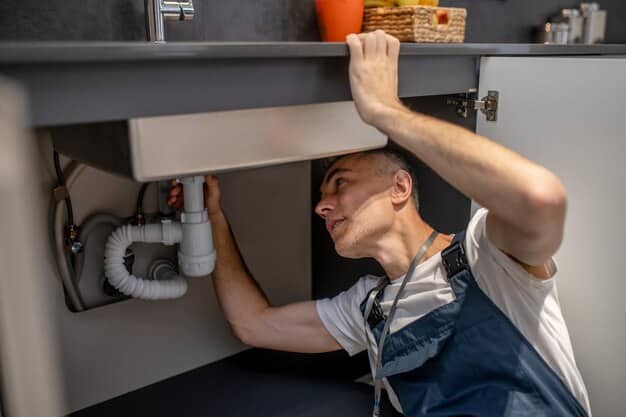
A plumbing problem often becomes visible through a leak, blockage, low pressure, poor drainage, or a fixture that stops working. The cause may be simple, but the repair can involve access, old materials, water damage, or a system that was installed badly years ago. Plumbers need to understand how supply, drainage, venting, and fixtures work together.
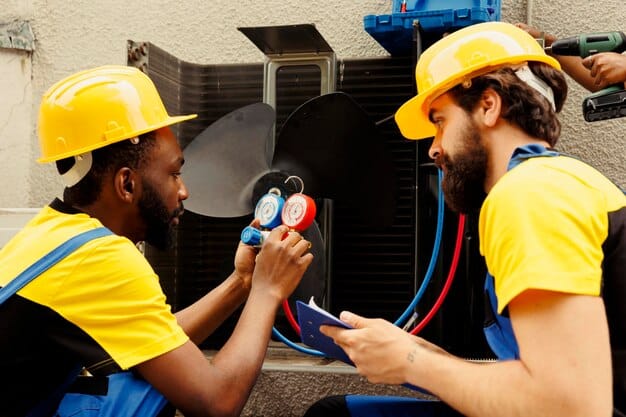
HVAC problems often appear as poor comfort, unusual noise, bad airflow, a failed control, or equipment that runs without doing its job. Diagnosis can involve electrical testing, motors, sensors, filters, airflow, temperature, pressure, combustion, or refrigerant-related components. The customer may want a quick answer even when the system needs careful testing.
Plumbing usually makes the failure easier to see. HVAC can require more layered diagnosis because the complaint may be far from the failed component. That is not a rule for every job, but it is a useful difference to explore during a job shadow.
Training and the first paid job
You can enter either trade through a helper position, an employer training program, a technical school, or an apprenticeship. The first paid role usually involves supervised work rather than independent diagnosis and sign-off.
In plumbing, an entry-level worker may learn tools, materials, pipe preparation, fixtures, jobsite safety, and basic installation or repair tasks. In HVAC, the early work may include equipment setup, maintenance checks, filter changes, wiring under supervision, airflow basics, and safe handling of systems used by the employer.
An apprenticeship can combine paid employment with related instruction. A school can give you a faster introduction to tools and concepts. Neither route guarantees a job, a license, or immediate independent work. Ask how the program connects to local employers and which requirements remain after graduation.
Before enrolling, ask:
- How much equipment will I work on with my own hands?
- Which tasks can graduates perform on their first job?
- Does the program prepare students for an official exam or only issue a school certificate?
- Are tools, books, PPE, transport, and exam fees included?
- Can I earn while I train?
- What do local employers expect from a new helper or apprentice?
The time to a first paycheck can be shorter than the time to broad competence. Keep those milestones separate when planning a career change.
Licensing, EPA Section 608, and employer rules
Plumbing permissions vary by state and locality. A jurisdiction may register apprentices, require supervised hours, issue journeyman or master credentials, or regulate contractor work separately. Permits can add another layer. Experience alone does not tell you what work you may legally perform or advertise.
HVAC has a federal refrigerant requirement that deserves attention. Technicians who handle regulated refrigerants generally need the appropriate EPA Section 608 certification. That certification is different from a state or local license, a contractor credential, or an employer’s own training requirements.
The two trades can overlap in building systems, but one credential should not be assumed to cover the other. Ask the employer which tasks require supervision, which exams matter, and whether the company pays for licensing or certification. Then check the official authority for the place where you intend to work.
Pay, seasonality, and emergency work
Searches for plumber vs HVAC salary can make the decision look like a contest between two national numbers. Those numbers are broad reference points. They do not tell you what an apprentice earns locally, how many hours are available, or how much overtime is built into an annual total.
Plumbing service can bring emergency calls, maintenance contracts, construction deadlines, and customer-paid repairs. HVAC demand can rise sharply during very hot or cold weather. That may create overtime, but it can also bring long days, rushed scheduling, and less control over evenings or weekends.
Compare the written offer using the same questions:
| Offer item | Question to ask |
|---|---|
| Base pay | Is the rate hourly, salaried, or tied to billable work? |
| Weekly hours | What were the hours during the last slow period? |
| Overtime | Is it optional, predictable, seasonal, or expected? |
| Emergency work | How often are nights, weekends, or urgent dispatches required? |
| Travel | Is driving between jobs paid, and is mileage reimbursed? |
| Tools | What must the worker buy, and what does the company supply? |
| Training support | Are licensing, EPA exams, manufacturer classes, or continuing education covered? |
| Benefits | What do health insurance, retirement, leave, and holidays cost the worker? |
| Progression | What verified skills or hours lead to the next pay step? |
For self-employment, revenue is not personal income. Both businesses have vehicles, insurance, tools, permits, materials, taxes, advertising, software, unpaid estimates, and callbacks. HVAC companies may also need specialized recovery equipment and must manage seasonal cash flow. Plumbing businesses carry their own equipment, compliance, and liability costs.
Physical demands and daily schedule
Plumbing can involve lifting pipe and fixtures, carrying tools, kneeling, crouching, working in wet or dirty areas, and entering crawlspaces. Construction work may follow a project schedule. Service work may change as soon as a wall, ceiling, or floor is opened.
HVAC can involve lifting equipment, climbing ladders, working on rooftops, entering attics or crawlspaces, kneeling, reaching overhead, and driving between calls. Installation, maintenance, refrigeration, and service work can have very different physical demands.
If you are changing careers after 40, ask how the company organizes the physical work. Are heavy components moved by two people or lifting equipment? Do technicians rotate tasks? How much of the week is spent on rooftops, in attics, in crawlspaces, or driving? Are there paths into diagnostics, estimating, controls, inspection, supervision, or project coordination?
Do not judge a trade from one unusually difficult day. Ask what happened during an ordinary week last month. The routine is what you would be signing up for.
Which trade fits your strengths?
Plumbing may fit you if you like practical repairs, visible system changes, water and drainage, and work where the problem often has a physical cause. Customer service matters in residential work, especially when the repair is disruptive or expensive. Patience helps when access is poor and the original installation is not straightforward.
HVAC may fit you if you enjoy finding faults across mechanical and electrical parts, learning how systems respond to conditions, and explaining technical decisions to customers or building managers. You may have more interest in refrigeration, controls, commercial equipment, or seasonal service. The work can be rewarding, but it may also bring heat, cold, urgent calls, and difficult access.
Previous experience in maintenance, facilities, construction, customer service, logistics, industrial equipment, or technical documentation can help in either trade. It does not replace supervised trade experience or required credentials. It can make you more effective during the first months, especially when an employer needs someone who can communicate and follow a process.
A practical way to decide
Find one real plumbing job description and one real HVAC job description in the area where you would work. Note the starting rate, expected hours, commute, tools, training support, licensing or certification steps, and physical demands. Compare the income ramp with your household budget.
If possible, observe both trades for a day. Notice the less glamorous parts: driving, setup, cleanup, paperwork, waiting for access, explaining options, and recovering after a demanding call. Those details are not distractions from the career. They are the career.
Start with our plumber career guide and HVAC career guide. Then compare plumber salary and career paths with HVAC technician salary and progression. For timing, read how long it takes to become a plumber and how long HVAC training takes. For physical demands, see plumbing work and HVAC work after 40.
Sources and date checked
- U.S. Bureau of Labor Statistics: Plumbers, Pipefitters, and Steamfitters, checked August 30, 2026.
- U.S. Bureau of Labor Statistics: Heating, Air Conditioning, and Refrigeration Mechanics and Installers, checked August 30, 2026.
- U.S. Environmental Protection Agency: Section 608 Technician Certification, checked August 30, 2026.
- Apprenticeship.gov: Career Seekers, checked August 30, 2026.
- CareerOneStop: Salary Finder, checked August 30, 2026.
Wages, licensing, training availability, certification requirements, and job duties vary by location and employer. Confirm the current rules with the relevant authority and the actual employer before paying for training or leaving a current job.
Related guides: Electrician vs Plumber: Which Trade Fits Your Career Change? and Career Change at 50: Trades and Technical Careers.
\n
Reviewed September 3, 2026: Plumbing and HVAC both serve building systems, but the daily work and training checkpoints differ. Compare service calls, installation, licensing, schedules, and physical demands before choosing a course. The comparison guide is a starting point.
\n