
Becoming an HVAC technician has several timelines. A helper may start earning quickly, a technical program may take months or two years, and an apprenticeship may continue for several years. The useful milestone depends on whether you mean the first paid job, EPA Section 608 certification, independent service tasks, or a broader technician role.
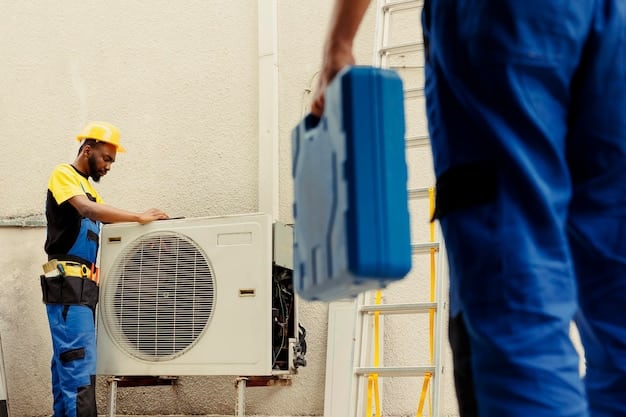
There is no single national timeline. The work setting, your prior mechanical experience, the equipment in your area, and the rules where you live all change the answer.
Separate the first job from independent work: A helper may begin by preparing tools, changing filters, recording readings, and assisting with installation. Later, supervised work may include electrical checks, airflow diagnosis, refrigerant procedures, and service documentation. Each step requires practice and, where applicable, the required certification or license.
A practical timeline
| Milestone | What it can look like | What it does not prove |
|---|---|---|
| First paid work | Helper, installer assistant, maintenance trainee, or entry-level technician | That you can diagnose every system |
| Basic task competence | Repeated supervised work with tools, measurements, maintenance, and simple repairs | That you are ready for every service call |
| Refrigerant credential | EPA Section 608 exam for the equipment covered | That you hold a state or local HVAC license |
| Broader independence | More systems, troubleshooting, documentation, customer communication, and fewer corrections | That every employer or locality uses the same title |
The Bureau of Labor Statistics says HVAC programs commonly last from 6 months to 2 years. It also says newly hired workers typically receive a lengthy period of on-the-job training, while apprenticeships usually last several years. Those are useful reference points, not a promise for a specific school or employer.
Route 1: Start as a helper or installer assistant
This can be the fastest way to test the trade. A new helper may clean furnaces, insulate refrigerant lines, carry equipment, prepare tools, assist with installation, or document basic information. You are earning while learning, but you are also starting with a narrow responsibility list.
The quality of the supervision matters. Ask who checks your work, which tasks you will learn first, and what moves you into a technician role. A job that only uses you for carrying and cleanup may provide little progress after the first few months. A crew that teaches measurements, maintenance procedures, electrical safety, and system basics can give you a stronger foundation.
This route works well for a career changer who wants evidence before paying tuition. Spend time with the crew if an employer allows it. HVAC work can mean attics, rooftops, crawlspaces, weather, travel, and emergency calls, not only indoor bench work.
Route 2: Attend a technical program
Technical schools and community colleges commonly offer HVACR programs lasting 6 months to 2 years. A shorter certificate may introduce tools, refrigeration cycles, airflow, electrical components, controls, brazing, safety, and maintenance. A longer program may provide more lab time and broader instruction.
The course length is only one part of the decision. Ask these questions before enrolling:
- How much time is spent on real equipment rather than demonstrations?
- Which systems do students practice on: residential, commercial, refrigeration, or controls?
- Is EPA Section 608 preparation included, and who administers the exam?
- What tools, books, uniforms, and exam fees are extra?
- Which local employers hire graduates, and what jobs do they actually receive?
- Can the schedule work alongside your current income?
A certificate can make the first job easier to reach. It does not automatically make you independent, and it does not replace a state or local license when one is required.
Route 3: Apply for an apprenticeship
An apprenticeship combines paid on-the-job training with related technical instruction. The sponsor sets the work processes, training schedule, wage progression, and completion requirements. Apprenticeships may cover safety, blueprint reading, heating and cooling systems, tools, maintenance, and repair.
This is usually the longest route to broad competence, but it can reduce the income gap because you are paid while learning. Read the actual standards before accepting a place. Ask how many hours are paid, whether classroom time is compensated, what raises are tied to, and how previous training is evaluated.
Apprenticeship.gov explains that registered programs can be time-based, competency-based, or hybrid. That is why two programs with the same occupation name may not use the same calendar. Search for sponsors and compare the work setting, instruction, wage steps, commute, and completion credential.
Do not confuse EPA certification with a license
EPA Section 608 certification applies to technicians who maintain, service, repair, or dispose of equipment that could release refrigerants. The EPA requires an approved exam for the type of equipment involved. Apprentices can be exempt while they are closely and continually supervised by a certified technician.
That certification is different from a state, county, or city HVAC license. Some locations regulate the technician, the contractor, the permit, or the type of work. Check the relevant authority before you perform refrigerant work without supervision, advertise services, or pull permits.
What speeds up or slows down the calendar?
Your starting point matters. Experience with electrical work, maintenance, facilities, refrigeration, controls, customer service, or mechanical troubleshooting may help you contribute sooner. It does not erase the need for HVAC-specific practice or local credentials.
The equipment around you matters too. A residential installer may become useful faster on a narrow set of systems, while a commercial or refrigeration path can take longer because the equipment, controls, documentation, and safety requirements are broader.
Your schedule affects progress. A full-time paid role offers more repetitions than one evening class each week. On the other hand, studying while keeping your current job may protect your household cash flow. After 40, that tradeoff is often more important than shaving a few months from the course.
A decision checklist before you resign
- Define the milestone you need first: paid work, EPA certification, a specific task set, or a local license.
- Compare one employer route, one school route, and one apprenticeship route.
- Get the wage, hours, supervision, tool policy, travel, and raise schedule in writing.
- Confirm the exact refrigerant and licensing requirements for the work you want.
- Budget for boots, tools, transportation, class costs, exams, and a lower starting wage.
- Keep your current income until the new route has a real start date and written terms.
Read How to Become an HVAC Technician for the entry routes, then compare the money in our HVAC technician salary guide. For a related trade with a different training pattern, see How Long Does It Take to Become a Plumber?.
Sources and date checked
- U.S. Bureau of Labor Statistics: Heating, Air Conditioning, and Refrigeration Mechanics and Installers, checked August 30, 2026.
- U.S. Environmental Protection Agency: Section 608 Technician Certification Requirements, checked August 30, 2026.
- Apprenticeship.gov: Apprenticeship Requirements Reference Guide, checked August 30, 2026.
Confirm training, wage, certification, license, and permit details with the specific employer, sponsor, school, and local authority before paying or accepting work.
\n
Reviewed September 3, 2026: The shortest HVAC course is not always the fastest route to useful work. Check hands-on practice, employer connections, EPA Section 608, and local requirements before counting the months. The HVAC salary guide adds the pay side of the decision.
\n
Reviewed September 3, 2026: HVAC training time depends on the program, hands-on practice, employer route, EPA Section 608, and local rules. Separate the time to a first job from the time to broader responsibility. Compare HVAC apprenticeship options.