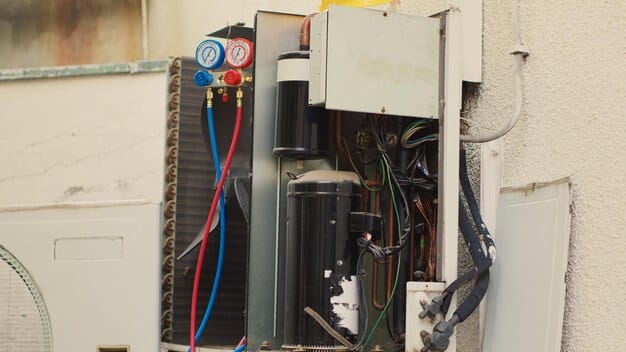
Becoming an HVAC technician usually involves some mix of supervised work, technical instruction, and equipment practice. You may enter through a helper job, trade school, apprenticeship, or employer training. Refrigeration rules, local licensing, the systems used by nearby employers, and the amount of hands-on practice should shape the route you choose.
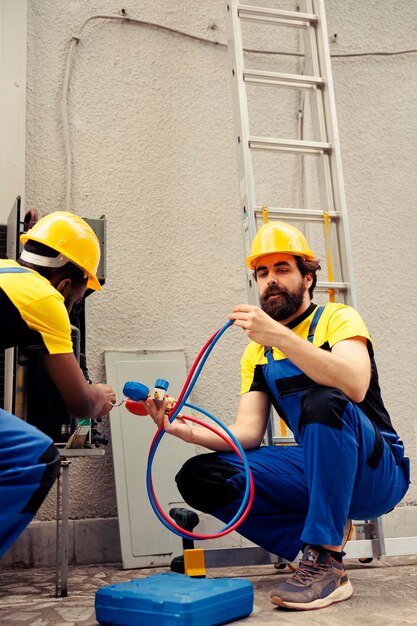
Training and legal permission are separate questions. A school certificate does not automatically let you perform every HVAC task independently, and state or local rules vary.
Check the first-job details: Ask whether a new hire will assist with installation, maintenance, service calls, controls, or refrigeration. Also ask who supplies tools, how EPA Section 608 preparation is handled, and when the trainee can perform tasks under supervision.
At a glance
| Route | Pay while learning | Main advantage | What to verify |
|---|---|---|---|
| Technical school | Usually no wage during class | Structured introduction to HVACR systems | Cost, hands-on time, placement, and next credential |
| Employer helper role | Usually paid | Real equipment and a fast look at the work | Supervision, training plan, tools, and raise path |
| Apprenticeship | Paid job with progressive training | Work and instruction together | Sponsor, wage steps, hours, and license relevance |
| Community college program | Varies | Broader instruction and possible credential | Schedule, equipment, total cost, and employer links |
The BLS says HVAC technicians typically need postsecondary nondegree education, although some enter with less education and receive on-the-job training. Programs commonly last six months to two years, but that does not guarantee competency or a license.
Decide which HVAC work you want to try
Residential service means customer homes, troubleshooting, maintenance plans, travel, and emergency calls. Commercial HVAC may involve larger equipment, planned maintenance, building controls, and service contracts. Refrigeration can involve specialized systems and uncomfortable temperatures. Installation work may require lifting, sheet-metal work, electrical connections, ladders, and changing jobsites.
Talk to employers before choosing a course. Ask what entry-level workers do, which systems they service, whether the job is seasonal, and whether the company trains helpers into technician roles. A program focused on residential split systems may not be the right preparation for commercial refrigeration.
Build the basic skill set
HVAC work combines mechanical troubleshooting with electrical and customer-service skills. Training may cover tools, measurements, airflow, refrigeration cycles, wiring diagrams, safety, maintenance procedures, and documentation. Modern systems can also involve digital controls and connected equipment.
You do not need to know everything before your first job. You do need to be willing to follow procedures, record readings, ask when you are unsure, and learn from correction. Employers should explain who supervises new workers and how progress is measured.
School, employer, or apprenticeship?
A technical program can make the first job less intimidating. Compare tuition, lab time, equipment, class size, books, tools, transportation, and placement support. Ask which employers hire graduates and whether the course prepares you for any named exam.
An employer may hire a helper to carry equipment, prepare tools, assist with maintenance, or learn basic installation. That can be the quickest way to test the schedule and physical demands. Ask how the company trains people beyond basic assistance. Without a progression plan, a helper job may remain just a helper job.
An apprenticeship can provide paid work, a mentor, related instruction, and wage increases as skills develop. Search Apprenticeship.gov and check the named sponsor. Ask how classes are scheduled, how hours are recorded, and which credentials or license requirements the training supports.
Certification and licensing questions
For work involving regulated refrigerants, check whether EPA Section 608 certification applies to the tasks you will perform. Ask the employer or school who provides the training and pays for the exam. State and local licensing rules may also apply to technicians, contractors, permits, or specific systems.
These credentials should not be treated as interchangeable. A course certificate, an EPA credential, a manufacturer certification, and a state license each prove something different. Confirm the exact requirement with the relevant authority before accepting independent work.
The BLS describes HVAC work as involving awkward spaces, travel, heavy equipment, heat or cold, chemicals, and possible evening or weekend schedules. Safety training and protective equipment should be part of the job, not an afterthought.
Budget for the transition
Include boots, hand tools, a meter if the employer requires one, transportation, class costs, exam fees, and income lost during training. Ask whether the company supplies refrigerant equipment, uniforms, vehicles, and larger tools.
After 40, the income ramp may be the central question. Compare the first paid job with your fixed expenses and the expected pay steps. Previous experience in maintenance, electrical work, facilities, customer service, or troubleshooting can help, but it does not replace HVAC-specific supervision or a required license.
A first-month checklist
- Choose the setting you want to test: residential service, commercial maintenance, installation, refrigeration, or controls.
- Ask three local employers what they expect from a new helper or trainee.
- Compare school, employer, and apprenticeship routes by pay, schedule, cost, and hands-on practice.
- Confirm the EPA Section 608 question and any state or local license requirement.
- Ask who supplies tools, transportation, protective equipment, and training.
- Keep your current income until the new route has a written wage, schedule, and start date.
For pay and progression, read our HVAC technician salary guide. Then compare How Long Does HVAC Training Take? and Is HVAC Hard on the Body After 40?. The electrician career guide covers a related technical path.
Turn the first HVAC step into a real plan
Before enrolling, identify the first local role you could realistically pursue: installer helper, maintenance trainee, service apprentice, or a registered apprenticeship. Each one teaches different habits. The job you can get while learning matters more than the course name on its own.
Ask a prospective employer whether new hires work alongside experienced technicians, which tools they provide, and when EPA Section 608 is needed for the tasks involved. Our HVAC apprenticeship guide can help you compare paid training routes with school-first options.
- U.S. Bureau of Labor Statistics: Heating, Air Conditioning, and Refrigeration Mechanics and Installers, checked August 30, 2026.
- U.S. Environmental Protection Agency: Section 608 Technician Certification, checked August 30, 2026.
- Apprenticeship.gov: Career Seekers, checked August 30, 2026.
Confirm the certification, license, training, wage, tools, and schedule requirements with the relevant employer and authority before enrolling or accepting work.
Reviewed September 3, 2026: HVAC training should be matched to the job and credentials required locally. Confirm EPA Section 608 expectations, hands-on practice, employer support, and any state or local license before enrolling. See the HVAC apprenticeship guide for another route.
Reviewed September 3, 2026: HVAC programs differ in hands-on time, employer connections, equipment covered, and preparation for EPA Section 608. Check those details before comparing tuition. The salary guide adds the income side.