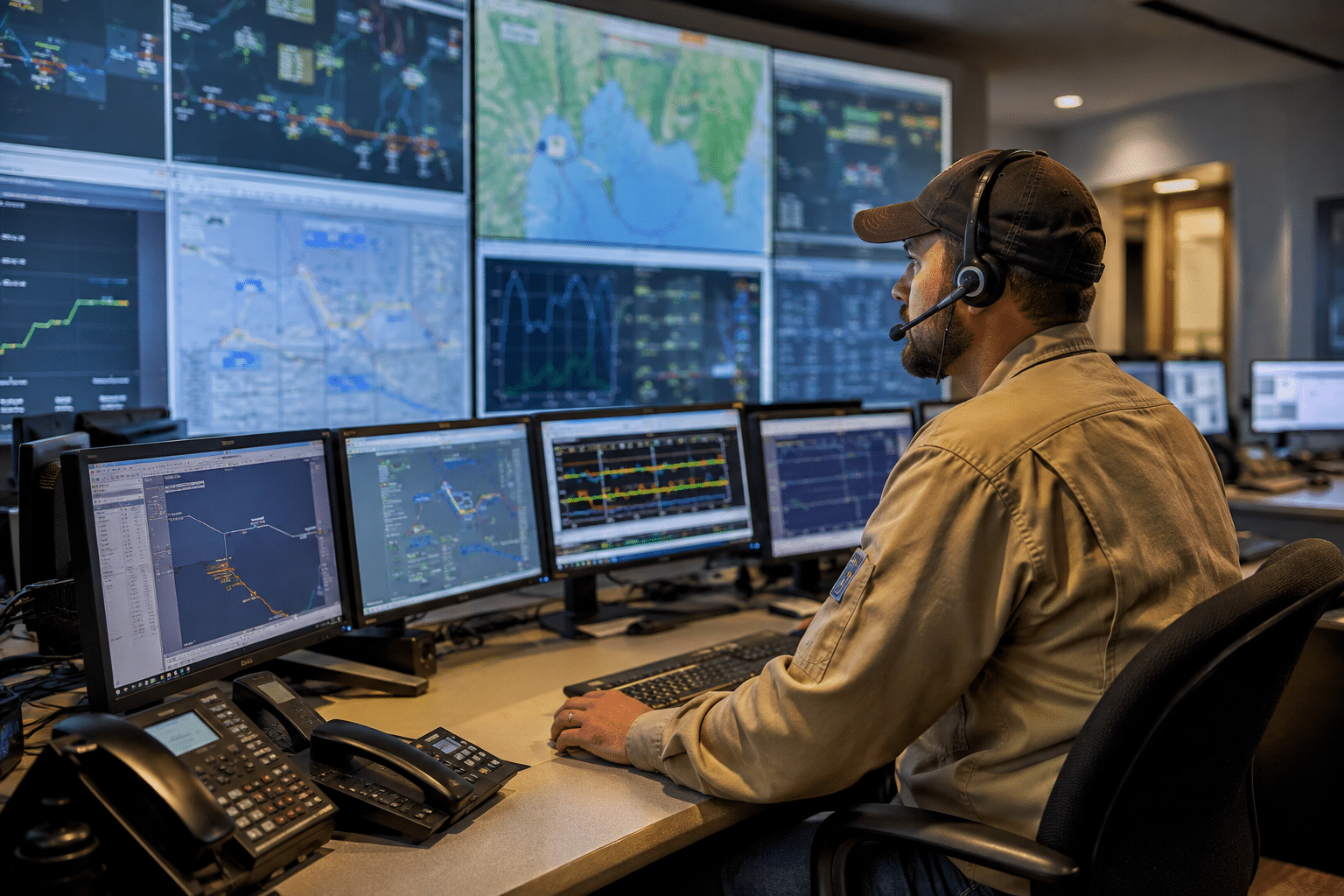
A pipeline controller watches a long-distance system from a control room and coordinates actions when flow, pressure, valve status, or alarms change. The work depends on SCADA screens, operating limits, communication, and careful records. It suits someone who can stay focused during quiet periods and still respond methodically when several pieces of information arrive at once.
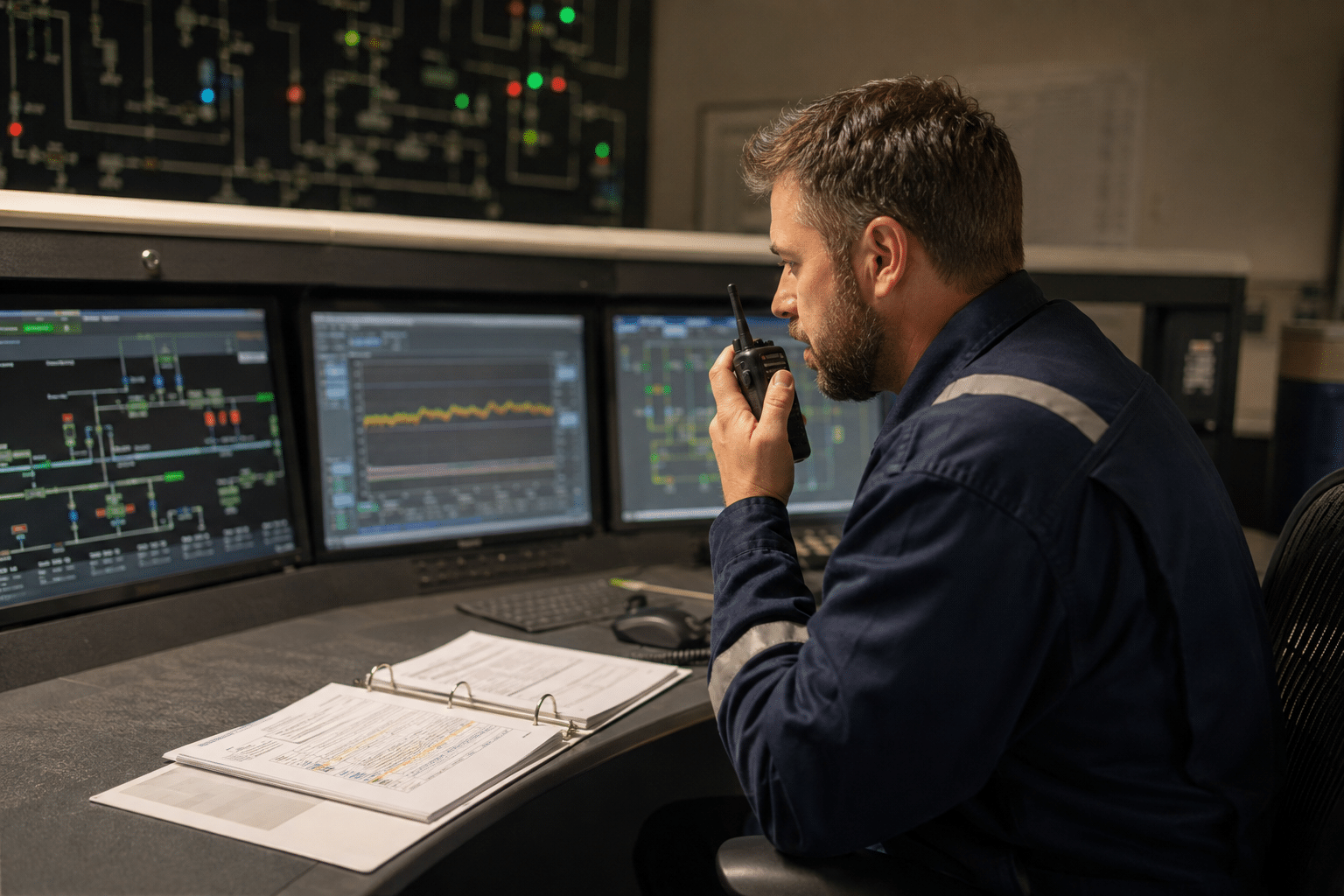
Consider a pressure alarm: The controller may verify whether the reading is real, compare it with nearby measurements, contact field personnel, and follow the escalation plan before changing a remote valve. A good controller leaves a clear record of what was seen, who was contacted, and why each action was taken.
What does a pipeline controller do?
- Watch flow, pressure, valve status, tank levels, and alarms.
- Use remote systems to adjust equipment when authorized.
- Compare live information with operating procedures and expected conditions.
- Communicate with field technicians, supervisors, maintenance teams, and emergency personnel.
- Record decisions, alarms, communications, and follow-up actions.
The exact job depends on the product and system. Gas and hazardous-liquid pipelines can have different procedures, equipment, and regulatory requirements.
Training and qualification
Employers usually provide structured training on the specific pipeline, control system, operating limits, communications, and emergency plans. Helpful background includes plant operations, dispatch, instrumentation, industrial controls, or pipeline field work.
PHMSA’s Control Room Management rules address controllers, control rooms, and SCADA systems for regulated gas and hazardous-liquid pipelines. They also address human factors, fatigue, abnormal operating conditions, and emergency response. This is why the role requires more than comfort with computer screens.
Pay and job outlook
Pipeline controller is not always listed as a standalone national BLS occupation, so a single salary claim would be misleading. Local job postings may place it under pipeline control-room operator, gas controller, dispatcher, or a related operations title. Pay can reflect shift premiums, experience, responsibility, and the product being moved.
PHMSA’s rules create a continuing need for operators to manage control-room practices and procedures. That does not guarantee hiring in every region, because pipeline work is concentrated around particular networks and facilities.
Is this career a good fit after 35?
This can suit someone who stays focused during quiet periods and becomes methodical when several alarms arrive at once. Shift work is common. The job is mostly seated, but the mental load is serious, and a controller must communicate clearly without guessing.
How to explore the field
Look for entry roles with pipeline operators, gas utilities, terminals, and control-room contractors. Related guides include pipeline technician, pipeline inspector, and gas plant operator.
What a normal week can include
Most pipeline controllers move between planned work and unexpected questions. The planned side may include inspections, readings, preventive tasks, scheduled service, or a review of records from the previous shift. The unexpected side is where judgment matters: a customer reports a problem, an alarm appears, a measurement does not match the drawing, or a component behaves differently from yesterday. Good work starts by confirming the condition before changing anything.
Because these jobs support control rooms and pipeline operations centers, the worker may coordinate with operators, customers, engineers, contractors, dispatchers, or a supervisor. A short, accurate handoff is often as important as the physical task. It should explain what was observed, what was tested, what was changed, and what remains open.
Tools, records, and technical judgment
The day-to-day equipment for a pipeline controller commonly includes SCADA screens, flow and pressure data, alarms, radio systems, operating procedures, and incident logs. The list changes by employer, but the habit is consistent: use the right instrument, check that it is suitable for the task, and record enough information for another person to understand the result. The controller may need to recognize a pattern across several signals before a field crew can confirm what is happening.
Controller logs should connect alarms, pressure or flow changes, equipment commands, nominations, field calls, and abnormal-operating procedures to exact times. Concise language matters because another controller or investigator may need to reconstruct the sequence. Record the reason for an action, not only the button or set point that changed.
Training that actually helps
Useful preparation includes pipeline hydraulics, control-room management, SCADA, alarm response, maps, and clear radio or phone communication. Employers provide system-specific instruction and qualification. Ask how simulators are used, how recurring assessments work, and whether trainees receive protected study time instead of learning only while covering a busy desk.
Pipeline controller training should explain the specific control system, commodities, operating limits, communication protocols, and fatigue-management rules. Ask how long trainees shadow qualified controllers, which simulations they complete, and what must be demonstrated before taking a console. A generic operations class cannot replace system-specific qualification.
Safety and working conditions
Safety depends on the setting. A pipeline controller may face electricity, moving machinery, pressure, chemicals, heights, vehicles, weather, confined areas, or stored energy. The correct response is not to improvise. It is to follow the hazard assessment, use the required PPE, isolate equipment when required, and stop when the conditions do not match the work plan.
Most of the work is seated at screens, but the schedule can be demanding. Ask about twelve-hour shifts, nights, weekends, console rotation, break coverage, overtime, and how the company handles fatigue after an abnormal event. The key fit questions are sustained attention, calm communication, and comfort making procedural decisions with limited physical movement.
Career fit after 40
This path can suit someone who brings reliability, patience, customer awareness, or practical troubleshooting from another industry. The strongest transferable skill is often not a specific tool; it is the ability to notice a change, ask a precise question, and complete the record. concentration, communication, and calm decision-making can be learned, but it is easier when you already respect procedures and take pride in leaving a site or workstation in better condition.
The challenge is learning what deserves immediate action and what can be verified first. Study normal trends by segment, know the field contacts, and verbalize critical steps during training. When data conflicts, follow the abnormal procedure and escalate rather than forcing the situation to fit an expected pattern. Consistency under pressure is the core skill.
Where the role can lead
With experience, a pipeline controller may move toward lead controller, control-room supervisor, operations coordinator, or integrity-support role. Advancement depends on demonstrated competence, additional education, employer structure, and sometimes a license or industry credential. Before applying, ask what the previous person in the role moved on to and whether internal training is available.
Questions to ask before applying
- What does the title mean at this company, and what tasks are outside the role?
- What equipment, software, PPE, and documentation system will I use?
- How are new workers trained and signed off for independent work?
- What are the schedule, travel, physical, and emergency expectations?
- What is the next realistic step after I become competent?