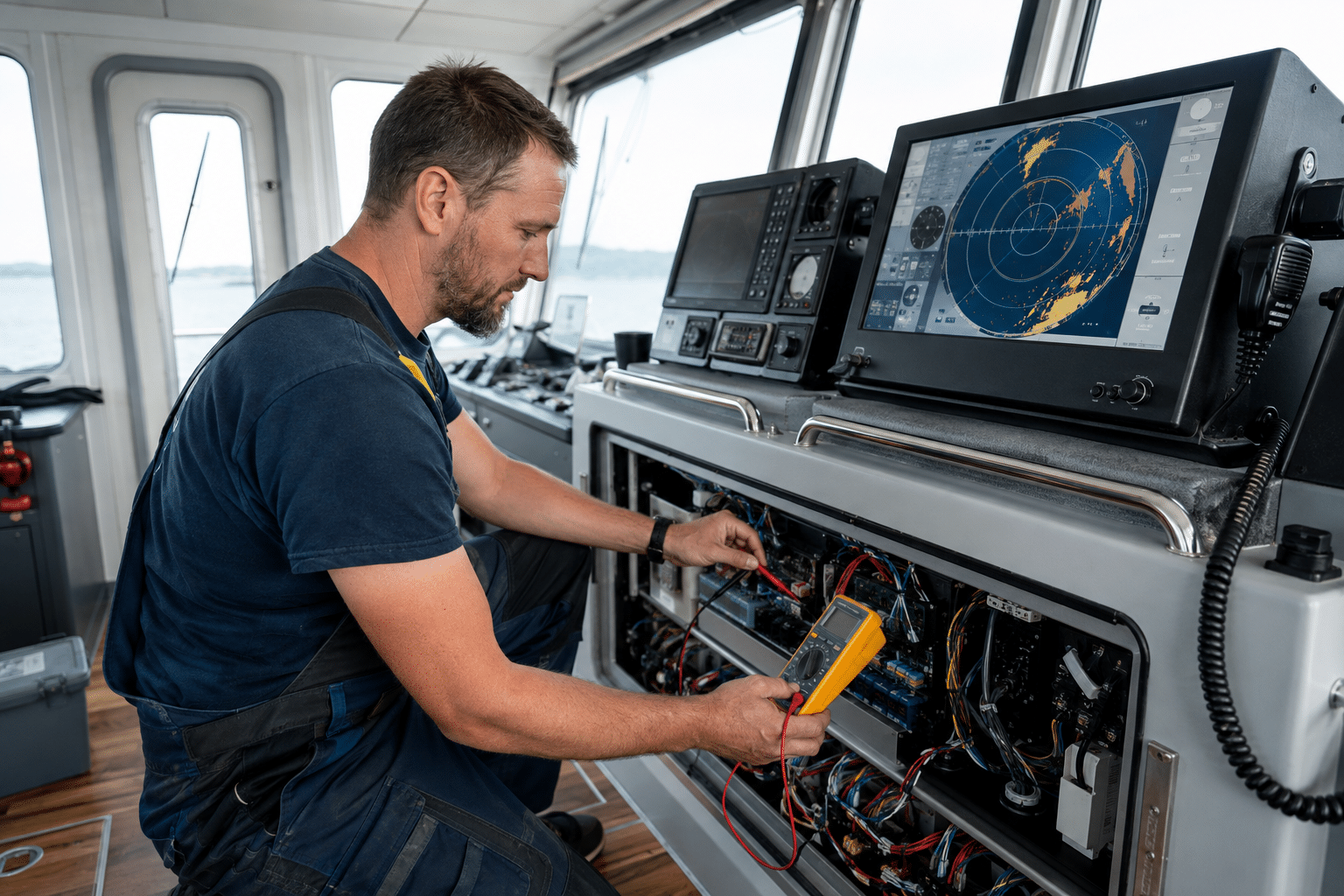
A marine electronics technician installs, tests, repairs, and maintains the electronic systems used on boats and ships. The work can include navigation, radar, communications, depth finding, alarms, networks, and the wiring that connects those systems.
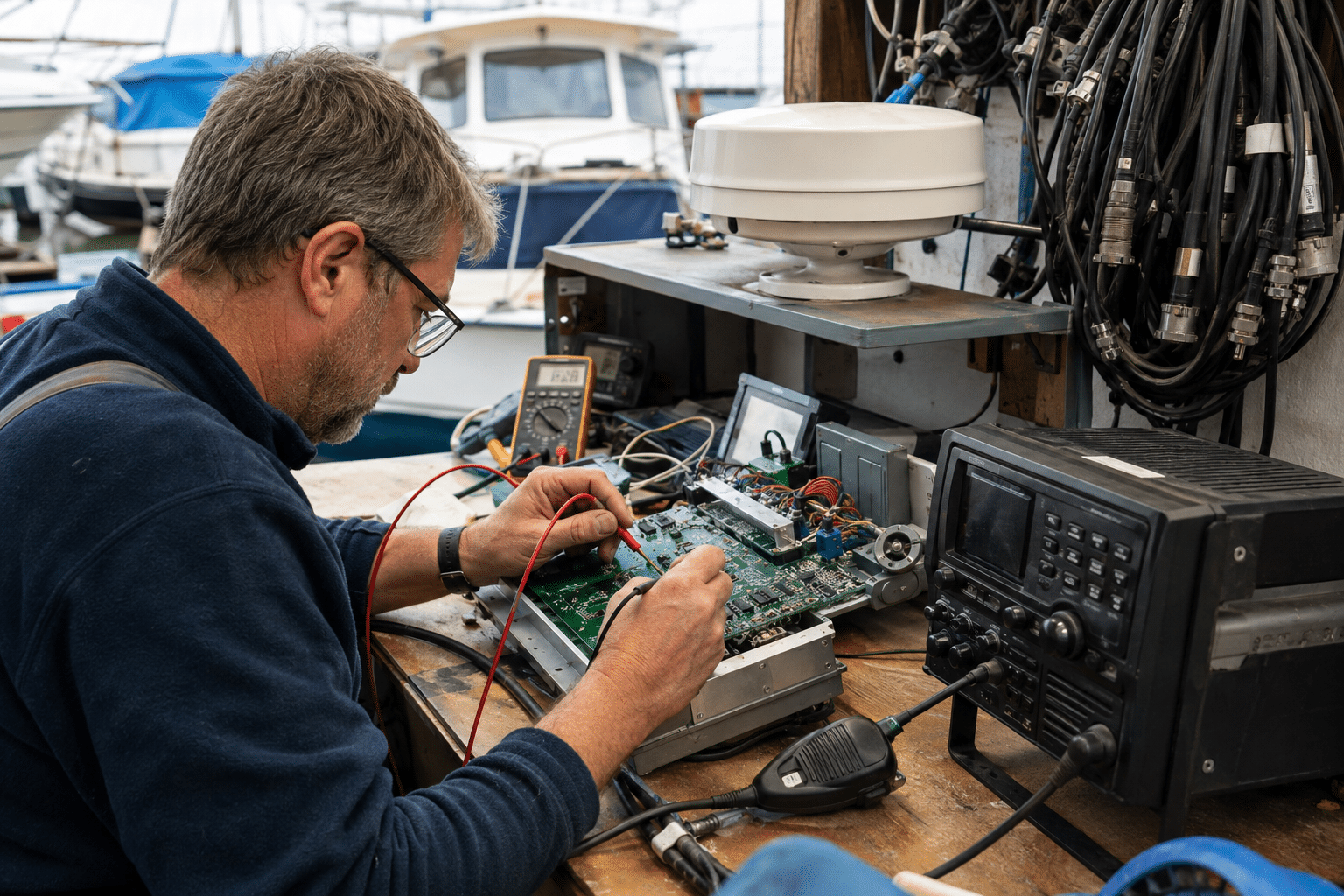
What does a marine electronics technician do?
- Install and configure radios, radar, GPS, displays, antennas, and navigation equipment.
- Trace wiring, test power and signal paths, and isolate faults.
- Replace connectors, cables, circuit boards, sensors, or damaged equipment.
- Update software or settings and verify communication between systems.
- Write service notes and explain the repair to a boat owner, yard, or vessel crew.
The job is more than computer repair. Salt, vibration, moisture, limited access, and interference can all affect equipment. A technician has to read manuals, use test instruments, and understand the vessel’s electrical system.
Training and certification
Employers may hire people with electronics, electrical, marine, telecommunications, or field-service experience. Technical-school training can help with circuits, soldering, digital systems, and troubleshooting. Marine-specific credentials from recognized industry organizations may also matter, depending on the employer.
Some jobs involve commercial vessels or regulated communications equipment. Ask what credentials, safety courses, driving requirements, and travel expectations apply before accepting a position.
Pay and career fit
Marine electronics technician is not always reported as a standalone BLS occupation. Related electronics and electro-mechanical categories can provide context, but wages vary by region, boatyard, manufacturer, vessel type, and overtime.
This path can fit someone who enjoys precise bench work but does not want to stay in an office. The tradeoffs include seasonal demand, cramped spaces, dockside weather, customer deadlines, and occasional travel.
How to explore the field
Look at boatyards, marine dealers, commercial fleet service companies, navigation-equipment manufacturers, and ferry or workboat operators. Related guides include marine mechanic, electronics technician, and field service technician.
What a normal week can include
Most marine electronics technicians move between planned work and unexpected questions. The planned side may include inspections, readings, preventive tasks, scheduled service, or a review of records from the previous shift. The unexpected side is where judgment matters: a customer reports a problem, an alarm appears, a measurement does not match the drawing, or a component behaves differently from yesterday. Good work starts by confirming the condition before changing anything.
Because these jobs support marinas, boatyards, service shops, and vessels, the worker may coordinate with operators, customers, engineers, contractors, dispatchers, or a supervisor. A short, accurate handoff is often as important as the physical task. It should explain what was observed, what was tested, what was changed, and what remains open.
Tools, records, and technical judgment
The day-to-day equipment for a marine electronics technician commonly includes radar, GPS, radios, sonar, displays, antennas, batteries, networks, and marine wiring. The list changes by employer, but the habit is consistent: use the right instrument, check that it is suitable for the task, and record enough information for another person to understand the result. A failed display may be caused by power, grounding, a connector, a network path, or the instrument itself.
Marine service notes should identify the vessel, equipment model, software version, power and network checks, connectors inspected, fault symptoms, and final test. Labeling cable routes and photographing hidden connections can prevent costly rework. Owners and captains also need a plain explanation of what failed and what remains uncertain.
Training that actually helps
Useful foundations include DC electrical systems, grounding and bonding, RF basics, network cabling, schematic reading, and corrosion awareness. Manufacturer training matters because interfaces and diagnostic procedures differ. Ask whether the employer supports certifications or factory courses and whether training time includes supervised installation and sea testing.
Marine electronics employers should explain whether trainees work on navigation, communications, sonar, alarms, power distribution, or networked vessel systems. Ask how much work is installation versus troubleshooting and who approves work that affects safety-critical equipment. Supervised time aboard the types of vessels you will service is more valuable than a course built only around classroom diagrams.
Safety and working conditions
Safety depends on the setting. A marine electronics technician may face electricity, moving machinery, pressure, chemicals, heights, vehicles, weather, confined areas, or stored energy. The correct response is not to improvise. It is to follow the hazard assessment, use the required PPE, isolate equipment when required, and stop when the conditions do not match the work plan.
Expect cramped access, docks, ladders, motion, salt, humidity, and occasional travel to a vessel that cannot come to the shop. Ask about on-call service, sea trials, lifting batteries or cable, and the rules for working around energized circuits and operating machinery. Comfort in a tidy workshop does not guarantee comfort inside a crowded machinery space.
Career fit after 40
This path can suit someone who brings reliability, patience, customer awareness, or practical troubleshooting from another industry. The strongest transferable skill is often not a specific tool; it is the ability to notice a change, ask a precise question, and complete the record. electronics troubleshooting and customer-facing field service can be learned, but it is easier when you already respect procedures and take pride in leaving a site or workstation in better condition.
A new technician can build trust by protecting the vessel, labeling every disconnected wire, and testing one change at a time. Boat systems often include earlier modifications that are absent from the drawing. Pause when the installation does not match the plan, document what you find, and involve the lead technician before creating another undocumented workaround.
Where the role can lead
With experience, a marine electronics technician may move toward senior marine electronics technician, service manager, systems integrator, or commercial-vessel specialist. Advancement depends on demonstrated competence, additional education, employer structure, and sometimes a license or industry credential. Before applying, ask what the previous person in the role moved on to and whether internal training is available.
Questions to ask before applying
- What does the title mean at this company, and what tasks are outside the role?
- What equipment, software, PPE, and documentation system will I use?
- How are new workers trained and signed off for independent work?
- What are the schedule, travel, physical, and emergency expectations?
- What is the next realistic step after I become competent?