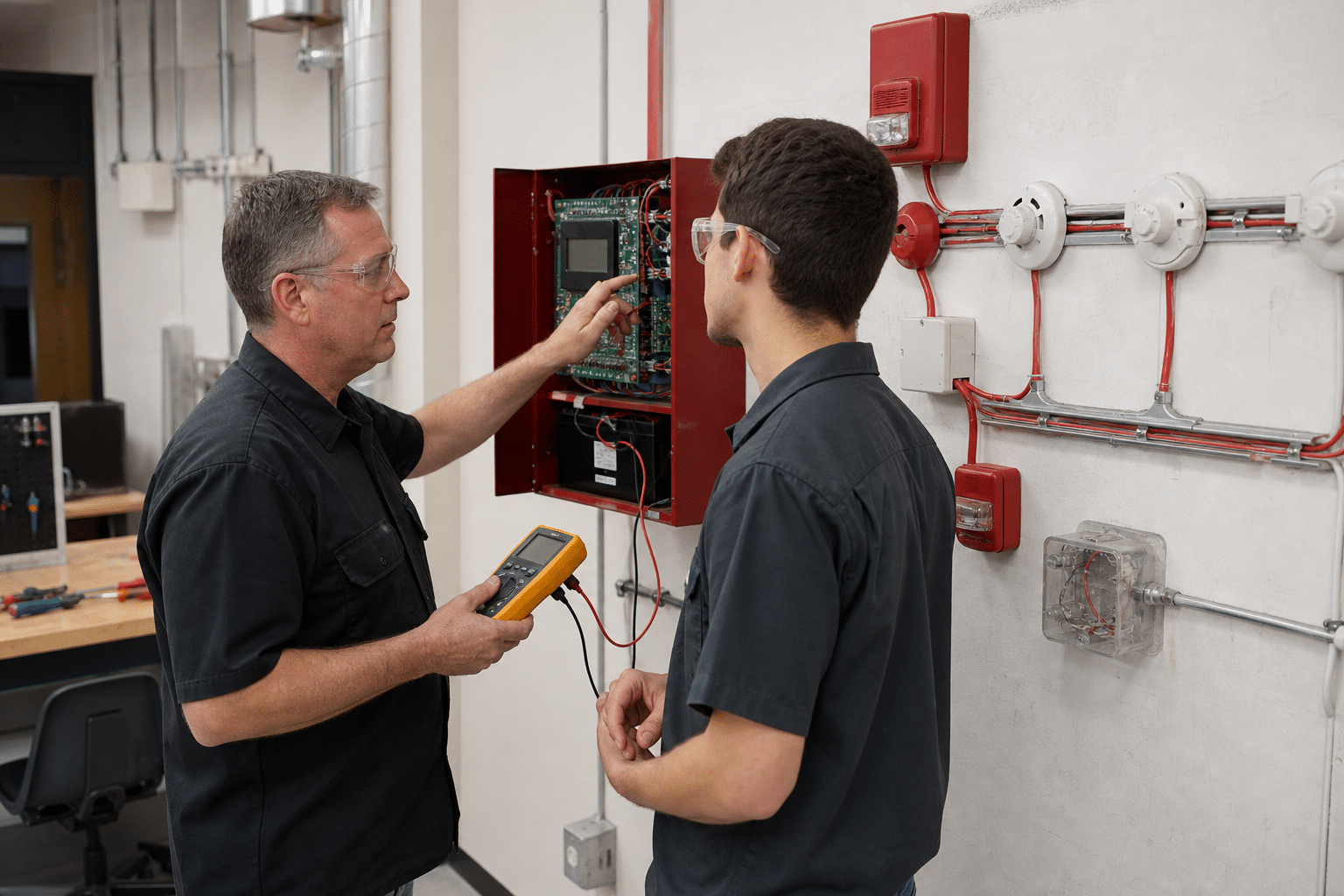
An electronics technician builds, tests, troubleshoots, or repairs electronic equipment. The job can be bench-based, production-based, field-based, or tied to a specialized system such as communications, industrial equipment, or aerospace. Because the title covers several levels of work, the circuit types, test instruments, documentation, and troubleshooting authority matter more than the title alone.
That range explains why the title is difficult to summarize. One posting may involve circuit boards and test instruments. Another may involve installation, customer travel or production testing.
What does an electronics technician do?
Common tasks include reading schematics, assembling boards or harnesses, using a multimeter or oscilloscope, testing components, replacing failed parts, recording results and helping engineers reproduce a fault. Some technicians work from established test procedures. Others diagnose equipment in the field.
| Setting | Typical focus |
|---|---|
| Bench repair | Test boards, isolate faults and replace components |
| Production | Run test stations, record results and control defects |
| Field service | Install, troubleshoot and explain equipment at customer sites |
| Engineering support | Build prototypes, collect data and reproduce failures |
| Industrial systems | Support sensors, drives, controls and power-related electronics |
Electronics technician vs related jobs
An avionics technician works on aircraft electronics. A controls technician focuses more on industrial automation and machine signals. An electrical technician may work with power distribution, wiring and equipment installation. The exact duties matter more than the label.
How do you enter the field?
An electronics certificate or associate degree can teach circuit theory, digital systems, soldering, test equipment, troubleshooting and technical documentation. Some employers train people with military, telecommunications, repair or maintenance experience.
Look for hands-on labs. You should be able to practice safe measurement, interpret a schematic, find a fault and document the repair. A course that only covers vocabulary will not prepare you for a real bench or field-service schedule.
Pay and outlook
Electronics technician is not one single BLS occupation. Depending on the role, the closest benchmark may be electrical and electronics engineering technicians or electrical and electronics installers and repairers. The BLS reported a $74,240 median annual wage in May 2025 for electrical and electronics engineering technologists and technicians. That is a broad benchmark and is not a promise for every electronics technician posting.
Compare the equipment, industry, education requirement, shift, travel and responsibility before using a salary number. A production test role and a field-service role can have very different total compensation.
Safety and quality
Electronics work can involve stored energy, high voltage, batteries, heat, chemicals, soldering fumes and equipment that starts unexpectedly. Follow the employer’s electrical-safety, machine-guarding and hazardous-energy procedures.
Quality also matters. A technician should record what was tested, which component changed and what evidence supports the result. A repair that works once but cannot be explained is not a reliable repair.
Is it a good change after 40?
Electronics can suit someone who enjoys careful diagnosis and has experience with computers, vehicles, appliances, industrial equipment or electrical work. Fine motor work and long periods at a bench may be easier for some people than heavy construction, but field roles can include travel and awkward positions.
Before enrolling, read local postings and note the tools, credentials, schedule and experience requested. Compare the first realistic wage and training cost with your current situation. Build a small portfolio of safe measurements, documented repairs or lab projects if the employer allows it.

A fault is often smaller than the symptom: A device that will not start may have a bad connector, power rail, solder joint, component, firmware setting, or test fixture. The technician isolates the problem with measurements and a controlled sequence instead of replacing parts until the symptom disappears.
Bottom line
Electronics technician is a flexible technical path, but the flexibility makes job quality uneven. Choose postings that name the equipment, testing methods, training and progression. Do not assume the title means design work, office work or a universal salary.
Choose an electronics specialty
Electronics technicians work in manufacturing, communications, laboratories, field service, transportation, and repair. One job may involve circuit boards at a bench; another may involve racks, sensors, cables, or customer equipment. Read local postings and list the instruments, voltage levels, products, and software named most often. Training should match that environment rather than the broad electronics label.
At a bench, careful setup matters. Confirm the drawing revision, inspect leads and fixtures, observe electrostatic-discharge controls, and record instrument settings. When a unit fails intermittently, note the exact condition instead of swapping parts until it works. A useful repair record lets another technician reproduce the symptom and understand why a component was replaced.
Build evidence of practical skill
A small portfolio can show more than a course title. Document a safe low-voltage project with a schematic, expected measurements, test results, fault introduced, and troubleshooting sequence. Explain discrepancies honestly. Employers are looking for someone who can measure before guessing, protect equipment, and communicate what remains uncertain.
Ask how new hires are qualified on soldering, calibration, powered testing, and customer equipment. Clarify shift work, production quotas, field travel, lifting, and responsibility for tools. Manufacturer instruction may matter more than a generic certification once you work on a specific product. The first employer should provide boundaries and review, not expect a beginner to improvise around unfamiliar energized systems.
When comparing courses, inspect the laboratory. Students should have enough instruments, components, documentation, and supervised troubleshooting time to make mistakes safely. Ask whether they diagnose unknown faults or simply follow demonstrations with known answers. Look for practice reading datasheets, tracing signals, using current limits, protecting static-sensitive parts, and recognizing when a measurement setup is influencing the circuit. Career changers should also consider the pace and posture of the work. Bench roles can mean fine visual tasks and repeated hand movements; field roles may involve racks, ladders, travel, and customer downtime. Ask how performance is measured and whether production quotas reward quick swaps or careful diagnosis. For interviews, be ready to describe one fault from symptom to verification. Employers do not need a dramatic project. They need evidence that you can organize a test, interpret the result, and stop before causing damage.
Sources
- BLS: Electrical and Electronics Engineering Technologists and Technicians – duties, pay and training benchmark; checked September 2, 2026.
- BLS: Electrical and Electronics Installers and Repairers – repair and industrial context; checked September 2, 2026.
- OSHA – workplace safety context; checked September 2, 2026.
Reviewed September 3, 2026: Electronics technician work can mean bench testing, production, repair, installation, or field service. Match training to the circuits, test instruments, and equipment used by local employers. Compare it with avionics technician work.