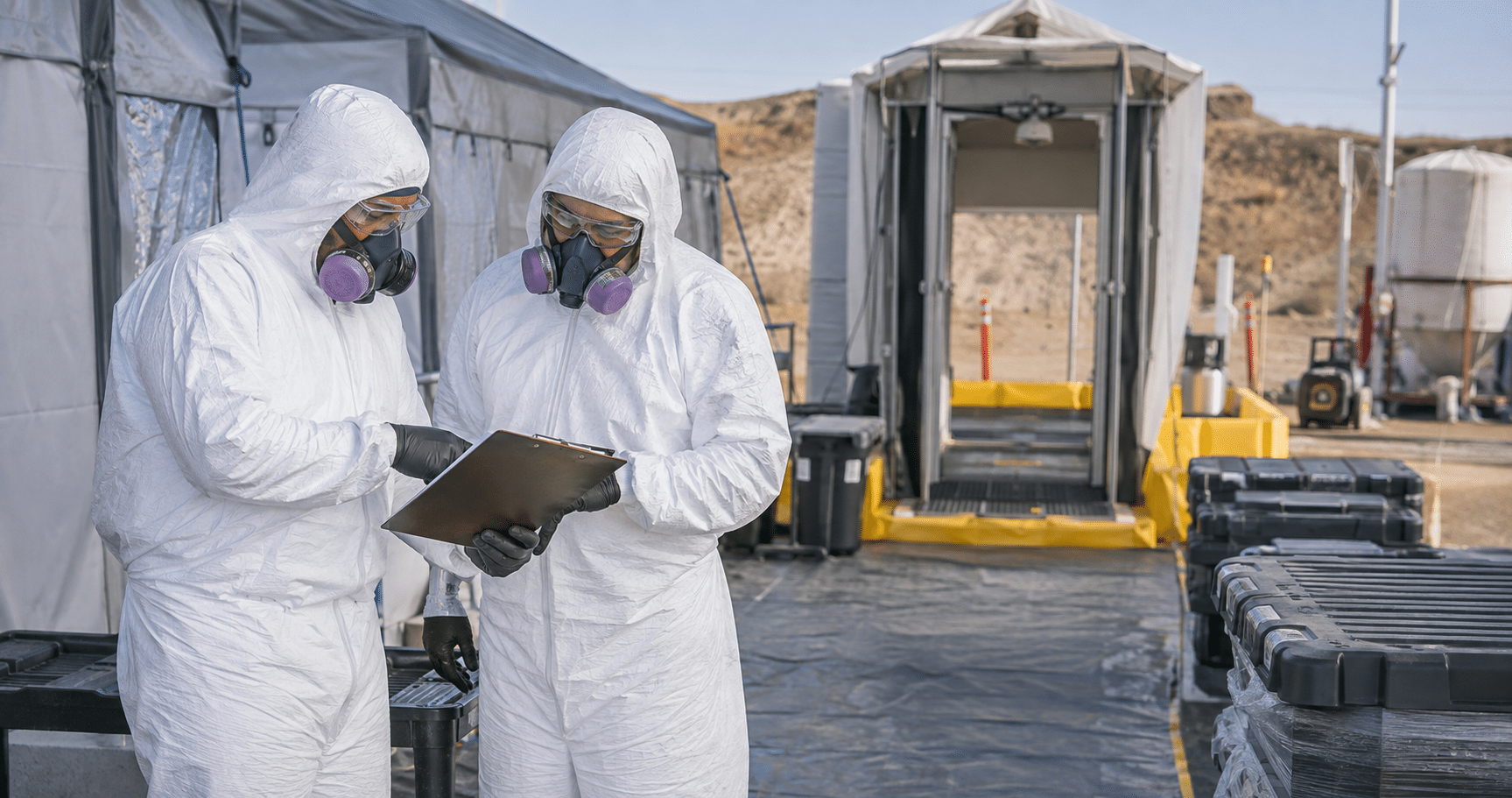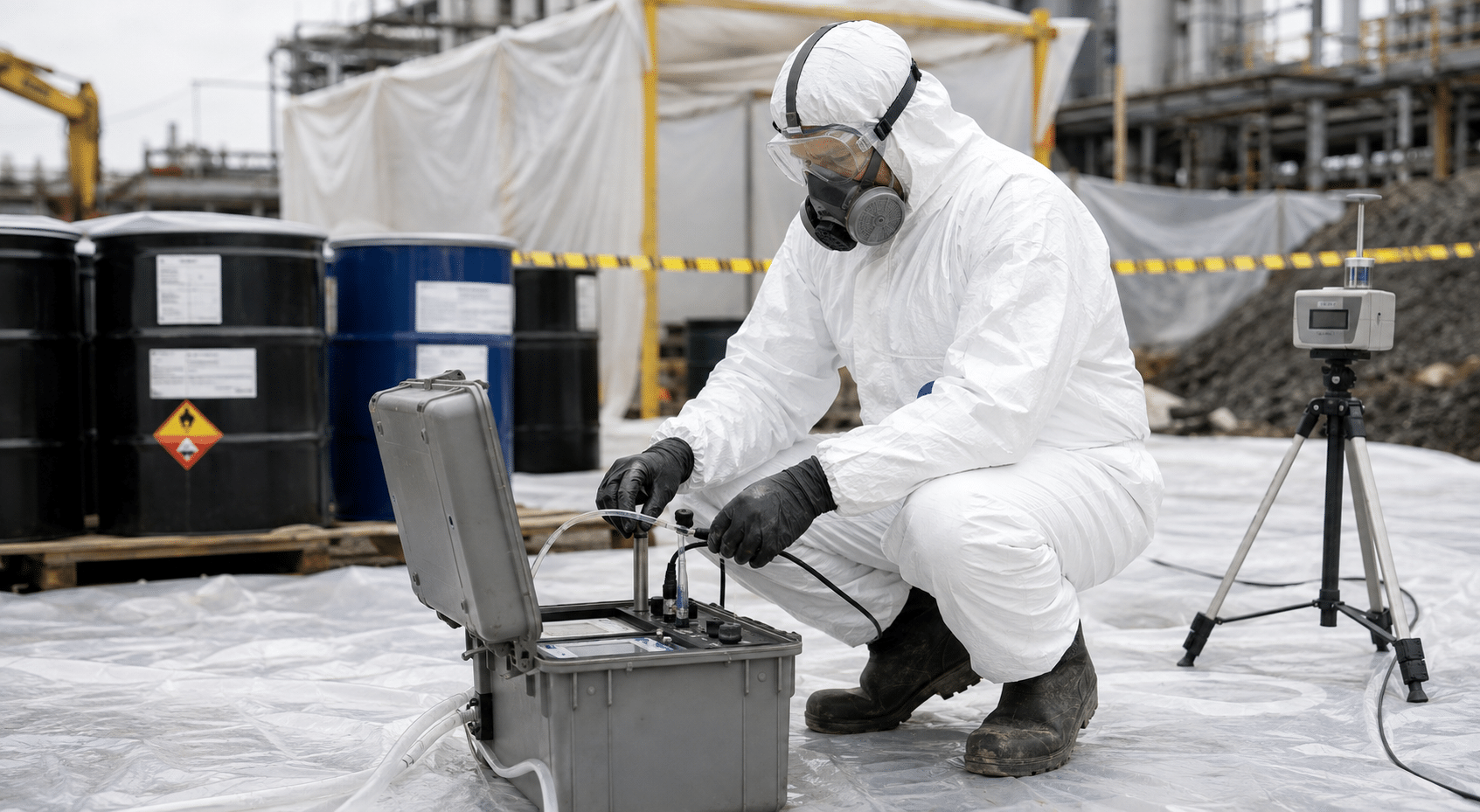
A hazardous materials removal worker prepares, contains, removes, packages, and disposes of regulated materials under a controlled work plan. The material may include asbestos, lead, mold, contaminated debris, or other hazards, depending on the project. Training, respiratory protection, medical clearance, and site procedures are central to the job, so the work should be evaluated as a safety career rather than a quick cleanup opportunity.
A cleanup crew may build containment, test the work area, wear respiratory protection, remove material, package it, decontaminate equipment, and keep records. The substance and the site determine the method.
Preparation comes before removal: A crew may need to establish the work zone, inspect protective equipment, control access, set up decontamination, and verify the waste containers before touching the material. If the conditions differ from the plan, the worker needs a clear stop-and-escalate path.
What does a hazardous materials removal worker do?
- Inspect and characterize a contaminated work area.
- Set up barriers, containment, negative-air equipment, or decontamination zones.
- Use approved tools and procedures to remove, neutralize, or clean hazardous material.
- Operate air monitors, sampling equipment, vacuums, sprayers, or other cleanup equipment.
- Package, label, move, and store regulated waste.
- Clean contaminated tools, clothing, and equipment before they leave the work zone.
- Record readings, materials removed, work completed, and incidents or changes.
Most workers operate in teams under a site supervisor. A worker may spend hours in protective clothing, move through a controlled entry and exit process, or wait while the supervisor changes the plan after a new hazard is found.
Hazmat removal versus environmental technician work
| Role | Main focus | Typical difference |
|---|---|---|
| Hazmat removal worker | Remove or contain dangerous material | Works directly in controlled cleanup zones and follows exposure procedures |
| Environmental technician | Sample, measure, and document environmental conditions | May work in a lab or field setting without performing the full removal |
| Industrial hygienist | Evaluate workplace exposures | Designs or recommends controls and interprets exposure data |
Our guides to environmental technician work and industrial hygiene explain the nearby paths. Hazmat removal is the more direct cleanup role.
Training and HAZWOPER
Hazmat removal workers typically need a high school diploma and employer training. The required training depends on the material, site, job duties, and state rules. Some employers also require experience in construction, equipment operation, military service, or environmental cleanup.
OSHA’s HAZWOPER standard covers workers who perform hazardous-substance removal or other work that can expose them to hazardous substances. For covered general site workers, the standard describes 40 hours of off-site instruction and at least three days of supervised field experience. That is a regulatory training requirement for covered work, not a universal promise that every entry-level job follows the same route.
Ask an employer which training is required before the first shift, who pays for it, and whether the job includes lead, asbestos, mold, chemical, radioactive, or emergency-response work. A generic safety course is not the same as task-specific qualification.
Safety is part of the job
Personal protective equipment is only one layer of protection. A proper site plan identifies the substance, tests the area, controls access, selects work practices, and explains emergency procedures. Decontamination protects workers, equipment, clean areas, and the public from carrying contamination away from the site.
Respirators can be hot and tiring. Protective suits can restrict movement. Workers may bend, kneel, scrub, lift, climb, or work in confined spaces. Ask how the employer handles fit testing, medical evaluation, heat stress, changing rooms, showers, air monitoring, and medical surveillance.
Do not treat a photograph of protective clothing as proof that a job is safe. The employer should be able to explain the written safety and health plan and the controls used on a real project.
Pay and job outlook
The Bureau of Labor Statistics reports about 52,700 hazardous materials removal worker jobs in 2025. The median annual wage was $48,880 in 2025, or $23.50 per hour. BLS describes a high school diploma as typical entry education and on-the-job training as the usual training route. Emergency response, overtime, travel, and specialized materials can change actual pay.
| BLS benchmark | 2025 figure |
|---|---|
| Employment | About 52,700 jobs |
| Median annual wage | $48,880 |
| Median hourly wage | $23.50 |
| Typical entry education | High school diploma or equivalent |
Compare the guaranteed hourly rate with overtime rules, travel time, per diem, protective-equipment policies, benefits, and the amount of emergency work. A higher annual number may depend on long projects away from home.
Is this a realistic career change after 40?
It can suit someone who prefers practical work, follows procedures carefully, and can handle unpleasant or physically demanding environments. Previous construction, maintenance, military, warehouse, or environmental experience may help. The work is not a shortcut into environmental consulting, and it may be harder on the body than a job title suggests.
Before enrolling, ask to speak with a supervisor or visit a training facility. Find out what material the crew handles, how often workers travel, how long they stay in protective equipment, and what advancement looks like after the first year. Those details matter more than a general promise of cleanup work.
Bottom line
Hazardous materials removal worker is a regulated, team-based cleanup career. The route can start with a high school diploma and employer training, but the required qualifications depend on the material and site. Confirm the HAZWOPER, state, and task-specific requirements before accepting a job or paying for training.
What a responsible entry path looks like
Hazardous-materials work is not a place to prove that you are fearless. A credible entry role includes site orientation, task-specific instruction, protective equipment that fits, a clear chain of supervision, and permission to stop when a condition does not match the plan. HAZWOPER training matters, but it does not replace the employer’s responsibility to train workers for the actual site.
Ask how crews handle decontamination, heat, respirator use, and changes in the work area. The answer should be concrete. If a company minimizes those questions, take that seriously. Compare the field role with environmental technician work if you want to stay closer to sampling, monitoring, and technical support than removal operations.
- U.S. Bureau of Labor Statistics: Hazardous Materials Removal Workers – duties, training, May 2025 pay, employment, and work conditions; checked September 4, 2026.
- OSHA: HAZWOPER Overview – scope and worker-protection framework; checked September 4, 2026.
- OSHA: 29 CFR 1910.120 HAZWOPER Standard – training and safety requirements for covered work; checked September 4, 2026.
- OSHA: Hazardous Waste Decontamination – decontamination purpose and procedures; checked September 4, 2026.