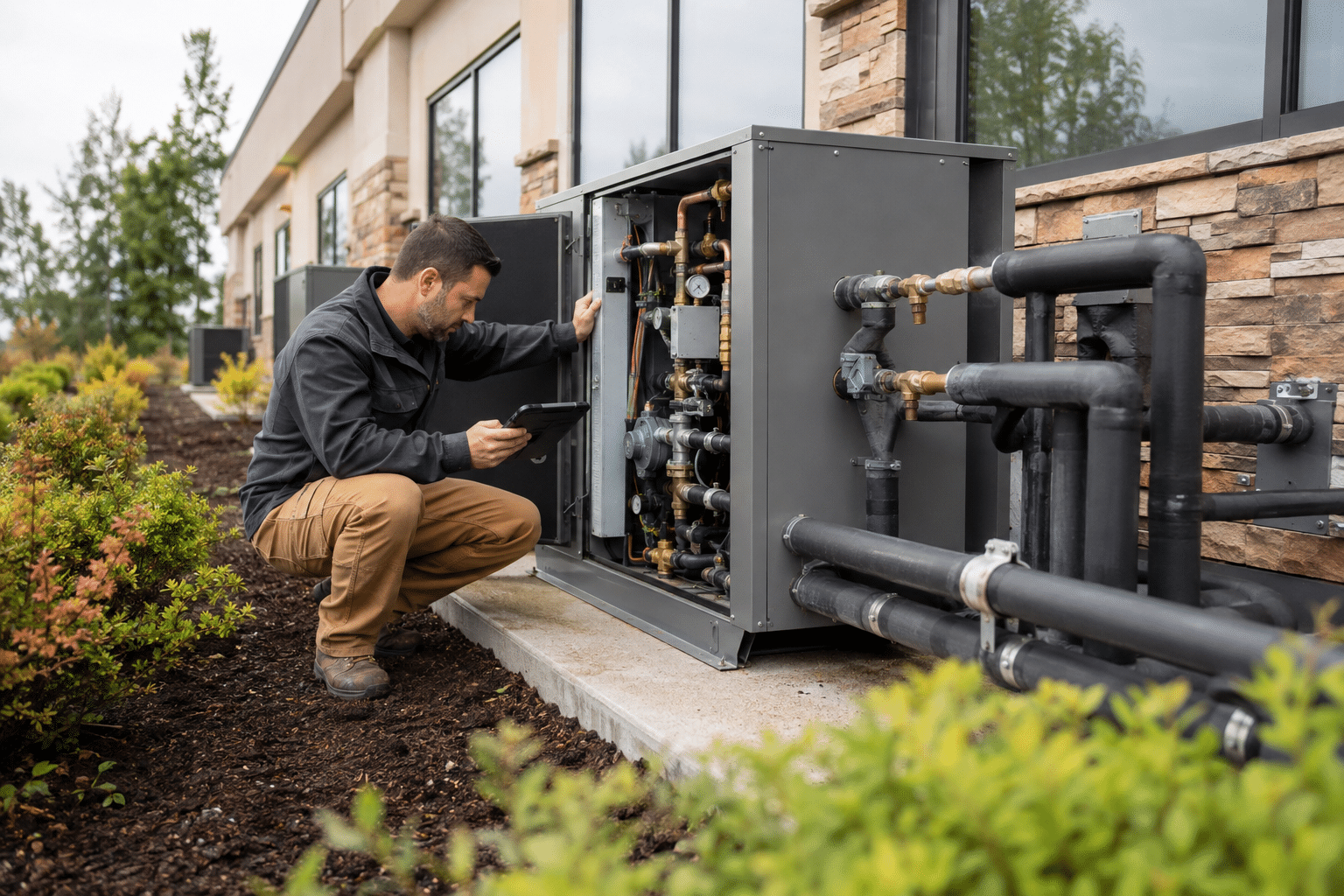
A geothermal technician installs, services, and troubleshoots ground-source heat pump systems. The work combines HVAC knowledge with pumps, controls, water or antifreeze loops, electrical testing, and careful attention to how the building uses heat.
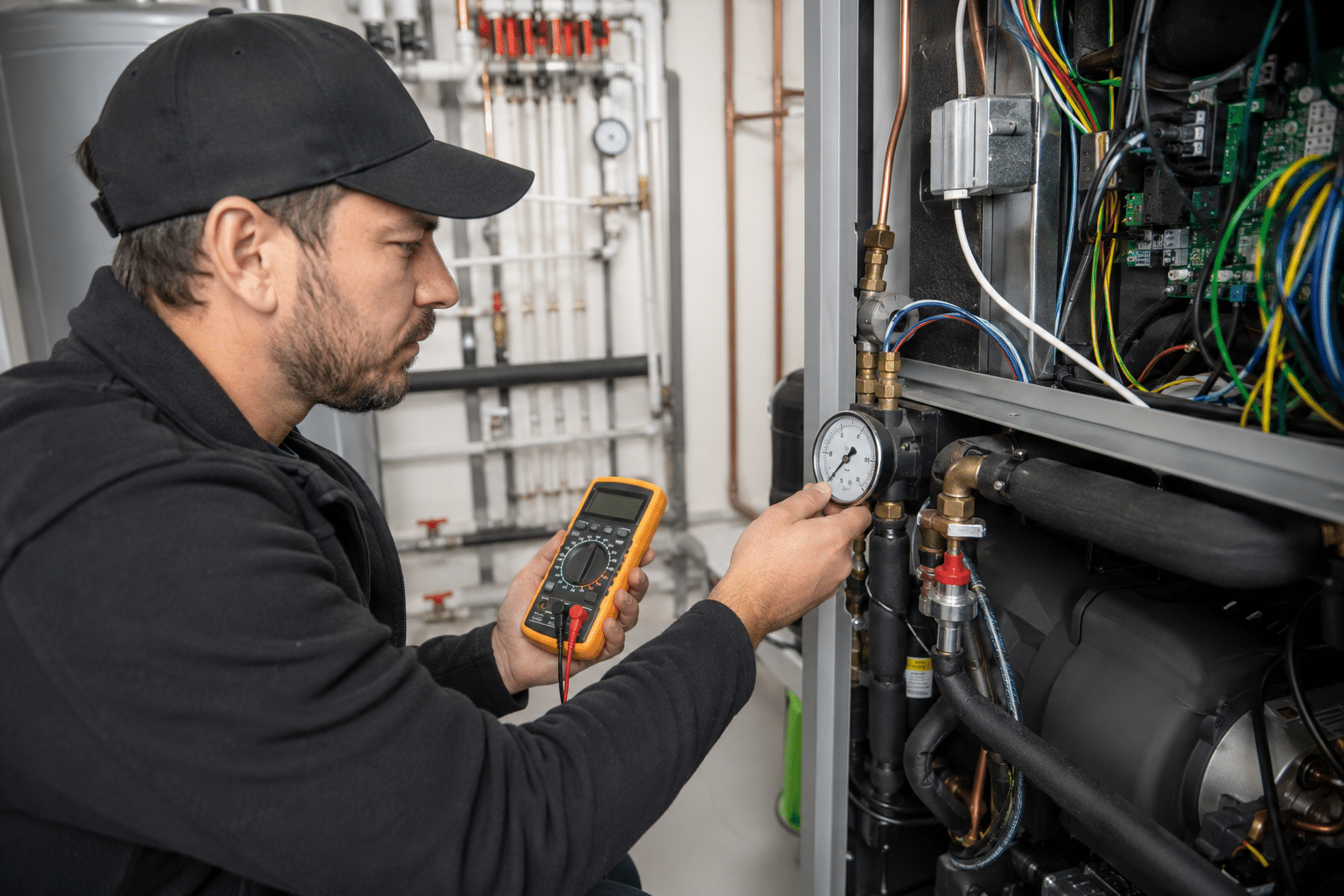
What does a geothermal technician do?
- Inspect heat pumps, loop piping, pumps, valves, controls, and electrical connections.
- Measure temperatures, pressure, flow, and system performance.
- Diagnose alarms, poor heating or cooling, leaks, and control problems.
- Service equipment and document readings, repairs, and recommendations.
- Help commission new systems and explain maintenance to owners or facility staff.
The Department of Energy notes that geothermal heat pumps need trained annual service and that correct loop sizing and site conditions matter. The technician works with the installed system, while design and permitting may require other professionals.
Training and certification
Common entry routes include HVAC school, apprenticeship, plumbing, electrical work, or hands-on work with pumps and hydronic systems. Training adds ground loops, heat-pump controls, refrigerant rules, flow measurement, and manufacturer procedures.
Licensing depends on the state and the tasks performed. EPA refrigerant certification may apply to covered work, while local rules may govern HVAC, electrical, plumbing, or drilling activities.
Pay and career fit
Geothermal technician is not a separate BLS wage category. HVAC mechanics and installers are a broad comparison, but local pay can differ because of specialization, travel, commissioning, and commercial work.
This career can suit someone who likes technical diagnosis and wants a role connected to efficient heating and cooling. Outdoor work, crawlspaces, lifting, and occasional customer education are part of the trade.
How to explore the field
Compare openings with HVAC controls technician, solar maintenance technician, and industrial refrigeration technician.
What a normal week can include
Most geothermal technicians move between planned work and unexpected questions. The planned side may include inspections, readings, preventive tasks, scheduled service, or a review of records from the previous shift. The unexpected side is where judgment matters: a customer reports a problem, an alarm appears, a measurement does not match the drawing, or a component behaves differently from yesterday. Good work starts by confirming the condition before changing anything.
Because these jobs support geothermal heating and cooling installations, mechanical rooms, and drilling or service sites, the worker may coordinate with operators, customers, engineers, contractors, dispatchers, or a supervisor. A short, accurate handoff is often as important as the physical task. It should explain what was observed, what was tested, what was changed, and what remains open.
Tools, records, and technical judgment
The day-to-day equipment for a geothermal technician commonly includes heat pumps, ground loops, pumps, valves, flow meters, temperature sensors, and electrical controls. The list changes by employer, but the habit is consistent: use the right instrument, check that it is suitable for the task, and record enough information for another person to understand the result. A system can appear to run while still losing efficiency because of poor flow, a sensor problem, an air pocket, or an incorrect setting.
Service records should identify the loop or equipment, entering and leaving temperatures, pressures, flow observations, alarms, and work completed. Those details help distinguish a controls problem from a heat-pump, pump, loop, or building-load issue. Good notes prevent the next visit from starting with the same unanswered questions.
Training that actually helps
Preparation may involve HVAC fundamentals, hydronics, electrical diagnostics, piping, controls, or drilling safety, depending on the position. Refrigerant work can carry specific requirements, while other duties are learned through employer training or apprenticeship. Compare the course syllabus with real local job postings before paying for a broad geothermal label.
For geothermal technician training, first identify whether the employer works on ground-source heat pumps, drilling and loop installation, plant equipment, or another geothermal system. Those paths use different tools and qualifications. Ask what beginners actually do, who supervises refrigerant, electrical, drilling, or pressure work, and how field competency is documented.
Safety and working conditions
Safety depends on the setting. A geothermal technician may face electricity, moving machinery, pressure, chemicals, heights, vehicles, weather, confined areas, or stored energy. The correct response is not to improvise. It is to follow the hazard assessment, use the required PPE, isolate equipment when required, and stop when the conditions do not match the work plan.
Work may take place in mechanical rooms, trenches, outdoor bore fields, construction sites, or remote plant areas. Ask about mud, weather, lifting pipe or pumps, confined spaces, travel, and seasonal workload. A site visit can clarify whether the role is mostly HVAC service, heavy installation, controls, or mechanical maintenance.
Career fit after 40
This path can suit someone who brings reliability, patience, customer awareness, or practical troubleshooting from another industry. The strongest transferable skill is often not a specific tool; it is the ability to notice a change, ask a precise question, and complete the record. HVAC fundamentals with an interest in energy systems can be learned, but it is easier when you already respect procedures and take pride in leaving a site or workstation in better condition.
The systems can feel unfamiliar because the problem may involve both the building and the ground loop. Learn the normal temperature and pressure relationships before chasing individual parts. Ask why readings are taken at a particular operating condition, and record changes after adjustments so the team can see whether performance actually improved.
Where the role can lead
With experience, a geothermal technician may move toward heat-pump service technician, controls technician, energy auditor, or project lead. Advancement depends on demonstrated competence, additional education, employer structure, and sometimes a license or industry credential. Before applying, ask what the previous person in the role moved on to and whether internal training is available.
Questions to ask before applying
- What does the title mean at this company, and what tasks are outside the role?
- What equipment, software, PPE, and documentation system will I use?
- How are new workers trained and signed off for independent work?
- What are the schedule, travel, physical, and emergency expectations?
- What is the next realistic step after I become competent?