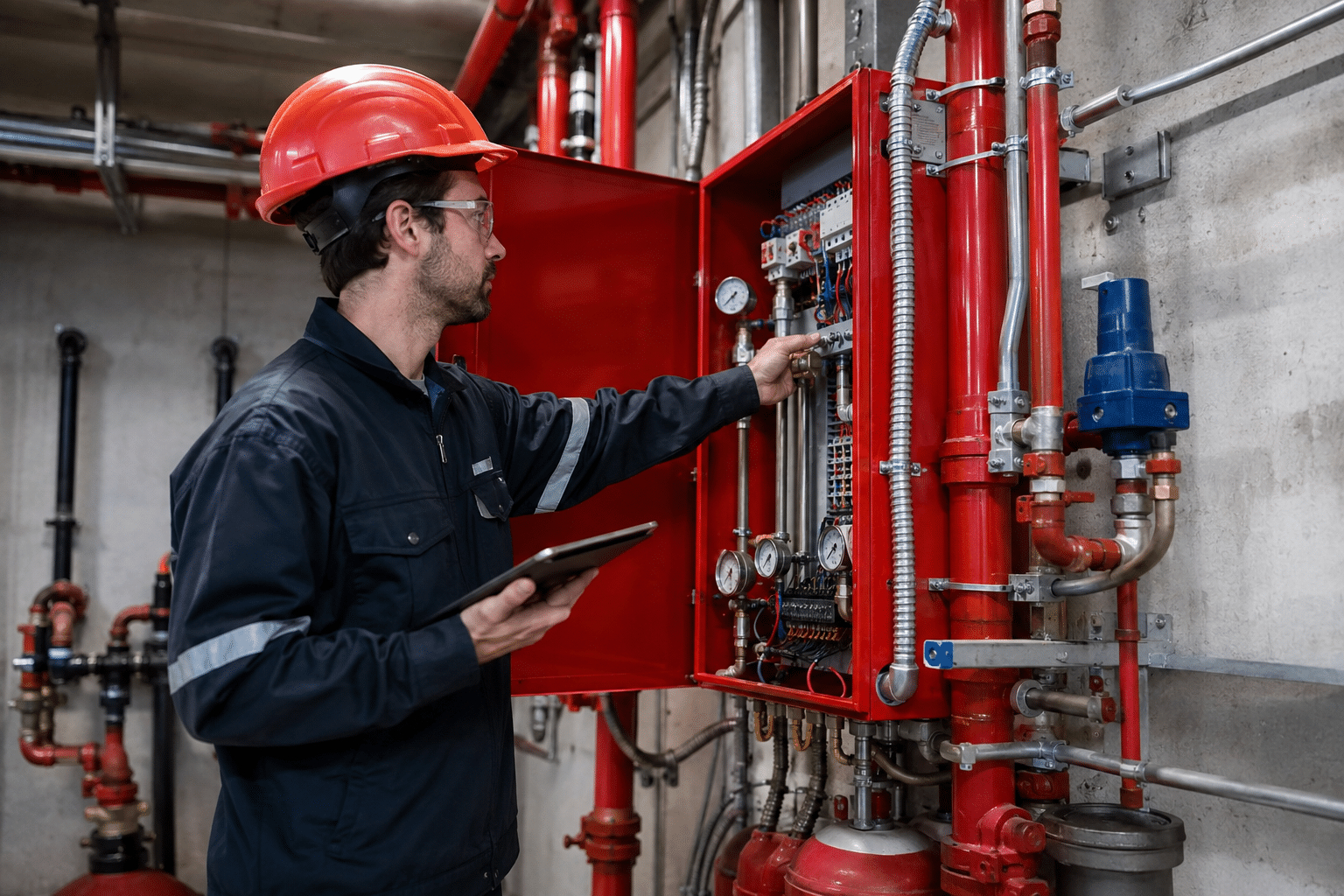
A fire suppression technician installs, tests, maintains, or repairs equipment intended to control a fire. The work may involve sprinkler piping, pumps, valves, clean-agent systems, special-hazard protection, or the connections between suppression and alarm equipment. It combines field work with code-aware documentation, and the correct training depends heavily on the system and the local authority.
What does a fire suppression technician do?
The job may include:
- Inspecting pipes, valves, gauges, pumps, nozzles, tanks, and control panels.
- Testing pressure, alarms, supervisory signals, releasing devices, and system components.
- Servicing sprinkler or special-hazard equipment according to the approved procedure.
- Reading plans, equipment manuals, inspection forms, and deficiency reports.
- Documenting results and explaining repairs or impairments to customers and supervisors.
- Coordinating with fire alarm, electrical, plumbing, construction, and facility teams.
This role is different from a fire alarm technician, who focuses mainly on detection and notification systems. It is also different from a fire sprinkler installer, whose work centers on installing the piping and heads. Some employers combine these functions, but many do not.
Training and certification
There is no one national license that covers every fire suppression job. Employers may train workers on a manufacturer’s equipment, a specific suppression agent, inspection procedures, and the local authority’s requirements.
NFPA-related standards are common references for inspection, testing, maintenance, installation, and service. A technician may need knowledge of sprinkler systems, fire pumps, clean agents, kitchen systems, or other special hazards. The credential that helps most depends on the system you want to work on.
Some service work requires documented training, a manufacturer credential, or certification accepted by the authority having jurisdiction. Before enrolling in a course, ask employers which systems they service and which credentials they accept. Safety training also matters because a system may be pressurized, electrically controlled, or connected to a live facility.
Pay and job outlook
Fire suppression technician is a specialized title, so BLS does not publish one national wage line for it. Related installation, maintenance, and repair occupations include security and fire alarm systems installers, but that broader category is not a direct salary guarantee for suppression technicians.
Pay often depends on licensing, system type, travel, emergency calls, overtime, and whether the worker performs inspections, installations, or advanced troubleshooting. Ask whether the role includes on-call work, vehicle use, tools, paid training, and time spent completing reports after a site visit.
Could this career fit you after 35?
This path can suit someone who likes technical service work with a clear safety purpose. Plumbing, HVAC, electrical, fire alarm, construction, and facilities experience can transfer, especially when it includes drawings, valves, pressure systems, or customer communication.
The work can be physical and procedural. You may carry ladders or tools, work above ceilings, enter mechanical rooms, climb, kneel, or respond when a system is impaired. The job also requires calm communication because a customer needs to understand what is wrong and what must happen before the system is returned to service.
How to prepare for the first job
- Choose a lane such as sprinkler, fire pump, kitchen, clean-agent, or special-hazard systems.
- Read local job postings and identify the credentials and equipment employers mention.
- Build basic skills in pipe systems, valves, pressure, electrical safety, drawings, and documentation.
- Look for helper, inspection trainee, fire alarm, sprinkler, or facilities-maintenance roles.
- Ask whether the employer provides manufacturer training and which credentials are required for independent service work.
For nearby career paths, compare fire alarm technician, fire sprinkler installer, and fire inspector careers.
Understand the system before touching it
Fire suppression work is divided by system type. A wet-pipe sprinkler system, restaurant hood system, clean-agent installation, and fire pump do not use the same service procedure. Before accepting a trainee role, ask which systems make up most of the company’s workload. Also ask whether the job is inspection, installation, recharge, repair, or emergency response. The answer determines the tools, training, and local credentials that matter.
A technician must know when a system is impaired and who needs to be told. Closing a valve, disconnecting a releasing circuit, or leaving a cylinder out of service can change a building’s fire protection. New workers should be taught the company’s impairment procedure, tagging practice, customer notification steps, and rules for returning equipment to service. If those answers are vague, the training plan is not ready.
What a careful service visit looks like
Begin by confirming the system, scope, and current operating condition. Review earlier deficiencies before testing anything. During the visit, identify each device or component clearly and record readings under the correct test condition. When a result falls outside the expected range, repeat only the checks allowed by procedure and escalate the finding instead of adjusting equipment by guesswork.
The final report should make sense to someone who was not present. State what was tested, what passed, what failed, whether protection remains available, and what correction is recommended. Photographs need enough context to locate the component. A close image of a corroded fitting is less useful when the next technician cannot tell which riser or room it belongs to.
Questions for a first employer
Ask how trainees accumulate supervised experience, which manufacturer courses are paid, and whether inspection quotas include time for accurate reports. Clarify on-call rotation, travel, vehicle use, ladders, tools, and work above ceilings. Finally, confirm which tasks require a license or certification in the jurisdictions served. A solid employer will distinguish company training from legal authorization.
Look at the employer’s inspection forms before your first independent assignment. They reveal whether the company separates tested components, deficiencies, impairments, and completed repairs clearly. Ask how rejected parts, discharged cylinders, waterflow tests, and alarm interfaces are handled. If technicians are paid by completed calls, find out how the company protects time for shutdown coordination and documentation. Fire protection work punishes rushed assumptions; the safest pace is the one that leaves the system status unmistakable.
Ask how the company handles deficiencies that a customer declines to repair. The technician should document the decision and follow the required notification process without minimizing the condition or arguing beyond the scope of the visit.
Sources
- National Fire Protection Association: Codes and Standards
- NFPA: Fire Extinguishing Systems Service Technician Requirements
- U.S. Bureau of Labor Statistics: Installation, Maintenance, and Repair Occupations
- OSHA: Fire Safety
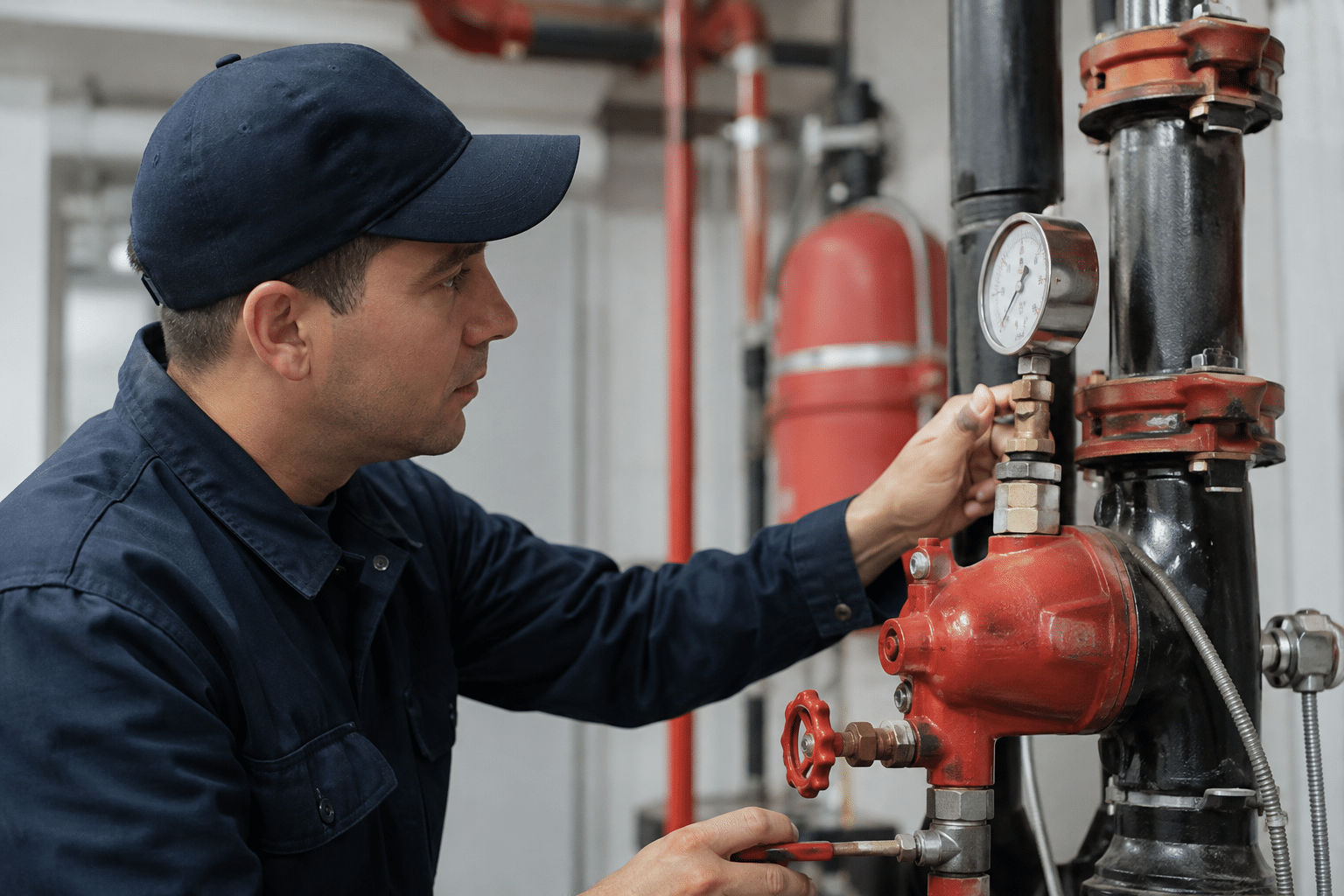
A maintenance visit can reveal a system change: A technician may find a closed valve, damaged sprinkler head, obstructed access, low pressure, or a room whose use no longer matches the protection design. The right response is to document the condition, follow the employer’s procedure, and identify the responsible correction rather than treating every issue as a simple parts replacement.