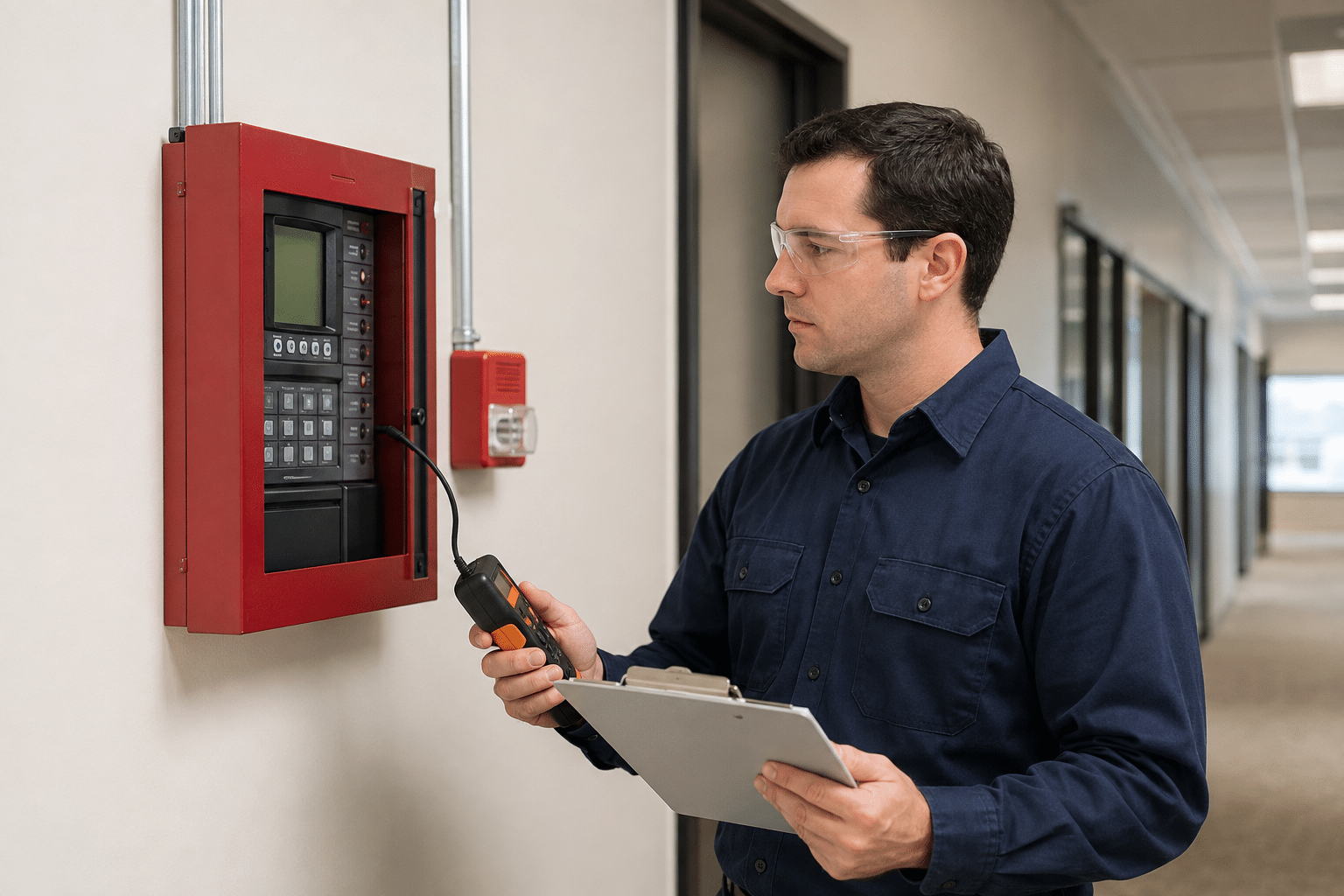
A fire alarm inspector tests whether a building’s alarm system responds as designed and whether the results are recorded for the owner, authority, and service company. The work may include control panels, initiating devices, notification appliances, batteries, monitoring connections, and inspection documentation. It is a compliance-focused role, so the technician must distinguish a failed device, a documentation gap, and a condition that needs immediate service.
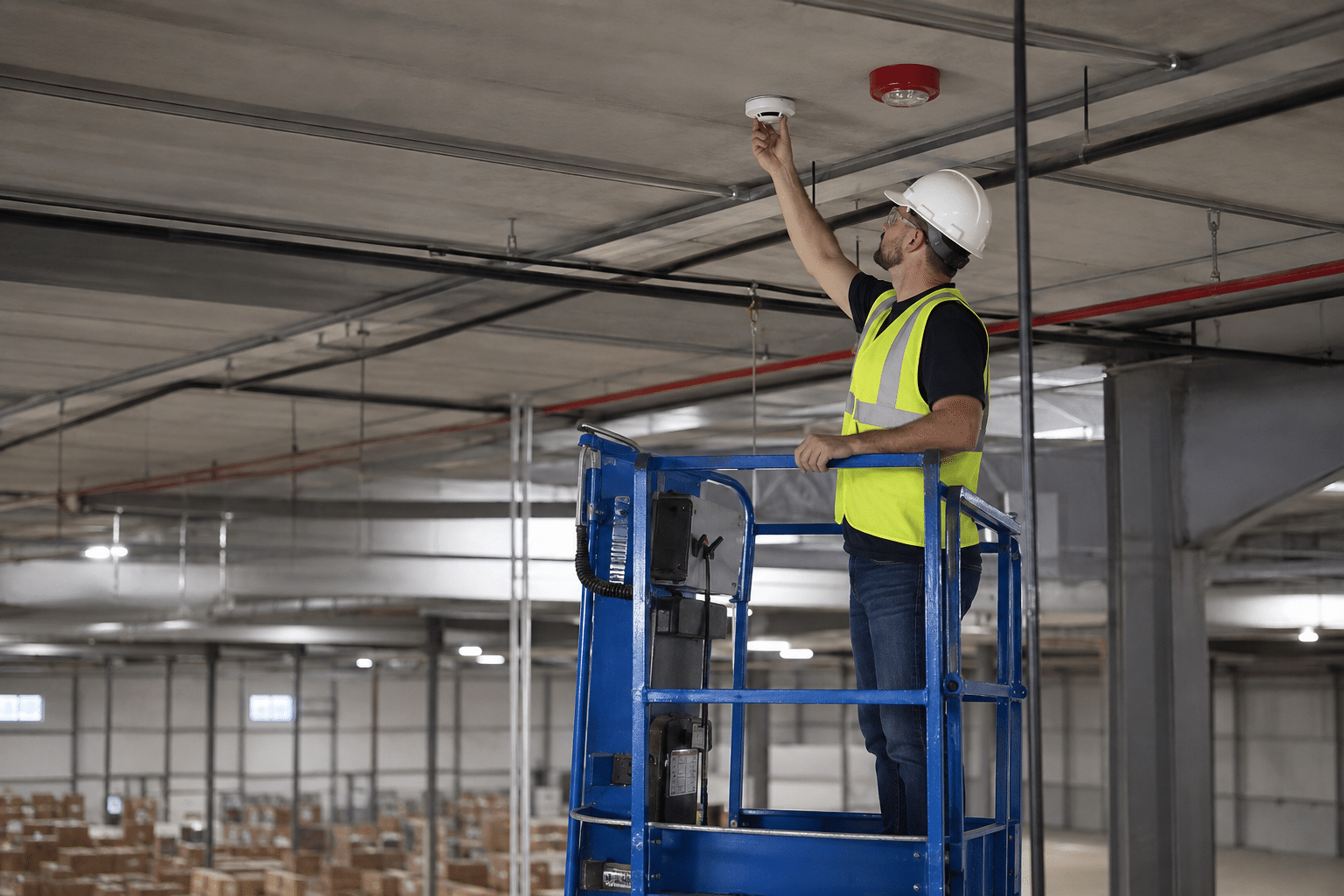
A test visit can reveal more than a failed detector: The inspector may find an expired battery, an inaccessible device, a panel trouble signal, a changed room layout, or a monitoring detail that no longer matches the record. The report needs enough detail for the responsible party to understand what was tested, what failed, and what correction is required.
What does a fire alarm inspector do?
The exact job depends on whether you work for a fire-protection contractor, an inspection company, a property owner, or a public agency. Common work includes:
- Visually checking smoke detectors, heat detectors, pull stations, horns, strobes, and other devices.
- Testing selected devices and confirming that the panel receives the correct signal.
- Checking batteries, power supplies, annunciators, communication paths, and trouble signals.
- Comparing the installed system with drawings, inspection records, and the applicable code or contract.
- Writing a report that separates passed items, observed deficiencies, and follow-up work.
Some inspectors also service or repair systems. Others are expected to identify problems and leave repairs to a separate technician. Ask about that boundary before accepting a job. It affects the tools you carry, the pace of the day, and the liability attached to your report.
What the workday feels like
Expect a mix of walking, ladder or lift work, conversations with building staff, and time at a control panel. You may inspect an office one morning and a warehouse, school, apartment complex, or industrial site the next. Testing can temporarily place part of a system out of service, so coordination matters. The inspector needs to notify the right people, follow the site’s impairment procedure, and confirm that the system is returned to normal.
There is paperwork. Photos, device lists, panel readings, test results, and deficiency notes need to be clear enough for a customer, authority having jurisdiction, or future technician to understand.
Training and certification
There is no single nationwide path called fire alarm inspector. Employers commonly look for a high school diploma, basic electrical or low-voltage knowledge, a driver’s license, and the ability to read plans and use a meter. New hires may learn through supervised field work and manufacturer training.
Certification depends on the employer, system type, and local rules. NFPA 72 includes inspection, testing, and maintenance provisions, but the code is not a substitute for checking your state’s licensing rules or the requirements of the local authority. Some employers value NICET credentials, manufacturer certificates, or experience with inspection software. Treat each as a job-specific requirement, not a universal promise.
The BLS describes the broader occupation of security and fire alarm systems installers as work that installs, programs, maintains, and repairs alarm wiring and equipment. Its profile is a useful benchmark, but it does not isolate the inspector title.
Pay and job outlook
Pay varies with geography, travel, overtime, credentials, and whether the role combines inspection with service. For a benchmark, BLS reports a May 2024 median annual wage of $59,300 for security and fire alarm systems installers, with projected employment growth of 10 percent from 2024 to 2034. That figure is for the broader occupation, so use local job postings to test what inspectors actually earn near you.
Can this career fit after 40?
It can suit someone who likes technical work but does not want a production line. Previous experience in electrical work, facilities, security systems, building maintenance, customer service, or documentation can transfer well. Clear communication matters because customers need to understand a deficiency without being frightened or brushed off.
The trade-offs are real. Travel between sites can be tiring. You may work in awkward spaces, climb, carry equipment, and occasionally schedule tests outside normal business hours. If you prefer diagnosis and reports to emergency response, ask whether the company has a dedicated inspection team. A short ride-along or entry-level helper position can tell you more than a generic aptitude test.
A sensible way to start
Read a few local postings and note the repeated requirements. Then look for a helper, inspection coordinator, or low-voltage trainee opening. Build comfort with electrical safety, multimeters, plans, and careful written notes. Do not claim a system passed unless you actually followed the required procedure and recorded what you observed.
If you are comparing this path with nearby options, see our guides to fire inspector, fire suppression technician, and biomedical equipment technician.
Build a habit of evidence, not guesswork
Fire alarm inspection work is methodical for a reason. A device can appear normal and still fail to communicate, report the correct condition, or match the documentation for the building. Good technicians follow the approved procedure, coordinate before testing, record results clearly, and make sure the system is returned to the expected condition. Rushing through a checklist can create as much trouble as missing the inspection.
That makes documentation a real job skill, not paperwork added at the end. You may need to identify the device tested, the location, the result, any deficiency, who was notified, and what follow-up is required. A future technician should be able to read the record and understand what happened without relying on memory.
Training routes vary. Some people enter through installation or low-voltage service and build inspection knowledge with an employer. Others start with a focused program or manufacturer training. The credential that matters depends on the employer, local rules, and system work involved. Before spending money, ask whether the course includes supervised testing on actual devices and whether it is recognized by the companies hiring in your area.
The career can suit a detail-oriented person who is comfortable with site visits and careful communication. It is not a shortcut into a purely desk-based safety job. Compare it with a fire inspector role and a fire suppression technician role. The systems overlap, but the daily responsibilities and entry routes are different enough to warrant a closer look.
Ask what happens after a deficiency is found. The answer should cover documentation, notification, retesting, and who has authority to close the item. That sequence is central to the work, not an administrative detail.