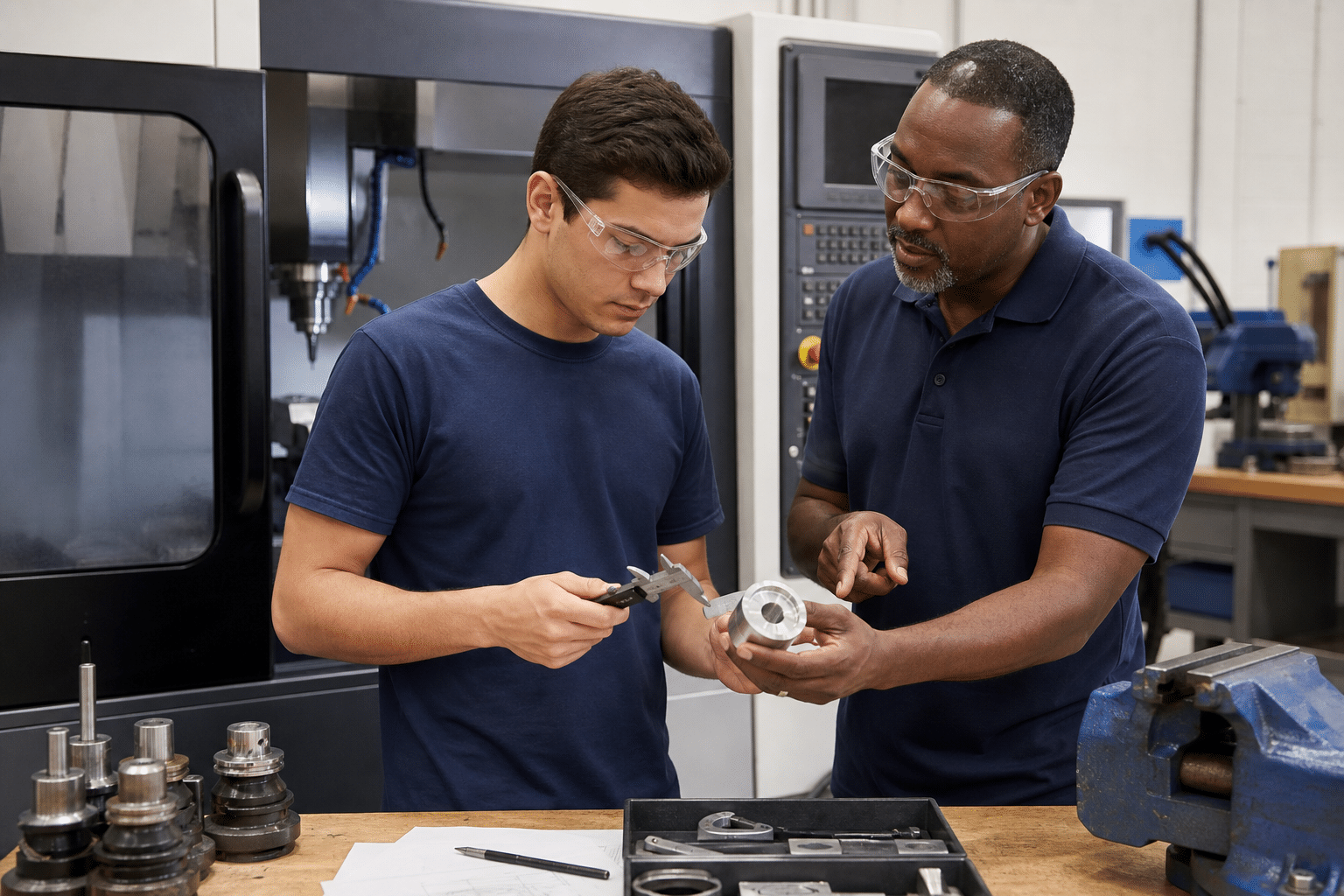
A CNC programmer turns a part drawing into instructions a computer-controlled machine can follow. The work sits between design and machining: the programmer chooses tools, plans cutting moves, accounts for material and tolerances, and helps prove out the job. The role suits someone who enjoys precision and problem solving, but it also requires respect for what the machine, tooling, and shop process can actually handle.
What does a CNC programmer do?
The job varies by shop, but common responsibilities include:
| Task | What it can involve |
|---|---|
| Read the design | Interpret drawings, dimensions, tolerances, and material notes |
| Plan the process | Choose stock, tools, workholding, speeds, and cutting order |
| Write or edit code | Create G-code or use CAD/CAM software to generate a program |
| Set up and prove out | Check offsets, run a test, and correct unexpected results |
| Inspect parts | Measure the first piece and compare it with the drawing |
| Improve the job | Reduce waste, tool wear, cycle time, or setup problems |
Some programmers sit in an engineering office; others work beside CNC mills, lathes, routers, or multi-axis equipment. Smaller shops may combine programming with setup and machining. The title alone does not tell you how much hands-on work the role includes.
What training helps?
The BLS says CNC tool programmers typically need postsecondary training, while machinists often enter with a high school diploma and learn on the job. Useful study includes blueprint reading, shop math, GD&T, materials, tooling, CNC controls, CAD/CAM, inspection, and safe machine operation.
Our CNC machinist guide covers the machine-side path. A programmer who understands setup, tools, and measurement can write better programs because the code has to work in a real shop, not just on a screen. Experience as a machinist, setup operator, tool and die maker, or mechanical technician can transfer.
How is CNC programming different from machining?
Machinists set up and operate equipment to produce parts. CNC programmers prepare the instructions and process plan, though the roles overlap in many workplaces. Programming often involves more CAD/CAM time, revision control, and communication with engineering or production. Machining involves more direct setup, inspection, and machine operation.
Ask whether a job requires a specific software package, manual code editing, multi-axis experience, or only program adjustments. Those details affect the training you need and the level at which you can enter.
CNC programmer pay and outlook
The BLS reports a $68,120 median annual wage in May 2025 for computer numerically controlled tool programmers, a detailed occupation within metal and plastic machine work. The broader machinist occupation had a $58,750 median. BLS projects the overall machinist and tool-and-die-maker group to decline 1% from 2025 to 2035, with about 30,400 openings per year from replacement needs.
These figures are benchmarks, not a guaranteed salary for every CNC programmer. Pay changes with software, multi-axis work, inspection responsibility, industry, shift, and the ability to set up and troubleshoot equipment.
Is CNC programming a good second career after 40?
It can suit someone who likes precision, practical problem-solving, and work that leaves a measurable result. Previous experience in fabrication, maintenance, drafting, production, automotive repair, or quality can provide useful examples. The learning curve is real, especially if you are new to machining terminology and CAD/CAM.
Before enrolling, look at local postings and ask which controls, software, machines, materials, and tolerances employers actually use. A program that teaches generic CNC concepts may still require employer training on its specific equipment.
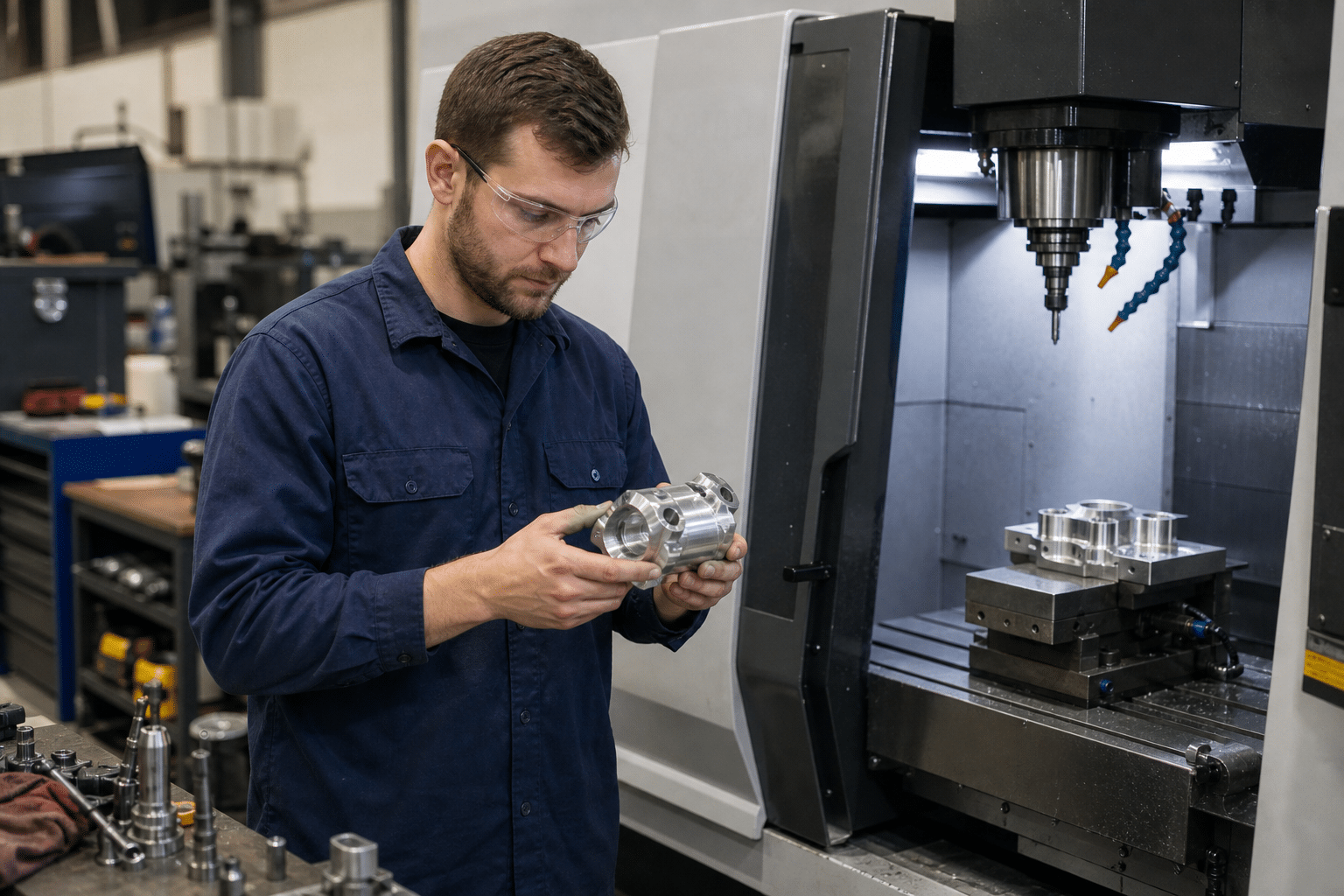
The first prove-out is where assumptions meet metal: The programmer may find that a tool path approaches a clamp, leaves too much stock, creates a poor finish, or takes longer than the production target. A careful prove-out uses controlled checks and measured results before the program is released for repeat work.
Bottom line
CNC programming combines drawing interpretation, machining knowledge, software, and careful verification. The strongest entry path is usually the one that gives you both programming practice and enough shop exposure to understand setup and measurement.
Related guides: Industrial Engineering Technician: Duties, Training, Pay and Career Fit and Robotics Technician: Duties, Training, Pay and Career Fit.
Program from a controlled setup
A CNC programmer needs the current drawing, material, machine, control, tooling, workholding, and quality requirements before creating a process. Confirm revision and units first. Plan datums, stock, tool reach, clearances, and inspection points. A program that simulates cleanly can still fail when the fixture, offset, or actual machine limits differ.
Use the shop’s prove-out procedure. Review code, run simulation where available, verify tools and offsets, use safe approach settings, and step through the first cycle under supervision. Do not disable limits or increase speed to hide an unresolved problem. Record changes so the approved program does not drift through undocumented edits at the control.
Build a portfolio employers can evaluate
Show a drawing, setup plan, tool list, code excerpt, simulation, finished part, and inspection results for a modest project. Explain why you chose the sequence and what changed after the first check. Ask local shops which controls, CAM systems, materials, and tolerances they use. Programming skill is tied to manufacturing judgment; software fluency alone does not prove that a process is safe, stable, or economical.
Toolpaths should be reviewed for more than collisions. Consider chip evacuation, tool deflection, heat, workholding force, finish requirements, and how the operator will inspect the part. A cycle that is fast in simulation may be unstable on the machine. After prove-out, compare actual dimensions and tool wear with the plan, then make controlled changes. Keep programmer and operator feedback connected. Operators often notice sound, chip shape, burrs, loading problems, or awkward measurements before a report reaches engineering. Ask how the shop captures that information and who owns the approved program. Career changers from machining may have strong process instincts; those arriving from software need deliberate machine time. Both should be able to explain why a program is safe and repeatable, not merely why the code runs.
Archive the verified revision with setup information and inspection evidence. The next production run should begin from a controlled record, not whichever file happens to remain on the machine.
Sources
- U.S. Bureau of Labor Statistics: Machinists and Tool and Die Makers
- U.S. Bureau of Labor Statistics: Metal and Plastic Machine Workers
- OSHA: Occupational Safety and Health Administration
Reviewed September 3, 2026: CNC programming sits between drawings, tooling, machine controls, materials, and shop-floor prove-out. Ask employers which software and tolerances matter before choosing a course. Compare it with CNC machinist work.