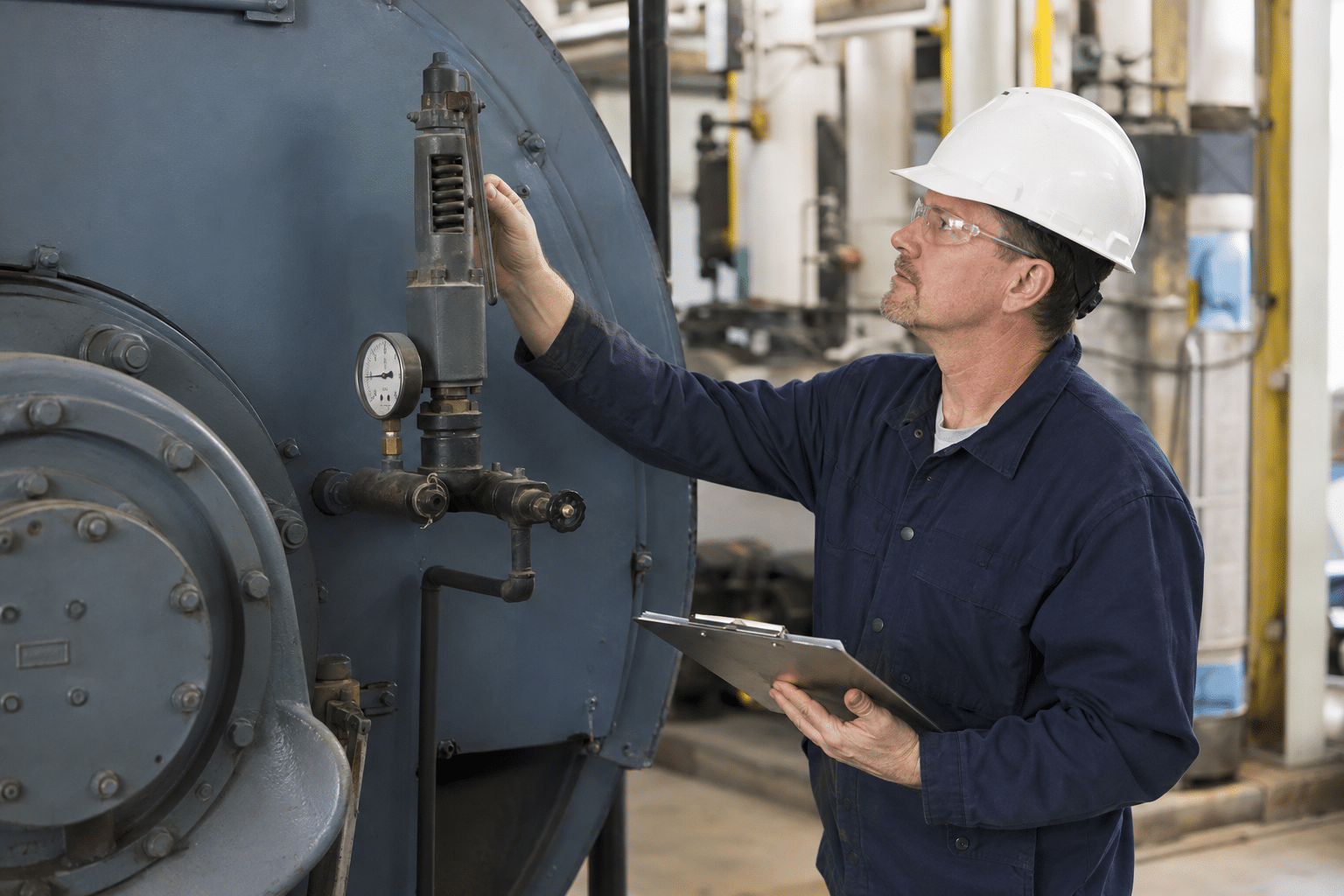
A boiler inspector examines equipment that produces heat and pressure, then records whether it meets the applicable safety and inspection requirements. The work can involve visual checks, documentation, code references, witness points, and conversations with owners or contractors. The title covers different assignments by state and employer, so the actual authority, certification, and equipment should be confirmed before applying.
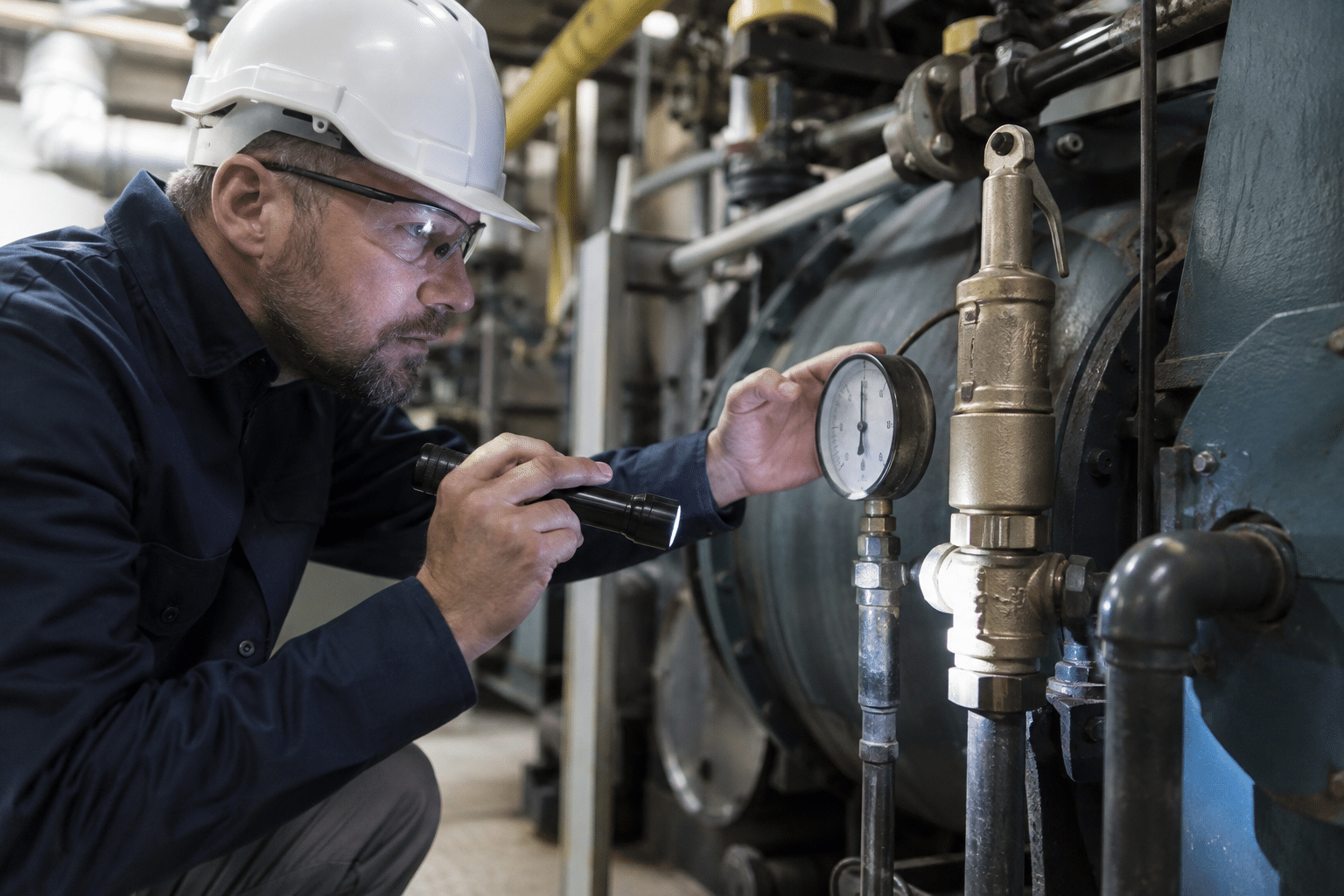
A site visit may uncover a documentation problem rather than a dramatic failure: The inspector could find an unreadable safety-valve record, an overdue inspection item, a change in piping, or a condition that needs a qualified repair contractor. The inspector’s job is to identify and document the issue accurately, not to perform unauthorized repairs.
What does a boiler inspector do?
The exact assignment depends on the jurisdiction, employer, and type of boiler. A typical inspection may include:
- Reviewing the boiler, pressure vessel, controls, relief devices, piping, and visible connections.
- Looking for corrosion, leaks, damage, poor repairs, blocked access, or signs that a safety device may not work as intended.
- Checking records, operating information, previous reports, and required certificates.
- Witnessing tests or coordinating with an authorized inspector, owner, contractor, or state agency.
- Writing a clear report that identifies defects, required corrections, and the next inspection step.
Mechanical inspectors can work around boilers and other mechanical systems. The U.S. Bureau of Labor Statistics notes that some inspectors examine heating, air-conditioning, refrigeration, commercial kitchen, gas, and boiler equipment.
Training and certification
There is no single nationwide path called a boiler inspector license. Requirements vary by state, city, insurance company, and inspection program. Employers may look for mechanical experience, knowledge of pressure equipment, safety training, and an industry credential or authorization recognized by the jurisdiction.
A realistic starting route is to build experience in boiler operation, stationary engineering, industrial maintenance, welding, pipefitting, or mechanical inspection. From there, a worker can learn the applicable codes, inspection procedures, report writing, and non-destructive testing methods. Always check the authority having jurisdiction before paying for a course, because an approved credential in one state may not satisfy another program.
Pay and job outlook
Boiler inspectors are not reported as a separate national occupation in every labor dataset. As a broad benchmark, BLS reported a 2025 median annual wage of $74,690 for construction and building inspectors. That figure is not a guaranteed boiler-inspector salary. Pay varies with authorization, travel, overtime, sector, and prior mechanical experience.
BLS projects little or no change for the broader occupation from 2025 to 2035, while still estimating about 14,800 openings each year from replacement needs and movement between jobs.
Is this career a good fit after 35?
This path can suit someone who prefers structured fieldwork, technical documentation, and responsibility over constant production work. Previous experience with equipment, facilities, construction, manufacturing, or safety can transfer well.
The tradeoffs are real. You may work in hot, tight, noisy, or industrial spaces. Travel and irregular schedules are possible, and the inspector has to communicate unwelcome findings professionally. If you want a role where careful judgment matters more than speed, boiler inspection may be worth investigating.
How to explore the field
Start by asking your state or local inspection authority which credentials it recognizes. Then compare entry roles such as industrial boiler operator, industrial mechanic, and pipeline inspector. Those conversations can reveal whether your current experience already covers part of the entry path.
What the work looks like in practice
A boiler inspector usually balances scheduled work with problems that cannot be predicted from a calendar. The scheduled side may include inspections, readings, preventive tasks, site visits, customer appointments, or a review of records from the previous shift. The unscheduled side may begin with an alarm, a complaint, a weather event, a failed test, or a result that does not match expectations. The first professional habit is to confirm the condition before changing anything.
Because the work supports industrial plants, commercial buildings, insurance inspections, and public safety programs, communication is part of the technical job. A worker may coordinate with a supervisor, customer, contractor, operator, dispatcher, engineer, or emergency team. A good handoff explains what was observed, what was checked, what action was taken, and what still needs attention.
Equipment and records
The tools used by a boiler inspector may include boilers, pressure vessels, inspection forms, gauges, records, codes, and non-destructive testing tools. The exact list varies, but the principle is consistent: select an appropriate tool, use it according to the procedure, and record enough information for another person to understand the result. A small indication of corrosion, leakage, or a failed safety device can matter because stored pressure changes the consequences of failure That is why a reading without location, time, condition, or method can be less useful than a shorter record made carefully.
An inspection report should identify the boiler, operating and shutdown condition, safety devices, controls, visible pressure-part concerns, records reviewed, tests witnessed, and items requiring correction. Photographs need scale and location. Precise language separates an observation from a code determination or engineering conclusion.
Training and the first months
Boiler inspection work varies between jurisdictional inspections, insurance surveys, facility checks, and service support. Ask which code, boiler types, pressure ranges, and credentials apply to the position. A trainee should know exactly what may be observed independently and what requires an authorized inspector.
Preparation may include boiler operation, combustion, controls, pressure systems, codes, and inspection procedures. Credential requirements differ by jurisdiction and employer, so verify the actual path before enrolling. Ask how candidates accumulate supervised experience and whether the employer supports examinations and continuing education.
Safety and working conditions
A boiler inspector may face moving equipment, electricity, pressure, traffic, heights, weather, chemicals, confined areas, or unfamiliar properties. The correct response is to follow the hazard assessment, use the required PPE, isolate equipment when required, and stop when the real condition does not match the work plan. Production pressure or a customer deadline does not remove the need for a safe method.
Inspections can involve hot mechanical rooms, ladders, confined access, noise, soot, and travel between facilities. Ask whether boilers must be shut down and opened, who prepares them, what protective equipment is used, and how schedules change during heating season. The role may be less predictable than office-based compliance work.
Career change after 40
This path can suit someone who brings reliability, practical judgment, customer awareness, or careful documentation from another field. The most transferable skill is often the ability to notice a change, ask a precise question, and complete the record. inspection, documentation, and mechanical systems can be learned, but it is easier when you already respect procedures and understand the consequences of a rushed decision.
Early learning should focus on the inspection sequence and the reason behind each safety device. Compare nameplate information with records, confirm that test conditions are valid, and resist drawing conclusions from appearance alone. When corrosion, leakage, overheating, or altered controls are found, document the condition and follow the required escalation process.
Advancement and fit
With experience, a boiler inspector may move toward senior inspector, insurance risk engineer, jurisdictional inspector, or safety manager. Advancement depends on demonstrated competence, additional education, employer structure, and sometimes licensing. Before accepting a job, ask what the previous person moved on to and whether internal postings or tuition support are available.
Questions to ask before applying
- What does this title mean at this employer, and which tasks are outside the role?
- What are the normal schedule, travel, physical, and emergency expectations?
- Which tools, software, records, and safety qualifications are required?
- How are new workers trained and approved for independent work?
- What is the realistic next step after the first year?