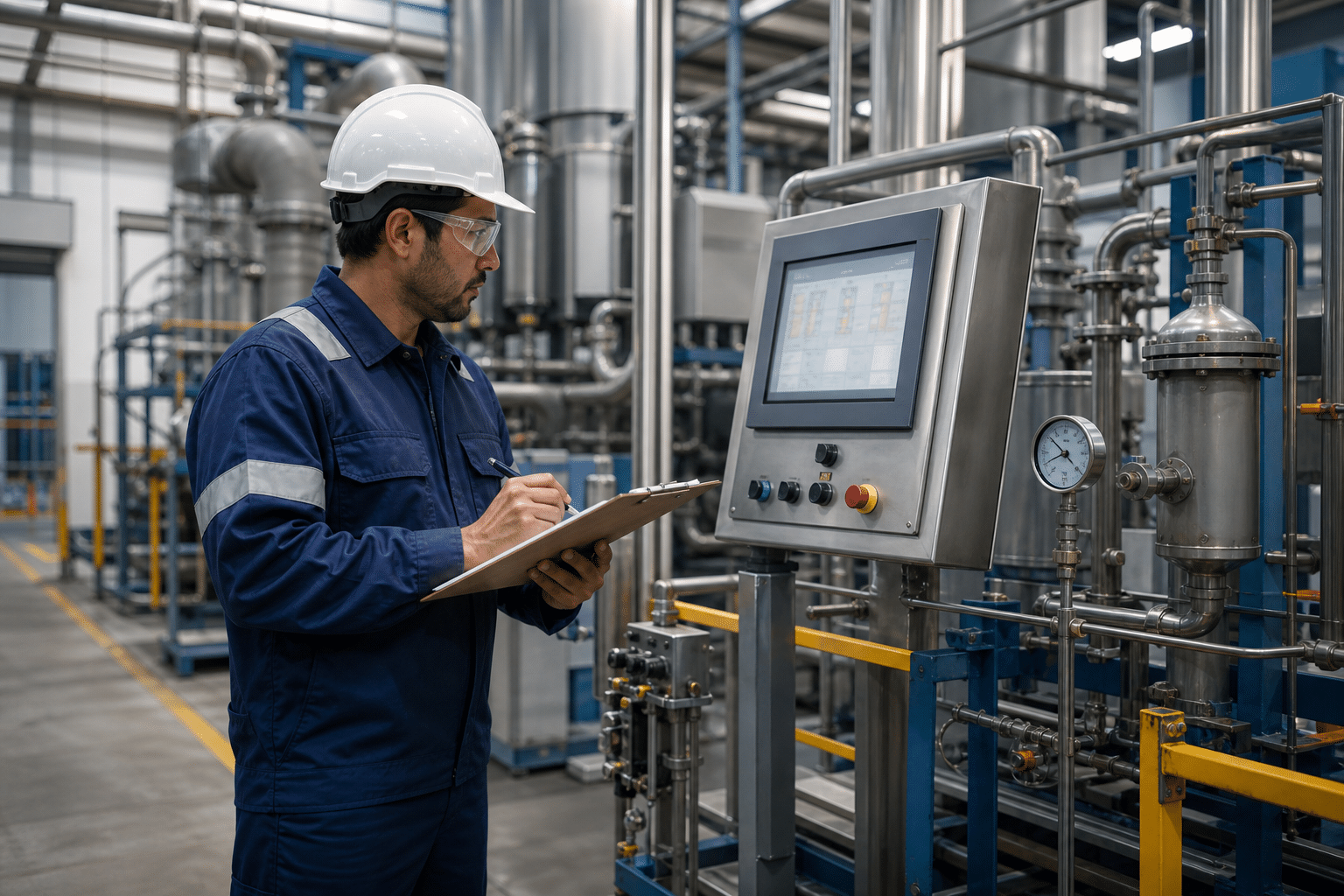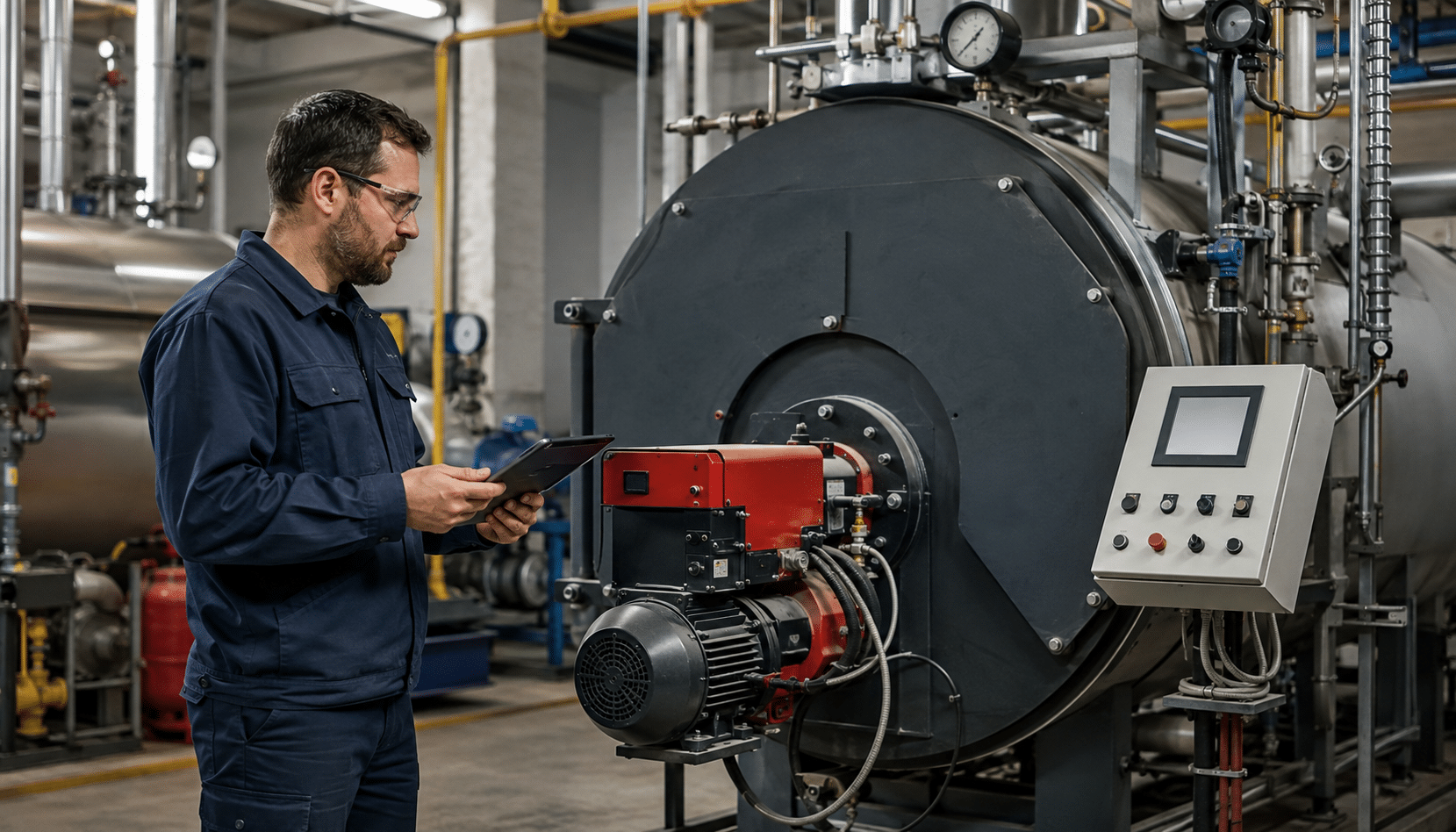
An industrial boiler operator monitors and maintains the equipment that produces steam or hot water for a plant, campus, hospital, or other facility. The job can involve control-room readings, field rounds, water treatment, fuel systems, pumps, valves, alarms, and written operating procedures. It is a process job with real safety responsibility, not simply a position spent watching gauges.
The title overlaps with stationary engineer, but the actual assignment can be narrower. One employer may need a boiler-room operator. Another may want a stationary engineer who also handles chillers, compressors, generators, and building controls.
A small change can matter: An operator may notice rising temperature, falling water level, unusual burner behavior, or a pump that sounds different during a round. The safe response is to verify the reading, follow the plant procedure, communicate the condition, and record the action rather than bypassing an alarm to keep production moving.
What does an industrial boiler operator do?
- Monitor boiler controls, gauges, alarms, water level, pressure, and temperature.
- Inspect burners, pumps, valves, feedwater systems, fuel systems, and safety devices.
- Start up, shut down, or change operating conditions according to written procedures.
- Test water chemistry or coordinate testing to protect boilers and piping.
- Record readings, rounds, maintenance needs, and unusual conditions.
- Respond to alarms and escalate equipment problems before they become unsafe.
- Coordinate with maintenance, controls, water-treatment, and production staff.
Operators do not simply sit beside a gauge. A round may reveal a leaking valve, an abnormal vibration, a burner problem, a low-water condition, or a reading that does not match the control screen. The job requires steady attention during quiet periods because the consequences of missing a change can be serious.
Boiler operator versus stationary engineer
| Role | Main focus | Typical difference |
|---|---|---|
| Industrial boiler operator | Safe operation of boilers and supporting systems | Often centered on steam, hot water, fuel, combustion, and feedwater equipment |
| Stationary engineer | Facility mechanical systems | May operate boilers plus chillers, compressors, generators, pumps, and controls |
| Boilermaker | Construction and repair | Installs, maintains, or repairs pressure vessels and related heavy equipment |
Our guides to stationary engineer work, boilermaker apprenticeships, and power plant operator careers help separate these paths.
Training and licenses
The BLS says stationary engineers and boiler operators typically enter with a high school diploma or equivalent and receive long-term on-the-job training or an apprenticeship. Many employers require workers to demonstrate competence through a license or company exam before they operate equipment without supervision.
License rules are local. A city, county, state, or insurance requirement may set the permitted boiler size, operating pressure, supervision rules, experience hours, examination, and renewal process. Some facilities also have their own qualification system. Check the authority having jurisdiction before paying for a course.
Useful preparation includes mechanical basics, electrical safety, combustion, steam and hot-water systems, pumps, valves, water chemistry, control panels, recordkeeping, and emergency procedures. A class can help, but it does not replace hands-on qualification on the equipment you will operate.
Safety and work conditions
Boiler rooms combine heat, pressure, fuel, rotating equipment, chemicals, noise, and stored energy. Operators need clear procedures for startup and shutdown, lockout and tagout, low-water protection, fuel isolation, confined spaces, chemical handling, and emergency response.
Facilities that run around the clock may schedule evenings, weekends, holidays, or rotating shifts. Some operators work indoors most of the time but still enter mechanical rooms, climb stairs, lift tools, and walk through loud or hot areas. Ask how the employer manages heat, hearing protection, ventilation, staffing, and emergency callouts.
Pay and job outlook
BLS combines stationary engineers and boiler operators in one occupation. It reports 31,200 jobs in 2025, a median annual wage of $78,620 in May 2025, projected growth of 3% from 2025 to 2035, and about 3,200 openings per year on average.
| BLS benchmark | 2025 figure |
|---|---|
| Combined occupation employment | 31,200 jobs |
| Median annual wage, May 2025 | $78,620 |
| Projected change, 2025-35 | 3% growth |
| Average annual openings | About 3,200 |
This benchmark is not a guaranteed starting wage for a boiler-room trainee. Compare the base rate with shift premiums, overtime, license pay, benefits, training costs, and the number of people on each shift. A job with broad equipment exposure may be useful even if the first wage is below the national median.
Is boiler operation a good career change after 40?
It can suit someone who likes machinery, procedures, readings, and responsibility. Experience in HVAC, industrial maintenance, facilities, plumbing, controls, manufacturing, or the military may help. You still need to learn the specific boiler, fuel system, water-treatment process, and local rules.
The route is less attractive if you need a predictable Monday-to-Friday schedule or dislike working around heat and alarms. Visit a plant or ask to shadow an operator if possible. Listen to the work environment and ask how often the team responds to abnormal conditions.
Before leaving a current job, calculate the time to qualification, expected trainee pay, transportation, tools, and any license fees. Then compare the first realistic wage, not the BLS median, with your household cash-flow needs.
Questions to ask before applying
- Which license or operating credential is required for this boiler and location?
- How long is supervised training before independent operation?
- Which boilers, fuels, pressures, pumps, and control systems will I handle?
- Does the schedule include rotating shifts, weekends, or emergency callouts?
- Who pays for exams, license renewals, medical checks, and continuing education?
- How many operators work each shift, and what happens during an alarm?
Bottom line
Industrial boiler operation is a technical facilities career built around safe control of heat, pressure, fuel, water, and mechanical equipment. The BLS data combine boiler operators with stationary engineers, so the local license and actual job description matter. Start with the jurisdiction’s rules and a real posting, then decide whether the schedule and responsibility fit your next move.
Why the control room is only part of the job
Boiler operation depends on paying attention before an alarm becomes an emergency. Operators make rounds, compare readings, listen for changes, check water and fuel conditions, and record what they find. The control screen helps, but it does not replace the judgment that comes from seeing the equipment and following the operating procedure.
Before you apply, ask whether the position includes training on the actual plant, what license rules apply locally, and how the employer handles callouts and shift handoffs. The stationary engineer guide helps explain the overlap, but the equipment and responsibilities can still differ from site to site.
- U.S. Bureau of Labor Statistics: Stationary Engineers and Boiler Operators – duties, training, May 2025 pay, employment, and outlook; checked September 4, 2026.
- OSHA: The Control of Hazardous Energy – lockout and tagout safety context; checked September 4, 2026.
- OSHA: Heat – workplace heat exposure and prevention context; checked September 4, 2026.