
A telecommunications technician installs, tests, troubleshoots, or maintains systems that carry voice, data, video, and other signals. The work may involve fiber, copper, wireless equipment, network hardware, customer premises equipment, or a specialized communications system. The right preparation depends on whether the job is mainly outside plant, building cabling, service calls, or network testing.
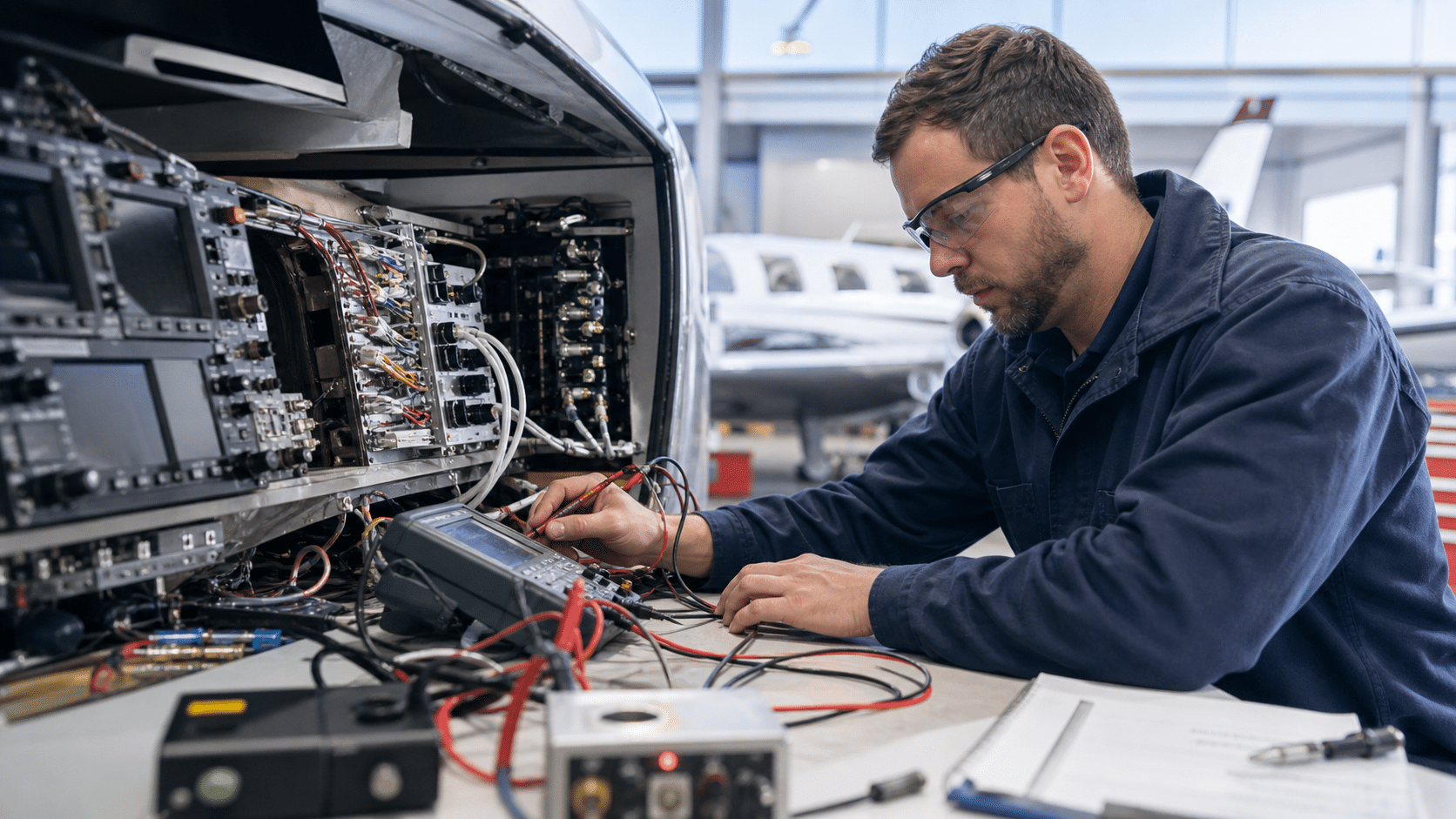
A connection problem can start anywhere in the path: The technician may check the customer equipment, power, patching, connectors, signal levels, fiber loss, or network configuration before replacing a component. Accurate test results help the next technician see what was ruled out and prevent repeated visits.
What does a telecommunications technician do?
The day-to-day job depends on whether the employer serves homes, businesses, cell sites, utilities, transportation, or a large network. Some technicians work mostly at customer locations; others work in central offices, data rooms, towers, or outside plant.
| Area | Typical work |
|---|---|
| Installation | Run cable, terminate connections, mount equipment, and label routes |
| Testing | Use meters, light sources, power meters, or network tools to verify signals |
| Troubleshooting | Isolate a fault, replace a component, and confirm service is restored |
| Maintenance | Inspect cabinets, power systems, connectors, batteries, and environmental controls |
| Customer work | Explain the repair, protect the property, and document the visit |
| Records | Update work orders, cable routes, test results, and equipment details |
Fiber work requires careful handling of connectors and test results. Wireless and tower work adds grounding, rigging, radio equipment, and fall-protection concerns. A technician should not assume that one short course prepares them for every telecommunications environment.
How do you become a telecommunications technician?
Requirements vary by employer and specialty. Common entry routes include a certificate in telecommunications or networking, community-college coursework, employer training, military communications experience, or work as a cable or fiber optic technician.
Useful subjects include basic electricity, networking, fiber and copper cabling, signal testing, equipment documentation, grounding, customer communication, and safe ladder or lift use. A field service technician background can also help because both roles require organized troubleshooting at changing locations.
Some projects require site-specific credentials, a commercial driver’s license, background screening, or safety training. Tower work has additional climbing and rescue expectations. Check the actual posting and the rules that apply to the equipment or worksite before paying for a credential.
Where do telecommunications technicians work?
Technicians may work indoors in homes, offices, data rooms, and central offices, or outdoors in streets, utility rights-of-way, cabinets, rooftops, and towers. Travel and irregular hours are common in installation, outage response, and project work.
The physical demands can include carrying cable and tools, kneeling, climbing ladders, working in awkward spaces, and driving between appointments. Outdoor work adds weather exposure. Technicians must follow electrical, traffic, fall-protection, and equipment-specific procedures rather than rushing to restore service.
Telecommunications technician pay and outlook
The title spans several BLS occupations. Telecommunications equipment installers and repairers are a closer benchmark for indoor network and communications equipment work. Telecommunications line installers and repairers may be a better comparison for outside-plant cable and line work. Neither benchmark represents every technician job.
Compare local postings by specialty, overtime, travel, union status, commission structure, on-call expectations, and whether the work is residential or commercial. Pay can differ sharply between customer installation, network maintenance, fiber construction, tower work, and specialized systems. Treat BLS figures as occupational benchmarks, not a promise for a particular title.
Is telecommunications a good second career after 40?
It may suit someone who enjoys practical troubleshooting and can work independently without losing the customer or team connection. Experience with electronics, electrical systems, construction, cabling, computers, or field service can be valuable. The transition may be less attractive if frequent driving, climbing, weather, or unpredictable outage work is a poor fit.
Before choosing a program, read twenty nearby job postings and sort them by specialty. Ask whether the employer trains beginners, supplies a vehicle and tools, pays for credentials, and expects on-call work. A realistic comparison of schedule and physical access is more useful than a generic promise that telecommunications is in demand.
Bottom line
Telecommunications technicians keep communication systems connected by installing equipment, testing signals, and fixing faults. The career offers several entry points, but fiber, network, outside-plant, and tower jobs are not interchangeable. Choose the specialty first, then match your training and expectations to the employers in your area.
Related guides: Industrial Hygienist: Duties, Training, Pay and Career Fit and Nuclear Technician: Duties, Training, Pay and Career Fit.
Pick the telecommunications specialty before you train
Telecommunications is a wide field. A technician who terminates fiber in a data room does not have the same day as someone restoring residential service, working on a cell site, or locating a fault along an outside cable route. Each role can be a good career move, but they ask for different tools, travel tolerance, and comfort with weather, customers, or height.
Use postings to sort the work into a few practical buckets. Customer-premises jobs often involve driving, appointment windows, and explaining a repair. Fiber and network roles may reward careful testing and documentation. Outside-plant work can mean traffic control, digging coordination, ladders, and emergency response. Tower work adds a separate level of climbing, rescue, and fall-protection expectations. Do not let a generic course title hide those differences.
A sensible first conversation with an employer is simple: which part of the network will I work on, who trains a beginner, and what does an ordinary week look like? Ask about the vehicle, tools, on-call rotation, travel radius, and the conditions that lead to overtime. Those answers make the job real fast.
People with electronics, construction, cabling, IT support, or field-service backgrounds often have transferable habits. The missing piece may be specialty training rather than a complete restart. Compare the work with our fiber optic technician guide and field service technician guide. If you like practical fault-finding but want a clearer specialty, one of those paths may offer the better first step.
If driving is part of the work, map the actual service area before accepting an offer. A job described as local may still involve long daily routes, weather delays, and evening restorations.
Sources
- U.S. Bureau of Labor Statistics: Telecommunications Equipment Installers and Repairers
- U.S. Bureau of Labor Statistics: Line Installers and Repairers
- OSHA: Communication Tower Safety
- Federal Communications Commission: Broadband Consumer Labels and Consumer Information
Reviewed September 3, 2026: Telecommunications technician jobs can involve fiber, copper, wireless systems, network hardware, customer sites, or specialized equipment. Check travel and certification expectations with local employers. Compare the role with fiber optic technician work.