A semiconductor processing technician works in a controlled environment where small changes in equipment, material, or procedure can affect a batch. The job may involve cleanroom gowning, process tools, chemical or gas systems, measurements, logs, and response to alarms. It is a structured manufacturing role that rewards attention to contamination control and repeatable steps.
The job is closer to controlled manufacturing than to designing microchips. You monitor equipment, adjust process settings, inspect wafers, record data, and report problems to engineers or supervisors. Some employers use the shorter title “semiconductor technician,” while BLS uses “semiconductor processing technician.”
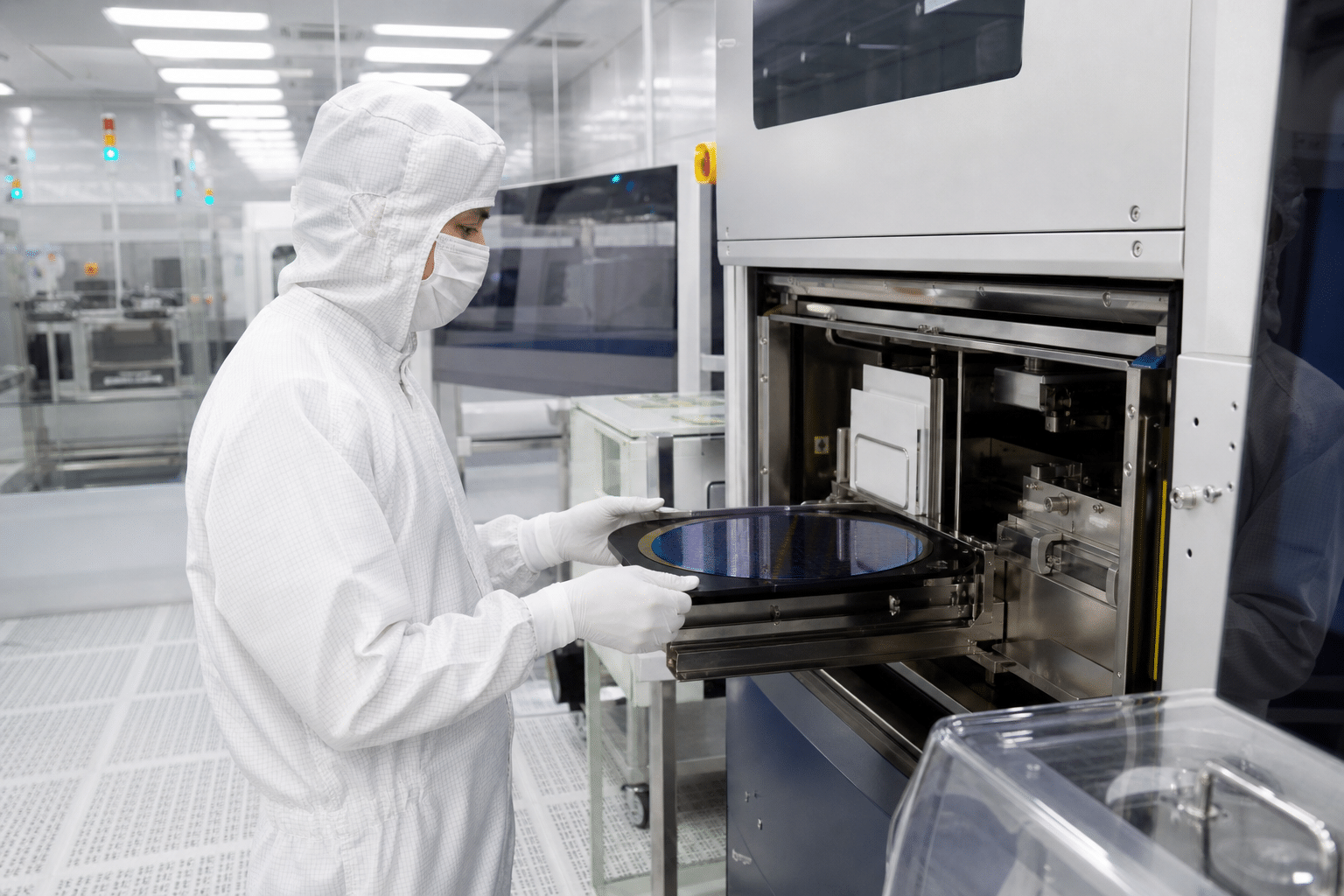
Consistency is the daily skill: A technician may notice a pressure trend, particle count, temperature change, or tool alarm before the product result shows a problem. The response is to verify the signal, follow the approved procedure, record the condition, and involve engineering or maintenance when the process is outside its limits.
What does a semiconductor processing technician do?
BLS describes work that can include reviewing work orders, loading wafers, operating cleaning and polishing tools, running photolithography or etching equipment, adjusting process controls, responding to alarms, inspecting wafers, recording data, and helping engineers investigate process issues.
- Review work orders, process charts, and production instructions.
- Handle wafers without contaminating them.
- Operate cleaning, polishing, lithography, etching, deposition, or test tools.
- Adjust temperature, pressure, timing, or electrical settings.
- Monitor automated equipment and respond to abnormal readings.
- Inspect wafers and record process data.
- Report defects and equipment problems to the right team.
The tool set depends on the fab and production stage. One technician may spend a shift at a photolithography tool. Another may work in wafer sort, packaging, metrology, or equipment support.
Semiconductor processing versus nearby roles
| Role | Main focus | Typical difference |
|---|---|---|
| Semiconductor processing technician | Run and monitor wafer-processing steps | Follows process instructions and controls equipment |
| Semiconductor equipment technician | Maintain and repair fab tools | More mechanical, electrical, vacuum, or controls troubleshooting |
| Quality control inspector | Check products against specifications | May work in many industries, not only semiconductor manufacturing |
| Automation technician | Support automated industrial systems | Broader controls work across factories and equipment |
| Process engineer | Develop and improve manufacturing processes | Usually requires more engineering education |
Compare our guides to automation technician work, electromechanical technician careers, and quality control inspection for related technical paths.
Cleanroom work and important skills
Cleanrooms limit particles that could damage a wafer. Technicians wear special garments, follow entry and handling procedures, and keep tools and materials in the required condition. The work can feel less like a traditional machine shop and more like a controlled lab with production targets.
- Basic math, science, electronics, and computer operation.
- Following a work instruction without skipping steps.
- Noticing small changes in a tool, wafer, screen, or measurement.
- Understanding basic sensors, motors, pneumatics, vacuum, and process controls.
- Recording data accurately and explaining an abnormal result.
- Working carefully with technicians, engineers, and shift teams.
You do not need to know every fabrication process before applying. A technician who follows a procedure and reports a problem early is more useful than someone who improvises around a sensitive tool.
Training and entry routes
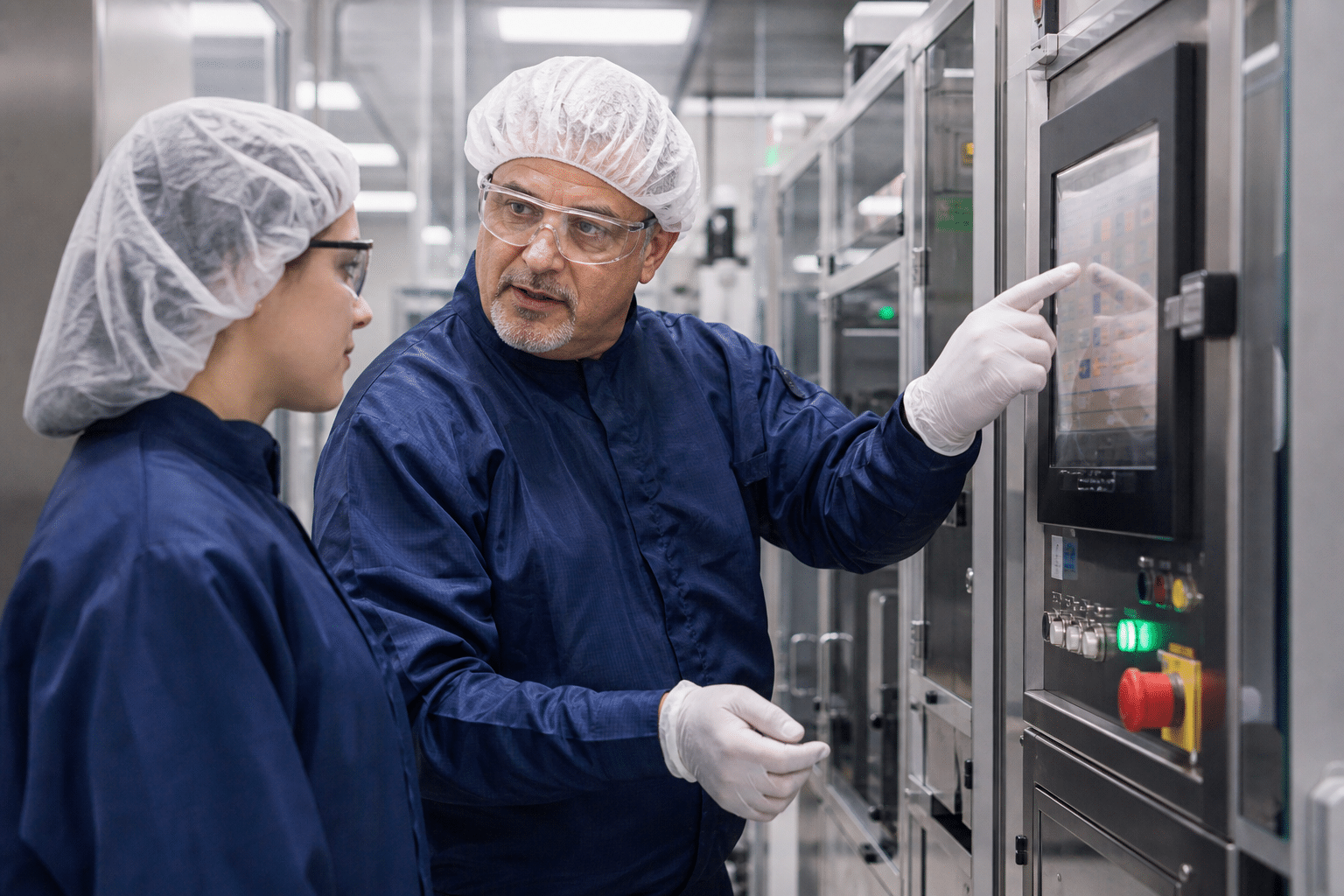
BLS lists a high school diploma or equivalent as typical entry education. Some technicians complete a certificate or associate degree in industrial electronics, microelectronics, engineering technology, or a related field. Employers may also partner with community colleges, technical schools, or apprenticeship programs.
New hires generally receive on-the-job training in cleanroom behavior, equipment operation, wafer handling, testing, and documentation. BLS says this training commonly lasts from one month to one year. A hands-on program can reduce the learning curve, but it does not guarantee a job at a specific fab.
The Apprenticeship.gov career-seeker page explains how to search for paid work experience and employer-sponsored training. Some chip manufacturers publish their own technician pathways, so check the employer rather than assuming every program has the same curriculum.
Semiconductor technician pay and outlook
BLS reports the following figures for Semiconductor Processing Technicians:
| BLS category | May 2025 median pay | 2025 jobs | 2025-35 projection |
|---|---|---|---|
| Semiconductor Processing Technicians | $51,430 | 31,200 | 8% growth |
BLS projects about 3,400 openings per year over the decade. It reports median wages of $52,450 in semiconductor and electronic component manufacturing and $78,870 in professional, scientific, and technical services in May 2025. Those industry figures do not describe every technician job, and shift premiums or overtime can change an offer.
Ask about the starting rate, night-shift differential, cleanroom allowance, overtime, schedule rotation, and promotion path to equipment, quality, or engineering-support work.
Safety and the real work environment
The cleanroom may look calm, but the process can involve chemicals, gases, high voltage, vacuum systems, moving equipment, heat, UV sources, and process residues. OSHA’s semiconductor guidance discusses hazards and controls for device fabrication, including chemical exposure, ventilation, PPE, gas detection, machine isolation, and emergency systems.
Follow the fab’s training and authorization rules. A technician should not open a tool, bypass an interlock, handle a chemical, or enter a controlled area without the required instruction and permission. Safety culture matters as much as the job title.
Shift work is common because fabs operate around the clock. Expect long periods standing, repeated handling motions, detailed screen work, and a need to stay alert late at night or early in the morning.
Is semiconductor processing a good career change after 40?
It can suit someone who likes precise procedures, technology, and clean indoor manufacturing. Experience in electronics, quality, maintenance, laboratory work, machine operation, or regulated production may transfer well.
The adjustment is real. Cleanroom clothing can be uncomfortable, the work can be repetitive, and shift rotation affects sleep and family routines. Visit a program or speak with a fab employee before paying for training. Our career-change roadmap after 40 can help you compare the schedule and training cost with your current situation.
Questions to ask before applying
- Is the job process operation, equipment maintenance, metrology, packaging, or quality?
- Is the schedule fixed, rotating, twelve-hour, overnight, or weekend based?
- What certificate, math, electronics, or cleanroom experience is preferred?
- How long is paid training, and what must be passed before solo work?
- Which safety hazards and chemicals are present in the assigned area?
- What paths exist after technician-level work?
Bottom line
Semiconductor processing technician is a hands-on manufacturing career built around cleanroom discipline, automated equipment, precise measurements, and repeatable procedures. BLS shows a $51,430 median wage and 8% projected growth for the occupation, but local offers depend on the fab, shift, and training route. Visit the work environment before deciding whether the schedule and repetition suit you.
Related guides: Commercial Diver: Duties, Training, Pay and Career Fit and Railroad Signal Maintainer: Duties, Training, Pay and Career Fit.
Sources
- BLS: Semiconductor Processing Technicians
- OSHA: Silicon device fabrication
- OSHA: Semiconductor standards
- TSMC: Technician Apprenticeship Program
- Apprenticeship.gov: Career seekers
\n
Reviewed September 3, 2026: Semiconductor processing technician jobs depend on cleanroom rules, shift work, equipment, documentation, and the process used at the facility. Visit the training lab or ask employers what entry-level technicians handle. See manufacturing technician work.