A railroad signal maintainer keeps the electrical, communication, crossing, and signal equipment that supports safe train movement in working order. The work may involve inspections, batteries, wiring, relays, controllers, wayside devices, and emergency response along a rail route. It combines outdoor travel with strict rules, documentation, and the ability to work around an operating transportation system.
It is a specialized maintenance career. You are not simply repairing a light. You are working under railroad rules, testing equipment against required procedures, recording the result, and reporting conditions that could affect train movements.
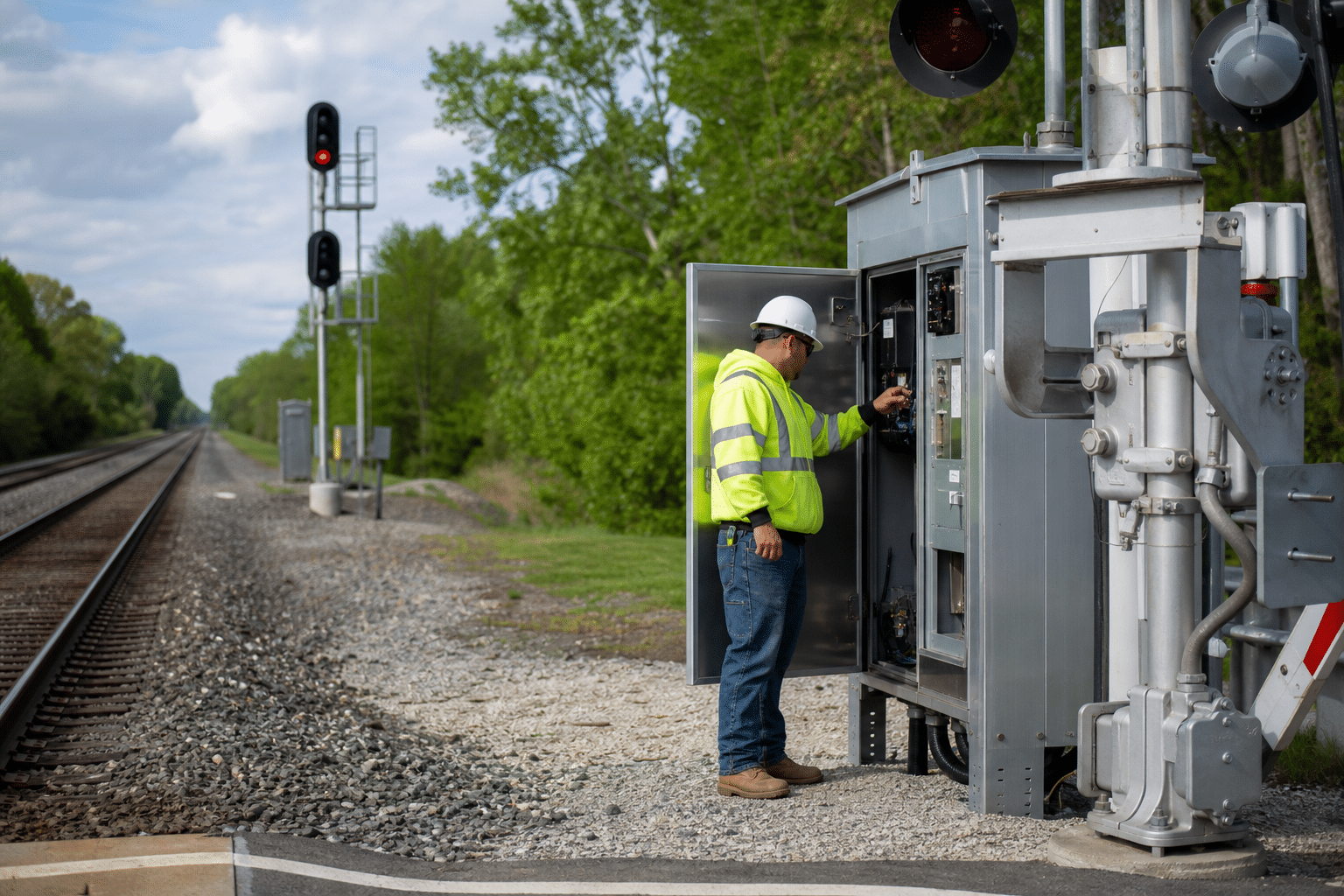
A reported signal fault needs careful isolation: The maintainer may check the local equipment, power source, cable path, crossing device, and control indications while coordinating with dispatch or the railroad’s operating rules. The repair is complete only when the system is tested and the record tells the next person what was done.
What does a railroad signal maintainer do?
The exact duties depend on the railroad and territory, but the work commonly includes inspecting signal equipment, wiring, batteries, cabinets, crossing devices, and switches. Maintainers test circuits, relays, detectors, lights, communications, and warning systems; find faults with meters and drawings; replace or adjust components under approved procedures; respond to failures and weather damage; and document inspections and repairs.
- Inspect signal equipment, grade crossings, cabinets, batteries, and switches.
- Test circuits, relays, detectors, lights, communications, and warning systems.
- Use meters, drawings, test equipment, and maintenance records to find faults.
- Respond to failures, alarms, weather damage, and crossing problems.
- Coordinate with dispatchers, train crews, track teams, contractors, and supervisors.
The Apprenticeship.gov occupation listing describes the broader occupation as installing, inspecting, testing, maintaining, or repairing signals, electric gate crossings, track switches, section lines, and intercommunication systems.
Signal maintainer versus related railroad jobs
| Role | Main focus | Typical difference |
|---|---|---|
| Signal maintainer | Signals, crossings, circuits, and control equipment | Tests and repairs systems that govern train movements |
| Railroad conductor | Train movement and crew coordination | Works with the operating crew rather than maintaining signal equipment |
| Track maintenance worker | Rail, ties, ballast, and right of way | Maintains the physical track structure |
| Industrial electrician | Electrical installation and maintenance | Usually works in buildings, plants, or construction settings |
| Signal engineer | System design, standards, and analysis | Typically has a larger design or engineering responsibility |
Read our guides to railroad conductor work, industrial electrician careers, and electromechanical technician jobs if you are comparing technical paths.
Tools and knowledge you may use
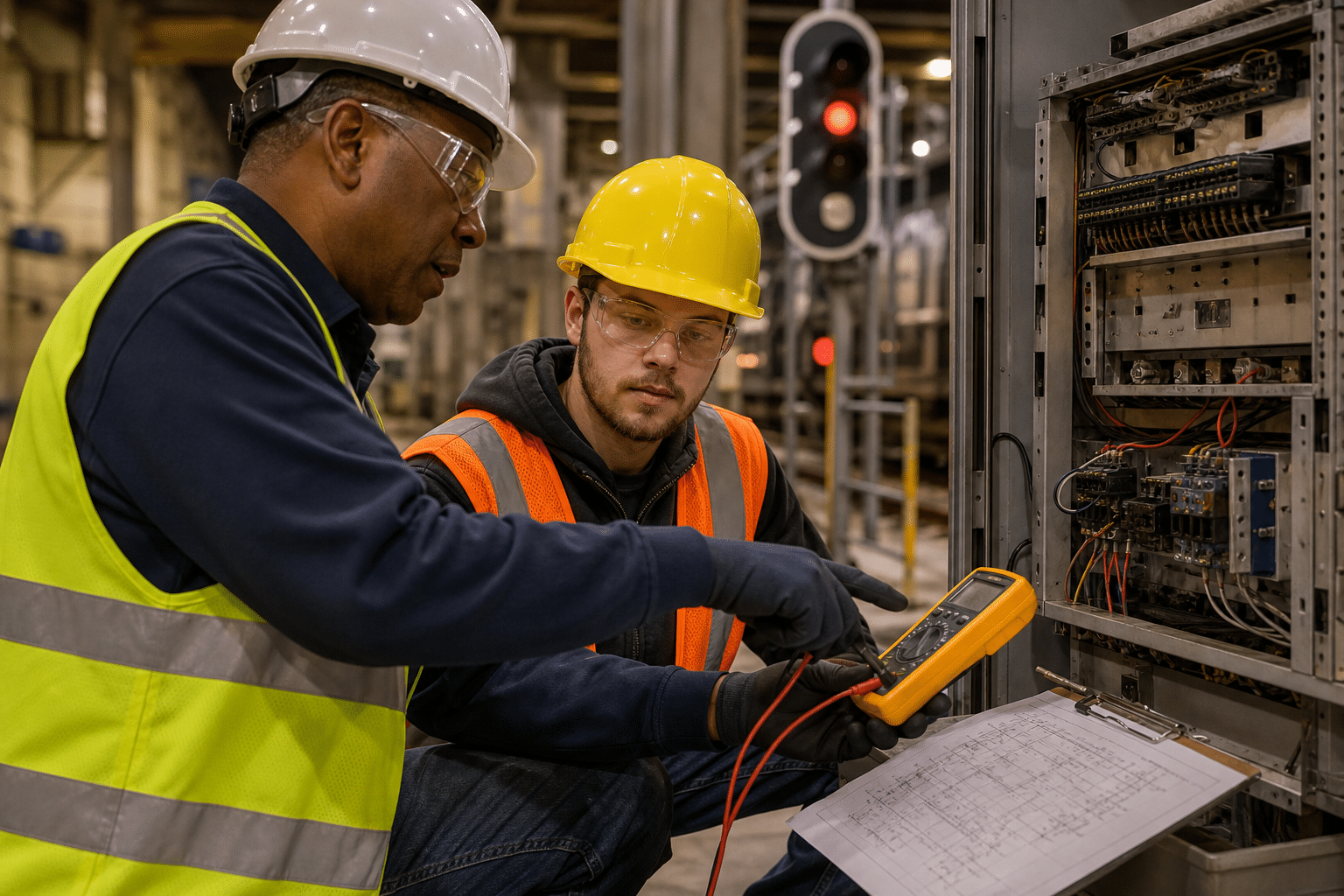
Signal work combines electrical, electronic, mechanical, and rule-based knowledge. You may use a multimeter, insulation tester, battery tester, hand tools, test panels, drawings, radios, laptops, and railroad-specific test equipment.
- DC and AC electrical principles.
- Relays, switches, batteries, wiring, grounding, and circuits.
- Reading schematics and following a test sequence.
- Careful documentation and repeatable measurements.
- Mechanical adjustment of switch or crossing components.
- Radio communication and clear handoffs.
- The discipline to stop when a result does not match the procedure.
Computer-based signal and train-control systems add software and network components. Older equipment may exist beside newer systems in the same territory.
Training and entry routes
Many people start as a signal helper, assistant signal worker, apprentice, or other entry-level railroad employee. A high school diploma or equivalent is a common baseline. Electrical, electronics, industrial maintenance, or military technical experience can strengthen an application, but the railroad’s qualification program remains essential.
The Federal Railroad Administration’s example on-the-job training worksheet includes inspection and testing topics, operating rules, roadway elements, relays, processor-based systems, maintenance manuals, and training requirements. It is a useful picture of the subject matter, not a universal hiring checklist.
Search Apprenticeship.gov’s occupation resources and the career pages of railroads in your region. A current CSX assistant signal worker overview illustrates how an employer may describe installation, repair, and maintenance duties.
Railroad signal maintainer pay and outlook
BLS reports Signal and Track Switch Repairers as a specific occupation. In 2024, it counted 8,700 jobs and reported an $83,600 median annual wage in May 2024. Employment is projected to grow 2% from 2024 to 2034, with about 100 net new jobs.
| BLS category | 2024 jobs | May 2024 median pay | 2024-34 projection |
|---|---|---|---|
| Signal and Track Switch Repairers | 8,700 | $83,600 | 2% growth |
BLS lists a high school diploma or equivalent as typical entry education and moderate-term on-the-job training. A national median can hide important differences. Railroad jobs may include overtime, callouts, territory travel, union rules, per diem, or shift premiums. Work is concentrated where railroad infrastructure exists.
Ask how the employer defines the probationary period, when a new hire can respond alone, and how pay changes after qualification.
Schedule, weather, and safety
Signal maintainers may work outdoors near tracks, roads, crossings, and electrical equipment. Rain, snow, heat, mud, insects, darkness, and long walks through a territory are part of the reality for some assignments. Emergency calls can happen at night, on weekends, or during holidays.
Safety is built into the work rules. A maintainer may need protection from moving trains, roadway traffic, electrical energy, stored energy, weather, and access hazards. The railroad’s rulebook, job briefing, protection system, and supervisor determine what work can proceed. Do not infer authority from a job title.
Is signal maintenance a good career change after 40?
It can fit someone who likes fault finding, outdoor technical work, and strict procedures. Electrical, electronics, maintenance, military, communications, or industrial experience may shorten the learning curve.
The tradeoff is lifestyle. A specialized railroad job may offer strong pay after qualification, but it can require relocation, irregular hours, territory travel, and time away from home. Contact a local railroad or training program before spending money on a course. Our career-change roadmap after 40 can help you compare the entry timeline with household needs.
Questions to ask before applying
- Is the position helper, apprentice, assistant, or qualified maintainer?
- Which territory, equipment, and signal systems will I cover?
- How often are night callouts, weekend work, and emergency responses required?
- What training, testing, and probation milestones come before solo work?
- Is relocation or a driver’s license required?
- How are overtime, travel, per diem, and qualification increases handled?
Bottom line
Railroad signal maintainer is a focused technical career with a clear safety and qualification structure. It may suit an adult career changer who likes electrical troubleshooting, outdoor work, and detailed rules. Before applying, confirm the territory, schedule, training path, and callout expectations with the railroad that is actually hiring.
Related guides: Surveying Technician: Duties, Training, Pay and Career Fit and Tool and Die Maker: Duties, Training, Pay and Career Fit.
Sources
- BLS: Data for occupations not covered in detail
- Apprenticeship.gov: Signal and Track Switch Repairers
- Federal Railroad Administration: Example OJT Standards
- CSX: Assistant Signal Worker – Maintenance
\n
Reviewed September 3, 2026: Railroad signal maintenance combines electrical systems, rules, field work, testing, and coordination around active rail operations. Ask about travel, on-call work, training, and safety qualification before applying. See railroad conductor work.
\n