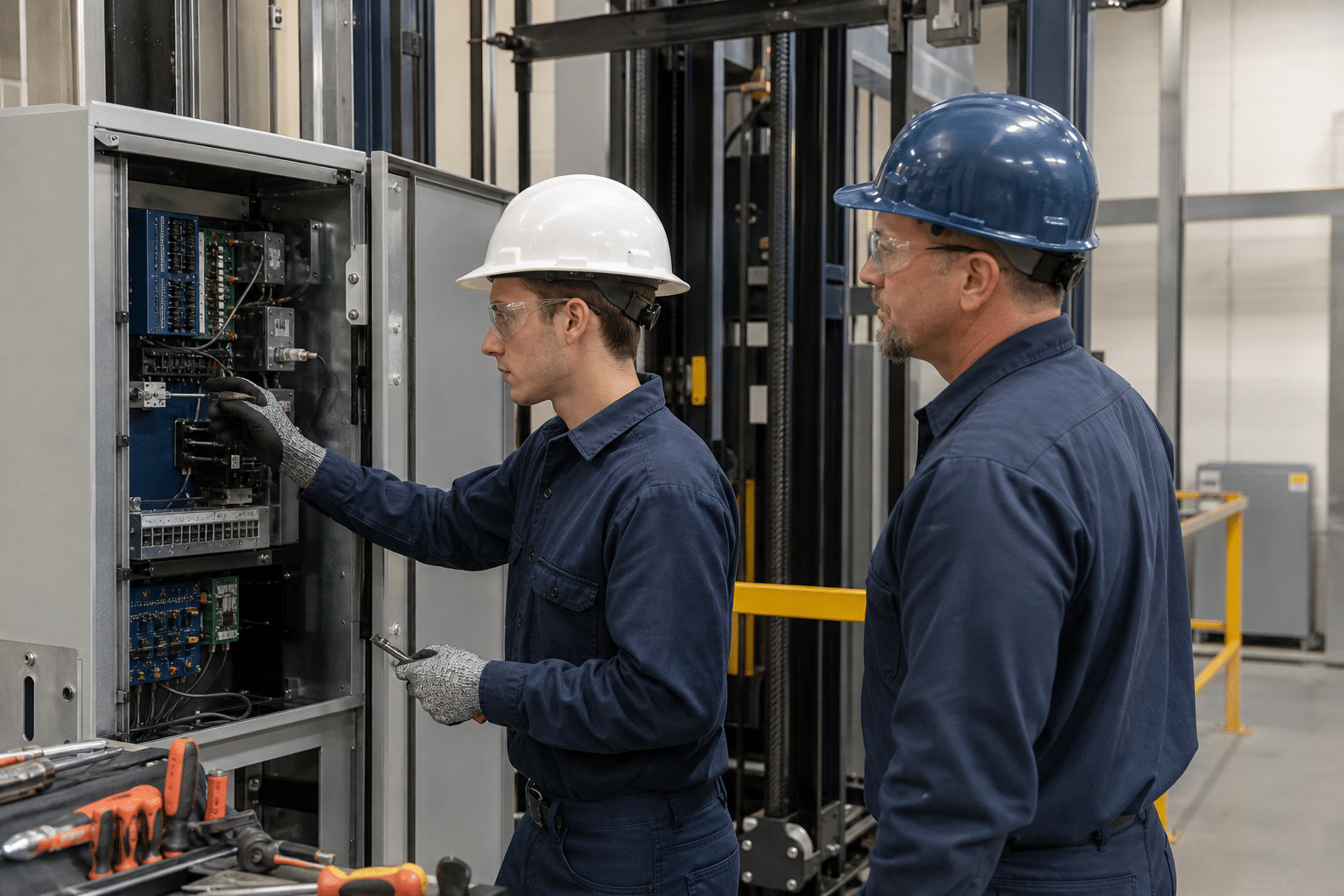
An elevator installer apprenticeship can lead to work on elevators, escalators, moving walkways, and related lifting equipment. It is usually built around paid job training and classroom instruction, not a short certificate that leads directly to independent repair. Applicants should compare the sponsor, entrance requirements, wage progression, travel, physical demands, and local licensing rules.
The job title can be confusing. Employers and unions may use elevator installer, elevator constructor, elevator mechanic, elevator technician, or elevator repair technician. Installation is only one part of the trade. After equipment is assembled, workers may maintain it, troubleshoot controls, replace worn parts, and modernize older systems.
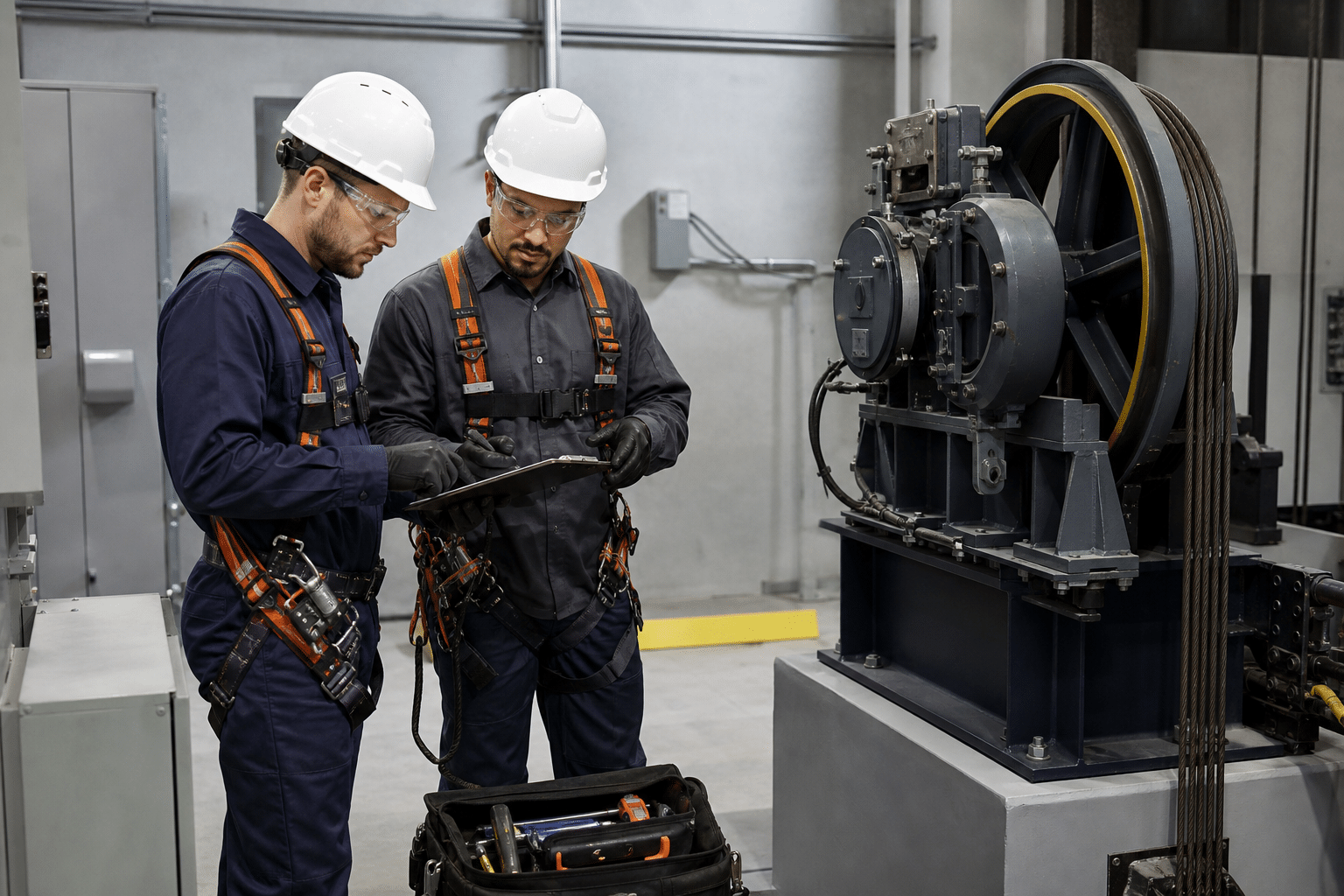
The early work is practical: An apprentice may learn safe access, material handling, layout, tools, hoisting, components, wiring, and inspection preparation before taking on more complex installation tasks. Ask how training is supervised and how the program records progress toward the next classification.
How the apprenticeship works
The U.S. Bureau of Labor Statistics says nearly all elevator and escalator installers and repairers learn the trade through an apprenticeship. A typical program lasts about four years and combines paid on-the-job training with a set amount of technical instruction.
The classroom side can include safety, blueprint reading, mathematics, applied physics, elevator and escalator components, electrical theory, digital systems, and electronics. On the job, an apprentice gradually takes on more responsibility under supervision. The exact hours, pay steps, exams, and benefits depend on the sponsor.
Some programs are sponsored by a union, an employer, an industry association, or a joint labor-management committee. The name matters less than the written standards. Before accepting a place, ask who employs you, who teaches you, how wage increases work, and what credential or license you can earn at the end.
What an elevator apprentice does
Early work is practical and sometimes repetitive. An apprentice may:
- move tools, materials, rails, doors, cables, and other equipment;
- clean machine rooms, pits, rails, hoistways, and elevator car tops;
- assist with assembling and installing mechanical components;
- help connect wiring to control panels and motors;
- observe equipment and report unusual sounds or movement;
- follow a mechanic’s instructions during testing and service;
- record measurements, work completed, and parts used.
The work changes as the apprentice gains skill. Installation crews follow drawings and building plans. Maintenance and repair crews diagnose electrical, mechanical, hydraulic, and computerized control problems. Modernization work can involve replacing motors, pumps, control panels, doors, or other major components.
The BLS lists blueprint reading, mechanical skills, troubleshooting, physical stamina, attention to detail, and the ability to work at heights among the qualities that matter in this occupation.
Elevator installer versus elevator mechanic
The boundary is not always clean, but the daily emphasis usually changes by assignment.
| Work area | Main emphasis | Examples |
|---|---|---|
| Installation | Assemble and place new equipment | Set rails, install doors, connect equipment, test a new system |
| Maintenance | Keep existing equipment operating | Inspect, lubricate, adjust, replace worn parts |
| Repair and service | Find and correct faults | Troubleshoot motors, switches, brakes, controls, and hydraulic systems |
| Modernization | Update older equipment | Replace controls, drives, pumps, doors, or other systems |
An apprentice may rotate through more than one area. A person who expects only new construction could be surprised by service calls, emergency repairs, or building maintenance work. Ask the program how often apprentices change assignments and how the progression is managed.
Requirements to apply
The baseline requirement is usually a high school diploma or equivalent. Helpful preparation can include math, mechanical drawing, physics, shop classes, electrical basics, or experience with tools. Employers and sponsors may also look for a valid driver’s license, reliable transportation, physical ability to do the work, and a willingness to work safely under instruction.
The application process may include an online form, an aptitude test, an interview, a physical assessment, a background check, or a drug screen. Those requirements vary by sponsor and location. Do not assume that a requirement shown on one local posting applies everywhere.
Previous experience can help, especially if you have worked as an electrician, mechanic, millwright, industrial maintenance technician, welder, or military maintenance specialist. It may not shorten the program automatically. Ask whether documented experience can change your placement or allow credit for part of the training.
If you are coming from industrial maintenance or controls, the transition may feel familiar in some areas and very different in others. Our industrial electrician guide and instrumentation technician guide cover adjacent work, but elevator systems add specialized equipment, building-code requirements, and shaft or machine-room conditions.
How to find an elevator installer apprenticeship
Start with three types of source:
- Local elevator contractors and manufacturers.
- Union locals or joint apprenticeship committees in the elevator industry.
- State workforce and apprenticeship offices, plus the federal Apprenticeship Job Finder.
The U.S. Department of Labor’s Apprenticeship.gov occupation page lists alternative titles such as elevator constructor, elevator mechanic, elevator service technician, and elevator troubleshooter. Its current page also says the occupation is not currently approved for use in a Registered Apprenticeship Program. That status is a reason to verify the program, not a reason to assume that no industry apprenticeship exists.
For example, the National Elevator Industry Educational Program describes an IUEC apprenticeship with classroom semesters, on-the-job learning, and an exam for advancement to mechanic. Its FAQ says that apprentices attend school as part of the program and do not pay out of pocket for the school while they are IUEC apprentices. That is specific to that program; another sponsor may use a different structure.
Use the Apprenticeship Job Finder to search by location, then contact the employer or sponsor directly. If a listing is closed, ask when the next recruitment opens. Elevator openings may be periodic rather than continuously available in every city.
What do elevator apprentices earn?
The BLS reports a median annual wage of $109,910 in May 2025 for fully employed elevator and escalator installers and repairers. The lowest 10 percent earned less than $59,270, and the highest 10 percent earned more than $158,890.
That is not an apprentice starting salary. The BLS says apprentice starting pay is usually about 50 percent of what fully trained workers make, with increases as the apprenticeship progresses. The exact wage schedule belongs in the sponsor’s agreement.
| BLS measure | May 2025 figure |
|---|---|
| Median annual wage, fully trained occupation | $109,910 |
| Lowest 10 percent | Less than $59,270 |
| Highest 10 percent | More than $158,890 |
| Median in building equipment contractors | $113,290 |
| Median in government, excluding education and hospitals | $116,480 |
| Median in educational services | $98,300 |
The wage table covers an occupation, not one union local or employer. It also does not tell you whether a particular job includes overtime, emergency callouts, travel, pension contributions, health coverage, or a defined raise schedule. Ask for the full package instead of comparing one hourly number with another.
Is elevator work physically demanding?
Yes. The BLS describes work in cramped crawl spaces, machine rooms, elevator shafts, dusty or greasy areas, and hot or cold environments. Workers may lift equipment and parts weighing up to 200 pounds. The schedule can include overtime or on-call repair work, sometimes around the clock.
NEIEP’s published apprentice requirements also describe long periods of standing or walking, repetitive bending and crouching, travel, non-climate-controlled field conditions, heights, and cramped working spaces. The numbers and wording are program-specific, but they give a useful picture of what the trade can ask from a new worker.
Safety training is not a formality. The work can involve electrical energy, moving machinery, suspended loads, shaft openings, ladders, hoists, and heavy components. Apprentices should expect to follow the mechanic’s instructions, use required protective equipment, and stop when the work is not understood or conditions change.
Licensing and certification
Most states require elevator and escalator installers and repairers to be licensed, according to the BLS. The exact license, exam, registration, and continuing-education rules are handled at the state or local level.
That means a sponsor’s training can be valuable without replacing a state license. Before relocating for an apprenticeship, check the licensing authority where you plan to work. Ask whether the program’s classroom hours count toward the local requirement and whether the employer handles registration or expects you to do it.
Certification is separate from licensing. The BLS notes that certification is not required everywhere but can demonstrate competence. Do not pay for a private credential until you know that employers in your target area recognize it.
How long until you become a mechanic?
The common answer is about four years for a typical apprenticeship, but the calendar depends on the sponsor and your progress. Programs combine predetermined technical instruction with paid work hours, and some workers with relevant documented experience may qualify for a shorter path.
Completion may not be the final step. A mechanic may need a state license, an employer qualification, a union exam, or continuing training as controls and equipment change. The National Elevator Industry Educational Program, for example, describes eight semesters of classroom training and a mechanic’s exam for its IUEC pathway.
If you already have a technical background, ask what can transfer before signing an agreement. A strong electrical or mechanical foundation may help you learn faster, but you still need the specialized elevator systems and safety practices.
Is this a good second career after 40?
It can be, especially for someone who likes mechanical systems, troubleshooting, and structured training. The pay can become attractive, and the apprenticeship lets you earn while building a specialized skill set.
The trade-offs deserve equal attention. You may work in shafts, crawl spaces, machine rooms, construction sites, and service vehicles. You may lift, kneel, climb, travel, or respond to urgent repairs. The first years can also involve lower apprentice wages before the larger occupational median becomes relevant.
Before applying, test the practical fit. Read current local postings, look at the physical requirements, ask about the wage progression, and speak with a current apprentice if possible. Our career-change roadmap after 40 can help you compare the training timeline with your financial runway. If you want a different entry format, our online trade school guide explains why some technical skills still require labs or supervised workplace practice.
Questions to ask a sponsor
Use these questions to compare programs:
- Who is the employer during the apprenticeship?
- What is the starting wage, and when are increases scheduled?
- How many classroom hours and paid work hours are required?
- Is the training free, reimbursed, or deducted from wages?
- Which installation, service, repair, and modernization tasks will I learn?
- What tests, licenses, medical checks, or registrations are required?
- How much travel, overtime, on-call work, lifting, and shaft work is typical?
- What happens if work slows down or a project ends?
- What percentage of apprentices complete the program?
The answers help you separate a real training path from a job ad that uses the word apprenticeship loosely.
Bottom line
An elevator installer apprenticeship is a long, paid learning route into a specialized trade. You will learn through supervised work and technical instruction, then build toward mechanic-level responsibilities, licensing, and continued training.
The BLS wage data are strong for understanding the fully trained occupation, but an apprentice starts lower and earns increases over time. The work is physically demanding, safety-sensitive, and sometimes unpredictable. For someone comfortable with heights, confined spaces, tools, and careful mechanical troubleshooting, it can be a serious second-career option. The sponsor’s wage schedule and training standards should decide whether a particular opening is worth pursuing.
Sources
- U.S. Bureau of Labor Statistics: Elevator and Escalator Installers and Repairers
- Apprenticeship.gov: Elevator and Escalator Installers and Repairers
- Apprenticeship.gov: Apprenticeship Job Finder
- NEIEP: Elevator Apprentices Frequently Asked Questions
\n
Reviewed September 3, 2026: Elevator apprenticeships are long-term paid training routes with strict safety and progression requirements. Check the sponsor, work territory, physical demands, and application process before relying on a salary headline. Compare the route with elevator mechanic pay.