Getting an HVAC license in the United States starts with identifying the work and the authority that regulates it. EPA Section 608 certification matters when a technician handles regulated refrigerants, while states, counties, and cities may set separate rules for contractors, technicians, permits, or supervision. The phrase “HVAC license” can describe different requirements depending on the job and location.
That distinction matters before you pay for a class. First decide what work you want to do. Then identify the authority that regulates it. A person servicing a refrigerant circuit, an employee working under a licensed contractor, and a company selling HVAC services may face different requirements.
Check the rule before booking training: If the job involves recovering or charging refrigerant, EPA Section 608 is part of the plan. If you will work for a contractor or pull permits, state or local rules may apply as well. A course that promises a “national HVAC license” without naming the authority is a warning sign.
HVAC license requirements at a glance
| Question | Practical answer |
|---|---|
| National HVAC license | No single license covers all HVAC work across the United States |
| Federal refrigerant credential | EPA Section 608 certification may be required when your work could release refrigerant |
| State or local license | Some states and localities require HVAC technicians or contractors to hold additional credentials |
| Common entry routes | Helper work, technical school, community college, or apprenticeship |
| Typical education | BLS says HVAC technicians often complete 6 months to 2 years of postsecondary instruction, though some enter with less |
| Apprentice exception | EPA allows apprentices to perform covered work when closely and continually supervised by a certified technician |
| Best first step | Match the exact job and location to the official state, local, and federal requirements |
What does “HVAC license” mean?
People use the phrase to describe at least three different things.
EPA Section 608 technician certification
This is the federal credential connected to refrigerant handling in stationary air-conditioning and refrigeration equipment. The Environmental Protection Agency requires technicians who maintain, service, repair, or dispose of equipment that could release refrigerants to pass an EPA-approved test.
Section 608 certification is not the same as a general HVAC license. It does not by itself authorize you to advertise as an HVAC contractor, pull every permit, work without supervision, or satisfy a state business requirement. It proves that you passed the appropriate refrigerant-handling examination.
A state or local HVAC license
A state, county, city, or other authority may regulate who can install, repair, alter, or contract for HVAC work. The credential may be called a technician license, mechanical license, HVAC contractor license, specialty license, registration, or something else entirely. Some jurisdictions regulate the company more heavily than the individual technician. Others create separate apprentice, journeyman, and contractor levels.
The name is less important than the scope. Does the credential cover residential equipment, commercial systems, refrigeration, boilers, sheet metal, electrical work, or contracting? Does it require an exam, documented experience, insurance, a supervising license holder, or renewal fees? Read the rule for the place where you will actually work.
An employer or manufacturer certification
Employers and manufacturers may offer training on a brand, control platform, or equipment family. This can help you get hired or take on more complex work, but it is not automatically a government license. Ask who recognizes the credential and what job task it qualifies you to perform.
EPA Section 608: the federal requirement
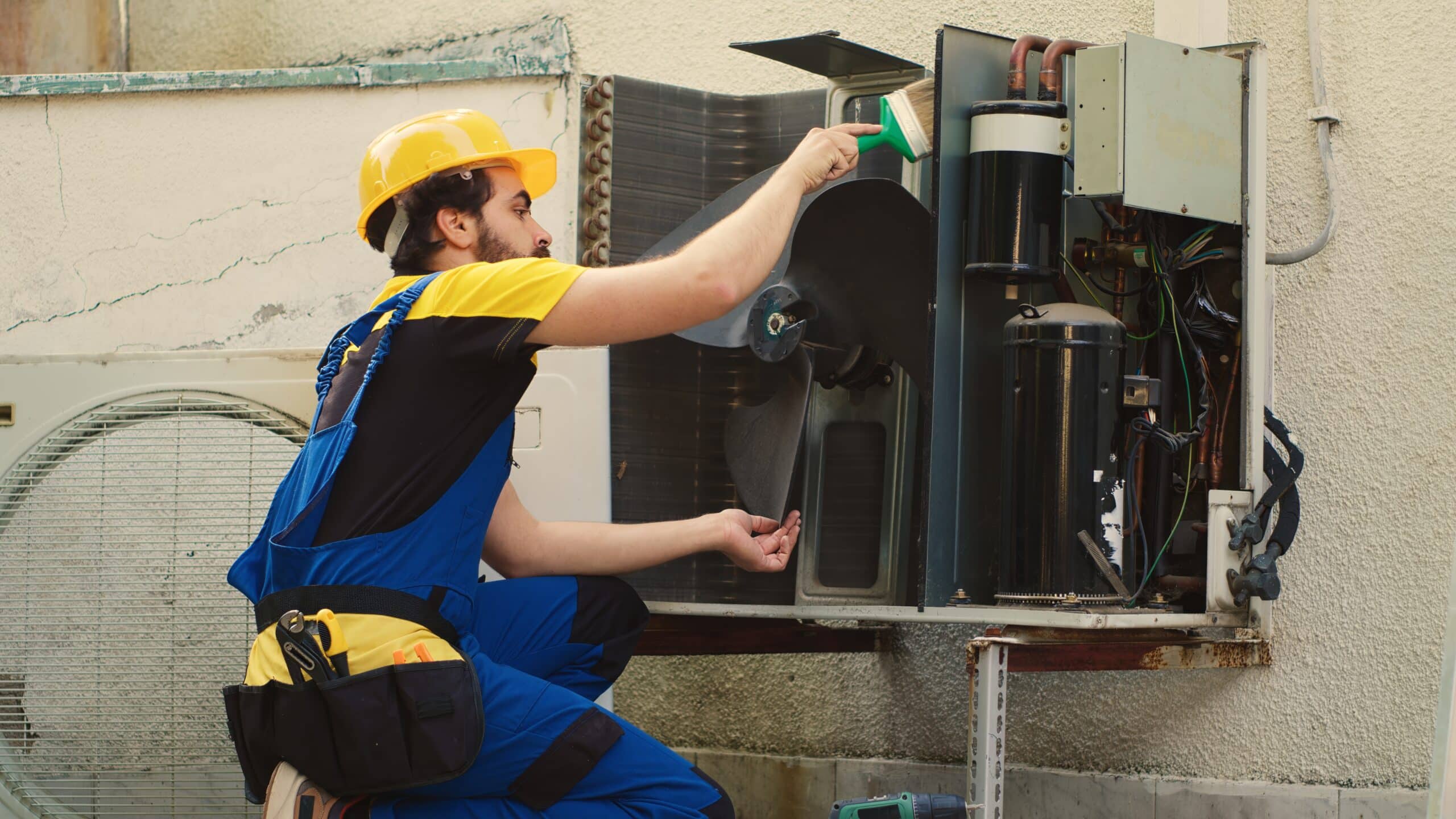
The EPA’s Section 608 certification requirements apply to technicians whose work could violate the integrity of an appliance and release refrigerant. EPA examples include attaching or detaching hoses and gauges, adding or removing refrigerant, and other work on covered appliances.
The certification test is administered by an EPA-approved certifying organization. EPA lists four categories:
- Type I for servicing small appliances;
- Type II for high- or very-high-pressure appliances, with stated exceptions;
- Type III for low-pressure appliances; and
- Universal for all types of covered equipment.
Choose a category based on the work you expect to perform, not simply the label that sounds most complete. Universal certification can be useful for a technician who expects to work across equipment types, but the test still needs to be taken under the required conditions. EPA says Section 608 credentials do not expire, although an employer or jurisdiction can impose separate training or renewal requirements.
There is a narrow apprentice rule. EPA says apprentices are exempt from the certification requirement when they are closely and continually supervised by a certified technician. That is not a way to work alone without the credential. Ask the employer how supervision is documented and when the apprentice is expected to test.
The EPA list of approved certification programs is the safest place to verify a testing organization. EPA also warns that it does not approve private preparation courses or study materials. A course can help you learn, but the testing organization is the part that must be EPA-approved.
Do states require an HVAC license?
Some do, and the details can change by location and by the type of work. The BLS says HVAC technicians may need a license or certification, and that some states and localities require HVAC technicians to be licensed. It directs candidates to state licensing information through CareerOneStop.
The practical answer is to check the official authority before accepting a job or offering services. Search for the state licensing board, mechanical code department, local building department, or contractor licensing agency. Start with a government website when possible. A training school or employer may explain the rule, but the regulator publishes the rule that controls your work.
Questions to answer include:
- Is the license for the individual, the business, or both?
- Does working as an employee differ from contracting directly with customers?
- Can an apprentice or helper work under a licensed supervisor?
- Is documented experience required before an exam?
- Does the jurisdiction count school hours toward experience?
- Are refrigeration, boilers, gas, electrical, or fuel-oil work regulated separately?
- Which jobs require permits, and who is allowed to pull them?
- When does the credential expire, and what continuing education applies?
Do not rely on a national checklist for a state-specific question. “HVAC license requirements” is a useful search term, but it is only the beginning of the research.
The main ways to qualify for HVAC work
Licensing is only one part of becoming employable. You also need a route that gives you supervised practice and enough technical knowledge to work safely.
Start as a helper or trainee
Some employers hire people with a high school diploma and train them on the job. You may begin with materials, cleaning, equipment setup, duct or line insulation, basic maintenance, and documentation. Over time, you can learn diagnostics, electrical testing, installation, and refrigerant procedures within the employer’s limits.
Before accepting a helper job, ask what you will learn and who will supervise you. A role that promises exposure to real equipment is different from a labor job that uses the word “HVAC” only in the advertisement.
Attend a technical school or community college
The BLS says HVAC programs commonly last from six months to two years and can lead to a certificate or associate degree. Useful subjects may include refrigeration cycles, electrical fundamentals, motors, controls, heating systems, airflow, brazing, load calculations, safety, and troubleshooting.
Hands-on time matters. Compare lab hours, equipment, instructor experience, total cost, schedule, completion requirements, and local employer relationships. Our guide to choosing a trade school without overpaying is a useful checklist. Online trade school can help with theory, but it should be paired with supervised practice when the job requires physical equipment work.
Apply for an apprenticeship
HVAC apprenticeships combine paid work with technical instruction and often last several years. You learn beside experienced technicians and build a record of hours, tasks, and training. The sponsor may be an employer, union, contractor association, or another approved organization.
Read the program standard before applying. Confirm the wage progression, classroom schedule, tools, travel, supervision, EPA Section 608 plan, and the license or credential expected at completion. Our guide to HVAC apprenticeships covers sponsor questions and the difference between an apprenticeship and ordinary employer training.
Which HVAC jobs usually trigger Section 608?
The question is whether your work could release refrigerant from a covered appliance. If you connect or disconnect gauges, add or recover refrigerant, open the circuit, or perform another task that can release it, Section 608 certification may be required. EPA’s rules are about the work performed, not the job title printed on your shirt.
You may be able to work on other tasks before certification, depending on your employer’s procedures and the scope of the work. For example, cleaning, filter changes, general inspection, duct work, or some electrical and mechanical tasks may not involve opening the refrigerant circuit. That does not make them risk-free, and it does not override state or employer requirements.
EPA’s refrigerant management questions and answers explain that apprentices in formal course-driven laboratory work may perform certain training activities before certification, while on-the-job work is treated differently. When in doubt, stop and ask the certified supervisor or employer’s compliance contact.
How to get an HVAC license: a practical sequence
1. Choose the work you want to perform
Residential service, commercial refrigeration, installation, facilities maintenance, controls, and contractor work do not have identical requirements. Write down the equipment and tasks you want to handle in the first two years.
2. Check the official rules for your location
Find the state and local authority. Save the page that describes license levels, experience, examinations, fees, supervision, insurance, permits, and renewal. Rules move, so record when you checked them.
3. Plan Section 608 certification if refrigerant work is part of the target
Select an EPA-approved testing organization. Compare the test format, proctoring, study resources, price, and equipment categories. Do not assume a general HVAC course automatically grants certification. Passing the test is the step that creates the credential.
4. Build supervised experience
Choose a helper job, school lab, or apprenticeship that gives you documented practice. Keep copies of pay records, training records, employer letters, and completion documents if your jurisdiction later asks for proof.
5. Confirm the application packet
Before you submit anything, check the current form, photo or identification requirements, exam rules, experience form, fees, background check, insurance, and supervisor signatures. A missing document can delay an application more than a difficult exam.
6. Recheck the scope after approval
A credential may cover less than you assumed. Keep track of what it authorizes, where it applies, and whether the business you work for needs a separate contractor license or permit authority.
Is an HVAC license worth pursuing after 40?
For many adults, the license is not the hardest part. The transition period is. You may need to study while working, accept a lower starting wage, spend time in hot attics or tight mechanical spaces, and learn customer-service habits alongside technical skills.
Experience from another field can still help. Construction, maintenance, driving, facilities, appliance repair, military work, customer service, and project coordination can all transfer in different ways. They do not replace HVAC training, but they can make you a more dependable trainee.
Ask the employer or program:
- How long do new hires work under close supervision?
- Which tasks can I perform before Section 608 certification?
- Does the company pay for testing, tools, and required classes?
- What state or local license is expected next?
- Are evenings, weekends, emergency calls, or seasonal overtime normal?
- How much time is spent in crawl spaces, attics, rooftops, or outdoor conditions?
Our guide to how to become an HVAC technician explains the broader route, while how long it takes to become an HVAC technician helps separate the first paid job from later independence and licensing milestones.
Common mistakes to avoid
Buying the wrong credential
A generic certificate may not satisfy EPA, state, local, or employer requirements. Identify the authority first.
Confusing EPA certification with a contractor license
Section 608 answers a refrigerant-handling question. It does not settle every business or building-code question.
Assuming school hours equal field experience
A jurisdiction may count classroom or lab hours differently from supervised employment. Ask the licensing authority.
Ignoring the employer’s boundaries
A certified technician still needs to follow job-site safety rules and authorization. A credential does not make an untrained task safe.
Waiting until the end of training to check the rules
If your target state requires a particular number of hours, exam, or supervisor relationship, learn that before choosing a program.
Bottom line
Getting an HVAC license is usually a sequence, not a single purchase. Start with the work you want to perform, check the state and local rules, plan EPA Section 608 certification for refrigerant work, and build supervised experience through employment, school, or apprenticeship.
The best first step is often a short conversation with a local HVAC contractor and the relevant licensing authority. You want a clear answer to one practical question: what must I be allowed to do on my first day, and what credential or experience gets me to the next level?
Related guides: Plumber vs HVAC Technician: Which Trade Is a Better Fit? and Electrician vs Plumber: Which Trade Fits Your Career Change?.
Sources
- U.S. Bureau of Labor Statistics: Heating, Air Conditioning, and Refrigeration Mechanics and Installers – education, training, licensing, certification, and work requirements; checked August 31, 2026.
- U.S. EPA: Section 608 Technician Certification Requirements – federal refrigerant-handling certification, test types, and apprentice supervision; checked August 31, 2026.
- U.S. EPA: Certification Programs for Section 608 Technicians – approved testing organizations; checked August 31, 2026.
- U.S. EPA: Refrigerant Management Program Questions and Answers – covered work, apprentices, and refrigerant handling; checked August 31, 2026.
This article is educational and does not replace current state or local licensing advice, employer safety training, or professional advice.
\n
Reviewed September 3, 2026: HVAC licensing is local, while EPA Section 608 applies to covered refrigerant work. Confirm both the state or local license path and the employer duties before paying for training. See HVAC apprenticeships.