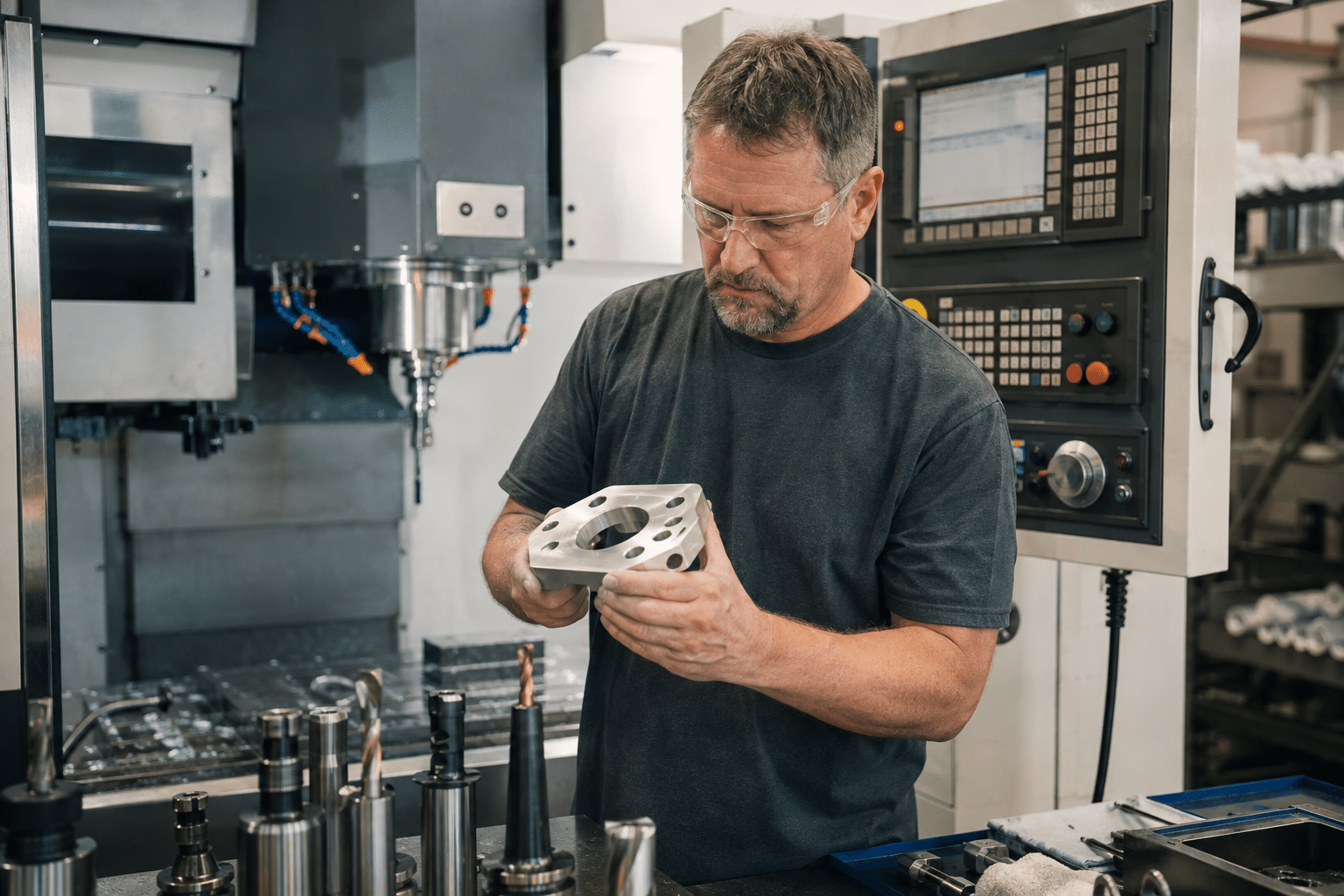
If you are considering CNC work, the first question is not whether the machine looks impressive. It is what you would actually do during a shift. A CNC operator loads material, checks the approved program, watches the cut, measures parts, and decides when a small change needs to be stopped and reported. The role suits people who like precise, repeatable work, but the shop floor can also mean noise, standing, production targets, and second-shift hours.
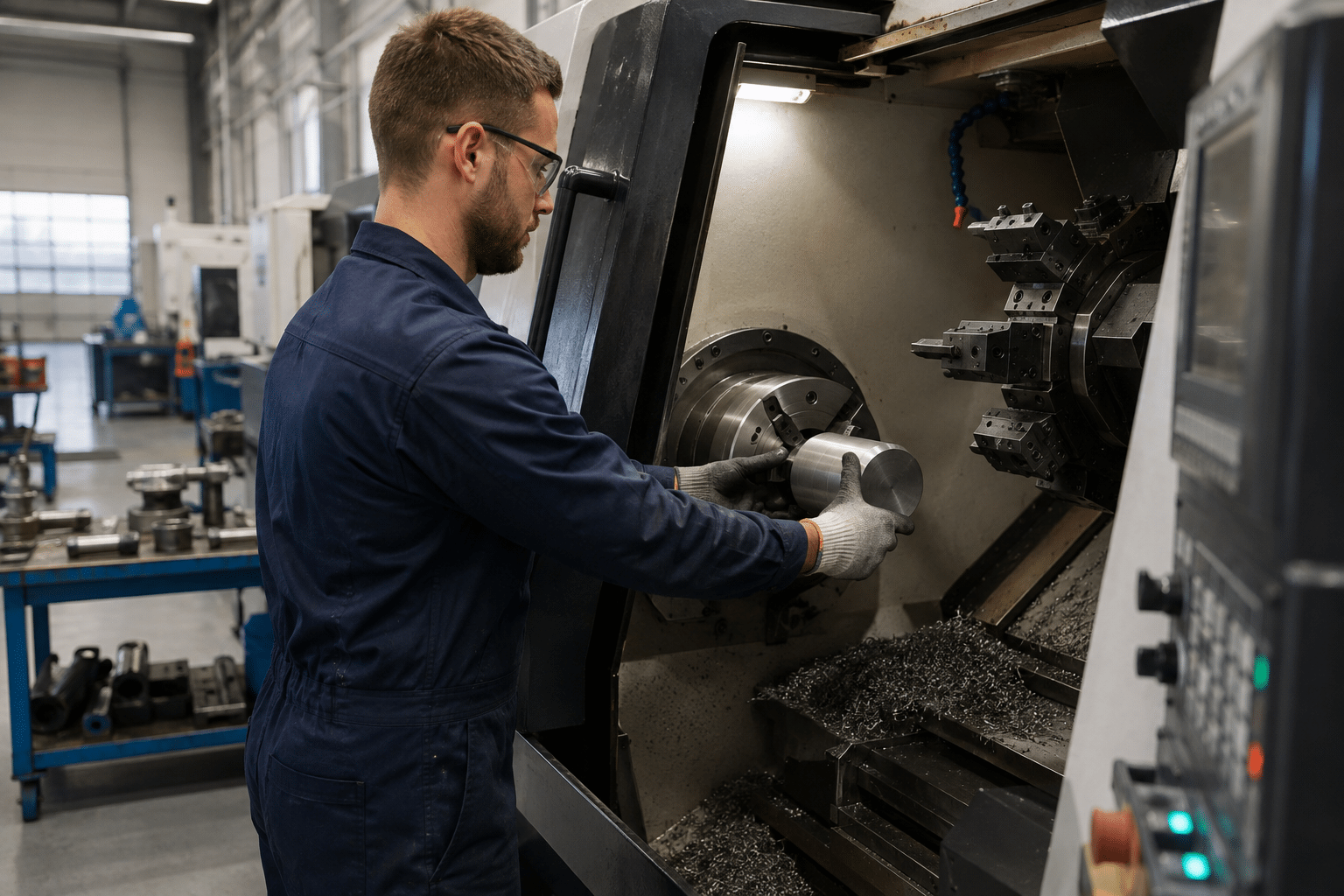
A typical shift: You might begin by checking the job traveler and tooling, load a bar or fixture, run the first piece, and compare several dimensions with the drawing. If a measurement drifts as the tool wears, the correct response may be a documented offset or a call to the setup technician, not an improvised change.
What does a CNC operator do?
- Load raw stock, fixtures, tools, and approved programs.
- Start cycles and monitor cutting, coolant, vibration, and chip buildup.
- Use calipers, micrometers, gauges, or other tools to check dimensions.
- Make permitted offsets or adjustments and report problems beyond the role’s limits.
- Record production, quality, downtime, and safety information.
The operator’s responsibilities depend on the shop. Some jobs are focused on tending several machines. Others include setup, tool changes, first-piece inspection, or basic troubleshooting.
Training and entry requirements
A high school diploma is commonly enough to start, although employers value shop experience, blueprint reading, measurement, and basic math. New operators often learn beside an experienced worker. The Bureau of Labor Statistics notes that CNC-related training can take several months and, for more complex equipment, up to about a year.
Community-college machining classes, short technical programs, and employer training can help. Ask whether the employer teaches GD&T, CNC controls, inspection, and setup, or expects those skills on day one.
Pay and outlook
CNC operator titles can fall across several BLS production categories, so a posting’s duties matter. BLS explains that automation may limit growth for some machine-operator roles while increasing the value of workers who can monitor, set up, and work with computerized equipment.
Could it fit a career change after 40?
CNC work may fit someone who likes tangible results, precision, and a structured production environment. Expect standing, noise, metal chips, repetitive checks, and possible second- or third-shift schedules. Strong safety habits matter more than pretending every machine problem is yours to solve.
Experience in maintenance, fabrication, automotive repair, quality inspection, or technical assembly can transfer. So can patience: a good operator notices a small change before it becomes a scrap bin or a damaged tool.
Questions to ask before applying
- Is the job operator-only, or does it include setup and programming?
- Which controls, materials, inspection tools, and tolerances are involved?
- What shift, overtime, lifting, and hearing-protection requirements apply?
- How long is paid training, and what advancement path follows operator work?
Setup, inspection, and troubleshooting
The boundary between a CNC operator and a setup technician is different from shop to shop. In one facility, the operator loads a proven program and makes only documented offsets. In another, the operator changes tools, touches off work, confirms the first piece, and helps prepare the next job. Read the posting carefully. “Operator” can describe a narrow production role or a broader position that requires several months of additional training.
Inspection is central to the work. A part can look fine and still be outside tolerance, especially as a tool wears or the material changes. Operators may compare the first part with a drawing, check critical dimensions at set intervals, and record results. When measurements drift, the response may be a permitted offset, a tool change, a cleaning step, or a call to a setup person or supervisor.
Safety and working conditions
CNC shops contain moving equipment, sharp chips, cutting fluids, lifting hazards, and noise. Operators need to respect guards and interlocks, use the required eye and hearing protection, and follow the employer’s procedure before reaching into a machine or clearing a problem. Production pressure does not change those rules.
The physical demands vary. Some jobs involve loading small parts repeatedly. Others require hoists or assistance for heavy stock. Standing and walking are common, and shifts may include nights or weekends. Ask about the actual part weights, temperature, ventilation, break schedule, and rotation between machines.
How to build useful experience
A beginner can improve by learning measurement before trying to sound like a programmer. Practice reading dimensions, tolerances, views, and basic symbols. Become comfortable with calipers and micrometers. Learn why a tool wears, how coolant affects a cut, and how to describe a problem precisely. Short courses can help, but a shop that provides supervised machine time may be more valuable than a certificate with no practical component.
With experience, CNC operators may move toward setup, quality, programming, maintenance, or production leadership. Those paths usually require stronger blueprint reading, process knowledge, and communication with engineers and machinists. A second-career candidate does not need to know everything on the first day; they do need to show that they can learn a controlled process and protect the quality of the part.
Reading a job posting carefully
Look for the difference between “operator,” “setup operator,” and “CNC machinist.” An operator posting may emphasize loading, monitoring, inspection, and documentation. A setup role may add workholding, tool offsets, and first-piece approval. A machinist role may expect blueprint interpretation, independent setup, and more responsibility for the process. These titles overlap, but the learning curve and pay can be different.
Also check whether the shop makes prototypes, short runs, or high-volume parts. Short-run work may offer more variety and more setup learning. High-volume work can build speed and consistency but may be repetitive. Neither is automatically better; the right choice depends on how you prefer to learn.
What employers tend to notice
Hiring managers usually want evidence that you can follow a controlled process, measure accurately, protect equipment, and communicate a problem without blame. Previous factory work helps, but so can automotive repair, woodworking, welding, maintenance, or technical hobbies. Describe the tools you used, the tolerances you worked to, and how you checked the result. Specific examples are stronger than saying only that you are a “hard worker.”
Learning without rushing
The best operators build confidence in stages. First learn the machine, then the measurement method, then the approved adjustments. Once those basics are reliable, setup and troubleshooting become easier to understand. That gradual approach is especially useful for career changers who may bring maturity and work discipline but not years of machining experience.
Sources
For nearby manufacturing paths, compare our CNC machinist guide and manufacturing technician guide.