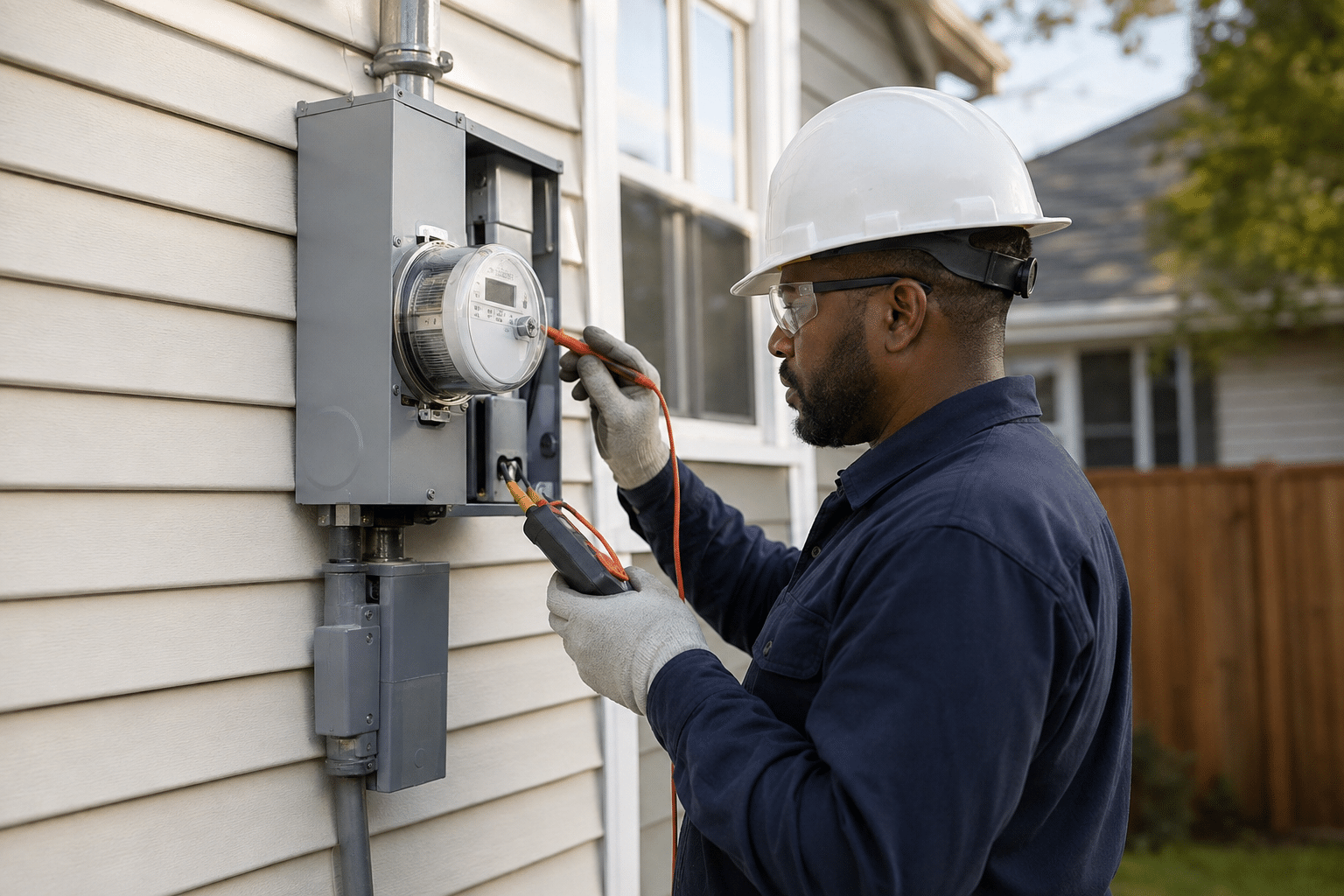
An electric meter installer works at a sensitive handoff point between a utility and its customer. The assignment may look routine when a meter is simply replaced, but the installer still has to confirm the address, inspect the service equipment, follow the utility’s safety procedure, update the work order, and know when a condition belongs to a different crew. This is field service with electrical exposure, customer contact, driving, and strict limits on what the worker is authorized to do.
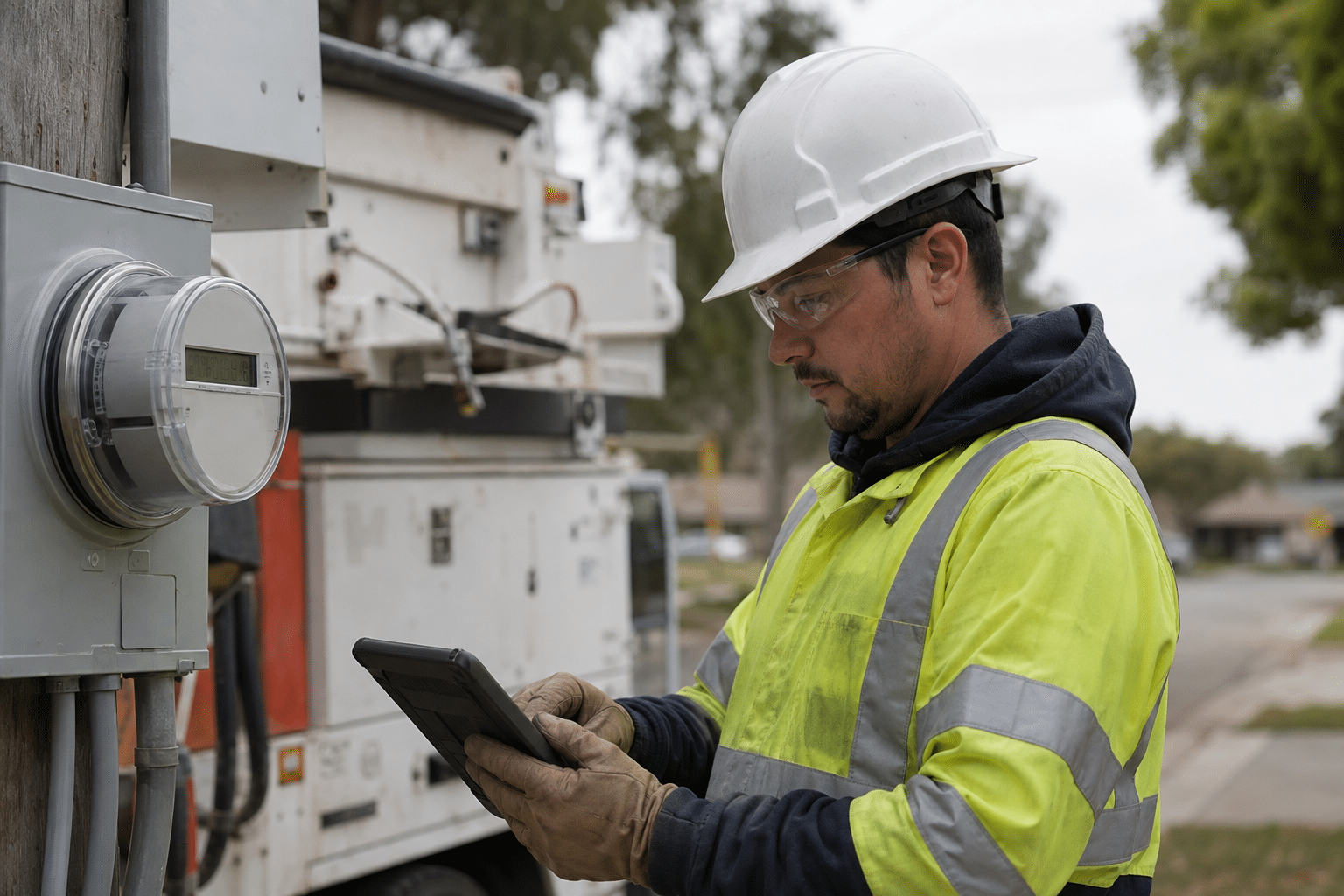
A routine call can change quickly: A work order may say ‘replace meter,’ but the installer could find water in the socket, a damaged enclosure, a missing seal, or a service condition that does not match the record. The useful skill is not improvising. It is recognizing the problem, making the area safe under the employer’s procedure, documenting it, and escalating it correctly.
What does an electric meter installer do?
Daily work varies by utility and by whether the meter is for a residence, commercial account, or larger electrical service. Common responsibilities include:
- Installing, removing, testing, and replacing electric meters.
- Checking meter sockets, seals, service connections, and visible signs of damage.
- Using handheld equipment or utility software to record readings and close work orders.
- Working with dispatchers, customers, electricians, and line crews when a service issue needs escalation.
- Following lockout, energized-work, traffic-control, and personal-protective-equipment rules.
The role is not the same as being a residential electrician. Meter installers work within utility procedures and defined limits. A damaged socket, unsafe service, suspected tampering, or problem on the utility side may require a different crew.
Training and entry requirements
Many employers train new hires through structured utility instruction, field mentoring, or an apprenticeship-style path. A high school diploma, a driver’s license, mechanical confidence, and comfort with basic math are common starting points. Some employers prefer electrical coursework or previous field-service experience.
Training normally covers meter equipment, service rules, electrical hazards, customer communication, documentation, and safe work practices. Requirements vary by state, utility, and job classification. Do not assume that a short course alone authorizes work on energized equipment.
Pay and job outlook
There is no single federal wage category that captures every meter installer. Employers may group the work with meter readers, electrical installers, line workers, or utility technicians. Compare the actual duties and local pay range in each posting instead of treating a broad occupational median as a guaranteed wage.
Could it fit a career change after 40?
It can be a practical option if you like structured field work, troubleshooting, and public-service infrastructure. The work may involve ladders, weather, driving between appointments, and strict safety rules. Ask about on-call expectations, service territory, physical testing, training pay, and whether the utility expects employees to work near energized equipment.
Experience with customer service, construction, HVAC, electronics, fleet work, or inspection can transfer well. The strongest candidates also show that they can document work accurately and stop when conditions are unsafe.
Questions to ask before applying
- Is the position meter-only, or does it include broader electrical service work?
- How is training delivered, and what qualifications are required before independent field work?
- What are the normal driving area, schedule, overtime, and emergency-call expectations?
- Does the employer provide the vehicle, tools, PPE, and technical training?
What the workday can look like
A typical assignment may begin with a work order, service address, safety briefing, and equipment check. At the site, the installer confirms the meter and service information, looks for obvious hazards, and follows the utility’s approved procedure. After the physical work, the installer verifies the connection or reading, updates the record, and explains any next step to the customer or dispatcher. The documentation matters because the meter becomes part of the utility’s billing and maintenance history.
Some calls are routine. Others involve a failed display, water intrusion, a damaged socket, suspected tampering, an inaccessible meter, or a mismatch between field conditions and the work order. An installer needs enough technical judgment to recognize the issue and enough discipline to escalate it instead of improvising outside the assigned authority.
Safety is part of the qualification
Meter work can bring an employee close to energized conductors, traffic, weather, dogs, ladders, and unfamiliar properties. Training normally includes hazard recognition, electrical approach boundaries, insulated tools, arc-flash awareness where applicable, and the utility’s rules for stopping work. The exact requirements depend on the task and employer. A job seeker should ask what work is performed energized, what work is de-energized, and who is authorized to make that decision.
Customer-facing safety matters too. Installers may enter yards, garages, basements, or commercial service areas. Clear identification, respectful communication, and accurate records protect both the customer and the utility.
Skills that transfer
People coming from HVAC, appliance repair, construction, telecommunications, fleet service, or inspection may already understand route planning, hand tools, work orders, and customer communication. Electrical knowledge helps, but reliability and careful procedure are just as important. The job rewards someone who can work independently while still calling for help when a condition falls outside the normal pattern.
Before accepting an offer
Ask how much time is spent driving, whether weather delays the schedule, how performance is measured, and whether training is paid. Clarify the service territory, vehicle policy, overtime, emergency response, physical test, and progression to higher classifications. Two jobs with the same title can have very different schedules and levels of electrical exposure.
Customer contact and documentation
Although much of the work is technical, meter installers may interact with homeowners, landlords, business staff, security personnel, or public-works employees. A short explanation of what was done and what happens next can prevent confusion. The installer may also need to document an inaccessible meter, a damaged enclosure, a safety concern, or a customer request that belongs to another department.
Good records protect the customer and the utility. They support billing accuracy, future service calls, asset tracking, and investigation of repeated problems. A worker who is technically capable but careless with addresses, serial numbers, readings, or work-order notes can create expensive follow-up work.
How to compare employers
When comparing offers, look beyond the hourly rate. Ask about paid classroom time, progression steps, health coverage, retirement benefits, vehicle use, weather policy, and equipment replacement. A union utility, municipal department, cooperative, and private contractor may organize the work differently. Find out who owns the customer relationship and who is responsible when a service condition is unsafe.
Sources
For related utility field work, compare this guide with our utility locator career guide and water meter technician guide.