Heavy equipment operator certification does not mean one universal national card for every excavator, loader, bulldozer, or grader. Employers usually need evidence that an operator can use the specific machine safely, while OSHA rules add training requirements for particular hazards and equipment. The useful credential depends on the machine, worksite, employer, and sometimes the state or city.
OSHA does not issue a general certification for heavy equipment operators. Employers must allow only workers qualified by training or experience to operate construction equipment, and they must provide hazard training for the work. Some equipment has additional rules. Powered industrial trucks, such as forklifts, have a specific employer training and evaluation requirement. Cranes and derricks have their own operator certification, licensing, and evaluation rules.
That leaves room for several useful credentials: an employer qualification, a school certificate, an industry assessment, a CDL for hauling equipment, or a license required by a state or city. They are not interchangeable. The right first step depends on the machine and the job you want.
Match the credential to the machine: A contractor hiring an excavator operator may want documented hands-on evaluation and site-safety training. A forklift position has its own employer training and evaluation requirement, while crane work follows a separate certification path. Ask the employer what proof is accepted before paying for a generic course.
Heavy equipment operator certification at a glance
| What you may hear | What it usually means | Who decides whether it counts |
|---|---|---|
| OSHA certification | Usually a misunderstanding. OSHA does not issue a general heavy equipment operator card. | OSHA sets workplace rules; the employer applies training and evaluation requirements. |
| Employer qualification | The company has trained and evaluated you on a machine or task. | The employer, project owner, or controlling contractor. |
| School certificate | You completed classroom and hands-on instruction. | The school and the employers reviewing your application. |
| NCCER credential or assessment | An industry training or knowledge and performance assessment for a defined equipment pathway. | Employers and programs decide how they use it. |
| Forklift operator certification | Employer-provided training, evaluation, and certification for a powered industrial truck. | The employer under OSHA’s powered industrial truck rule. |
| Crane operator certification | A credential for equipment covered by OSHA’s crane standard. | The employer must verify the certification, license where required, and evaluation. |
| CDL | A commercial driver’s license for driving certain vehicles on public roads. | The state motor vehicle agency and the employer. |
The phrase “certified heavy equipment operator” is too broad to make a hiring decision. Ask what machine, task, standard, and worksite the credential covers.
Does OSHA certify heavy equipment operators?
No. OSHA’s own guidance says it does not provide a general certification for heavy equipment operators. OSHA does require employers to train workers to recognize and avoid hazards, and construction employers must permit only employees qualified by training or experience to operate equipment and machinery.
In practical terms, an employer should be able to show that you were trained for the equipment you operate and that you can perform the assigned work safely. A short online course may help you understand terminology, but it does not automatically prove that you can inspect, start, maneuver, shut down, and work around a real excavator or loader.
Training should match the job. A worker learning a skid steer needs different practice from a worker operating a motor grader on a road project. The employer should cover the operator’s manual, controls, inspection, attachments, site hazards, communication with ground workers, utility lines, blind spots, slopes, loading areas, and emergency procedures.
The general construction rule is different from OSHA’s industry-specific certification rules. Do not read an OSHA safety course certificate as permission to operate every machine on a site.
The three qualifications employers usually care about
1. Employer training and evaluation
For many construction machines, the employer’s own qualification process is the most relevant proof. A company may pair classroom instruction with supervised seat time, a machine inspection, a practical test, and a written evaluation. The qualification may be limited to one type of equipment or one set of tasks.
Ask whether the employer records:
- the exact make, model, and equipment type;
- the tasks you were evaluated to perform;
- the trainer’s name and qualifications;
- the date and result of the evaluation;
- any restrictions, refresher training, or re-evaluation date; and
- the site conditions or attachments covered.
A qualification from one employer may not transfer automatically to another. It can still help your job search, especially when you can explain what you operated and what work you completed. Keep copies of training records when the employer allows it.
2. School or training-program certificate
A technical school, community college, workforce program, or private provider may offer heavy equipment training. The course may include safety, equipment systems, basic maintenance, grading, excavation, site layout, and hands-on practice. Some programs use simulators before students move to live equipment.
The certificate is evidence that you completed the provider’s program. It is not automatically a state license or an OSHA credential. Before paying, ask how much time is spent on actual machines, which types of equipment are available, how many students share each machine, whether instructors have recent field experience, and which local employers hire graduates.
Online material can teach vocabulary, inspection sequences, and basic theory. It cannot replace supervised operation when an employer needs proof that you can control a machine in a real work area. Our guide to online trade school explains what online instruction can and cannot do for hands-on careers.
3. Industry credential or assessment
NCCER’s Heavy Equipment Operations program is one example of an industry training and assessment pathway. Its current curriculum covers safety, pre- and post-operation checks, site planning, and several equipment types. It offers pathways for equipment such as backhoes, dozers, excavators, loaders, motor graders, skid steers, and dump trucks.
An NCCER credential can give a beginner a structured curriculum and a way to document knowledge or performance. It still does not replace employer orientation, site-specific training, or a license required by a particular jurisdiction. Confirm that the employers you are targeting recognize the exact NCCER pathway and edition before treating it as a must-have.
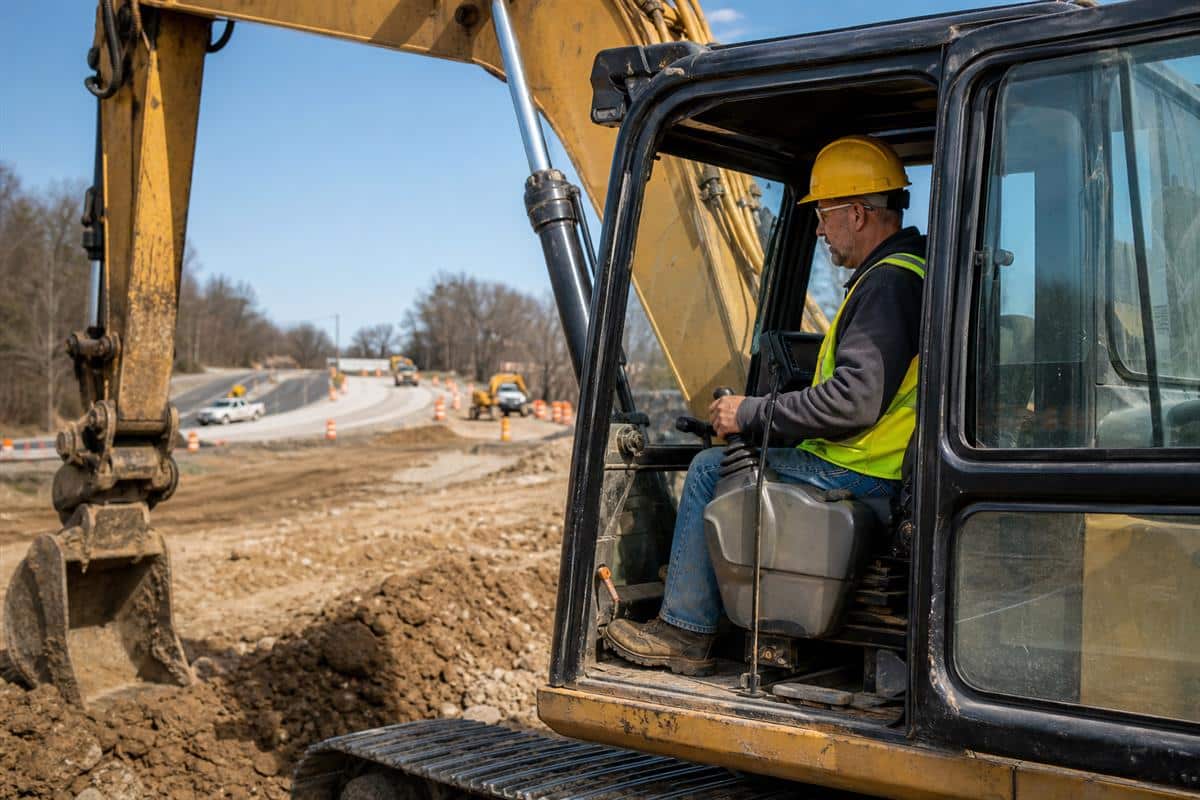
The same rule applies to other private certificates. Look for the equipment scope, the assessment method, the practical component, the issuing organization, and the employers that accept it. A certificate with a broad title and no live evaluation deserves careful questions.
When do special OSHA rules apply?
Forklifts and other powered industrial trucks
Powered industrial trucks have a specific OSHA training rule. The employer must ensure that each operator is trained and competent to operate the truck, and the operator must be evaluated before operating independently. Refresher training and evaluation may be required after an accident, near miss, unsafe operation, a change in workplace conditions, or a change in truck type.
This is why a forklift card is not the same as an excavator certificate. Both involve heavy machinery, but the rules and evaluation process are different. If a job posting asks for forklift certification, ask whether the employer provides the required training and evaluation or expects a particular outside program.
Cranes and derricks
Construction cranes are covered by OSHA’s crane standard, 29 CFR Part 1926 Subpart CC. Before operating covered equipment, the employer must ensure that the operator is trained, certified or licensed as required, and evaluated. There are exceptions and special rules, so the exact equipment and capacity matter.
A mobile crane operator credential from a recognized testing organization may be appropriate for crane work. It is not a general credential for excavators, bulldozers, or loaders. Do not buy a crane certification simply because a course advertises it as heavy equipment training.
Excavation and utility work
Excavators, backhoes, and trenching equipment bring additional site hazards. An operator may need training on underground utilities, spotter communication, trench safety, traffic control, overhead lines, soil conditions, and the limits of the machine’s attachments. The operator’s credential does not make an unsafe excavation acceptable.
Employers and contractors may also require site-specific orientations, drug screening, a background check, or documented experience before allowing independent operation. Those conditions are separate from a private training certificate.
Do you need a CDL?
Sometimes. The Bureau of Labor Statistics notes that construction equipment operators often need a commercial driver’s license to haul equipment to different jobsites, and state CDL laws vary.
A CDL usually relates to driving a qualifying vehicle on public roads. It does not prove that you can safely operate an excavator once you arrive at the site. Conversely, a strong excavator evaluation does not give you permission to drive a tractor-trailer or equipment-hauling truck on public roads.
Ask the employer which vehicle you would drive, whether the job includes loading and securing equipment, what license class and endorsements apply, and who pays for the test. Check the current rule with your state motor vehicle agency before assuming a course or employer statement is complete.
How to become a heavy equipment operator
Start with one equipment family
“Heavy equipment” covers too many machines for one beginner course to teach equally well. Choose a first target such as excavator, loader, dozer, motor grader, skid steer, backhoe, or forklift. Read local job postings and note the machines employers mention repeatedly.
Build basic safety and mechanical knowledge
You should understand pre-operation inspections, fluids, controls, attachments, shutdown procedures, basic maintenance, and the hazards around people and fixed objects. Mechanical experience can help, but it does not replace machine-specific training.
Choose supervised practice
Look at an entry-level laborer or equipment trainee role, a technical school, a community college, a workforce program, or a contractor training route. The best option is the one that gives you repeated, supervised time on the machine you want to operate.
Document what you can do
Keep training records, evaluation forms, course descriptions, equipment types, and supervisor contacts. Record the work you performed without overstating your experience. “Assisted with site preparation and operated a skid steer under supervision” is more useful and more credible than “certified in all heavy equipment.”
Check the jobsite requirements
Before accepting a position, ask about OSHA training, employer evaluation, equipment type, attachments, CDL needs, site orientation, required PPE, and any state or city license. If the job includes crane operation or powered industrial trucks, ask about the specific OSHA rule that applies.
What should a good training program include?
A sensible program should spend time on both the machine and the work around it. Look for:
- daily inspection and defect reporting;
- controls, steering, braking, and safe shutdown;
- attachments and rated operating limits;
- loading, unloading, slopes, soft ground, and weather;
- hand signals, radios, spotters, and exclusion zones;
- underground utilities and overhead hazards;
- grading, excavation, or material-placement practice;
- basic maintenance and written records; and
- a practical evaluation on the equipment taught.
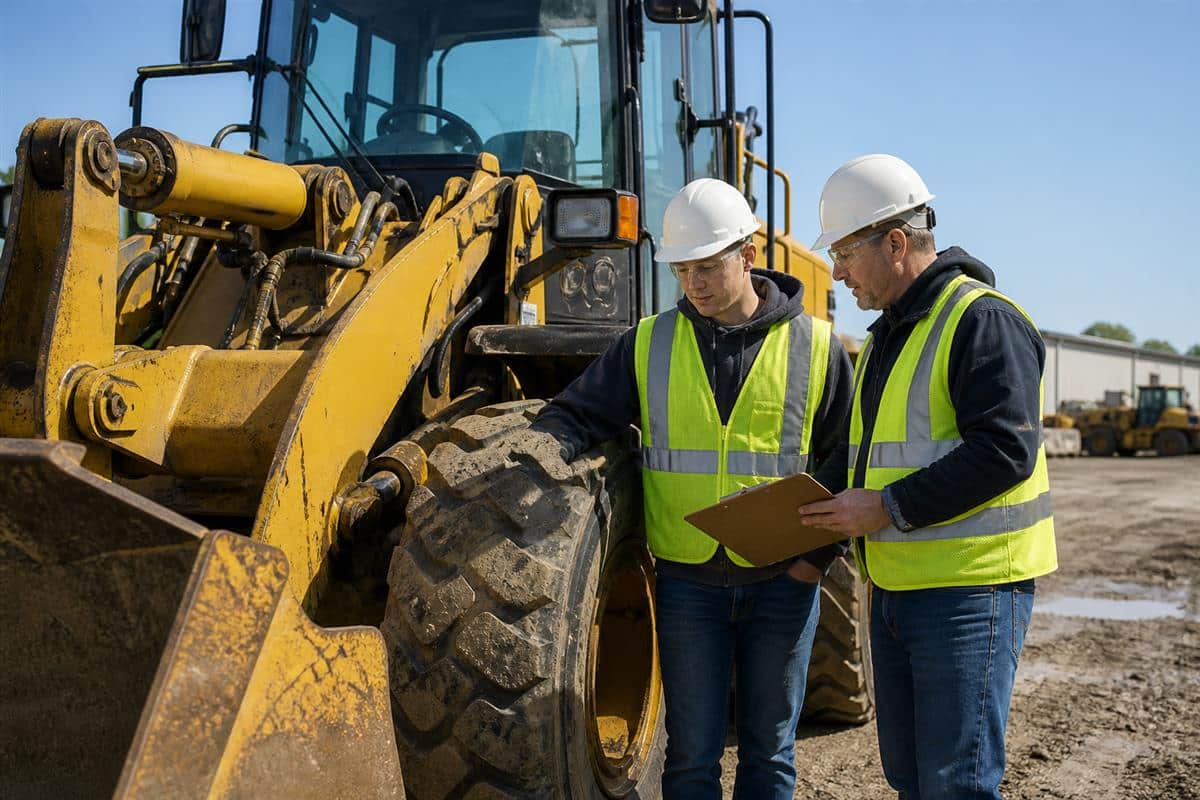
Be cautious when a provider promises a national license, instant job placement, or a high wage from a short online class. Ask for the written scope of the credential and the names of employers or public programs that accept it.
Is this a realistic career change after 40?
It can be, but the first job may involve more than sitting in a cab. New operators often start with inspections, cleanup, fueling, spotting, ground work, basic maintenance, and supervised machine time. The work can involve early starts, changing weather, dust, noise, vibration, remote projects, and seasonal schedules.
Adults coming from construction, maintenance, farming, driving, facilities, mechanics, or military equipment work may already have useful habits. Safety discipline, jobsite awareness, communication, and mechanical troubleshooting transfer well. They do not remove the need to learn the specific machine.
Before enrolling, ask yourself how quickly you need full wages, whether you can accept a trainee rate, how far you can travel, and which physical conditions you can handle week after week. Our career change at 40 roadmap can help you compare training time, income timing, and job fit. If you like diagnosing and maintaining systems as much as operating equipment, industrial maintenance technician work may be a nearby alternative.
Questions to ask before paying for certification
- Which exact machines and attachments does the program cover?
- Is there a hands-on evaluation, or only a quiz and completion certificate?
- Who recognizes the credential in the local jobs I want?
- Does the credential expire, and what keeps it current?
- How many hours will I spend on live equipment?
- Does the course include jobsite safety, utility awareness, and inspection practice?
- Will employers still require their own evaluation?
- Does the target job also require a CDL, medical qualification, or local license?
The bottom line
Heavy equipment operator certification is a category, not one universal credential. OSHA does not issue a general operator card. For most construction equipment, employers want evidence of training and competence on the assigned machine. Forklifts and cranes have additional rules, and a CDL may be necessary to haul equipment on public roads.
Start by choosing one equipment family and reading the requirements in real job postings. Then compare supervised training, school programs, employer evaluation, and industry credentials. Pay for a certificate only when you know what it proves and who will accept it.
Sources
- U.S. Bureau of Labor Statistics: Construction Equipment Operators – duties, training, CDL, pay, work conditions, and outlook; checked August 31, 2026.
- OSHA: OSHA requirements for individuals interested in employment as Heavy Equipment Operator – no general OSHA certification and employer training duties; checked August 31, 2026.
- OSHA: 1926.20 General safety and health provisions – qualification by training or experience and construction training duties; checked August 31, 2026.
- OSHA: 1926.1427 Operator training, certification, and evaluation – crane and derrick operator requirements; checked August 31, 2026.
- Apprenticeship.gov: Operating Engineers and Other Construction Equipment Operators – occupational information and apprenticeship references; checked August 31, 2026.
- NCCER: Heavy Equipment Operations – equipment pathways, curriculum, credentials, and assessments; checked August 31, 2026.
This article is educational and does not replace current OSHA training, state or local licensing rules, employer instructions, or professional safety advice.
\n
Reviewed September 3, 2026: Heavy equipment credentials vary by machine, employer, worksite, and state or local safety rule. Ask what training is required for the equipment you will operate rather than assuming one certificate covers every job. Compare the role with the certification guide.