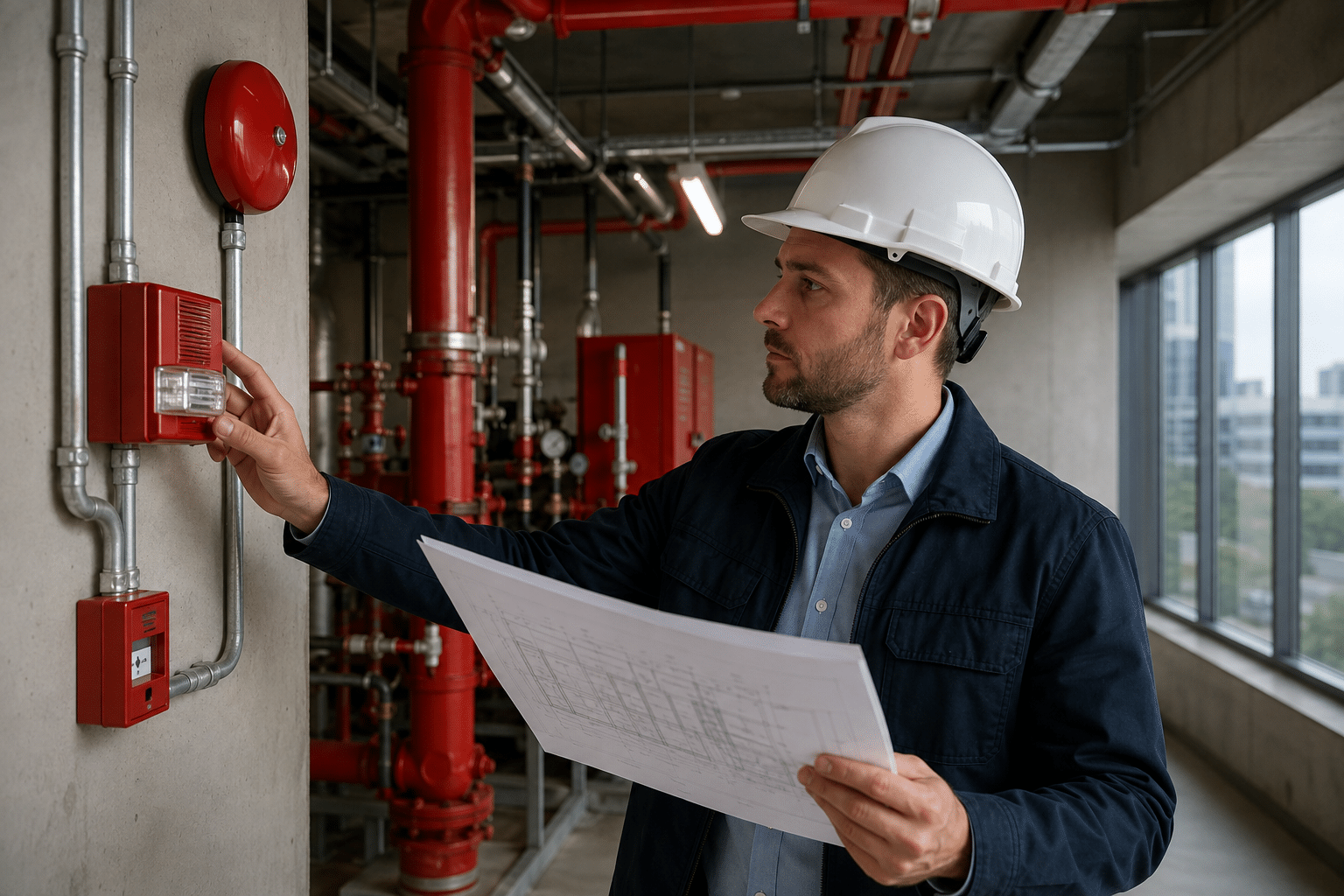
A fire protection engineer applies engineering methods to reduce fire risk and design systems that protect people, buildings, and operations. The work may involve fire modeling, suppression and detection systems, egress, codes, hazard analysis, plan review, and communication with architects, owners, authorities, and contractors. It is an engineering career, not a short-course technician role, so education and licensure expectations deserve careful attention.
What does a fire protection engineer do?
The exact mix depends on the employer. A consulting engineer may review plans for a hospital, warehouse, high-rise, or industrial plant. An engineer working for an owner may manage fire-protection upgrades and inspections. Common work includes:
- Designing or reviewing sprinkler, alarm, suppression, and smoke-control systems.
- Analyzing building layouts, occupancy, fuel loads, evacuation routes, and fire scenarios.
- Checking plans against adopted codes, standards, and the authority having jurisdiction.
- Writing design reports, specifications, calculations, and technical recommendations.
- Visiting sites to observe installation, investigate problems, or review existing conditions.
- Explaining technical choices to architects, contractors, owners, and public officials.
The role is different from a fire inspector. An inspector checks whether a building meets the applicable rules. A fire protection engineer develops or evaluates the technical solution behind the protection strategy.
How to become a fire protection engineer
Most engineering roles require a bachelor’s degree in fire protection engineering, mechanical engineering, civil engineering, or a related field. Some employers accept a different engineering degree when the candidate has relevant design, code, or systems experience.
Licensure rules depend on the work and the state. If you will offer engineering services to the public or take professional responsibility for designs, check the requirements of the state engineering board. The usual path can include an accredited degree, the Fundamentals of Engineering exam, supervised experience, and the Principles and Practice of Engineering exam. That sequence is not identical for every state or employer.
Technical knowledge matters, but so does judgment. You need to read plans, understand how building systems interact, document assumptions, and explain risk without making promises the design cannot support. A background in mechanical systems, construction, code review, or fire service can help, but it does not replace the education required for engineering responsibility.
Codes, standards, and project work
Fire protection engineers work with adopted building and fire codes plus technical standards. The authority having jurisdiction decides which rules apply to a project. A standard used by an engineer is not automatically the same thing as a law in every location.
Projects can involve calculations, drawings, hydraulic analysis, equipment schedules, site observations, commissioning, and conversations with the fire marshal or building official. One week may be mostly desk work. The next may include a construction visit in an unfinished building with noise, dust, ladders, and changing site conditions.
Pay and career data
Fire protection engineer is a specialization rather than a single clean BLS occupation. Salary depends on the engineering degree, license, sector, project responsibility, location, and experience. BLS data for related engineering occupations can provide context, but it should not be presented as a guaranteed fire protection salary.
| Question | Practical answer |
|---|---|
| Typical education | Usually a bachelor’s degree in engineering |
| Possible employers | Consultancies, engineering firms, manufacturers, insurers, owners, and public agencies |
| Work mix | Design, calculations, code review, meetings, and site visits |
| License | Depends on the service, responsibility, and state |
| Closest BLS context | Engineering occupations, not fire inspectors |
Could it fit after 40?
It can be a strong second-career target for someone who already has an engineering degree, technical design experience, construction knowledge, or a long record working with regulated systems. Starting from zero is a longer project because the degree and supervised experience may be essential.
Before enrolling, read job postings from firms that actually design fire protection systems. Note the requested degree, software, codes, license status, field experience, and type of projects. You may find that a fire protection designer, plans examiner, fire alarm designer, or project coordinator is a nearer entry point than an engineer title.
Clarify the engineering scope
Fire protection engineering can involve suppression, alarms, smoke control, egress, hazardous materials, modeling, plan review, testing, or loss prevention. Ask which systems and occupancies dominate the role. Entry routes differ from technician work because engineering decisions may require an accredited degree, supervised experience, and professional licensure depending on the jurisdiction and responsibility.
Design review should connect code criteria, calculations, product data, drawings, and the actual building use. Document assumptions and interfaces between systems. A sprinkler layout, alarm sequence, door operation, and smoke-control response can each appear correct alone while failing to work together. Engineers need disciplined coordination rather than a checklist of isolated components.
Evaluate the first employer
Ask who reviews junior work, how site visits and commissioning are taught, and whether projects expose trainees to both design and field results. Clarify travel, deadlines, continuing education, exam support, and responsibility for sealed documents. For a career changer with engineering or building experience, the strongest route may be a focused transition with supervised fire-protection work, not a short certificate that implies independent authority.
A junior engineer should learn how designs are tested after installation. Witnessing acceptance tests exposes the gap between drawings and field conditions: devices may be inaccessible, sequences may conflict, fans may rotate incorrectly, or documentation may not match the installed system. Record deficiencies precisely and confirm the retest scope. Ask how the firm handles substitutions and requests for information during construction. Product changes can affect calculations, listings, interfaces, and maintenance access. Do not approve a substitution based only on a sales sheet. Follow the review process and state what information is missing. These habits also help with existing-building work, where records may be incomplete and the engineer must distinguish verified conditions from assumptions before recommending changes.
Ask to review a completed calculation, drawing set, field report, and acceptance-test record during onboarding. Seeing the whole project cycle helps a junior engineer understand how early assumptions affect construction and final operation.
Keep calculation files and design assumptions organized so another engineer can review the reasoning without reconstructing the project.
Sources
- U.S. Bureau of Labor Statistics: Health and Safety Engineers
- National Fire Protection Association: Research and education
- National Society of Professional Engineers: Licensure resources
Related reading: Fire Inspector, Building Inspector, and Building Automation Technician.
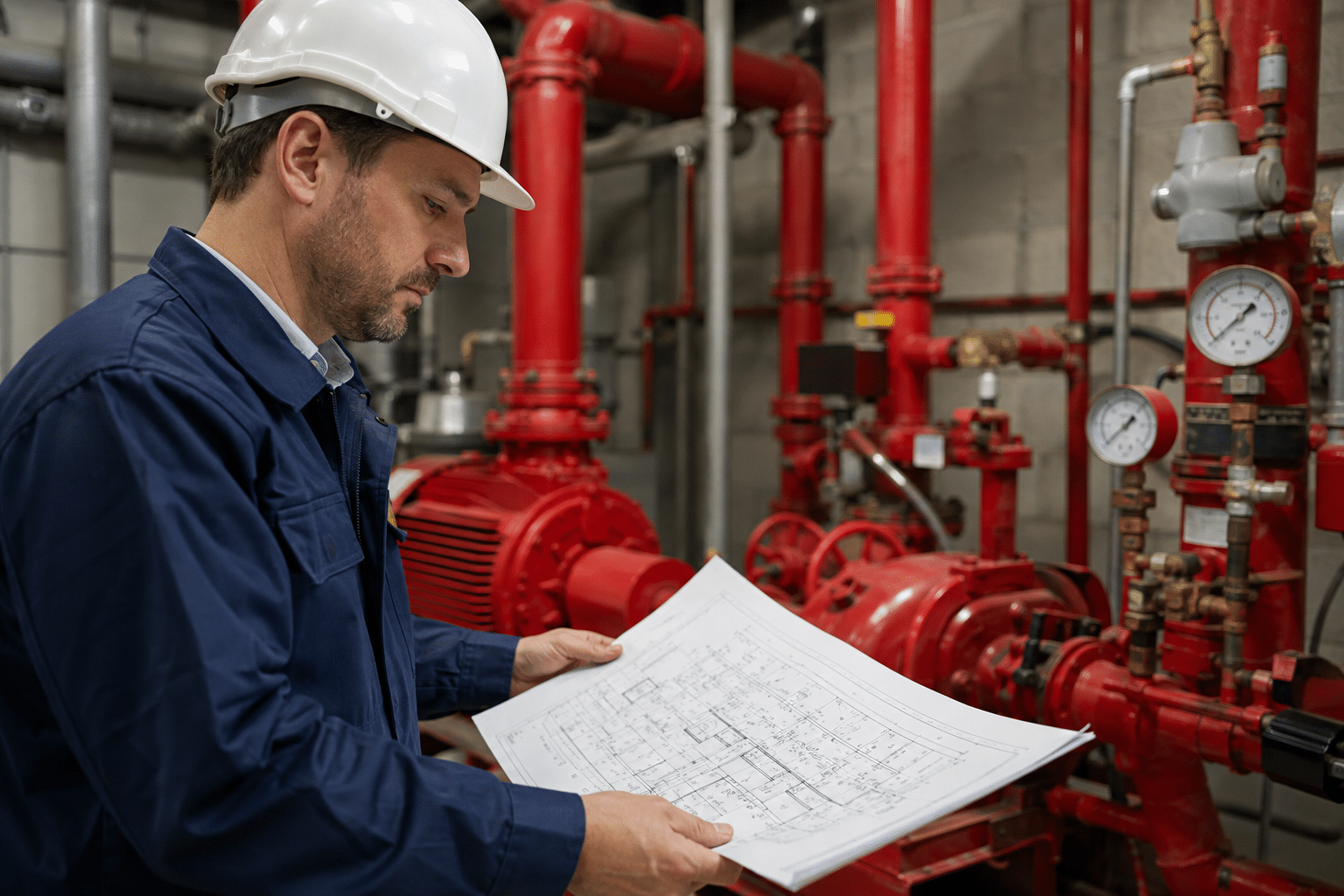
A design decision has to fit the actual hazard: A warehouse storing ordinary materials may need a different approach from a facility with high-piled plastics, flammable liquids, or complex battery systems. The engineer reviews the occupancy, fuel load, layout, detection, suppression, and evacuation assumptions instead of applying one standard design to every building.