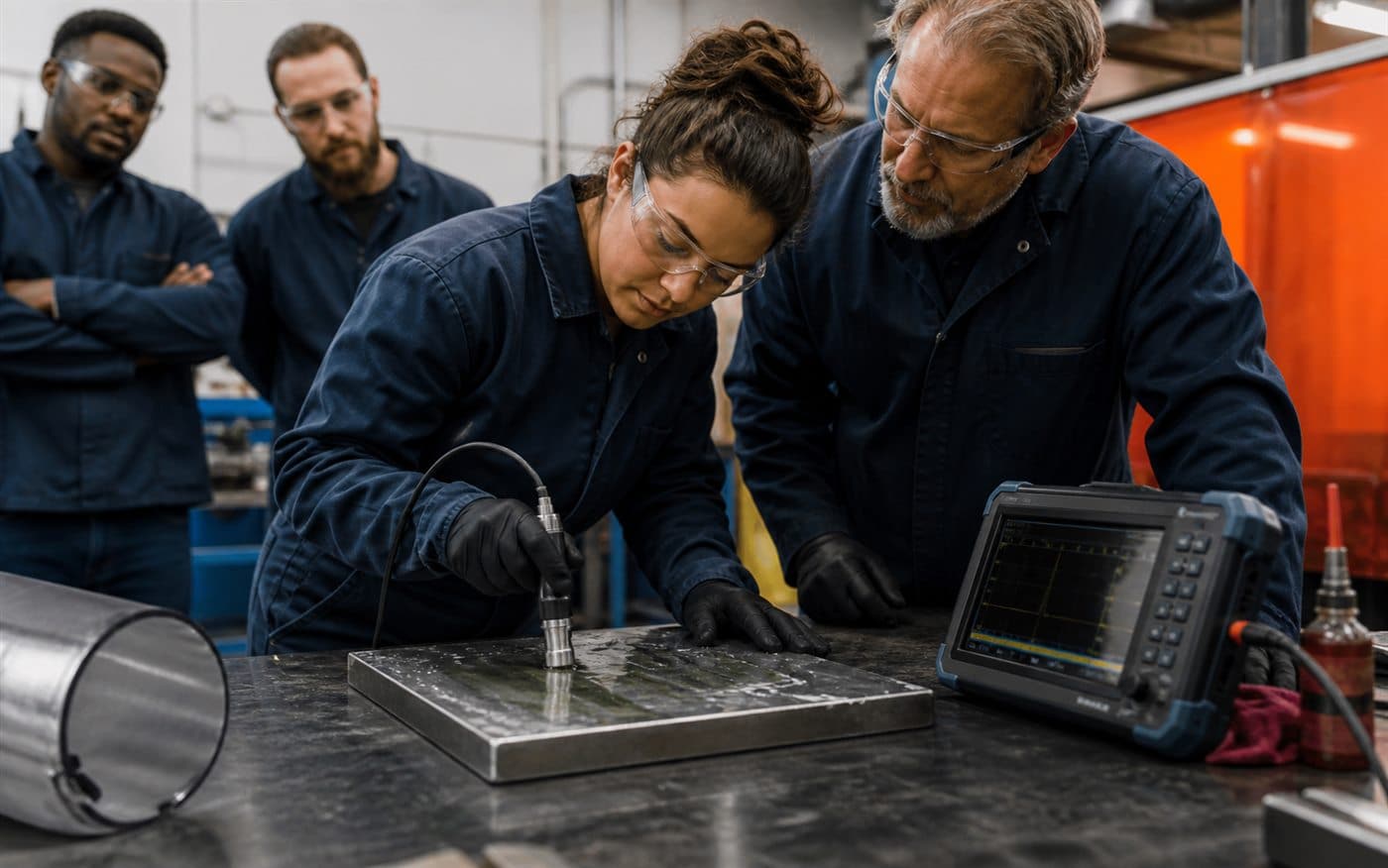
A dental laboratory technician makes or repairs custom products that fit a patient’s mouth, often from a dentist’s prescription and digital or physical impressions. The work may include crowns, dentures, bridges, orthodontic appliances, model work, finishing, and computer-aided design. It is precision bench work with a direct quality consequence: a small error can affect fit, comfort, appearance, and the time needed for correction.
Dental laboratory technicians usually work behind the scenes. They do not diagnose patients or independently prescribe treatment. Their job is to translate a clinical order into a precise appliance and communicate with the dental team when information is incomplete.
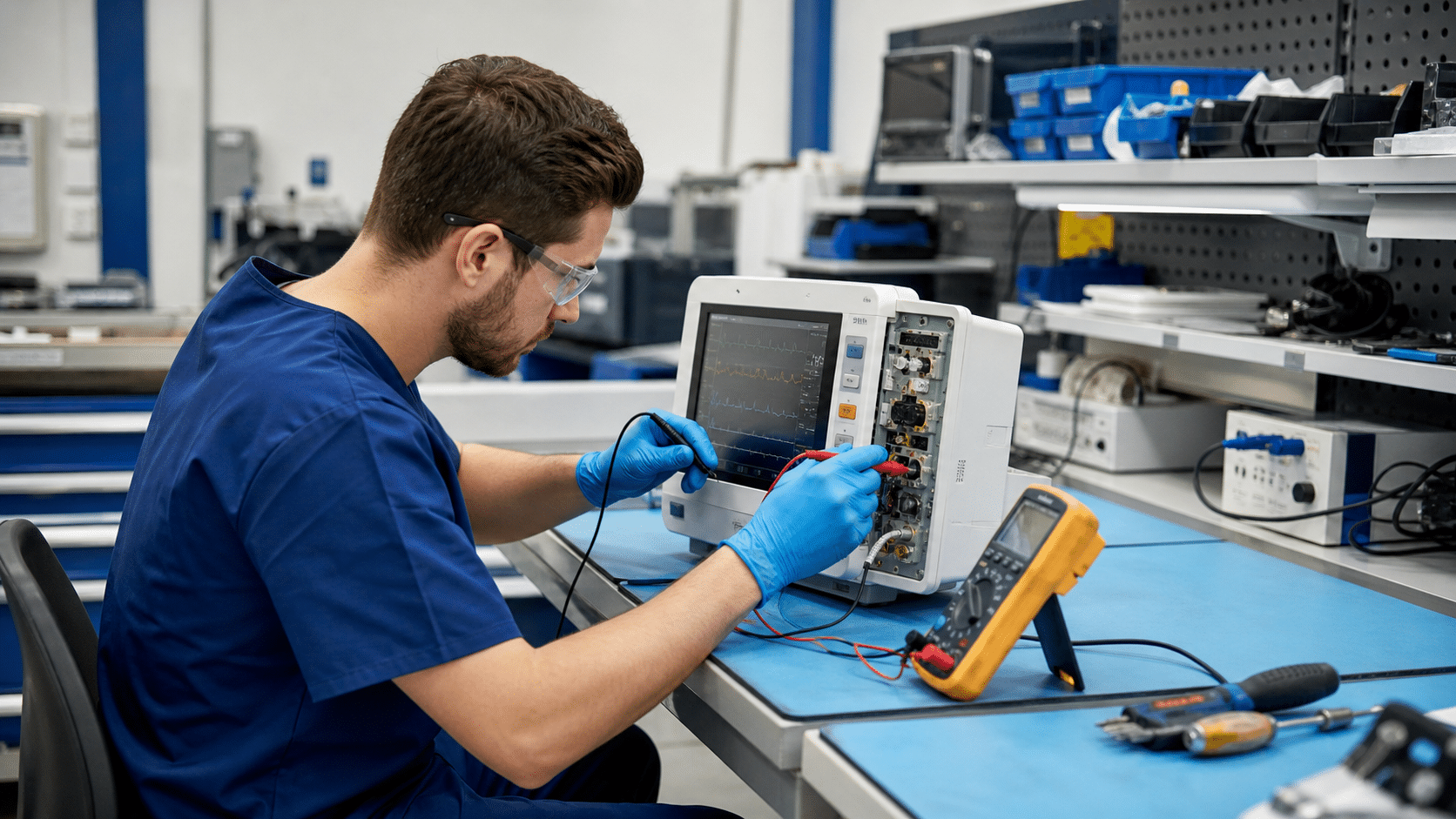
The case file follows the work: The technician checks the prescription, identifies the case, reviews the impression or scan, selects the material, and completes each stage before the product returns to the dentist. Good records matter because a remake often begins with finding where the fit, shade, design, or material choice went off track.
What does a dental laboratory technician do?
The exact workflow depends on the specialty. A technician may pour or scan a model, trim and prepare a working surface, select materials, build or finish a restoration, and check the result against the prescription. Digital laboratories may use CAD software, scanners, milling systems, or 3D printers alongside traditional hand tools.
Technicians inspect fit, shape, color, contacts, and surface finish before sending work back to the dentist. They may also repair appliances, remake work that does not meet the specification, maintain equipment, and document materials or case details.
This is different from a medical laboratory technician or a general laboratory technician. Dental laboratory work focuses on custom oral appliances and restorations, not patient specimens or broad laboratory testing.
Where do dental laboratory technicians work?
Employers include commercial dental laboratories, dental practices with in-house labs, orthodontic laboratories, denture services, and manufacturers of dental materials or devices. Some labs specialize in fixed restorations, removable appliances, orthodontics, ceramics, implant work, or digital production.
Work may be organized around case deadlines. Ask about production targets, repetitive hand work, ventilation, dust control, lifting, schedule flexibility, and how much of the process is digital versus traditional.
How do you become a dental laboratory technician?
Some people learn through employer training, while others complete a dental laboratory technology program at a technical school or community college. A program can provide structured practice with anatomy, materials, infection control, model work, dental terminology, and laboratory equipment.
Certification and licensing expectations vary by specialty, employer, and state. Do not assume that one credential is required everywhere. Check the requirements for the kind of laboratory and appliance work you want to do, then compare programs by hands-on training, digital-design content, clinical or laboratory placement, and employer recognition.
The Bureau of Labor Statistics groups this work with Dental and Ophthalmic Laboratory Technicians and Medical Appliance Technicians. That benchmark includes several related occupations, so it should be treated as context rather than a precise promise for every dental laboratory role.
Skills that matter
- Fine-motor control and patience with detailed work.
- Ability to interpret written prescriptions, measurements, models, and digital files.
- Understanding of materials, tools, finishing methods, and equipment safety.
- Consistent quality control and willingness to redo work when it is not accurate.
- Communication with dentists, assistants, case coordinators, and other technicians.
- Interest in learning digital scanning, CAD/CAM, and changing production methods.
Is dental laboratory technology a good second career after 40?
It can fit adults who enjoy precise making but prefer a laboratory or workshop setting to direct patient care. Previous work in jewelry, model making, machining, crafts, quality inspection, manufacturing, or digital design may transfer well.
The tradeoffs are worth testing in advance. Some roles involve long periods of close visual work, repeated hand motions, deadlines, dust or chemicals, and limited public interaction. A visit, informational interview, or short introductory class can help you understand the daily pace before you invest in training.
Bottom line
A dental laboratory technician turns a dental prescription into a carefully finished appliance or restoration. It is a specialized second-career option for detail-oriented adults who like combining craft, science, and digital tools in a healthcare support role.
Understand the laboratory workflow
A dental laboratory technician may specialize in crowns, dentures, ceramics, digital design, implants, or orthodontic appliances. Ask which department trains beginners and how work moves from prescription and impression or scan to the finished device. Each specialty uses different materials, equipment, tolerances, and finishing skills.
Case control is fundamental. Verify the patient and case identifiers, dentist’s prescription, material, shade, design, and due date before beginning. Keep components together and record changes. A beautiful restoration is still a failure if it belongs to the wrong case or does not match the prescription.
Test your fit for detailed production work
The job rewards steady handwork and sustained visual attention. It may also involve dust, resins, heat, repetitive posture, deadlines, and remakes. Ask to observe a normal production day, not only the clean digital design area. Find out how often technicians switch tasks and what ventilation, magnification, and ergonomic equipment are provided.
Digital tools have changed the workflow, but they do not remove the need to understand fit, occlusion, contacts, margins, materials, and finishing. Ask whether trainees receive supervised feedback on completed cases and remakes. A program should provide repeated hands-on work with the systems local laboratories actually use, not only software demonstrations.
A small portfolio can include wax work, a model, a digital design screenshot, or finishing samples, but patient information must be removed and laboratory policies respected. Photograph work consistently and include the stage before correction when possible. Employers want to see whether you respond to feedback, not only your best final piece. Ask how remakes are reviewed. A constructive laboratory traces whether the issue came from the impression or scan, prescription, design, material process, fit, shade, or finishing. Blaming the dentist or technician without evidence teaches nothing. Career changers should also compare pay systems and pace. Some laboratories use hourly wages, production incentives, or specialized department rates. Find out how quality affects performance measures and whether training time is protected. A fast technician who creates repeated remakes is expensive, so careful improvement should be visible in the workplace’s standards.
Clean organization and consistent case tracking are practical skills worth demonstrating during a laboratory interview.