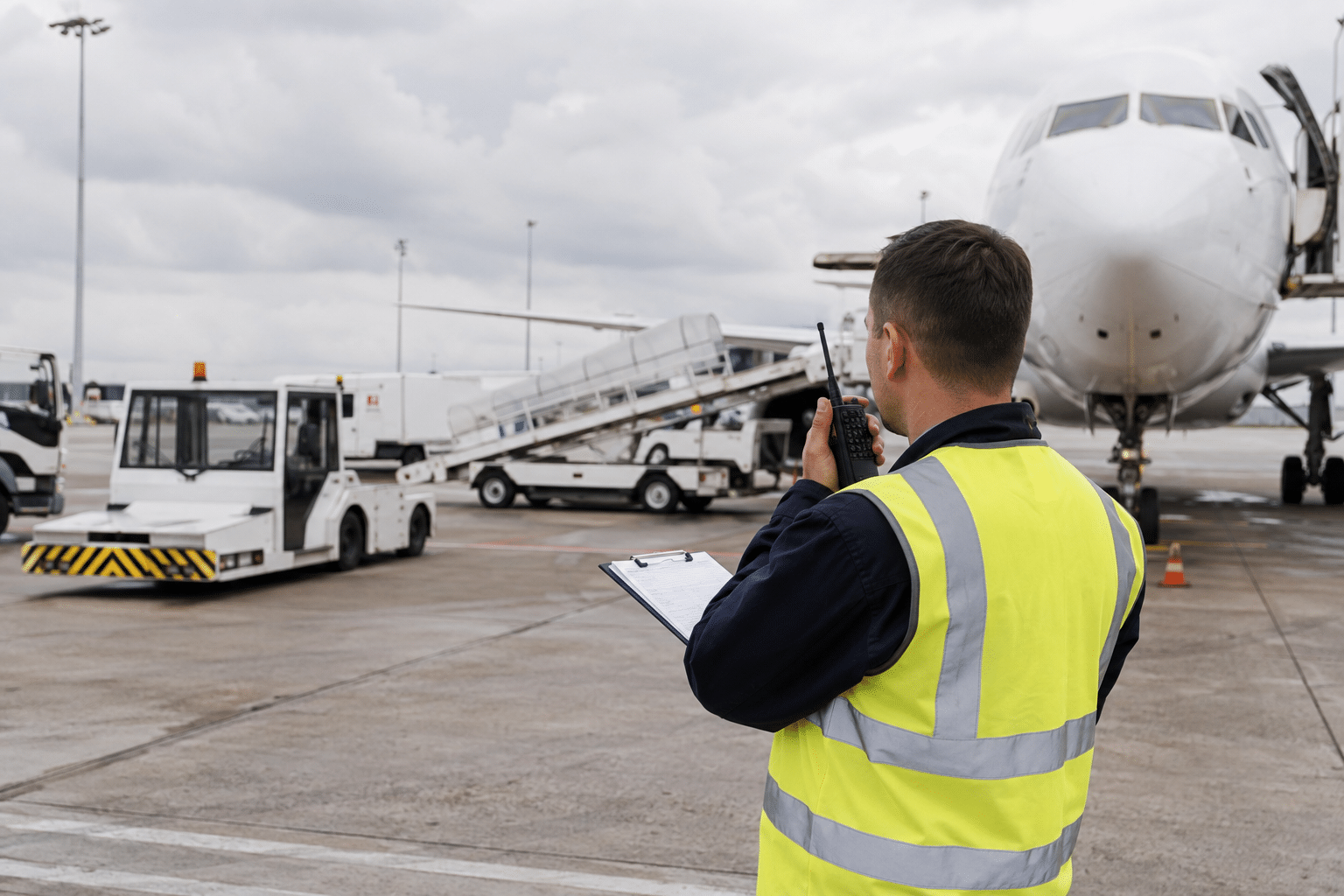
Airport operations technicians work behind the scenes to keep an airport usable and safe. The job can include inspecting runways and taxiways, checking signs and lighting, documenting hazards, coordinating with airport staff, and responding when weather or equipment changes the plan. It is a field operations role, not an air-traffic-control job, and the schedule may include early mornings, nights, weekends, or emergency call-outs.

A real workday can change quickly: A routine airfield inspection may uncover a damaged sign, standing water, wildlife activity, or debris near a movement area. The technician must document the condition, notify the right airport contact, and follow the site’s access and escort rules before normal operations resume.
What does an airport operations technician do?
Common duties include inspecting runways and taxiways, reporting debris or wildlife hazards, checking signs and markings, monitoring construction areas, recording weather or surface conditions, and coordinating access to movement areas. A technician may also support emergency response, escort contractors, update logs, and communicate with airport operations, airlines, maintenance, and public-safety teams.
The airport never stops moving. A routine inspection may change when weather arrives, a light fails, a vehicle enters a restricted area, or an aircraft incident requires a new response. Good technicians stay calm, follow the chain of communication, and write down what happened.
Training and work conditions
Requirements vary by airport. Employers may seek a high school diploma, a driver’s license, computer skills, clear radio communication, and the ability to work shifts. Airport badging, background screening, movement-area training, and recurrent safety training are common. Some roles value aviation, public works, emergency services, or military experience.
Expect outdoor work around aircraft, vehicles, noise, heat, cold, and irregular schedules. Nights, weekends, holidays, and on-call rotations are possible. The job may involve driving on the airfield and working under strict escort and radio rules.
Pay and second-career fit
Airport operations technician is not a single national BLS occupation, so local government pay grades and airport employers are the best comparison. Ask about shift differentials, overtime, retirement benefits, and whether the role is union or civil service.
This path can suit someone with facilities, public-works, logistics, safety, dispatch, military, or customer-coordination experience. It may be a poor fit if you need a predictable Monday-to-Friday schedule or dislike enforcing procedures with contractors and visitors.
How to start
Read airport authority postings and learn the difference between operations, airfield maintenance, security, and air traffic roles. An operations assistant or airfield support position can provide a realistic first step. Ask how much time is spent driving inspections versus working at a desk.
For related reading, see airfield lighting technician, aircraft mechanic, and occupational safety technician.
What the work looks like in practice
A airport operations technician usually balances scheduled work with problems that cannot be predicted from a calendar. The scheduled side may include inspections, readings, preventive tasks, site visits, customer appointments, or a review of records from the previous shift. The unscheduled side may begin with an alarm, a complaint, a weather event, a failed test, or a result that does not match expectations. The first professional habit is to confirm the condition before changing anything.
Because the work supports airports and airfields, communication is part of the technical job. A worker may coordinate with a supervisor, customer, contractor, operator, dispatcher, engineer, or emergency team. A good handoff explains what was observed, what was checked, what action was taken, and what still needs attention.
Equipment and records
The tools used by a airport operations technician may include runway inspections, NOTAM information, radio communication, airside vehicles, wildlife reports, and compliance records. The exact list varies, but the principle is consistent: select an appropriate tool, use it according to the procedure, and record enough information for another person to understand the result. A loose object, a weather change, a lighting failure, or a construction vehicle in the wrong area can affect a safe operation That is why a reading without location, time, condition, or method can be less useful than a shorter record made carefully.
Airfield records must identify the exact pavement, light, sign, gate, fence, or hazard and the time it was observed and corrected. Clear radio and written communication helps maintenance, air traffic personnel, and the next shift understand whether an item is closed, monitored, or still restricting operations.
Training and the first months
Airport operations training should cover the actual airfield layout, inspection route, radio phraseology, wildlife procedures, snow or storm plans, and incident reporting used at that airport. Ask when a trainee may drive in the movement area and how proficiency is checked before independent duties.
Airport-specific instruction is central. Useful foundations include aviation safety, weather observation, emergency coordination, driving procedures, and familiarity with FAA guidance, but local qualification determines what you may do alone. Ask whether simulations and supervised airfield inspections are included in paid onboarding.
Safety and working conditions
A airport operations technician may face moving equipment, electricity, pressure, traffic, heights, weather, chemicals, confined areas, or unfamiliar properties. The correct response is to follow the hazard assessment, use the required PPE, isolate equipment when required, and stop when the real condition does not match the work plan. Production pressure or a customer deadline does not remove the need for a safe method.
This role mixes desk coordination with airfield driving in darkness, rain, heat, cold, and active traffic. Ask about overnight shifts, rotating weekends, emergency call-ins, runway inspections, and long periods of vigilance. Visit during an operating shift if possible, not only during a quiet daytime tour.
Career change after 40
This path can suit someone who brings reliability, practical judgment, customer awareness, or careful documentation from another field. The most transferable skill is often the ability to notice a change, ask a precise question, and complete the record. airfield safety and coordination can be learned, but it is easier when you already respect procedures and understand the consequences of a rushed decision.
The first challenge is building a mental map while continuing to follow radio and vehicle procedures. Learn taxiway designations in small sections, review each inspection route, and admit immediately when a clearance or location is unclear. Calm repetition is safer than trying to sound experienced before the layout is familiar.
Advancement and fit
With experience, a airport operations technician may move toward airport operations supervisor, safety coordinator, or emergency-planning role. Advancement depends on demonstrated competence, additional education, employer structure, and sometimes licensing. Before accepting a job, ask what the previous person moved on to and whether internal postings or tuition support are available.
Questions to ask before applying
- What does this title mean at this employer, and which tasks are outside the role?
- What are the normal schedule, travel, physical, and emergency expectations?
- Which tools, software, records, and safety qualifications are required?
- How are new workers trained and approved for independent work?
- What is the realistic next step after the first year?