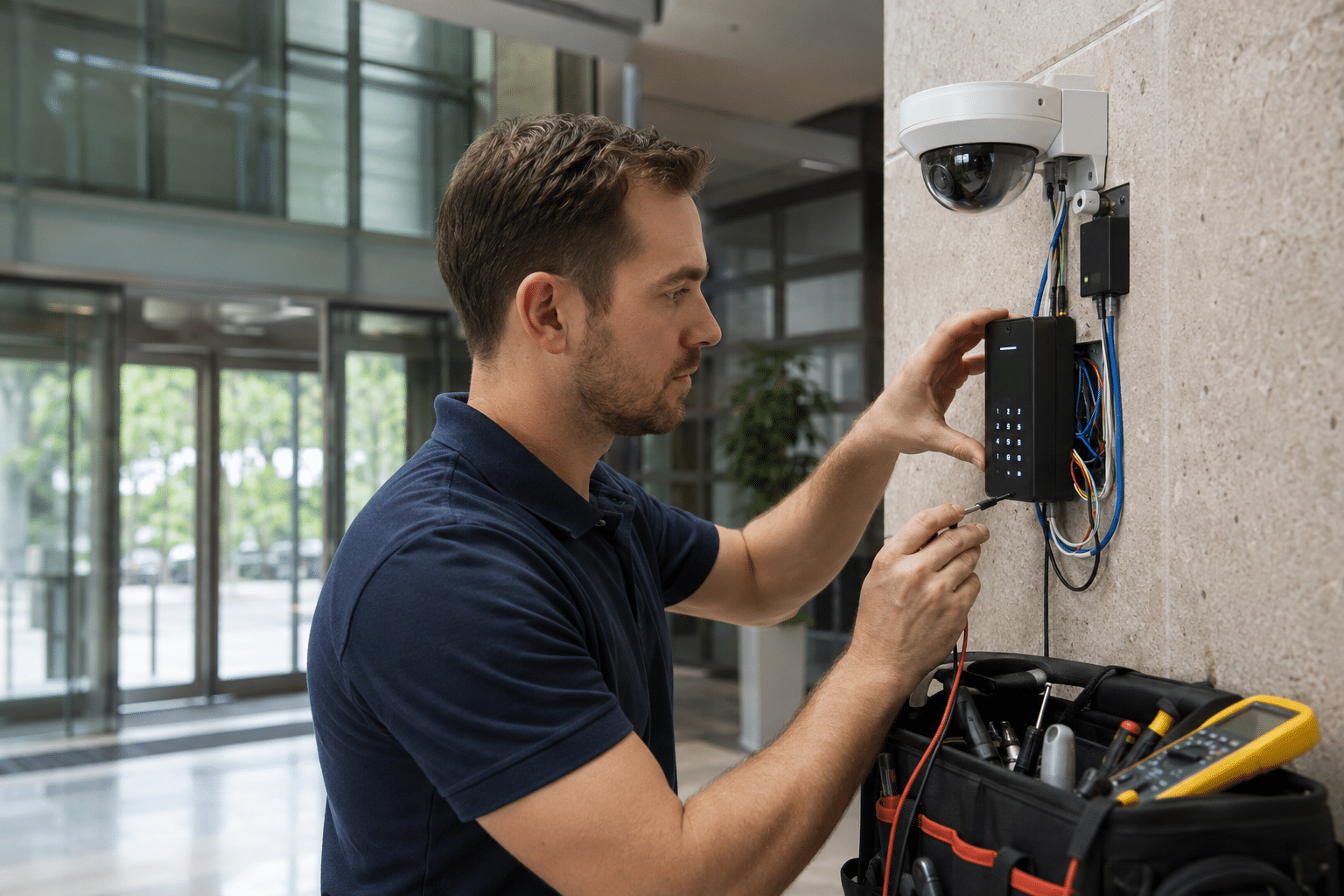
Security systems technicians install and service the equipment that helps a site control access, detect intrusion, record video, or alert people to a problem. The job sits between low-voltage wiring, networking, software configuration, customer communication, and troubleshooting. A career changer should look closely at whether a position is mostly installation, service calls, programming, or a mixture of all four.
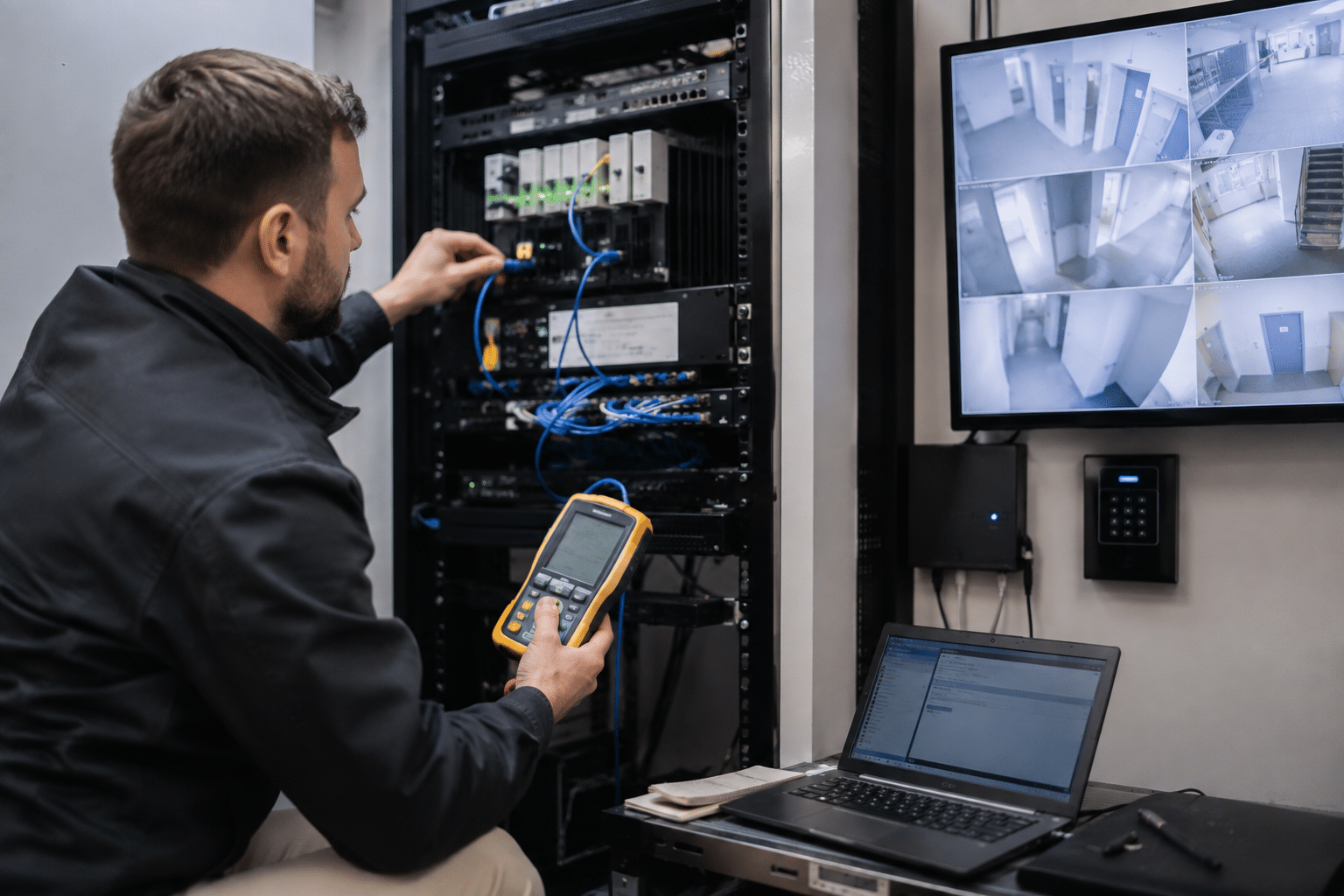
A service call is rarely just a bad camera: The technician may need to check power, cabling, network settings, storage, user permissions, and the device configuration before replacing anything. The final job record should explain what failed, what was changed, and what the customer still needs to manage.
What does a security systems technician do?
A technician may mount cameras and card readers, pull and terminate low-voltage cable, label devices, configure software, test door hardware, troubleshoot power or network problems, update documentation, and train a customer on basic operation. Service calls can involve a failed camera, a door that will not unlock, a false alarm, or a recorder that has stopped communicating.
The job is part electrical work and part information technology. A device can be physically intact and still fail because of a switch, address, credential, configuration, or network path. Patience matters. So does clean documentation, especially when another technician will inherit the system later.
Training and certification
Many employers start with a high school diploma and provide moderate-term on-the-job training. Helpful preparation includes basic electricity, hand tools, cable testing, IP networking, wiring diagrams, and safe ladder work. Manufacturer training can matter because systems differ by brand.
Licensing rules vary by state and by the type of security work performed. Some jurisdictions regulate alarm companies, access-control work, monitoring, or low-voltage contracting separately. Ask the employer which license or registration the company holds and what an employee is allowed to do under it.
CISA describes electronic physical security as a combination of tools such as video monitoring, intrusion detection, and electronic access control. That layered view is useful in the field: the technician is not simply installing a camera, but making sure the device connects to the larger system and produces a usable response.
Pay and work conditions
Pay varies with travel, on-call work, union coverage, system complexity, and whether the role includes programming or project leadership. As a broad benchmark, BLS reported a May 2023 median annual wage of $56,430 for security and fire alarm systems installers. That occupation includes more than security systems technicians, so local postings remain the better test of an offer.
Expect customer sites, ladders, ceiling spaces, construction dust, tool bags, and occasional evening work. Some service teams drive long distances. Ask about the normal service radius and whether the company pays for travel time.
Is it a realistic second career?
This path may fit someone coming from telecommunications, audiovisual installation, electrical work, computer support, facilities, or field service. It rewards people who can explain a technical problem without making the customer feel lost. A worker who has already dealt with work orders and site coordination may adapt quickly.
The job is less appealing if you want completely predictable days or dislike returning to a system you did not install. Before enrolling in a course, apply for helper, installer, or service trainee roles and compare the equipment they actually use. A short entry route can reveal whether you prefer cable installation, programming, or fault diagnosis.
Related guides include fire alarm inspector, telecommunications technician, and field service technician.
What the work looks like in practice
A security systems technician usually balances scheduled work with problems that cannot be predicted from a calendar. The scheduled side may include inspections, readings, preventive tasks, site visits, customer appointments, or a review of records from the previous shift. The unscheduled side may begin with an alarm, a complaint, a weather event, a failed test, or a result that does not match expectations. The first professional habit is to confirm the condition before changing anything.
Because the work supports homes, commercial buildings, campuses, warehouses, and integrated security service companies, communication is part of the technical job. A worker may coordinate with a supervisor, customer, contractor, operator, dispatcher, engineer, or emergency team. A good handoff explains what was observed, what was checked, what action was taken, and what still needs attention.
Equipment and records
The tools used by a security systems technician may include access-control panels, cameras, intrusion sensors, readers, network connections, test meters, ladders, and service software. The exact list varies, but the principle is consistent: select an appropriate tool, use it according to the procedure, and record enough information for another person to understand the result. A camera can be powered but unusable, and a door reader can work locally while failing to report correctly to the larger system That is why a reading without location, time, condition, or method can be less useful than a shorter record made carefully.
Service documentation should identify the device, zone, panel, software setting, wiring test, fault history, and final verification. Photos and accurate labels help the next technician avoid tracing the same cable again. Customer notes must explain what was restored, what remains limited, and who should follow up.
Training and the first months
Security systems training should specify whether the job focuses on intrusion alarms, access control, cameras, fire-related interfaces, networks, or integrated platforms. Ask which tasks require a license in the state and who supervises wiring, programming, testing, and customer handoff during the trainee period.
Useful preparation can include low-voltage wiring, basic networking, electrical safety, plan reading, and manufacturer platforms. Licensing and permit rules vary, so confirm them with the relevant authority and employer. A broad online course is only a starting point if it provides no supervised installation practice.
Safety and working conditions
A security systems technician may face moving equipment, electricity, pressure, traffic, heights, weather, chemicals, confined areas, or unfamiliar properties. The correct response is to follow the hazard assessment, use the required PPE, isolate equipment when required, and stop when the real condition does not match the work plan. Production pressure or a customer deadline does not remove the need for a safe method.
Installers and service technicians may climb ladders, work above ceilings, drill through finished spaces, enter occupied businesses, and drive between calls. Ask about on-call rotation, attics, lifts, travel radius, tool costs, and responsibility for repairing accidental damage. Customer trust is part of the working environment.
Career change after 40
This path can suit someone who brings reliability, practical judgment, customer awareness, or careful documentation from another field. The most transferable skill is often the ability to notice a change, ask a precise question, and complete the record. electronics, low-voltage work, and customer problem-solving can be learned, but it is easier when you already respect procedures and understand the consequences of a rushed decision.
Beginners often lose time by changing several settings before identifying the fault. Start with power, communication, wiring, device status, and recent site changes, then test one correction at a time. Protect passwords and customer information, and ask before disabling any active protection, even for a quick test.
Advancement and fit
With experience, a security systems technician may move toward senior service technician, systems designer, project lead, or security integration specialist. Advancement depends on demonstrated competence, additional education, employer structure, and sometimes licensing. Before accepting a job, ask what the previous person moved on to and whether internal postings or tuition support are available.
Questions to ask before applying
- What does this title mean at this employer, and which tasks are outside the role?
- What are the normal schedule, travel, physical, and emergency expectations?
- Which tools, software, records, and safety qualifications are required?
- How are new workers trained and approved for independent work?
- What is the realistic next step after the first year?