
A gas plant operator monitors the equipment and process conditions that move natural gas through a facility. The work may alternate between control-room screens and field rounds around compressors, valves, meters, tanks, and safety systems. It is a procedure-driven job where a small change in pressure, temperature, flow, or vibration deserves attention before it becomes a larger operating problem.
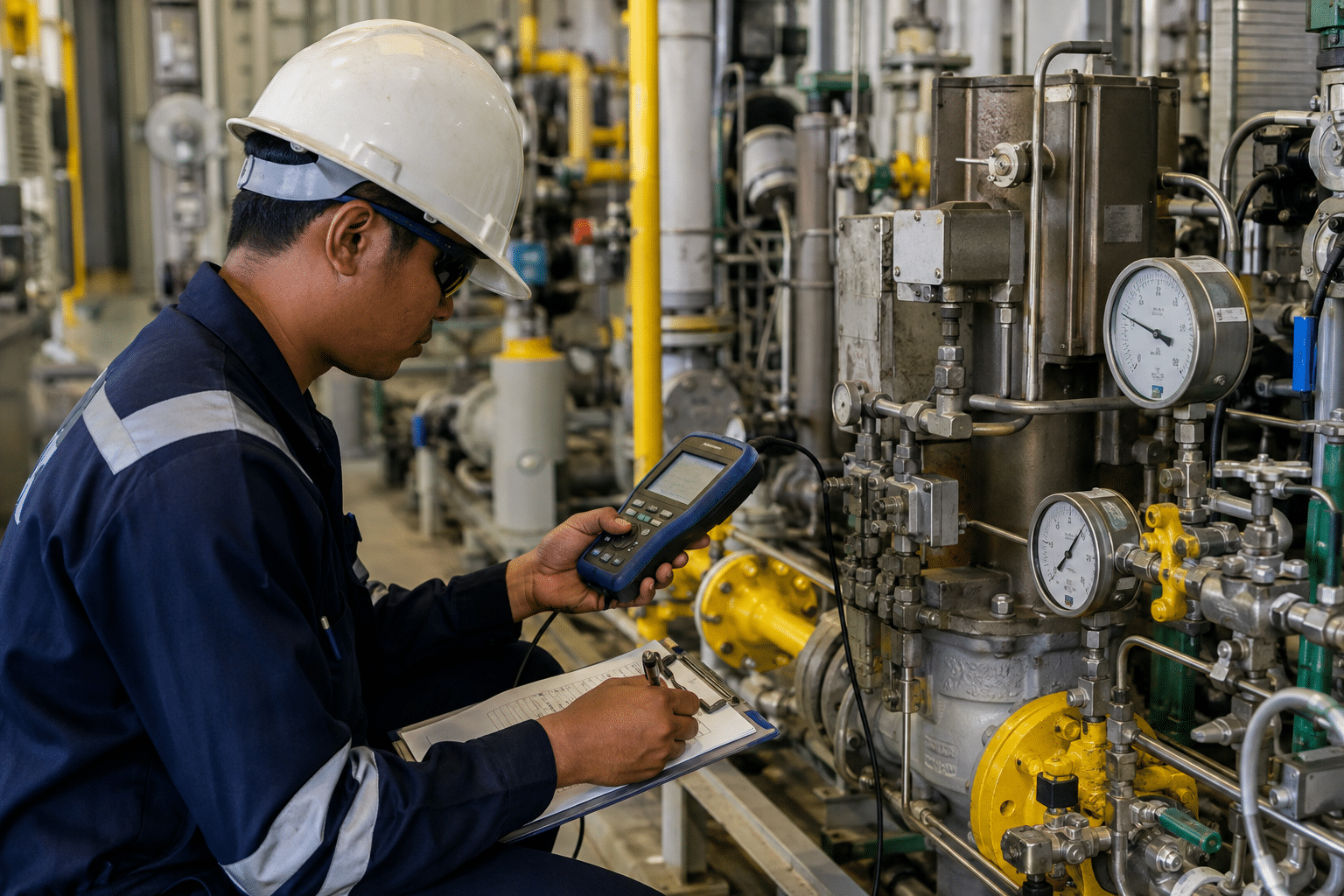
A shift can move from routine to urgent: An operator may notice a pressure trend moving outside its normal pattern, confirm the field gauge, communicate with the control room, and follow the written response procedure. The job is not about improvising a fix; it is about recognizing the condition, protecting people and equipment, and handing accurate information to the next decision-maker.
What does a gas plant operator do?
- Monitor process equipment, tanks, compressors, valves, gauges, and control screens.
- Take field readings and compare them with expected operating conditions.
- Start, stop, isolate, or adjust equipment under written procedures.
- Collect samples, record production data, and report abnormal conditions.
- Coordinate maintenance, contractors, and emergency response when needed.
BLS identifies gas plant operators as a distinct occupation and lists detail orientation, adaptability, and problem-solving among its top skills. Actual duties depend on whether the facility treats, compresses, stores, or distributes gas.
Training and certification
Many operators start with a high school diploma and employer training. Useful preparation includes process safety, mechanical basics, industrial controls, reading diagrams, lockout/tagout, and hazard communication. Some employers prefer experience in a refinery, chemical plant, power plant, or pipeline facility.
There is no single national gas-plant-operator license. Site rules, employer qualification programs, and state requirements can differ. Ask what training is paid and whether the role requires shift work or emergency call-in.
Pay and job outlook
BLS reports gas plant operators under SOC 51-8092. Its current occupation data lists a national annual wage benchmark of $87,820, but that figure should be checked against the latest detailed wage table and local postings. Pipeline transportation and natural-gas distribution are among the industries employing these workers.
Automation changes the tasks, but it does not remove the need for field checks, operating judgment, maintenance coordination, and safe response. Employment may be concentrated near processing plants, compressor stations, storage sites, and energy corridors.
Is this career a good fit after 35?
This path can suit someone who likes technical routines, equipment, and responsibility for a process that cannot simply be paused. The tradeoffs include rotating shifts, outdoor rounds, noise, chemicals, and strict procedures. A calm person who notices small changes may do well here.
How to explore the field
Compare local postings with power plant operator, pipeline technician, and instrumentation technician roles. Ask whether new hires rotate through field and control-room assignments.
What a normal week can include
Most gas plant operators move between planned work and unexpected questions. The planned side may include inspections, readings, preventive tasks, scheduled service, or a review of records from the previous shift. The unexpected side is where judgment matters: a customer reports a problem, an alarm appears, a measurement does not match the drawing, or a component behaves differently from yesterday. Good work starts by confirming the condition before changing anything.
Because these jobs support natural-gas processing plants, compressor stations, and related industrial facilities, the worker may coordinate with operators, customers, engineers, contractors, dispatchers, or a supervisor. A short, accurate handoff is often as important as the physical task. It should explain what was observed, what was tested, what was changed, and what remains open.
Tools, records, and technical judgment
The day-to-day equipment for a gas plant operator commonly includes compressors, separators, valves, meters, control screens, pumps, process samples, and operating logs. The list changes by employer, but the habit is consistent: use the right instrument, check that it is suitable for the task, and record enough information for another person to understand the result. A change in pressure, temperature, vibration, or flow may signal a developing process problem that requires a controlled response.
An operator log should capture process conditions, alarms, equipment status, samples, valve or set-point changes, permits, and communication with maintenance. Precise times and reasons matter during a shift handover. Good records let the incoming crew understand whether a change is expected, temporary, or evidence of a developing problem.
Training that actually helps
Preparation often includes process technology, mechanical systems, instrumentation, basic chemistry, permit-to-work practices, and emergency response. The exact plant process determines what matters most. Ask whether the employer has a paid trainee progression and whether classroom instruction is tied to field demonstrations on the units you will operate.
Gas plant operator candidates should ask how the facility qualifies workers for control-room rounds, field checks, sampling, startup, shutdown, and emergency response. New operators usually progress through defined units or tasks rather than receiving blanket authority. Request the qualification map and learn how written knowledge, demonstrations, and supervised shifts are assessed.
Safety and working conditions
Safety depends on the setting. A gas plant operator may face electricity, moving machinery, pressure, chemicals, heights, vehicles, weather, confined areas, or stored energy. The correct response is not to improvise. It is to follow the hazard assessment, use the required PPE, isolate equipment when required, and stop when the conditions do not match the work plan.
Plants can run continuously, so examine rotating shifts, nights, weekends, overtime, and call-in expectations. Field rounds may include stairs, ladders, heat, noise, weather, process chemicals, and respiratory or flame-resistant equipment. A schedule that looks manageable on paper can feel different after several rotations, so ask current operators about recovery time.
Career fit after 40
This path can suit someone who brings reliability, patience, customer awareness, or practical troubleshooting from another industry. The strongest transferable skill is often not a specific tool; it is the ability to notice a change, ask a precise question, and complete the record. industrial operations, process awareness, and procedure-driven work can be learned, but it is easier when you already respect procedures and take pride in leaving a site or workstation in better condition.
Learning a plant means understanding relationships, not memorizing isolated numbers. Trace where material enters and leaves a unit, learn what protects each vessel or compressor, and compare current readings with normal trends. Speak up when a line-up or alarm response is unclear; disciplined verification is a stronger operator habit than pretending to remember every detail.
Where the role can lead
With experience, a gas plant operator may move toward senior operator, console operator, shift supervisor, or process technician. Advancement depends on demonstrated competence, additional education, employer structure, and sometimes a license or industry credential. Before applying, ask what the previous person in the role moved on to and whether internal training is available.
Questions to ask before applying
- What does the title mean at this company, and what tasks are outside the role?
- What equipment, software, PPE, and documentation system will I use?
- How are new workers trained and signed off for independent work?
- What are the schedule, travel, physical, and emergency expectations?
- What is the next realistic step after I become competent?