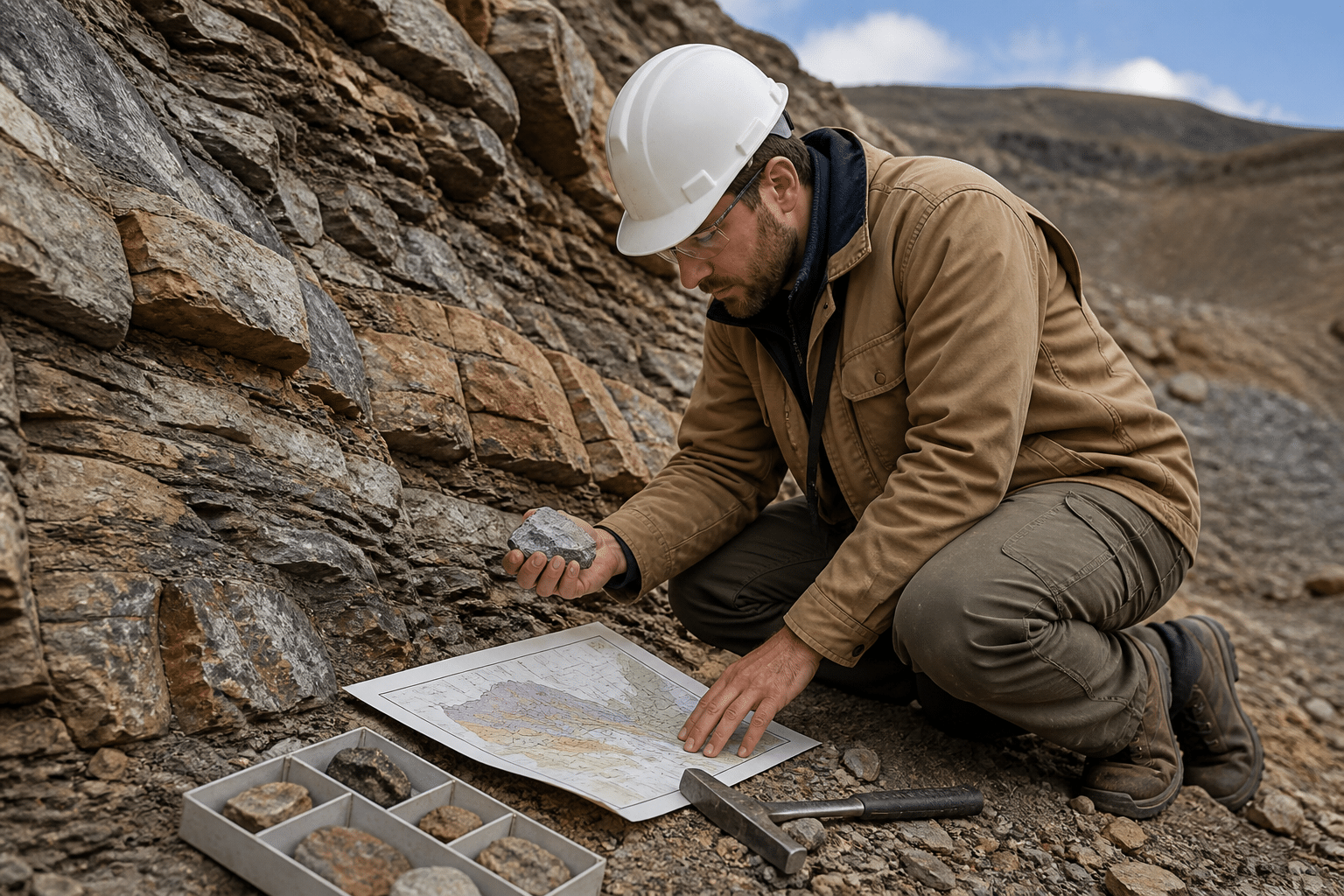
A geology technician helps collect, prepare, and document physical evidence about rocks, soil, minerals, and the ground beneath a project. The setting might be a mine, environmental investigation, construction site, laboratory, water study, or public agency. The work is practical and methodical, with samples and records that other professionals will use to make larger decisions.
What does a geology technician do?
The daily work depends on the employer and field setting, but common responsibilities include:
- Collecting rock, soil, sediment, or water samples in the field.
- Labeling samples and maintaining chain-of-custody records.
- Preparing specimens for laboratory testing, logging core, and recording observations.
- Using hand tools, GPS equipment, mapping software, or basic survey instruments.
- Entering measurements and field notes into databases or technical reports.
- Following site safety rules, including procedures for remote work, vehicles, chemicals, and contaminated locations.
Some technicians spend most of their time in a laboratory or core-storage facility. Others travel to drilling sites, mines, construction projects, or environmental sampling locations. It is practical work, but careful documentation matters just as much as physical stamina.
Training and education
The U.S. Bureau of Labor Statistics identifies an associate degree as the typical entry-level education for geological and hydrologic technicians. Relevant programs may include geology, earth science, environmental science, geological technology, or laboratory technology.
A degree is not the only way to test the fit. A career changer can build useful evidence through introductory geology courses, field mapping, GIS practice, laboratory methods, or experience with technical documentation. Community colleges and workforce programs may offer a more manageable starting point than a four-year program.
Employers may also expect a valid driver’s license, comfort with outdoor conditions, and basic competence with spreadsheets, GPS tools, or GIS. Work at contaminated sites may require site-specific training such as OSHA’s HAZWOPER requirements.
Pay and job outlook
BLS reported 2025 median pay of $53,350 for geological technicians and $64,790 for hydrologic technicians. These are broad national benchmarks for related technician occupations, not a promise of starting pay for every geology technician. Location, industry, travel, overtime, and laboratory or field specialization can change the offer substantially.
BLS projects 2% employment growth for geological and hydrologic technicians from 2025 to 2035, with about 1,400 openings per year on average. The total field is relatively small, so local employer demand can matter more than the national percentage.
Could this career fit you after 35?
Geology technician work can suit someone who wants a hands-on science career without immediately committing to professional geologist responsibilities. It may be a good match if you enjoy careful observation, practical problem-solving, outdoor work, and organized records.
The tradeoffs are worth naming. Field assignments can involve early starts, travel, uneven ground, heat or cold, and repetitive sampling. Laboratory roles may be steadier but can include long periods of precise, routine work. Ask employers how much time the role spends in the field, how often travel is required, and which tools a new hire must already know.
How to prepare for the first job
- Compare local job postings and note repeated requirements.
- Take an introductory geology, GIS, or environmental sampling course.
- Practice clear sample logs, spreadsheets, photo records, and short technical summaries.
- Look for internships, seasonal field crews, drilling support, or laboratory assistant roles.
- Ask about safety training, travel expectations, and advancement into senior technician or specialist work.
For nearby options, compare this path with geotechnical technician, materials testing technician, and environmental technician roles.
The sample record is part of the specimen
Imagine a tray of rock core arriving from a drilling crew. The pieces are physical evidence, but the investigation also needs their origin and sequence. A technician checks identifiers and depth information against the accompanying log. If a label is missing, the correct next step is to resolve the discrepancy with the responsible team. Appearance alone cannot establish which interval a piece represents.
This attention to provenance distinguishes geological support work from collecting interesting rocks. The observation must remain connected to a project, a location and a method. Technicians who maintain that connection make it possible for a geologist to revisit the evidence later, sometimes after the field crew has left the site.
Core work, sample preparation and field support
Ask employers what their technicians actually handle. A core facility may emphasize organizing trays, photographing specimens and maintaining an accessible inventory. A sample-preparation laboratory has different routines and equipment. A field assistant may spend much of the day transporting supplies and supporting collection at several locations. The same job title can sit over any of these arrangements.
The distinction matters when choosing training. Someone aiming at a laboratory should investigate specimen preparation and laboratory quality practices. Someone seeking field work should ask about navigation, site logistics and the recording methods used by that employer. Introductory geology helps in both cases, but it should connect to the proposed work rather than stand alone as a credential.
Observations and interpretation have different owners
A technician may describe a specimen using the project’s approved terminology and record visible features. The supervising professional decides how observations contribute to the geological interpretation. A beginner should make uncertainty explicit. Recording that an identification needs review is more useful than turning an uncertain impression into an apparently definite fact.
During training, ask to compare your notes with a reviewed example. That reveals the required detail, abbreviations and limits of your assignment. It also develops technical writing without requiring long reports. A short description with the correct sample identifier can be more valuable than a polished paragraph that leaves out the location.
Prepare a modest, honest work sample
A practice portfolio can include a specimen inventory, photographs linked to identifiers and a simple map of permitted observation locations. Use safe, lawful activities and label the exercise as educational. Explain how you kept filenames and records consistent. You do not need to claim professional field experience to demonstrate that your work can be checked.
For a career changer, records management, warehouse traceability or laboratory handling experience can supply relevant examples. Explain the process you followed and how you corrected discrepancies. Geological knowledge is still needed, but an employer can see why your previous habits would help protect a sample collection.
Compare travel arrangements before accepting
Find out whether travel is occasional or organized into extended assignments. Ask who arranges accommodation, how equipment is transported and whether the position is seasonal. A laboratory vacancy may offer a very different routine from a field crew supporting exploration. Those details will help you choose between geology support, geotechnical construction testing and geophysical instrument work, which have related names but different daily outputs.
Sources
- U.S. Bureau of Labor Statistics: Geological and Hydrologic Technicians
- U.S. Bureau of Labor Statistics: Geoscientists
- OSHA: HAZWOPER
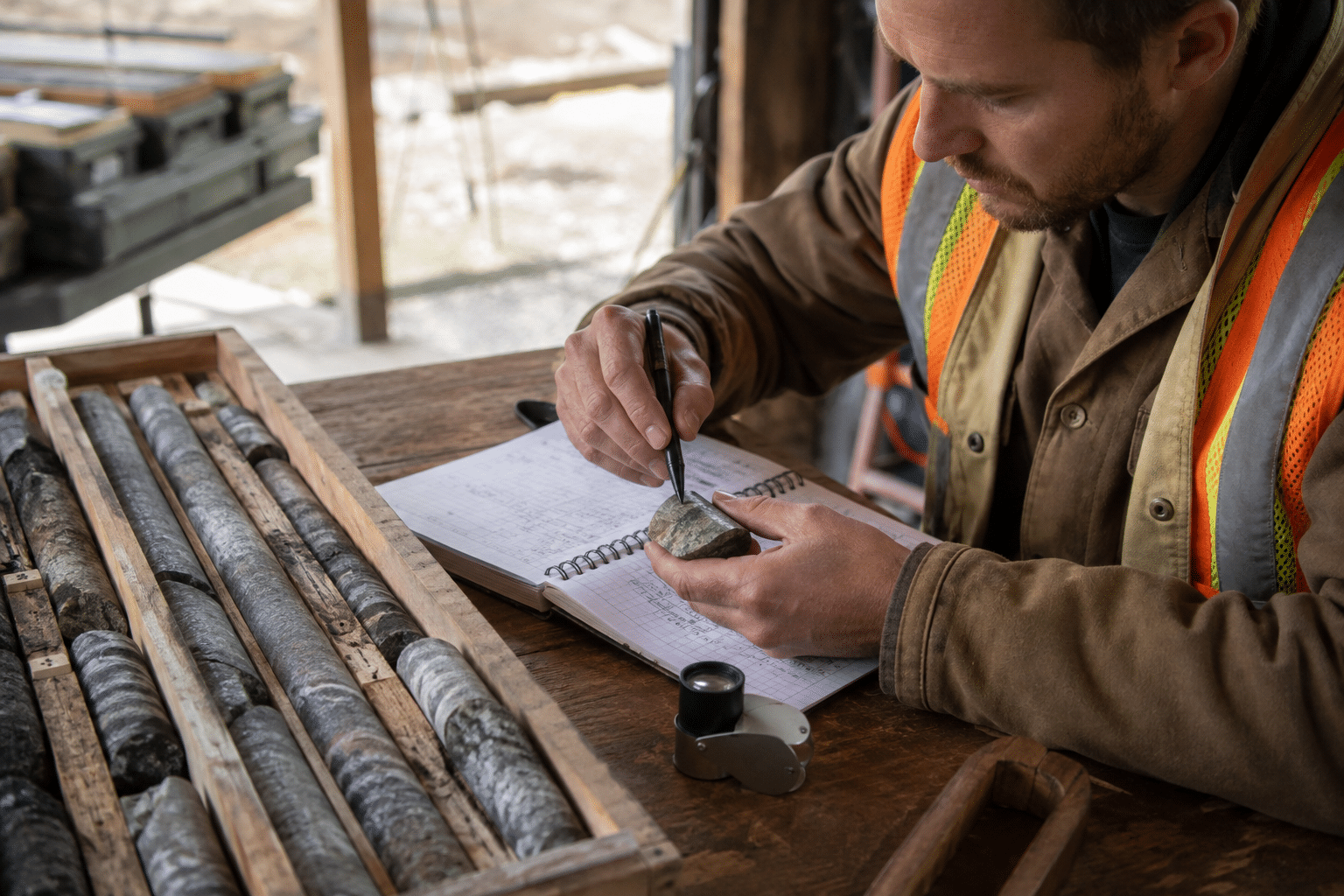
Sample handling is part of the technical work: A technician may label a core or soil sample, record its depth and location, prepare it for testing, and compare the paperwork with the physical container before it moves. A lost identifier or mixed sample can undermine an otherwise good analysis.