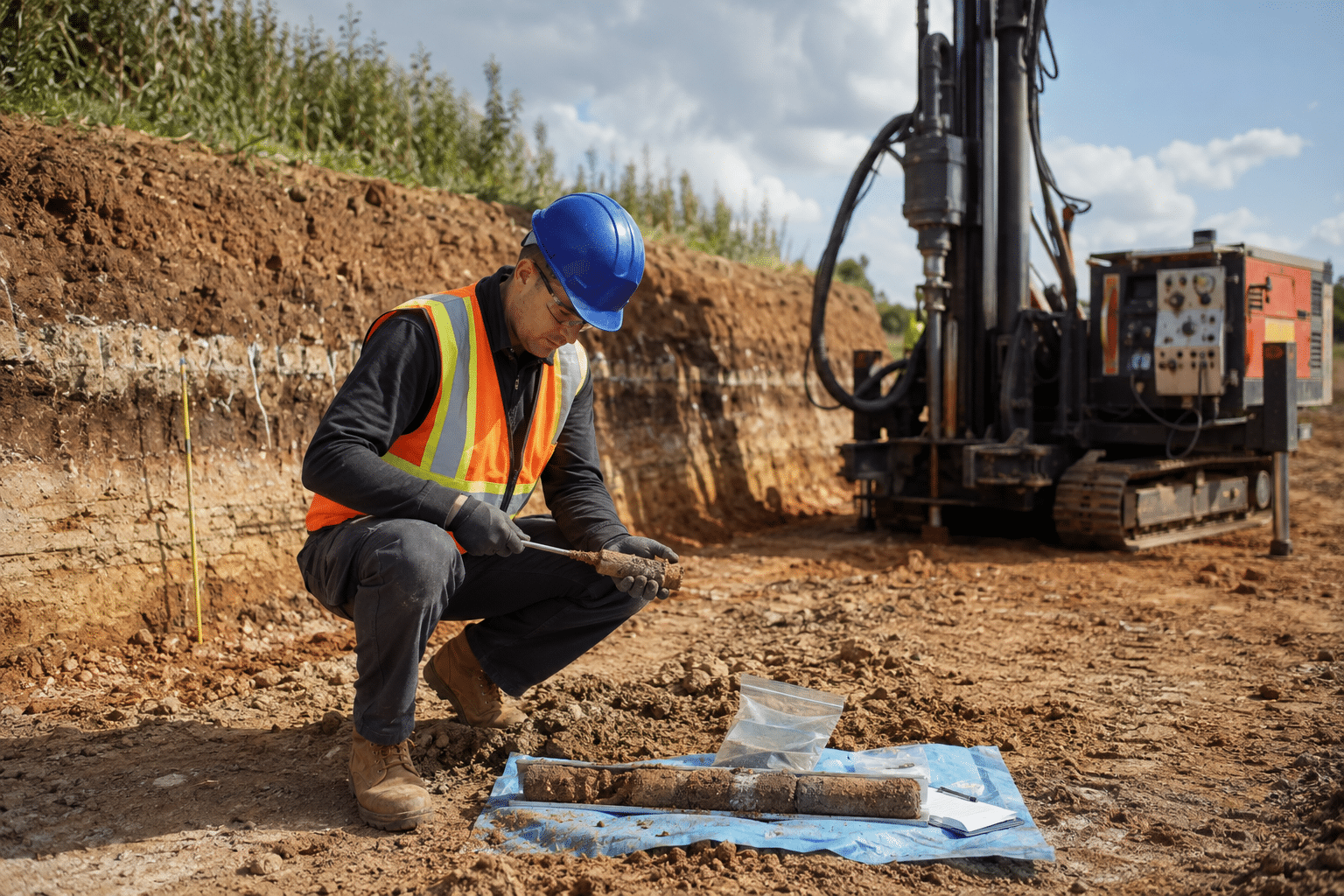
A geotechnical technician collects and tests information about soil, rock, water, and the ground that will support a structure or road. The work can include drilling support, sampling, compaction tests, concrete-related field checks, laboratory preparation, and written records. It suits someone who can work outdoors and follow a testing procedure even when the site is muddy, noisy, or under schedule pressure.
What does a geotechnical technician do?
The job can be field-based, laboratory-based, or a mix of both. Common tasks include:
- Logging soil and rock samples from borings, test pits, or excavations.
- Collecting samples for moisture, density, strength, classification, or contamination testing.
- Operating or assisting with drilling, sampling, and field-testing equipment.
- Recording groundwater observations, site conditions, photographs, and measurements.
- Performing laboratory tests under an engineer’s or senior technician’s direction.
- Preparing clear field notes and reports that can be used in a geotechnical assessment.
The work is practical, but the records must be precise. A sample that is mislabeled or taken from the wrong depth can lead a project team to misunderstand the site.
How to become a geotechnical technician
The BLS places geotechnical engineering technicians within the broader civil engineering technologist and technician occupation. An associate degree in civil engineering technology is common, although some employers train people with construction, surveying, laboratory, or heavy-equipment experience.
Useful training includes soil mechanics, geology, construction materials, basic mathematics, technical writing, blueprint reading, and safe equipment operation. You may also learn field methods such as density testing, soil classification, groundwater observation, and sample handling.
Certification is not one universal requirement. Employers may value credentials connected to concrete, soil, asphalt, or field testing, but the right choice depends on your region and the projects the company handles. Read local job postings before choosing a program.
Field work and laboratory work
Field technicians may travel to active jobsites, work around drilling rigs, carry samples, and stand outdoors in changing weather. Laboratory technicians may spend more time preparing specimens, running tests, cleaning equipment, and entering results.
Some jobs change every day. Others involve long projects where the same site is visited repeatedly. Ask whether the position is mostly field sampling, laboratory testing, report preparation, or a combination.
Pay and career data
Geotechnical technician is a job title rather than a separate BLS category. The related civil engineering technologists and technicians occupation had a 2025 median annual wage of $64,950, about 70,900 jobs, and projected 3% growth from 2025 to 2035. Those figures cover a wider group and should be used only as context.
| Factor | What to check |
|---|---|
| Typical education | Associate degree, certificate, or related field experience |
| Work setting | Drilling site, construction site, laboratory, or office |
| Technical focus | Soil, rock, groundwater, materials, or environmental conditions |
| Schedule | Early site starts, travel, weather, and project deadlines |
| BLS benchmark | Civil engineering technologists and technicians: $64,950 median in 2025 |
Could it fit after 40?
Geotechnical work can fit someone who likes outdoor problem-solving, measurements, construction, and technical records. A background in surveying, concrete testing, heavy equipment, environmental fieldwork, or construction can make the transition easier.
It is less suitable if you want a purely indoor office role or dislike travel and variable site conditions. Ask to shadow a field crew if possible. Ten minutes beside a drilling rig can tell you more about the job than a polished course description.
Following a sample from the ground to the report
A geotechnical sample only answers a useful question when the project team knows where it came from. The technician records the boring or test location, depth interval, sample identifier and relevant observations. Laboratory staff then need to associate their result with that same material. A transcription error between those stages can make an accurate test misleading.
Imagine two sample bags from different depths arriving together. Their color and texture may look similar, but they cannot be treated as interchangeable. The technician checks the labels against the field record and asks the project lead about discrepancies. Guessing which bag belongs to which interval would weaken the investigation. This is why experience managing traceable inventory or laboratory records can transfer well into the role.
Construction testing and ground investigation are different assignments
An investigation helps the engineering team understand existing ground conditions. Construction testing checks work as a project proceeds, such as the placement of fill. A firm may employ technicians in both areas, but the travel pattern, equipment and daily conversations can differ. Ask which assignments account for most of the vacancy.
On a construction project, the technician may face pressure for a quick result because the next activity is waiting. The appropriate response is to follow the specified test and reporting process. Reporting measurements does not give a junior technician authority to redesign a foundation or approve a departure from the engineer’s requirements. Clarify who makes acceptance decisions and how an unexpected result reaches that person.
What to learn in a soils laboratory
Laboratory work develops a feel for specimen preparation, measurement and repeatability. Read a test procedure closely enough to identify the specimen requirements and the information that must be recorded. Learn how the laboratory identifies equipment and checks its condition. A result with missing preparation details may be difficult to interpret or reproduce.
A useful beginner exercise is to prepare a sample register using invented specimens: identifier, collection location, requested test, receipt condition and result status. Label the exercise as practice when presenting it to an employer. It demonstrates organization without pretending to have carried out professional testing. Pair it with coursework in soil behavior or construction materials if those subjects are new to you.
Questions about field assignments
Find out whether the day begins at the office, at a laboratory or directly at the project. Ask about travel between sites and the handling of heavy sample containers. A posting described as local may still involve early starts and substantial driving. If the employer uses specialized equipment, ask what training and authorization are provided before you operate it.
Finally, ask how field technicians receive feedback from the engineers who use their notes. Seeing how an observation contributes to the final assessment helps you improve. That connection is also the main distinction from a general construction labor role: your output is reliable information about the ground and the work placed on it, not simply completion of a physical task.
Sources
- U.S. Bureau of Labor Statistics: Civil Engineering Technologists and Technicians
- BLS Occupational Outlook Handbook A-Z Index
- OSHA: Construction Industry
Related reading: Materials Testing Technician, Surveying Technician, and Environmental Technician.
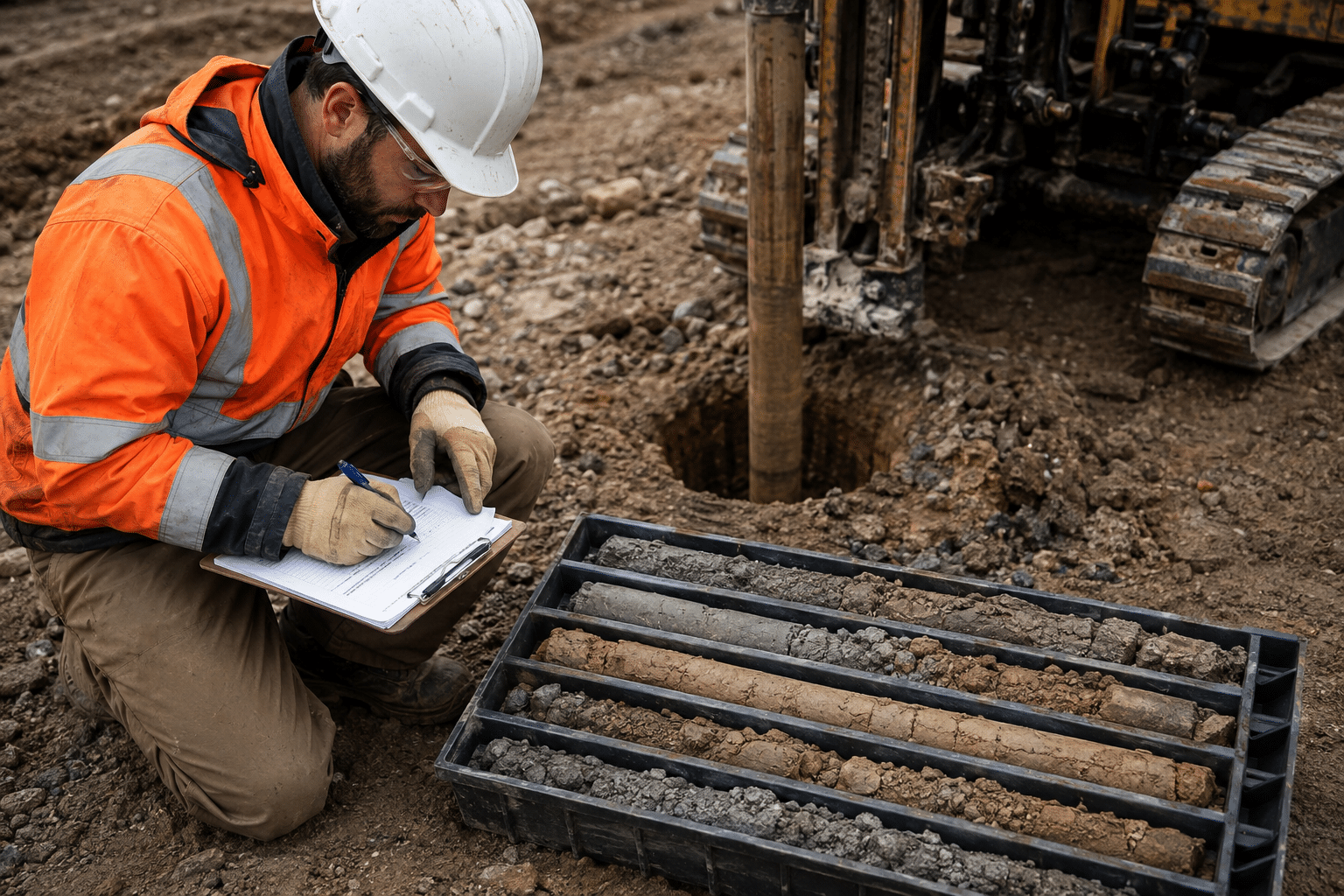
A field result needs a location and method: A compaction reading is useful only when the technician records where the sample came from, which test was used, and whether the result meets the project requirement. If the material or conditions do not match the plan, the technician flags that difference instead of forcing the number to fit.