
A medical laboratory technician performs testing that helps clinicians diagnose and monitor disease. The work may involve blood, urine, tissue, or other specimens, along with analyzers, quality controls, laboratory information systems, and strict handling procedures. It is a detail-heavy healthcare role where the identity and condition of a sample matter as much as the machine result.
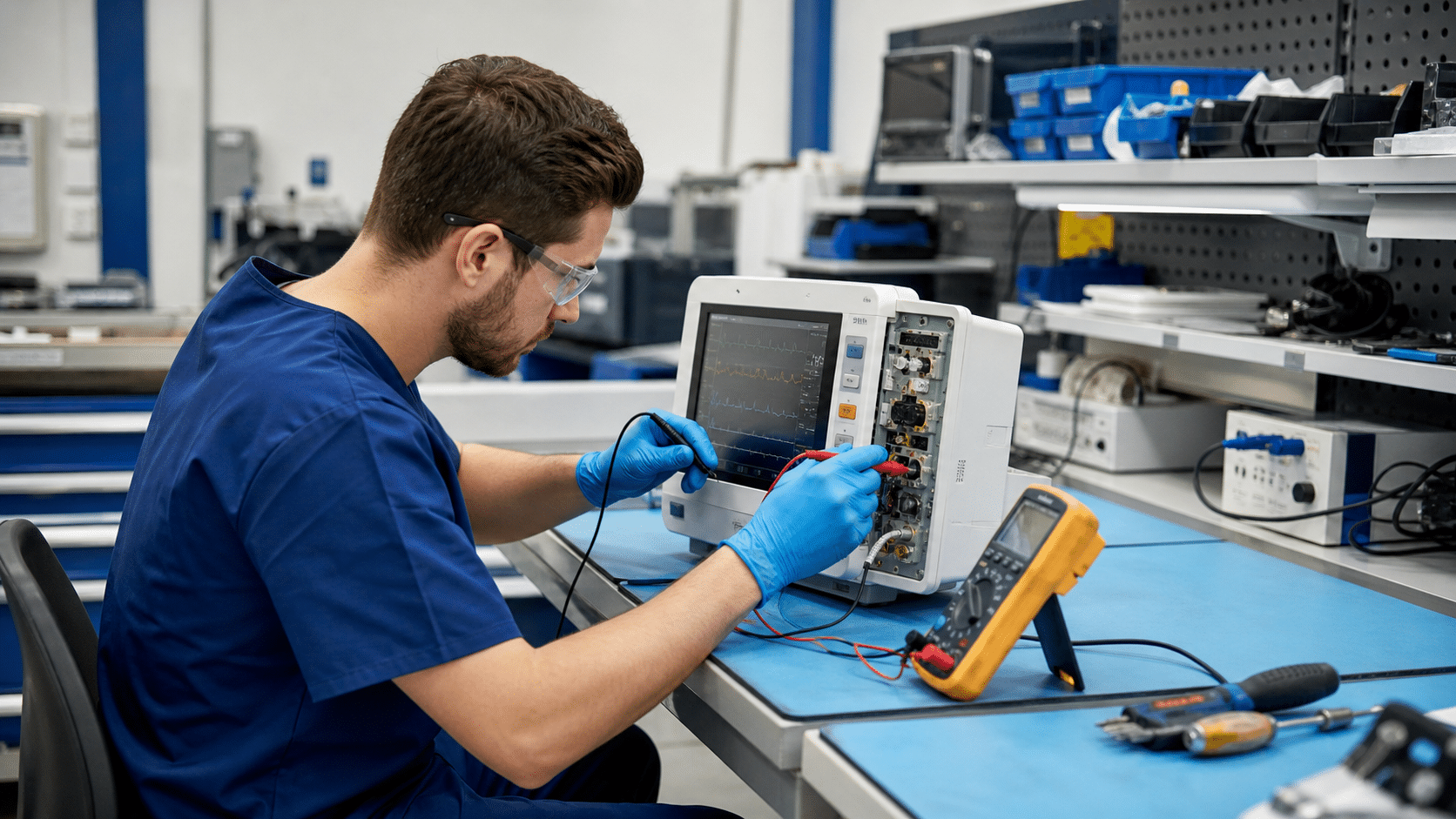
The workflow starts before the analyzer: The technician checks the label, specimen type, timing, storage, and test order before preparing the sample. A result can be technically correct for the wrong specimen, so identification and documentation are part of patient safety rather than administrative extras.
What does a medical laboratory technician do?
The work is organized around specimens and validated methods. A result is only useful when the sample is identified correctly, the test ran properly, and the record is complete.
| Area | Typical work |
|---|---|
| Specimens | Receive, identify, prepare, and store blood or other patient samples |
| Testing | Perform approved chemistry, hematology, microbiology, or blood-bank procedures |
| Instruments | Run controls, load analyzers, troubleshoot basic errors, and flag problems |
| Quality | Check results against procedures and escalate an unreliable run |
| Records | Enter results, maintain logs, and document corrective actions |
| Safety | Use precautions for biohazards, chemicals, sharps, and waste |
The exact duties depend on the laboratory and the technician’s training. Some roles are generalist positions. Others focus on one department, such as hematology or microbiology.
How do you become a medical laboratory technician?
Many employers expect an associate degree or an approved postsecondary program in medical laboratory technology. Certification may be required or strongly preferred, and state licensing rules can add another step. The federal CLIA framework also affects how clinical laboratories operate and who may perform testing.
Coursework commonly includes biology, chemistry, microbiology, hematology, immunology, laboratory math, specimen handling, and clinical practice. This is different from a general laboratory technician program, which may prepare someone for environmental, food, industrial, or research work instead.
Experience as a biomedical equipment technician can help with analyzers and maintenance, but it does not replace clinical laboratory education or certification. Confirm the requirements with the state agency, employer, and certifying organization before enrolling.
Where do medical laboratory technicians work?
Medical laboratory technicians work in hospitals, physician offices, clinics, blood centers, public-health laboratories, and independent diagnostic laboratories. Hospitals may operate around the clock, so evenings, nights, weekends, and holidays are possible.
The job usually involves standing, repetitive hand work, close visual tasks, protective equipment, and contact with patient specimens. It is not bedside care, but the results can affect urgent medical decisions. Following procedure is part of the professional responsibility.
Medical laboratory technician pay and outlook
The closest BLS benchmark is clinical laboratory technologists and technicians. It combines technicians and technologists, who may have different education, duties, and pay. Use the benchmark to understand the occupation, then compare local postings by credential, hospital or outpatient setting, shift, specialty, and experience.
Certification, department, night differential, union status, and location can change the offer. A national BLS figure is not a promise for a particular medical laboratory technician position.
Is it a good second career after 40?
It may fit someone who prefers structured technical work and does not need constant customer interaction. Experience with quality systems, healthcare support, chemistry, manufacturing, or careful documentation can help. The trade-off is that the work can be repetitive and the schedule may follow the hospital rather than a regular office week.
Before paying for a program, ask nearby laboratories which schools and credentials they accept. Confirm clinical placement, certification eligibility, licensing, shift expectations, and starting pay. The program’s name matters less than whether it leads to the role you want.
Check the clinical placement before paying tuition
Ask the program how clinical rotations are arranged, which laboratories accept students, and what happens if a placement is delayed. Get the schedule in writing. Daytime rotations can be difficult to combine with a full-time job, even when academic classes are advertised as flexible. Include travel, required supplies, and time away from paid work in the training budget. A course schedule alone does not describe the full commitment.
Confirm eligibility for the specific certification route you intend to use and any licensing requirements where you plan to work. Program completion, certification, and permission to perform assigned testing are separate checkpoints. A hiring laboratory must determine whether your education and experience meet the requirements for the work it assigns. The CMS CLIA information linked below explains the federal laboratory framework; the school should explain how its graduates fit that framework.
Understand the responsibility behind a test result
Consider a specimen whose identification does not match the order. The technician’s role is to follow the laboratory’s discrepancy process and contact the appropriate person. Guessing the patient’s identity can undermine every later step, however well the analyzer performs. During an interview, ask how new staff learn specimen acceptance, quality-control review, and escalation. These habits deserve as much attention as instrument operation.
Clinical laboratories also need reliable handovers. A pending test, instrument problem, or unresolved specimen issue must reach the next shift with a clear status. Ask how trainees are assessed in each department and who is available when they encounter an unfamiliar result overnight. Technical independence should follow demonstrated competence rather than simply completing a certain number of shifts.
Compare laboratory schedules before choosing a specialty
A hospital generalist role may offer broad exposure but require rotating weekends. A specialist department or outpatient laboratory may have a different rhythm. Ask about scheduled hours, mandatory overtime, shift differentials, and how frequently employees move between benches. Someone changing careers from office work should test the combined effect of standing, close visual work, protective clothing, and an early or late shift. The best comparison is between actual offers with similar credentials, not between an advertised technician wage and a technologist’s experienced salary.
Bottom line
Medical laboratory technicians produce clinical test results by protecting specimen identity, following validated methods, checking quality, and documenting the work. It is a regulated path in many settings. Start with local requirements, then choose an approved education route that matches the laboratory department you want.
Sources
- U.S. Bureau of Labor Statistics: Clinical Laboratory Technologists and Technicians
- CDC: Clinical Laboratory Improvement Amendments (CLIA)
- OSHA: Bloodborne Pathogens and Needlestick Prevention
- CMS: Clinical Laboratory Improvement Amendments
Reviewed September 3, 2026: Medical laboratory technician requirements depend on the laboratory department, state rules, employer, and certification route. Confirm clinical placement and credential eligibility before paying for a program. Compare the role with general laboratory technician work.