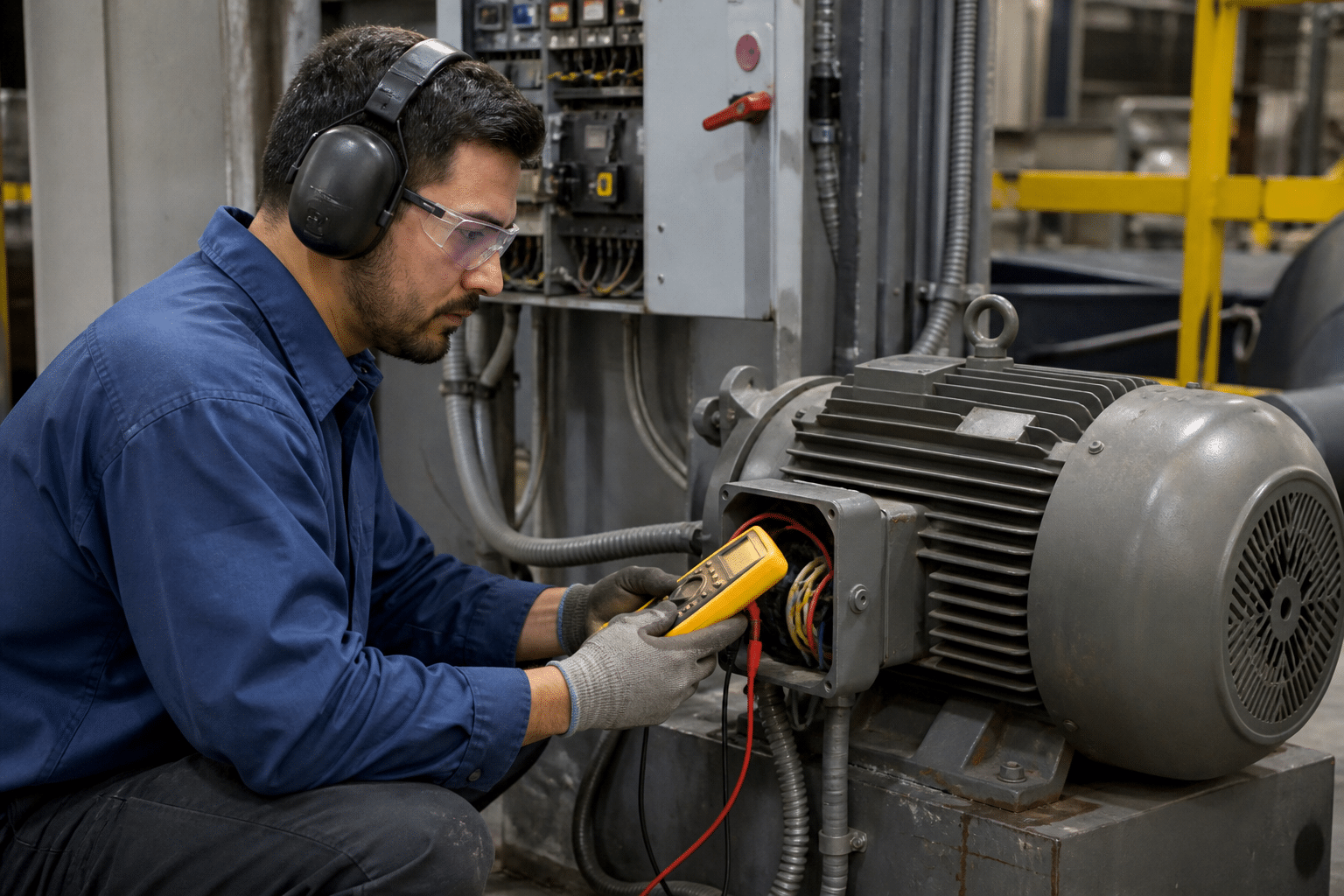
An electrical engineering technician helps turn an electrical design into something that can be tested, built, measured, or repaired. The work may involve prototypes, circuit boards, test fixtures, wiring, power equipment, drawings, and records. It is hands-on technical work, but it is not the same as being an electrical engineer: the technician often works closer to the bench, equipment, and verification process.

A prototype can fail for a mundane reason: The technician may trace a wrong component value, a loose connection, an unsuitable test setup, or a design detail that behaves differently under load. Good documentation lets the engineer reproduce the condition instead of relying on a vague note that the circuit ‘did not work.’
What does an electrical engineering technician do?
The job changes with the employer. A technician in a product company may test prototypes. A utility or manufacturing employer may need help with equipment, drawings, field measurements, or production problems.
| Area | Typical work |
|---|---|
| Testing | Set up instruments and record voltage, current, signals, or performance |
| Prototypes | Assemble, modify, and test circuits or electrical components |
| Troubleshooting | Isolate a failed part, connection, board, or test step |
| Production support | Help resolve build issues and keep drawings or instructions current |
| Engineering support | Collect measurements and prepare test reports for engineers |
| Documentation | Record revisions, results, defects, and corrective actions |
Common tools include multimeters, oscilloscopes, signal generators, power supplies, soldering equipment, drawings, and test software. The technician needs to know when a result is meaningful and when the test setup itself may be the problem.
How do you become an electrical engineering technician?
Many employers prefer an associate degree in electrical engineering technology, electronics, or a related field. Certificates, military electronics training, apprenticeships, and experience as an electrical technician can also open doors, especially for production or test roles.
Coursework often includes circuit theory, digital systems, measurement, technical math, CAD, programming basics, and safety. A technician who wants industrial work may add motors, controls, and industrial networking. An electronics technician may already have useful bench and troubleshooting skills.
The title usually does not require an engineering license, but the work must stay within the employer’s procedures and the person’s training. It is not a shortcut to signing off engineering designs. Read the actual job description before choosing a program.
Where do electrical engineering technicians work?
Technicians work in manufacturing, laboratories, utilities, transportation, aerospace, communications, medical-device companies, and engineering service firms. Some spend most of the day at a bench. Others visit production floors, test sites, customer locations, or electrical rooms.
The physical demands vary. Bench work can mean standing, close visual work, and repetitive hand movements. Field and industrial roles may add lifting, ladders, noise, heat, or travel. Safety depends on the equipment and test voltage, not on the word "technician" in the title.
Electrical engineering technician pay and outlook
The closest BLS benchmark is electrical and electronic engineering technologists and technicians. That group includes people who assist with design, development, testing, manufacturing, and maintenance. It is a useful starting point, but it is broader than any one employer’s version of the job.
Compare local postings by industry, degree requirement, test responsibility, shift, security screening, and travel. A prototype laboratory, a factory test department, and a utility field team may offer very different pay for similar-sounding titles. BLS figures are occupational benchmarks, not a guaranteed salary for this title.
Is it a good second career after 40?
It can suit someone who likes precise troubleshooting and wants a technical role with a clear paper trail. Experience with wiring, repair, quality control, computers, drafting, or machinery can help. The transition still requires comfort with math, measurement, documentation, and learning unfamiliar equipment.
Before paying for school, read nearby postings and identify the tools they mention. If most employers want an associate degree, a short course may not be enough. If they want test experience and schematic reading, hands-on practice may matter more than a broad credential.
Keep a prototype’s revision history visible
Prototype work can involve several versions of a board, wiring assembly, or test fixture in a short period. Before a test, confirm which hardware and drawing revision the engineer wants evaluated. Identify approved changes and record the configuration used. A measurement from the wrong version can waste development time even when the instrument reading itself is accurate.
For a student project, keep a simple build record showing the schematic version, parts changed, reason for the change, and result of the next test. This is useful interview evidence. It shows that you can support an engineering question through several iterations instead of presenting only a finished circuit that happened to work.
Explain the measurement, not just the number
A technician should be able to describe what was connected, which instrument and settings were used, and the operating condition during a measurement. A waveform or voltage value without that context may be difficult to reproduce. In an employer’s test area, equipment limits and connection methods must come from approved procedures and the technician’s qualification.
Ask how junior staff learn to recognize a setup problem and how unexpected results are reviewed. A useful training exercise compares the expected behavior with the observed result, identifies plausible explanations, and proposes the next authorized check. Avoid changing several things simultaneously; doing so can make a successful result difficult to explain later.
Choose between product development and routine testing
Some vacancies emphasize building prototypes and working alongside engineers. Others center on repeatable production tests, failure analysis, or field support. Read the task list and ask which part occupies most of the week. The education requirement may be similar while the pace, autonomy, and opportunity to learn differ considerably.
For someone moving from electronics repair, the additional challenge may be documenting experimental work and reading engineering specifications. For someone arriving from academic study, it may be assembling hardware reliably and recognizing practical test limitations. A course or placement should provide evidence of the missing ability. Before accepting a role, clarify who supplies instruments, whether training includes the company’s products, and how overtime or travel is assigned. A clear learning path is especially useful when the advertised title covers several departments with different expectations.
Bottom line
Electrical engineering technicians support the practical side of electrical design and equipment. Their work sits between engineering plans and reliable test results. Choose the specialty first, then match your education and hands-on practice to the devices and worksite you want.
Related guides: Industrial Electrician: Duties, Training, Pay and Career Fit and Telecommunications Technician: Duties, Training, Pay and Career Fit.
Sources
- U.S. Bureau of Labor Statistics: Electrical and Electronic Engineering Technologists and Technicians
- U.S. Bureau of Labor Statistics: Electrical and Electronics Installers and Repairers
- OSHA: Electrical Safety
Reviewed September 3, 2026: Electrical engineering technician roles may focus on prototypes, testing, drawings, wiring, or production support. Ask which instruments and standards the employer uses before choosing training. See electrical technician work.