
A biomedical equipment technician keeps patient-care equipment working safely in hospitals, clinics, laboratories, and home-care settings. The work may include inspection, preventive maintenance, calibration, troubleshooting, installation, vendor coordination, and service records. It is technical healthcare support, not patient care, but a missed fault can affect clinicians and patients who depend on the equipment.
The job is technical healthcare support, not patient care. You do not become a nurse or clinician by repairing medical equipment, but your work can affect whether staff can use equipment safely and reliably.
What does a BMET do?
The equipment can include patient monitors, infusion pumps, defibrillators, beds, sterilizers, imaging support equipment and laboratory devices. The exact list depends on the employer. A technician may test a device, replace a component, verify an alarm, read service documentation, coordinate vendor support and record the result in a computerized maintenance system.
| Work area | Example |
|---|---|
| Preventive maintenance | Perform scheduled inspection and function checks |
| Repair | Find the failed component and restore the device under procedure |
| Calibration | Compare measurements with an approved reference |
| Installation | Set up equipment and confirm operating requirements |
| Documentation | Record service, parts, test results and release status |
BMET vs medical equipment repairer
Biomedical equipment technician and medical equipment repairer are often used for overlapping work. A hospital may use BMET for an in-house team, while a manufacturer or service company may use field service or medical equipment repairer. Read the equipment list, travel requirement and authorization level instead of relying on the title.
Our medical equipment repairer guide covers the broader occupation. This page focuses on the hospital and clinical-equipment context.
How do you enter the field?
Employers may accept an associate degree in biomedical equipment technology, electronics, engineering technology or a related field. Some provide training to people with electronics, electrical, computer hardware or maintenance experience. Helpful foundations include circuits, safe measurement, troubleshooting, technical reading, computers and careful recordkeeping.
Ask programs which devices students use and whether they teach electrical safety, risk management and service documentation. A purely theoretical electronics course may not show you the pace or responsibility of a hospital environment.
Pay and outlook
The BLS groups much of this work under medical equipment repairers. It reported a $62,630 median annual wage in May 2025 for that occupation. The benchmark includes different employers, experience levels and specialties, so it is not a guaranteed starting wage for a new BMET.
Pay can differ between a hospital, equipment manufacturer, third-party service company and traveling field role. Ask whether travel, on-call work, mileage, tools and overtime are part of the offer.
Safety and responsibility
Technicians may work around electricity, compressed gases, radiation-producing equipment, infection-control procedures and devices connected to patients. The employer should define when equipment must be removed from service, who can approve a repair and what tests are required before return.
Good service records are part of safety. If a workplace treats documentation as optional, ask how it prevents an unverified device from going back into use.
Is it a good change after 40?
BMET work can fit someone from electronics, IT hardware, field service, maintenance or laboratory support. It may offer a cleaner environment than heavy industrial repair, but hospitals can still involve lifting, walking, urgent requests and irregular schedules.
Before paying for training, speak with a working technician and compare the first wage, program cost, commute, on-call expectations and advancement path. The national median describes an established workforce, not the first paycheck.
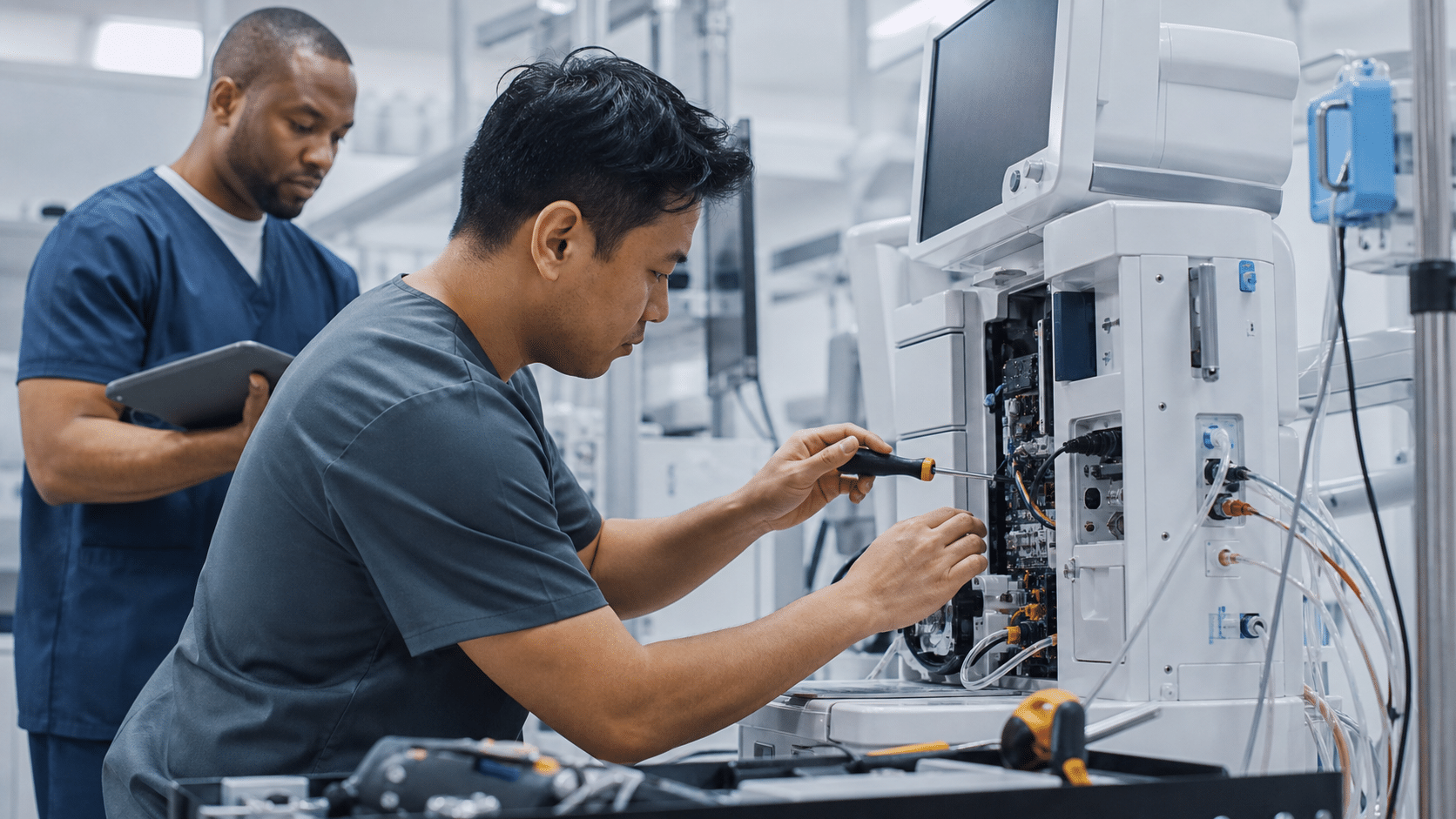
A service call needs context: A monitor, infusion pump, or sterilizer may show an error caused by a sensor, battery, cable, software setting, or maintenance issue. The technician checks the complaint, verifies the condition with the approved test, records the result, and returns the device only when its safety and performance are documented.
Bottom line
Biomedical equipment technician is a practical technical career for someone who likes electronics, documentation and work that supports healthcare without providing clinical care. Choose the employer carefully. Equipment scope, training and responsibility vary widely under the same title.
Know the service environment
Biomedical equipment technicians may support hospitals, clinics, manufacturers, or independent service companies. Ask which devices fill the workload, how much travel and on-call coverage is required, and whether technicians enter patient-care areas. A bench-repair role and a hospital field role can have very different schedules and communication demands.
Before servicing equipment, confirm its identity, complaint, accessories, contamination status, and availability for work. Follow the organization’s infection-control and electrical-safety procedures. Some devices require manufacturer authorization or specialized training. A general electronics background does not permit a technician to alter every medical system.
Make service records clinically useful
Document the reported problem, tests performed, measurements, parts, software or configuration when relevant, and final functional verification. State whether the device returned to service and note any limitation. Hospital staff need a clear status, while future technicians need enough detail to recognize a recurring fault.
Ask how trainees are supervised and how competency is assessed for different equipment groups. Useful preparation may include electronics, networking, anatomy and physiology terminology, and careful customer communication. The job fits people who can troubleshoot methodically while respecting that a delayed or unreliable device affects clinical work, not just production output.
In a hospital, communication affects whether equipment is available for care. Before removing a device, confirm its status with clinical staff and identify any accessories that must stay with it. Use the approved replacement or loaner process rather than making informal swaps. After service, explain the result in plain language without giving clinical advice. Privacy also matters: screens, labels, logs, and networked systems may expose patient information. Follow the organization’s access and data-handling rules and collect only what the service task requires. For career planning, ask whether the department supports certification, manufacturer schools, and progression from general equipment to specialized systems such as imaging or laboratory analyzers. Specialization may require travel or call coverage. A careful first step is to compare hospital, manufacturer, and independent-service roles, because each offers a different mix of supervision, equipment depth, customer contact, and schedule.
Ask who reviews completed preventive maintenance before a trainee closes the work order and releases equipment.
Sources
- BLS: Medical Equipment Repairers – duties, pay and training; checked September 2, 2026.
- FDA: Medical Device Servicing – servicing and safety context; checked September 2, 2026.
- OSHA – workplace safety context; checked September 2, 2026.
Reviewed September 3, 2026: Biomedical equipment technicians may work in hospitals, clinics, laboratories, or field service. Ask about equipment types, travel, documentation, electrical safety, and employer training before enrolling. See medical equipment repairer work.